You can work 5 days a week and succeed as a startup.
Mercury has done that from day 0 and we are valued @ $5.2bn 7 years after launch.
I have been an entrepreneur for 20 years and raised 3 kids while doing it.
The point of success is to have a great life not just a startup 😊
“Looks pretty obvious to me that high-majors need to play mid-majors during the season. They said we ain’t played nobody—we played somebody now. Nobody would play us. just like nobody would play Miami Ohio. But they gotta play us in this tournament.”
🗣️🗣️
Should not even be a debate about 29-0 @MiamiOH_BBall as to whether they should be part of @MarchMadnessMBB if they do not win the MAC tourney -metrics used to define who should qualify as at large teams is one sided & favors MEDIOCRITY from power conferences over EXCELLENCE by mid majors .
YouTube is the most important thing to happen to golf since Tiger Woods. Creator golf is a $1B industry it just don't know it yet... My thoughts on the category and why I'm so happy to be building here with @PeoplesLeagueX. https://t.co/ivzAaPkZka
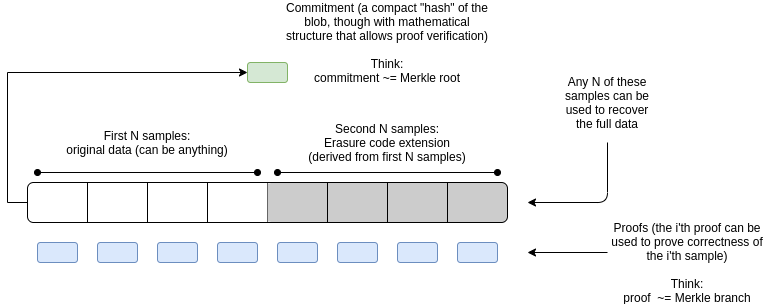
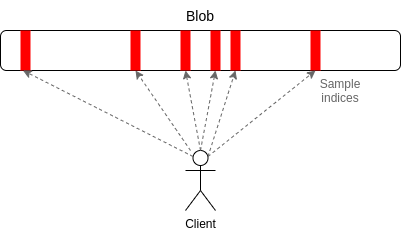
PeerDAS in Fusaka is significant because it literally is sharding.
Ethereum is coming to consensus on blocks without requiring any single node to see more than a tiny fraction of the data. And this is robust to 51% attacks - it's client-side probabilistic verification, not validator voting.
Sharding has been a dream for Ethereum since 2015 , and data availability sampling since 2017 ( https://t.co/Fa0jKFgObW ), and now we have it.
That said, there are three ways that the sharding in Fusaka is incomplete:
* We can process O(c^2) transactions (where c is the per-node compute) on L2s, but not on the ethereum L1. If we want to scaling to benefit the ethereum L1 as well, beyond what we can get by constant-factor upgrades like BAL and ePBS, we need mature ZK-EVMs.
* The proposer/builder bottleneck. Today, the builder needs to have the whole data and build the whole block. It would be amazing to have distributed block building.
* We don't have a sharded mempool. We still need that.
But even still, this is a fundamental step forward in blockchain design. The next two years will give us time to refine the PeerDAS mechanism, carefully increase its scale while we continue to ensure its stability, use it to scale L2s, and then when ZK-EVMs are mature, turn it inwards to scale ethereum L1 gas as well.
Big congrats to the Ethereum researchers and core devs who worked hard for years to make this happen.
The Ethereum whitepaper was published 12 years ago today.
Ethereum changed the course of crypto by giving builders greater tools - including a Turing complete language!
Shoutout to @VitalikButerin, the Ethereum co-founders, and the entire Ethereum community. So many of the products responsible for where our industry is today wouldn’t have happened without your vision.
Gold is secured by N armies who are each independent owners and find value in gold. It can be traded at this value. It is scarce and hard to come by. This increases it's value. Value comes from security - the N armies and the scarcity.
Bitcoin is scarce. But it's security is centralized. Yes, N miners can choose to mine, but it's all out of a *single* mine. When this mine runs dry due to the scarcity, the army left to protect will be paid for by those using bitcoin (tx fees).
But, if bitcoin is a *store* of value, no one will be using it. Thus, the amount that can be paid to the protectorate is not significant. Rendering bitcoin insecure.
This differs from Gold in that each of the N holders of gold can choose to protect it because they're decentralized as holders. Bitcoin holders are centralized and must protect together, otherwise anyone can claim everyone's assets. The chain is very much a centralized single point of failure once subsidizes run out.
Thus it, bitcoin, is very much *not* like Gold. Gold is far more secure than bitcoin on a long term horizon.
For bitcoin to be more like gold, every holder who views bitcoin as a store of value, would also need to choose to contribute hashing power to the network as a form of insurance against theft - and not leave it up to the miners as is done today. This would be the same way Gold holders might choose to fight to protect their gold.
What is this insurance based hashing power they'd need to contribute? Well, that's basically a form of *stake*.
In many ways, Gold is closer to POS than it is to Bitcoin's POW. And in that, Gold is far more resilient in the long term.
@Lighter_xyz built an app chain that leverages Ethereum's security model and scales to meet the demands of the perps market.
Ethereum sidechains (@HyperliquidX) were excusable when verifiable compute was immature, but no more.
@Lighter_xyz models where Ethereum is headed.
@chang_defi Being an L1 is a bug, not a feature.
An L1 is just an Ethereum L2 without any of the security and verifiability parts.
Your conclusion may be correct but in the opposite direction.
There's a lot of money in Ethereum failing.
BTC may remain #1 forever if Eth fails. So they argue that Ethereum and ETH are separate and distinct, and the platform can succeed while the asset languishes.
At least, that's their argument when Ethereum is doing really well.
During years when Ethereum struggled, Bitcoiners argued that both eth the platform and ETH the asset were ~trash.
Because their real goal isn't to constructively criticize but to delegitimize.
Alt L1s can capture much of the onchain pie if Eth fails. So they argue Eth's L1+L2 model is bad.
Sometimes they argue the L1 is too slow, or L2s are just multisigs, or their Trust Me Bro finality is better than L2 finality backed by L1 finality, or that L2s break atomic composability, etc. None of it's true in the high level sense that it follows to use the centralized alt L1s.
These memetic attacks on Ethereum have been going on since the very beginning. They are difficult to defend against. But much easier this era.
The problem for Bitcoin is that it's looking like BTC dominance was artificially propped up by the chilling effect that the previous administration had on onchain growth.
How can Bitcoin remain as dominant as onchain grows 10,000x, with the lion's share on Eth? It can't.
ETH will surpass BTC, and when it finally happens, it'll feel natural and justified to everybody because of how important and huge onchain has become globally.
The problem for alt L1s is that Eth's L1+L2 model and flywheel are maturing and accelerating. The window of use cases for which it makes sense to build an alt L1 is shrinking rapidly.
How can alt L1s continue to make sense for institutions and investors when L2s will soon be faster, cheaper, equally customizable, much more secure, and interoperable with the eth L1 and every other L2? They can't. Alt L1s are a bad deal.
Pretty much every customer segment out there is better off on eth L1 and/or L2.
That's why the vast majority of them are picking Ethereum.
Ethereum and ETH's time has come.
Ethereum has been completely shut down in Afghanistan.
I think we neglect how dependent Ethereum is on internet access. A censorship-resistant "always-on" ledger isn’t much help if a government can just pull the plug by shutting down the internet.
Alright my man. I have so much respect for
Galaxy. Just did a podcast with Alex. Your team is awesome.
But 1) solana does not do 65k TPS sustainably. That’s fake and if you’re representing that I’ll push back hard.
2) you’re not engaging in constructive dialogue. There’s no slashing or economic penalty for misbehaving on Solana.
If you don’t think that’s an issue and you keep spreading your 65k tps BS then that’s fine.
But it’s untrue and the ETH community you constantly put down won’t just lay down and accept it. Have fun with your propaganda.
This is why blockchains need to be decentralized. Because they put power and choice back in the hands of individuals, protecting them to some event against government excesses, they will always rub some governments the wrong way. What happens when the bank of England insists that, say, Tempo, enforce such a limit?
Now would be a great time to build a system that securely publishes eth app UIs on the L1.
Can use an interface security council to sign each releases's IPFS hash.
An offchain program "Secure Eth App Portal" is the user entrypoint. Click Aave in this app, it looks up latest signed hash, run IPFS node in background, loads secure UI from localhost, including local L1/L2 nodes or light clients.
The Secure Eth App Portal app can itself be distributed via slower-moving secure channels, like the iOS/OSX/Android App Stores.
This is an example of one of those categories (secure software distribution on ethereum L1) that will be obvious in hindsight and eventually a big deal, but the right person hasn't come along yet for a serious effort to try it.
ETHEREALIZE'S NEXT CHAPTER
We were born as a marketing and BD arm for Ethereum.
Today, we're excited to announce that we’re expanding our mission:
Etherealize is building for the next era of finance—where Wall Street merges with Ethereum.
(1/12)