I am once again, with 100% sincerity and meaning it as fully as it can be meant, telling whoever has the power in the United States of America to do it, bar holding public office or any office in the public trust, along with naturalization, for all members of ideologies, including the DSA's, that are openly stated to be in conflict with the oaths required to hold those positions or to have been granted that citizenship.
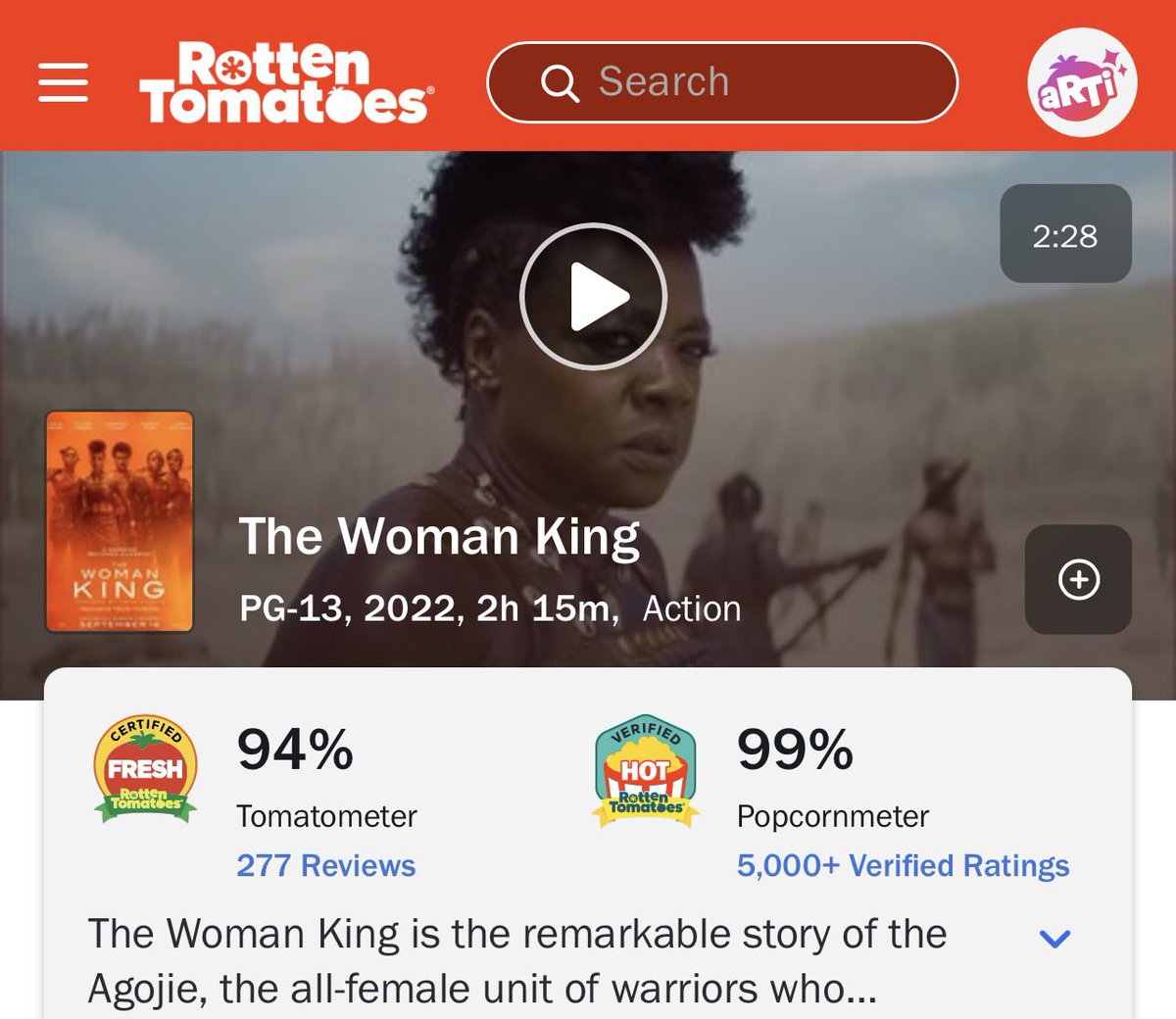
Rotten Tomatoes is an op.
We do not know the mechanism; it is clear that some films are denied the special treatment; but for some films, the reviews are clearly not real.
Below: Return of the King vs. The Woman King.
The Odyssey’s current RT score is similarly fake.
There are many reports of removed reviews, and there is now a large divergence in the score with other review sites.
The problems with this film’s pacing, length, coherence, and character development are well-recognized even by professional reviewers.
Likewise the film inverts many of the original story’s core messages, turning Homer into a post-Cold War anti-war multi-cultural liberal who needs a therapist.
There is simply no way the film is rated this highly, but Rotten Tomatoes, through some mechanism or another, has become the Wikipedia of film reviews—pushing a false, politicized, manufactured consensus.
Again, The Odyssey’s review score is not real, and even those who liked the film know it.
Shame on Rotten Tomatoes.
@creation247 All they had to do was recast Sean Bean as Odysseus and take it from there. He is roughly the same age as the character returning to Ithaca.
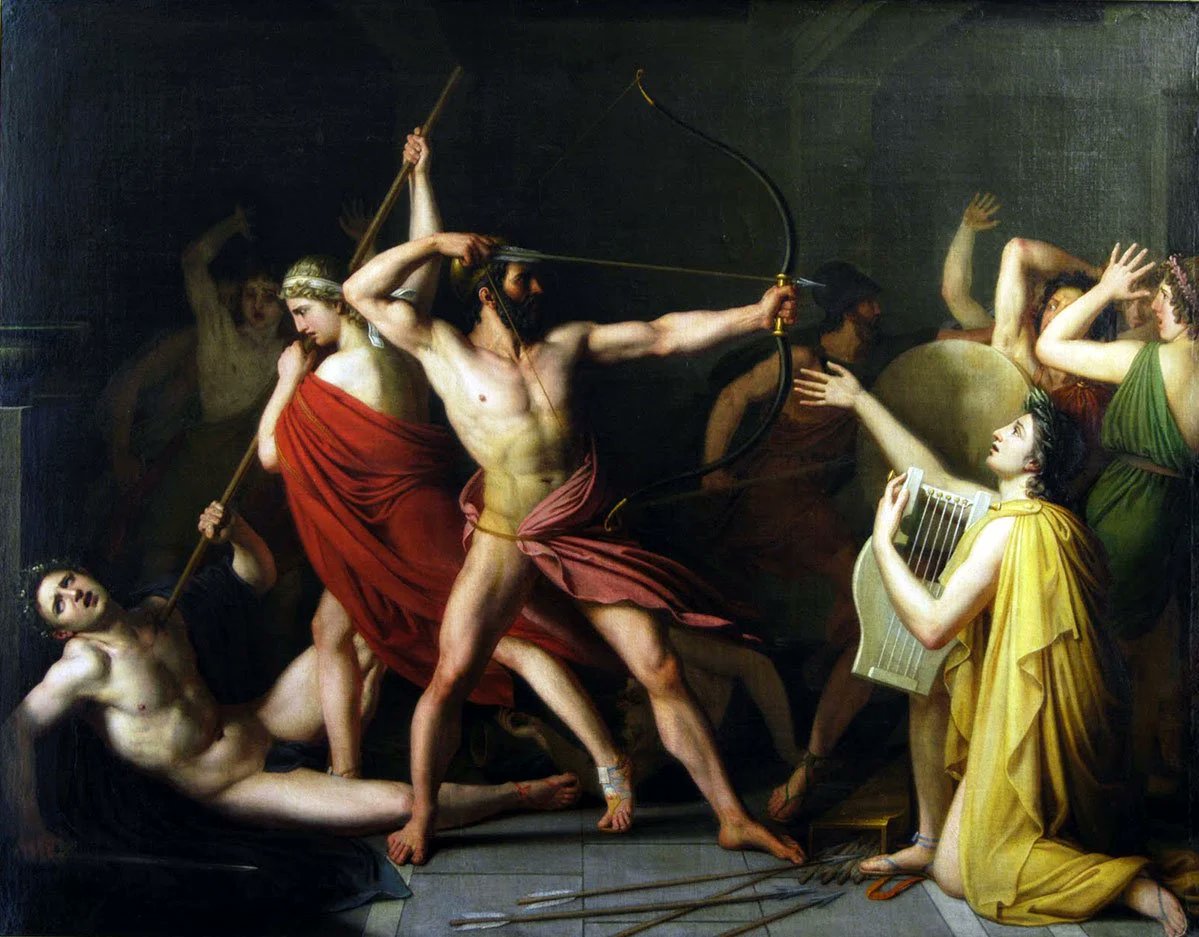
There are some powerful secrets and symbols in the Odyssey that you can only understand if you speak Greek. The Odyssey, apart from being a literary work, also conceals a profound philosophy that most people are unaware of, not intentionally, but because this philosophy cannot be fully understood in the English language; it can only be grasped in Greek, thanks to the richness of its philology and the etymology of its words. The three most important suitors who die are Antinous, Eurymachus, and Amphinomus. In English, these names mean nothing, but in the Greek language, they carry great significance due to Homer's deliberate choice of them.
The name Antinous means the one who opposes rational arguments, the irrational one ('anti' + 'nous' = mind/intellect). Antinous is the first to speak, the most irreverent of all, and the first to be killed. Odysseus reveals his true self, he has changed after ten years fighting at Troy and another ten struggling against the seas. The first trial he faces upon his return is a war within his own mind, his reason. That is why Homer creates Antinous as his first enemy: the one who fights against logic, according to his name. Odysseus triumphs over him.
Next comes Eurymachus. He is warlike but also two-faced. His name means the broad, great fighter ('eurys' = wide/broad + 'machites' = fighter). Eurymachus puts Odysseus in a dilemma and tries to shift the blame onto Antinous. He personifies discord and duplicity, a man without morals, capable of anything to avoid punishment. Yet Odysseus overcomes this obstacle as well, which symbolizes moral superiority. He does not yield, and his mind is not poisoned.
Third is Amphinomus. His name means the one who distorts the law ('amphi' = around/both sides + 'nomos' = law). He is the most compassionate of the suitors. Amphinomus tries twice to discourage the other suitors from murdering Telemachus. Odysseus even tries to warn Amphinomus to leave the house before the final battle. Nevertheless, Amphinomus stays and dies along with the others.
Through this, Odysseus, and by extension Homer, teaches us that in life, sacrifices are required, even when they demand that we show no compassion when the goal is more important and serves a greater purpose that will improve things overall. These are sacrifices that most people, even brave and heroic ones, cannot make.
That is why there are many people, but few are truly heroes.
Homer Pavlos