Absolute dharmic 🚩. A fish in kshirsagar. Narayana hari Narayana. A strong Savarna Voice. Debunking propaganda against hinduism. Unleashing villian arc.
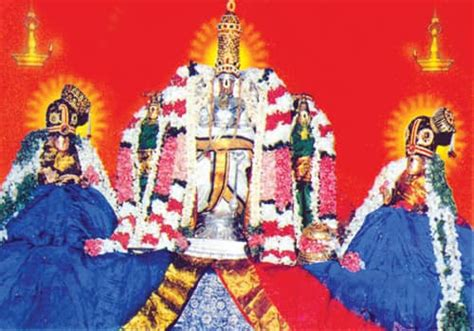
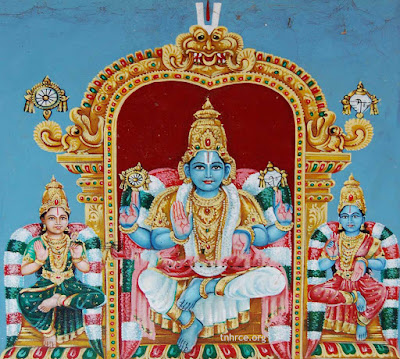
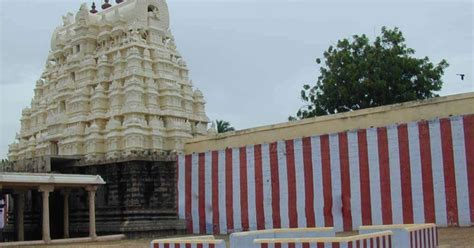
Divyadesam related to Shukra Bhagwan - Makara Nedunkuzhaikathar, ThenThiruPerai
PS: The graha dosha nivarana is supplementary but bhagawan is main focus here.
I am going to tell you about navagraha related vaishnava divyadesams (navatirupatis) near Thirunelveli in Tamilnadu. Each divyadesam will reduce bad effects of it's respective graha.
Sthala Puranam:
Sage Durvasa cursed Bhoomadevi, the consort of Mahavishnu, causing her to lose all her natural charm and beauty, and take on the form and golden complexion of Sridevi. To relieve herself of the curse, she performed severe penance to Lord Mahavishnu on the southern bank of the river Thamirabarani. One day, while immersed in devotion, she saw two beautiful fish-shaped earrings floating towards her in the river. Ever thinking only of Narayana, she prayed that the Lord himself should wear those earrings. Pleased with her devotion, Mahavishnu appeared before her, gladly accepted the makara kundalam (fish-shaped earrings), and removed the curse. From that moment, the Lord came to be known as Makara Nedun Kuzhaikathan – the one who wears large fish-shaped earrings. Since Bhoomadevi had assumed the form and colour of Sridevi at this place because of the curse, the village came to be called Sri Perai, which later became Thiru Perai.
In another incident associated with the same sacred spot, the Rain God Varuna once disrespected his guru Brihaspati and, as a consequence, lost his divine weapon, the Pasam (noose), along with his powers. He undertook intense penance on the banks of the Thamirabarani at Thiru Perai. Lord Vishnu appeared before him on the full moon day of the Tamil month of Panguni (Phalguna) and restored both his weapon and his powers. It is believed that even today, Varuna visits this temple every year on Panguni Pournami to offer worship to Makara Nedun Kuzhaikathan.
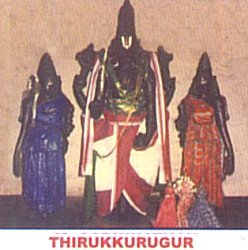
Divyadesam related to Brihaspati Bhagwan - Adinatha Perumal, Alwar Thirunagari (thirukkurugur).
Clarification - The temple I've quoted below is Budha graha (mercury) sthalam. Not Buddha sthala
PS: The graha dosha nivarana is supplementary but bhagawan is main focus here.
I am going to tell you about navagraha related vaishnava divyadesams (navatirupatis) near Thirunelveli in Tamilnadu. Each divyadesam will reduce bad effects of it's respective graha.
Sthala Puranam:
Azhwar Thirunagari, also known as Thirukkurugoor, is the foremost and most important among the nine sacred temples collectively called Nava Thiruppathi, situated on both banks of the Tamirabarani (Thamirabarani) river in Thirunelveli district. Sriman Narayanan Himself declared this place as the “Aadhi Temple” (the first and primary temple). He told Brahma that even before creating him, He had come to the banks of the Porunai (Tamirabarani) river and resided here, instructing Brahma to worship Him here first. Since the Lord acted as Guru to Brahma and said “kuru” (do this – meaning perform tapas and worship Me here), the place came to be called Kurugoor, which later became Thirukkurugoor and Azhwar Thirunagari.
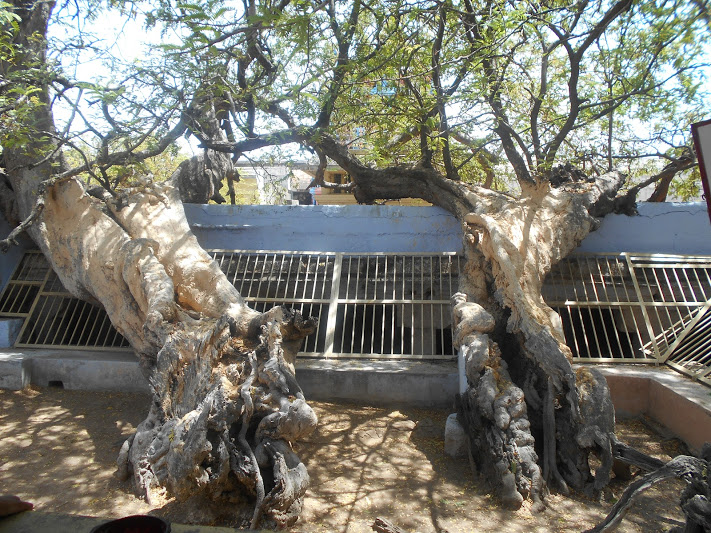
The Moolavar here is Sri Aadhinatha Perumal (Aadhinarayanan), a gigantic self-manifested (Suyambhu) form whose sacred feet extend deep into the earth. Devendra was relieved of his curse by worshipping this Perumal. It is believed that Lakshmana, the brother of Sri Rama, installed himself as the ancient tamarind tree in this temple, and the Lord resides in that tree in Brahmacharya form. When Mahalakshmi approached Him seeking marriage, He transformed her into a flower and wore her on His chest.
This is the avatara sthalam of the greatest among the twelve Alwars – Nammalwar. He was born on Vaikasi Visakam (full-moon day of Vaikasi) to Kariyar (also called Kaarimaran) and Udaya Nangai. Miraculously, the child neither cried, opened his eyes, nor took milk at birth, earning him the name “Sadagopan” (one who conquered even the life-air). Worried parents left the infant under the tamarind tree in the Aadhinatha temple, where he sat in deep yoga for 16 years without food, sleep, or speech, his mind completely absorbed in Sriman Narayanan.
During this time, Madhurakavi Alwar, born in Thirukkoloor, was on pilgrimage to Ayodhya and other northern shrines when a divine light guided him southward. The light vanished at this temple, where he found the 16-year-old Nammalwar in meditation. To test him, Madhurakavi asked: “If the small one (soul) is born in the dead one (body), what does it eat and where does it rest?” Nammalwar broke his long silence and answered: “Atthai thinru ange kidakkum” – it will eat That (Paramatma) and remain there itself. Overwhelmed, Madhurakavi accepted Nammalwar as his Acharya. When Perumal gave darshan to open Nammalwar’s eyes, Madhurakavi saw only his guru and composed the famous “Kanninun Siruththambu” in praise of Nammalwar alone. Because he completely belongs to the devotees (“Nam” = ours), Sadagopan is lovingly called Nammalwar.Sitting beneath the same tamarind tree (now known as “Puliyalwar” (the tree still stands with holes and receives daily thirumanjanam), Nammalwar opened his divine eye of wisdom and performed mangalasasanam on 35 Divya Desams. His four prabandhams – Thiruviruttam, Thiruvasiriyam, Periya Thiruvandadi, and the magnum opus Thiruvaimozhi – are regarded as the Tamil essence of the four Vedas.
The temple has many unique features: the Sadaari placed on devotees’ heads in all Vishnu temples is shaped exactly like Nammalwar’s divine feet; Sri Ramanujar’s vigraha here uniquely wears white cloth instead of saffron; separate sannadhis exist for Thiruvenkata Mudaiyan, Aranganathan, Andal, Vedanta Desika, and Manavala Mamunigal. Since both Lakshmi and Udaya Nangai are considered mothers to Nammalwar, all nine Nava Thiruppathi temples have two Thayars. One mile away lies “Appan Sannadhi,” the shrine of Nammalwar’s father.Thus, Azhwar Thirunagari stands as the holiest among the Nava Thiruppathi temples – the birthplace of Nammalwar, the leader of all Alwars, and the sacred spot where the Lord Himself became Guru to Brahma and accepted the devotion of countless bhaktas through His beloved Alwar.
लंबी पोस्ट!!
मंदिरों को क्यों बचाना चाहिए? 🙏🏻🪷🚩
जब कोई व्यक्ति या समूह हमारे मंदिरों के प्रति घृणा प्रदर्शित करता है, तो वह केवल पवित्र संरचना के प्रति नहीं, बल्कि हिंदू धर्म के अनुयायियों के शरीर, मन और आत्मा के प्रति भी उसी घृणा को व्यक्त कर रहा होता है। मंदिर केवल ईंट और पत्थरों से बनी एक भौतिक संरचना नहीं है; यह हमारी आत्मा (आत्मन्) को परमात्मा से जोड़ने का माध्यम है।
भगवद्गीता में भगवान श्रीकृष्ण कहते हैं—
"इदं शरीरं कौन्तेय क्षेत्रमित्यभिधीयते।"
अर्थ: यह शरीर एक क्षेत्र के समान है। यहाँ क्षेत्र का एक अर्थ है मंदिर जैसा पवित्र
मंदिर की अवधारणा की यात्रा स्थापत्यवेद से शुरू हुई - यह वेद काल वास्तु शास्त्र की नीव बना...
1. प्रारंभ में मंदिरों का विकास देवताओं के निवास और विश्राम-स्थल के रूप में हुआ, जहाँ व्यक्ति या समूह शांति और आध्यात्मिक संतोष प्राप्त करने के लिए जाते थे और आज भी जाते हैं।
2. इसके बाद मंदिर स्वयं एक दिव्य संरचना के रूप में देखा जाने लगा। इसे केवल वास्तुकला की दृष्टि से नहीं, बल्कि आध्यात्मिक दृष्टिकोण से समझा गया—देवालय, अर्थात् भगवान का निवास। मंदिर के वे भाग जहाँ देवी-देवताओं की मूर्तियाँ नहीं थीं, जैसे प्रांगण या सीढ़ियाँ, वे भी पवित्र माने जाने लगे।
3. अंततः जब मन, शरीर और आत्मा से जुड़े शारीरिक, मानसिक और आध्यात्मिक ज्ञान का विस्तार हुआ, तब मानव शरीर को भी एक मंदिर के रूप में देखा जाने लगा। इसका अर्थ था स्वास्थ्य और कल्याण को प्राथमिकता देना—सात्त्विक भोजन करना, स्वच्छ वातावरण बनाए रखना और ध्यान-साधना का अभ्यास करना। इसका उद्देश्य स्वयं के भीतर विद्यमान दिव्य ऊर्जा का सम्मान करना तथा आत्म-देखभाल और आत्म-सम्मान का प्रदर्शन करना था।
इन्हीं कारणों से सदियों से मंदिर जाना मानसिक, भावनात्मक और आध्यात्मिक उपचार का एक माध्यम माना गया है।
वास्तुशास्त्र के अनुसार, मंदिरों का निर्माण मानव शरीर के सात चक्रों के अनुरूप किया जाता था। प्रत्येक चक्र किसी न किसी हिंदू देवी या देवता से संबद्ध माना जाता है। इसी कारण मंदिर में प्रवेश करने से पहले जूते-चप्पल उतारने की परंपरा है, ताकि मंदिर की दिव्य ऊर्जा शरीर के एक या अधिक चक्रों को सक्रिय कर सके।
इसी प्रकार गर्भगृह (Sanctum Sanctorum) में प्रवेश करते समय विशेष आचार-संहिता का पालन करना आवश्यक माना जाता है, क्योंकि वहाँ स्थापित देवी या देवता की मूर्ति को मंदिर की आत्मा माना गया है, जबकि संपूर्ण मंदिर को उसका शरीर।
🎥 दंतेश्वरी मंदिर, जो भारत में स्थित 52 शक्तिपीठों में से एक है। यह माँ शक्ति, दिव्य स्त्री-ऊर्जा, को समर्पित पवित्र तीर्थस्थल है। इस मंदिर का निर्माण काकतीय वंश के शासनकाल में 12वीं–13वीं शताब्दी के दौरान किया गया था।
#सनातन_धर्म_ही_सर्वश्रेष्ठ_है
INSANE.
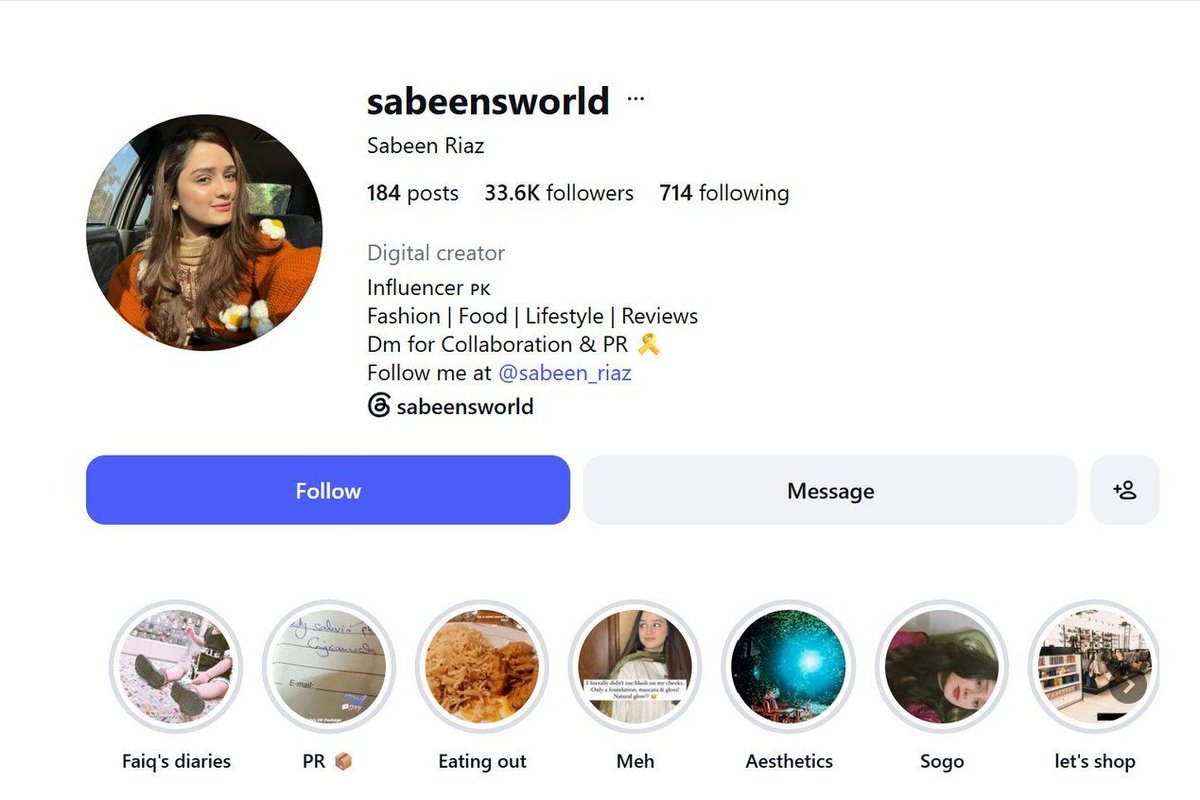
Tarun gautam follows dozens of anti india pakistan affiliated handles, including many of them being woman, he regularly converses with them, they regularly comment on his posts.
All of this seems fishy considering, that he regularly amplifies anti india content, sponsors racism against indians, which can ultimately threatens safety of indians.
@NIA_India , @DelhiPolice , must investigate into this matter