IN 1999 MIT FILMED A MATH LECTURE ON THE ABSTRACT IDEA YOU PROBABLY HATED IN COLLEGE -- THE EXACT MATH GOOGLE LATER USED TO RANK THE ENTIRE INTERNET
50 minutes from Gilbert Strang, who taught this at MIT for over 60 years, on eigenvalues -- the one idea most students memorize and never understand.
-> The shift it creates: an eigenvector is just the direction a system doesn't twist, only stretches. Find those, and a tangled mess of equations falls apart into something simple.
You were drilled to compute them by hand and never told what they were for.
Google's entire empire started here. PageRank is one giant eigenvector problem and the same math now sits inside PCA, recommendations, and how models find structure in data.
Computing eigenvalues was never the skill -> understanding what they reveal is. This is where it finally clicks.
Most people filed this under "Useless college math". The ones who watched this see it running quietly inside half the tech they touch.
Bookmark & Watch it. This one's a legend ↓
A hyperscale AI datacenter consumes the power of a small power plant. A mature molecular mechanical computer might perform comparable computation on the power budget of a hearing aid with no water. That's the promise of reversible nanomechanical computing!
@Danlohen@p4purrip0p Querella vigente del SII presentada por el uso de facturas ideológicamente falsas; Inconsistencias entre los domicilios registrados ante el SII versus los domicilios identificados en terreno, los registrados en documentos ...(Especulación de mierda según el niño)
(1/n) ∑_{i=0}^{n-1} f(T^i x) → ∫_X f dμ
Watching Maryam Mirzakhani command the blackboard like this; unique ergodicity, the convergence of invariant measures, the rhythmic tap of the chalk: it hits different. The absolute fluid motion, the focus, the way she translates the chaotic dance of orbits into a singular, elegant truth.
This is pure dynamical magic: where the statistical history of a single point dictates the behavior of the entire space. It’s the bridge between simple iterations and the deep, complex moduli spaces of Riemann surfaces.
Her work lives in these transitions; showing how the geometry of hyperbolic surfaces and their geodesics isn't just math: it's the blueprint for the symmetry of the universe.
To see the first woman to win the Fields Medal operating in her element is to see a masterclass in human potential and mathematical grace.
In Japanese swordsmanship, drawing a katana in limited space—such as narrow corridors or low-ceilinged rooms—requires specialized techniques that prioritize economy of motion and vertical control.
Did you know that disability can be permanent, such as visual or hearing impairment; or temporary such as a broken bone? Or even situational, such as accessing content where sound can’t be played!
Robert Sapolsky es un neurocientífico de Stanford que demostró que el estrés crónico es el asesino silencioso que los médicos ignoran.
Reveló 10 hábitos que haces todos los días y que te quitan años de vida.
1) Repasar conversaciones en tu cabeza
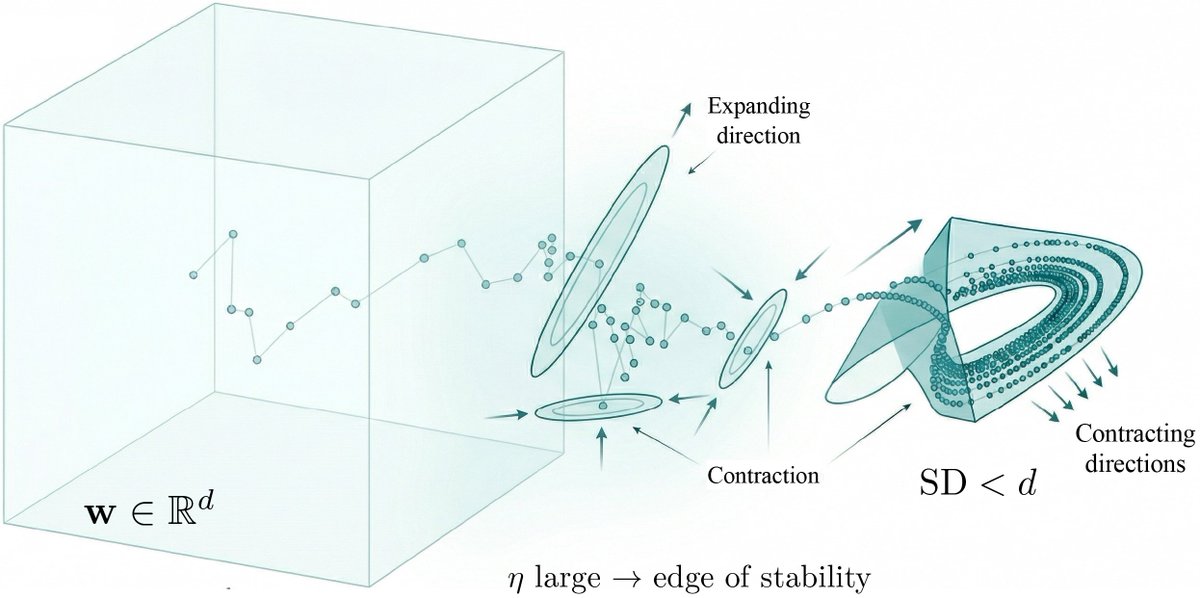
Modern deep networks are often trained at the #EdgeOfStability, a regime where dynamics are locally unstable, nearing chaos. Yet generalization improves, defying the wisdom of classical optimization. We now theoretically explain this central puzzle: https://t.co/yh79EN8EfF. 👇
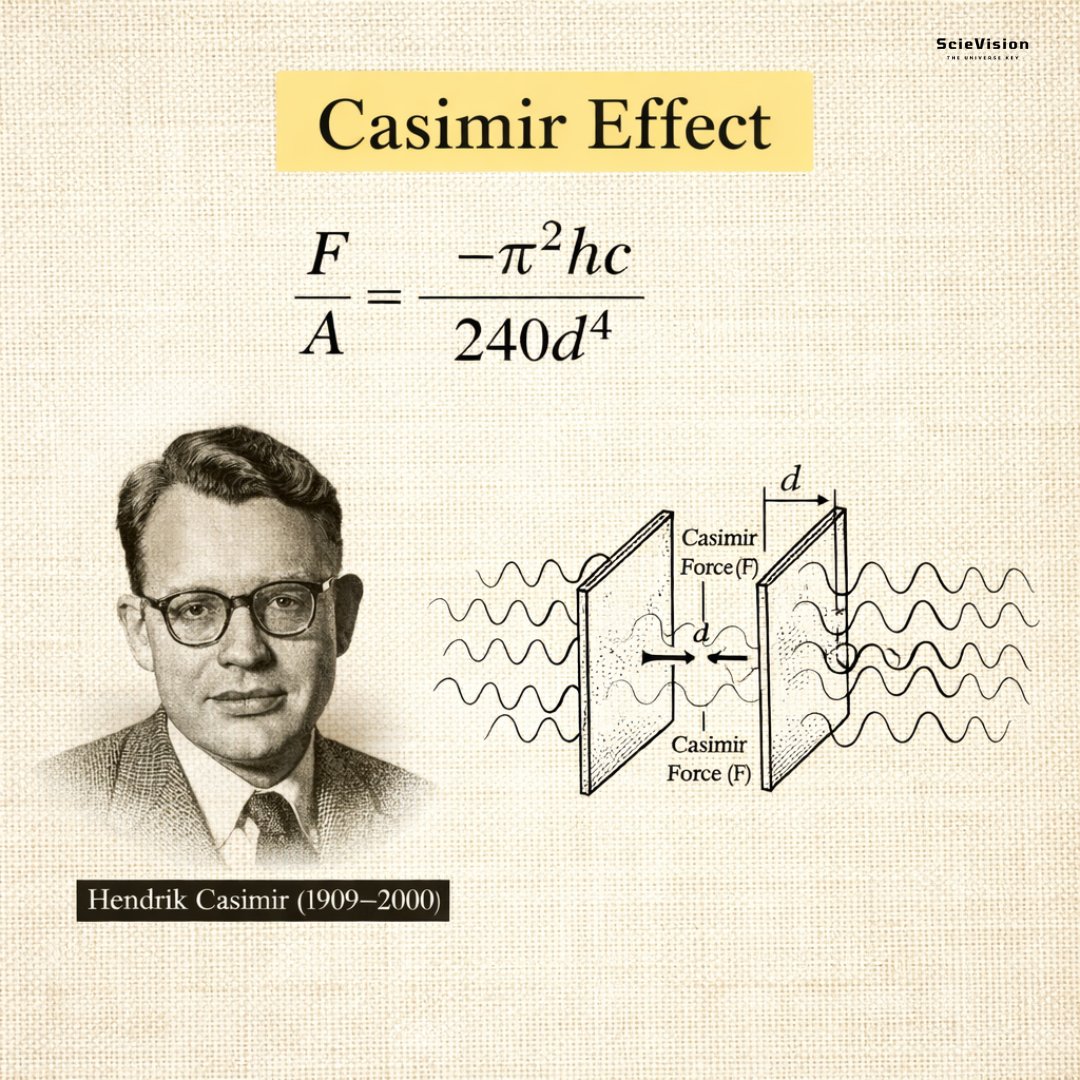
The Casimir effect ✍️
It is a surprising quantum phenomenon. When two flat, uncharged metal plates are placed very close together in empty space, a perfect vacuum, they are pulled toward each other by a tiny force. Even though the plates carry no electric charge or any classical force, "empty" space isn’t really empty. It is filled with temporary ripples of energy called vacuum fluctuations, similar to fleeting virtual light waves of various sizes. Between the plates, only certain short waves can fit and bounce around, while longer waves are blocked. Outside the plates, every possible wave can exist freely. This creates a situation where the vacuum pressure is stronger outside than inside, gently pushing the plates together. This phenomenon provides clear evidence that the quantum vacuum produces real physical effects, and scientists have measured it in laboratories.
The Aizawa attractor, a particular case of the Lorenz attractor, has this system of differential equations:
dx = (z-b) * x - d*y
dy = d * x + (z-b) * y
dz = c + a*z - z³/3 - x² + f * z * x³
Según la filosofía de las matemáticas que se defiende aquí, las matemáticas son una ciencia del mundo real, al igual que la biología o la sociología. Mientras que la biología estudia los seres vivos y la sociología las relaciones sociales humanas, las matemáticas estudian los aspectos cuantitativos y estructurales o pautados de las cosas.
Una verdad matemática típica es que existen seis pares diferentes en cuatro objetos:
Los objetos pueden ser de cualquier tipo: físico, mental o abstracto. El enunciado matemático no se refiere a ninguna propiedad de los objetos, sino únicamente a la pauta de las partes en el complejo de los cuatro objetos.
La verdad, por lo tanto, trata de la estructura pura, y también es cuantitativa, al abordar la relación necesaria entre el número de objetos y el número de pares.
Si el enunciado nos parece una verdad menos sólida sobre el mundo real que, por ejemplo, la causa de la gripe por virus, esto se debe simplemente a nuestra ceguera respecto a las relaciones, o a nuestra tendencia a considerarlas de alguna manera menos reales que las cosas y las propiedades. Pero las relaciones (en el ejemplo, las relaciones de igualdad entre las partes de una estructura) son tan reales como los colores o las causas. No hay nada que objetar a la visión de los ingenieros de que las matemáticas no son más que un cajón de sastre de métodos y fórmulas, un «extractor de jugo teórico» para derivar una verdad sustancial de otras. La verdad sobre pares de objetos no es de naturaleza hipotética, lógica o simbólica, sino una verdad directa sobre los objetos: objetos de cualquier tipo, físicos o de otro tipo, pero objetos reales.
Una filosofía de las matemáticas que parte de esa dirección presenta muchos contrastes con las dos filosofías que han dominado el debate en la filosofía de las matemáticas: el platonismo y el nominalismo.
El platonismo atribuye a los objetos de las matemáticas una realidad, en cierto sentido, necesariamente abstracta y separada de los objetos físicos, y considera los objetos matemáticos como cosas individuales (como el número 3). Pero el aristotelismo considera que la simetría, la proporción y otras propiedades matemáticas pueden tener múltiples realizaciones en la realidad física, y en cualquier otra realidad que pueda existir. (La calificación "capaz de" es importante: es el mundo, no la teoría, quien debe decidir si los infinitos, por ejemplo, se realizan en el mundo físico, pero el aristotelismo, a diferencia del platonismo, insiste en que son propiedades que podrían realizarse literalmente.) Mientras que el nominalismo (incluyendo versiones como el formalismo y el logicismo) considera que las matemáticas no tienen un tema real sino que son solo una manera de hablar o hacer inferencias sobre los objetos físicos ordinarios, el aristotelismo considera que las matemáticas son literalmente sobre algún aspecto de la realidad, pero sobre ciertos tipos de propiedades y relaciones en lugar de sobre objetos individuales.
Las características de la filosofía aristotélica de las matemáticas —afirmaciones que la distinguen claramente de todas las alternativas en la filosofía de las matemáticas— son:
1. Ciertas propiedades reales del mundo (físico y de cualquier otro tipo) (razón, simetría, etc.) se encuentran entre los objetos de las matemáticas.
2.Aunque algunas propiedades matemáticas no puedan ser realmente instanciadas, todas podrían serlo.
3. No existen objetos abstractos (en el sentido platónico de entidades acausales en un ámbito no físico) ni necesidad de ellos.
4.Las matemáticas aplicadas son fundamentales para la filosofía de las matemáticas.
5. Existen verdades matemáticas necesarias que son literalmente ciertas en la realidad física.
Las verdades matemáticas más simples pueden percibirse como verdaderas, mientras que otras pueden establecerse mediante métodos más intelectuales.
Fourier Transform Equation ✍️
It is a mathematical process that acts like a prism for signals. It breaks down a complex wave, like a piece of music or a radio transmission, into its individual "ingredients" or frequencies. While we usually see data as a sequence of events over time, this transform shifts our view. It shows us the strength and pitch of each underlying component all at once. A good analogy is a smoothie: if the original signal is the finished drink, the Fourier Transform provides the recipe. It details exactly how much of each fruit was used to create that specific flavor. This ability to isolate specific frequencies lets modern technology compress digital photos, filter out background noise from calls, and enable wireless communication.
Norbert Herz, Lehrbuch der Landkartenprojektionen (Textbook of Map Projections). 1885.
You can’t flatten a sphere. To make a map, you have to cut it open somewhere, stretch some parts, compress others.
Herz catalogued the options in this book, showing the geometry of how it’s done, construction lines tracking where things tear and warp.
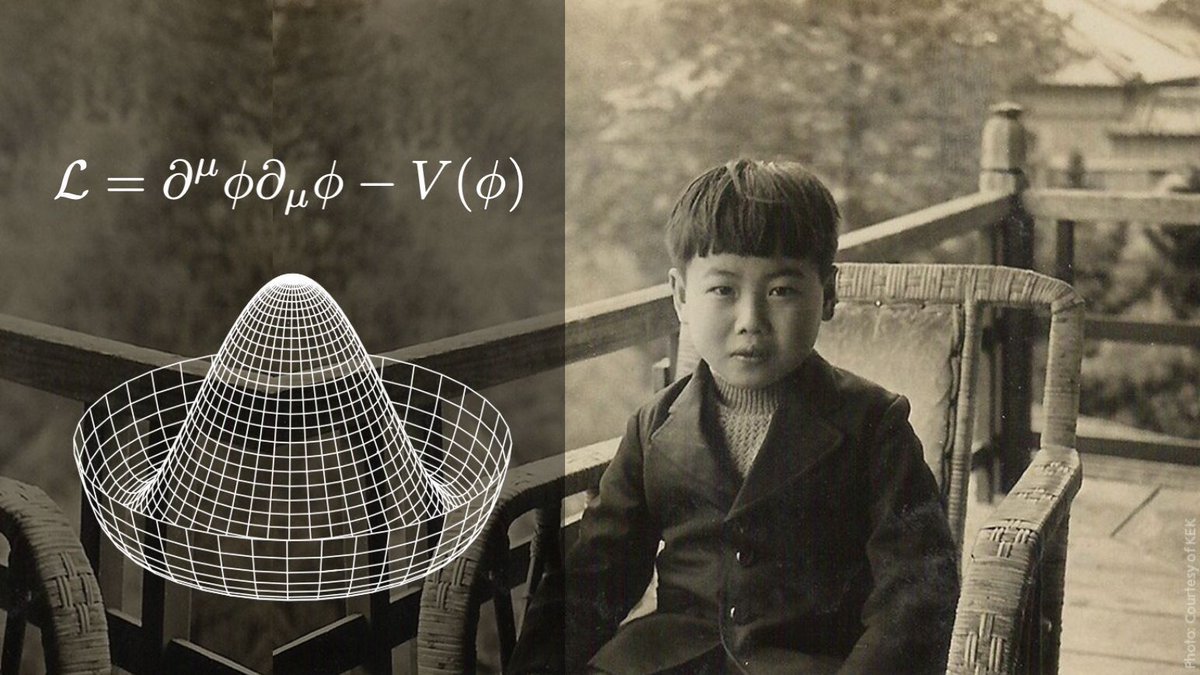
Born 105 years ago, Yoichiro Nambu won the Nobel in Physics for his work on spontaneous symmetry breaking-a phenomenon where hidden symmetries 'break,' giving rise to properties in nature. His ideas paved the way for the Higgs mechanism, explaining how particles gain mass.
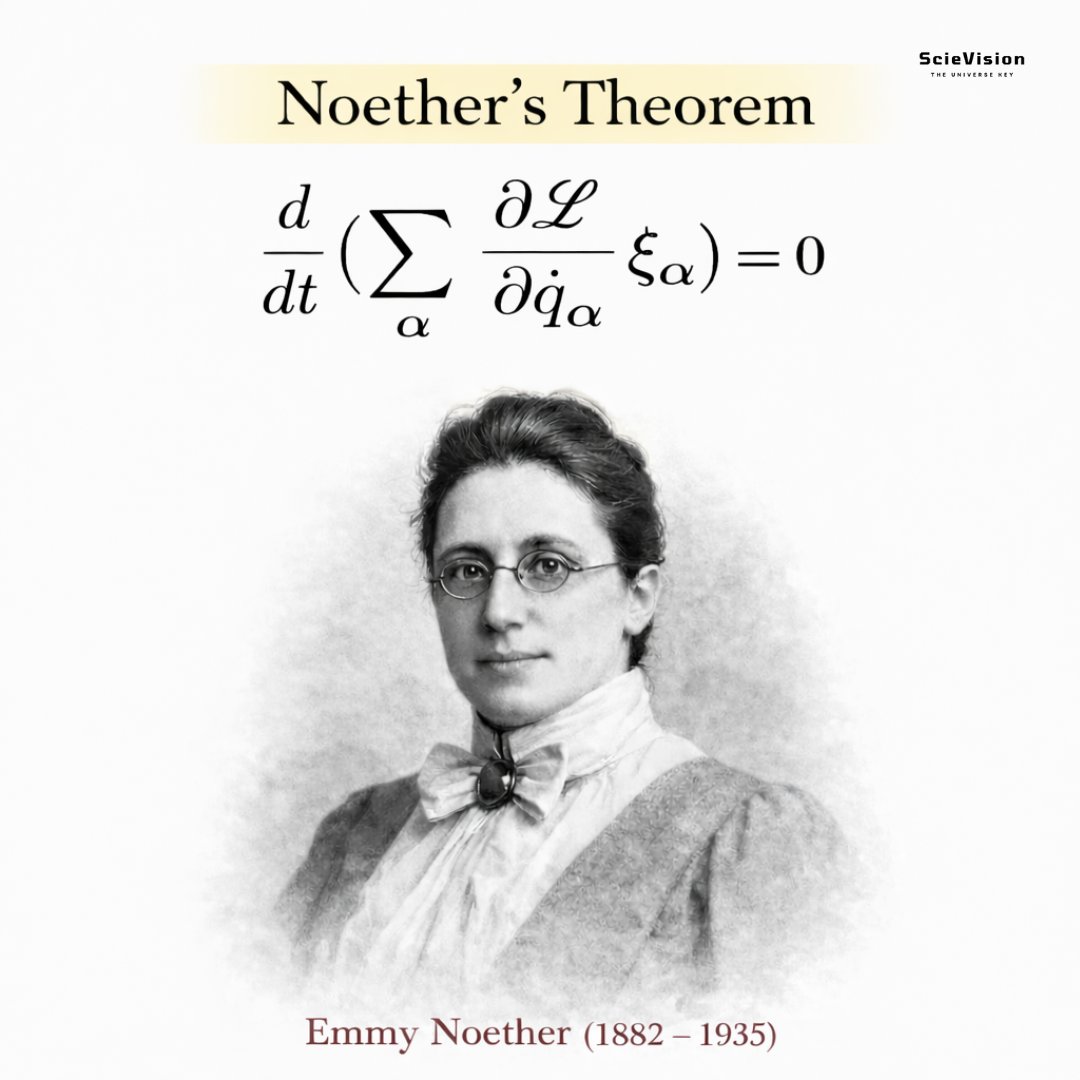
Noether’s Theorem ✍️
This equation reveals that every continuous symmetry in nature, a change you can make to a system without affecting its physical laws, brings about a conservation law. In simple terms, if the universe does not react to a certain change in perspective, it must keep a related physical quantity constant. For example, since the laws of physics remain unchanged no matter when you are (Time Symmetry), energy is conserved. Since the laws are the same regardless of where you are (Space Symmetry), momentum is conserved. Because they stay the same regardless of which way you face (Rotation Symmetry), angular momentum is conserved. This insight shifted our view of the universe. We no longer see conservation as just a series of lucky observations, but as a necessary outcome of the symmetry of space and time.