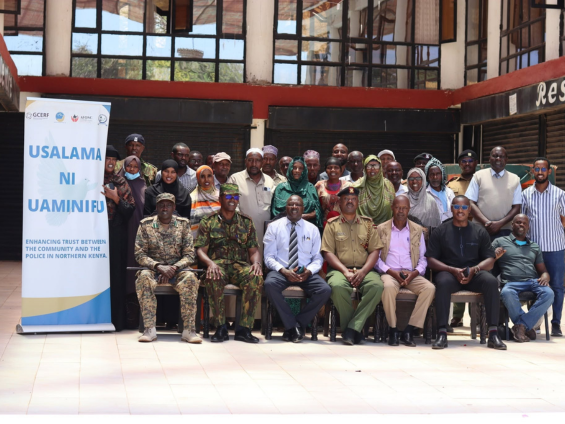
Trust is one of the strongest foundations for preventing violent extremism. In Northern Kenya, we saw what that looks like in practice.
GCERF-supported civil society partner, the @RPPL006 rebuilt and strengthened trust between communities and security actors - the lack of which is a key driver of violent extremism. Through community policing, dialogue, and locally led solutions, communities experienced stronger cooperation, increased reporting of security concerns, and greater resilience against violent extremism.
Read our latest article by Mohamedamin Issack, Monitoring and Evaluation Learning Manager at the @RPPL006 and Samhita Ayaluri, Monitoring, Evaluation and Reporting Officer at GCERF, to explore how this transformation happened and what it means for community-led prevention.
The article highlights measurable results including:
📈 Confidence in community policing rose from 15.1% to 41%
📈 Perceptions of effectiveness in countering terrorism jumped from 9.3% to 30%
📄 Read the full article: https://t.co/lC7wjdg1M1
💐Thank you to the @EU_Commission and @EU_FPI for your continued support to community-led approaches for preventing violent extremism.
@stefanomanservi@pmwBxl@GCERF_ED
#PreventingViolentExtremism #PVE #CVE #Peacebuilding #CommunityLedSolutions #CommunityResilience #TrustBuilding
GCERF was recently in Tajikistan to strengthen partnerships that advance rehabilitation, reintegration, and community resilience.
The EU-funded PRR Programme in Uzbekistan and Tajikistan unites GCERF, Hedayah, and the IIJ to strengthen prevention, rehabilitation, and reintegration efforts through local partnerships and regional cooperation.
As part of the programme, GCERF participated in the IIJ Operational Dialogue in Dushanbe on 14–15 July, bringing together key stakeholders to advance sustainable security and justice outcomes.
GCERF also held a project design workshop with the three CSO finalists for our R&R programme grants, offering technical guidance for the shift from design to implementation.
The EU PRR consortium's work in Tajikistan focuses on three priorities:
🔹 Building prosecution capacity: helping justice actors respond effectively to terrorism-related cases while upholding the rule of law.
🔹 Strengthening R&R systems: equipping civil society with tools for evidence-based programming.
🔹 Turning plans into delivery: helping partners translate strategies into community-based reintegration programmes.
One message emerged consistently: effective PRR should work as a continuum, with strong collaboration between government institutions, civil society, and international partners.
💐 We are grateful to @EU_FPI and @EU_Commission for funding this vital work. Our sincere thanks to all partners who contributed to these discussions, including the @iijmalta, @Hedayah_CVE, and the General Prosecutor’s Office of Tajikistan.
#PVE #CVE #PreventingViolentExtremism #RehabilitationAndReintegration #CommunityResilience #PeaceAndSecurity #RuleOfLaw #JusticeAndSecurity
Syria is at a critical juncture. And GCERF is stepping in.
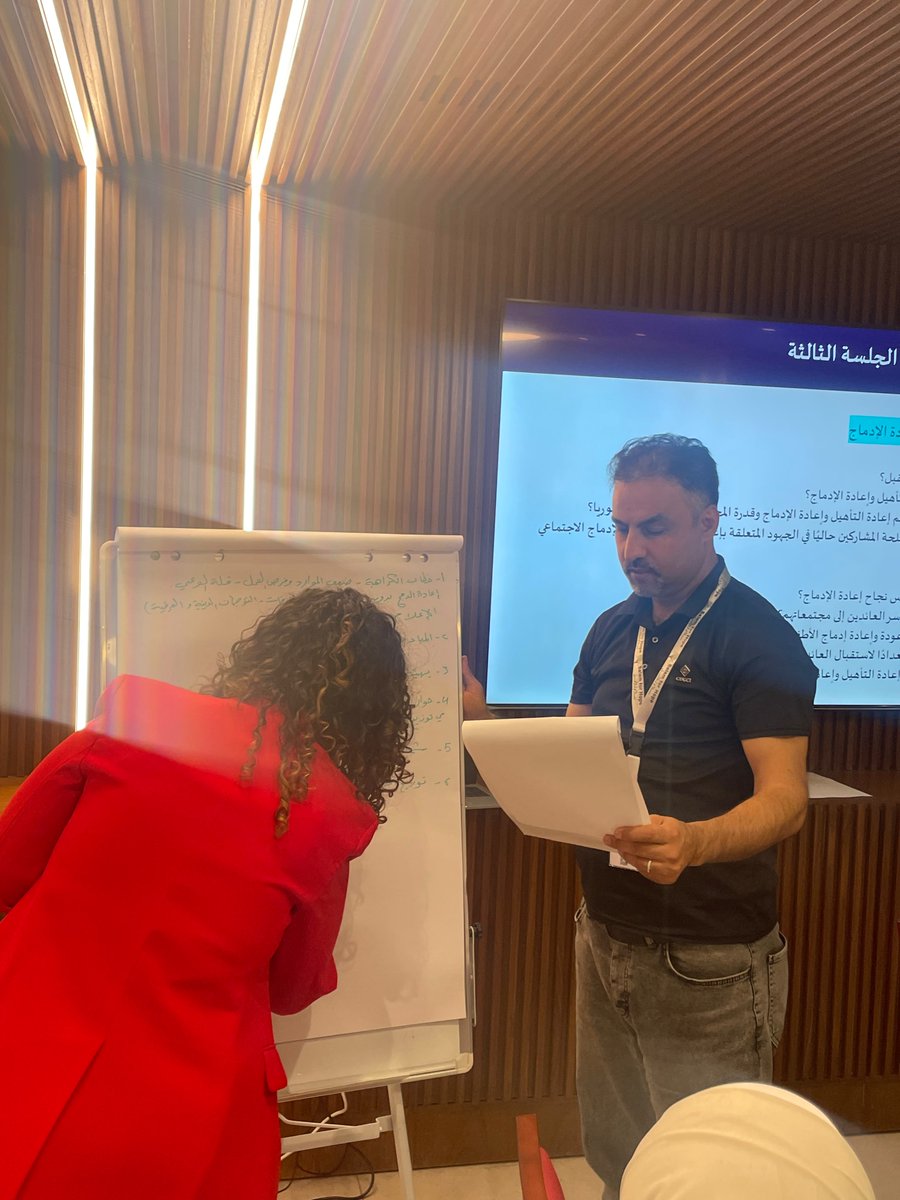
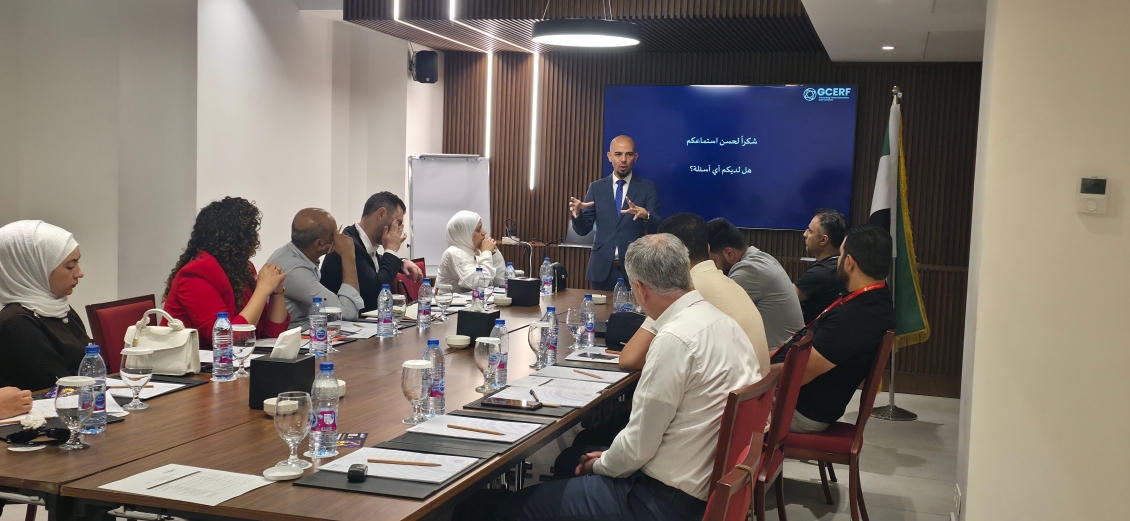
Last week, as part of preparations to launch a new programme in Syria, GCERF convened a Needs Assessment Workshop and consultative meetings in Damascus, bringing together key ministries, international organisations, and civil society to identify priorities for community-based recovery, resilience, and social cohesion.
The discussions centred on three interconnected challenges:
🔹 Recovery
🔹 Social Cohesion
🔹 Rehabilitation and Reintegration
These priorities are directly grounded in and aligned with Syria's national recovery priorities while remaining responsive to the needs of local communities.
What came through clearly: lasting stability in Syria cannot be imposed from the outside. It must be rooted in local ownership, inclusive participation, and solutions that respond to the realities of Syrian communities. This workshop laid the foundation for exactly that.
Our sincere thanks to all participants and partners, including colleagues from @syrianmofaex, Syrian Ministry of Social Affairs and Labour, @SyMOIGov, @SyrMOYAS, Syrian Minister of Emergency and Disaster Management, @Refugees, @save_children, @StabUnit, @SyrDevOrg, and all those who contributed to these important discussions.
#Syria #CommunityEngagement #Recovery #SocialCohesion #Reintegration #Resilience #LocalLeadership #PreventionThroughPartnerships #PartnershipsForRecovery
🌱 Strengthening Resilience Among Women Returnees
What does the first step towards independence look like?
A programme implemented by SOS Children's Villages Kyrgyzstan is helping returnee women access psychosocial support and life skills to strengthen their reintegration and plan for a more stable future.
"At 19, “Aida” (pseudonym) returned to Kyrgyzstan with her siblings after several years in Iraq. She now lives with her maternal grandmother, who serves as her guardian.
Divorced and raising a three-year-old daughter on her own, Aida was married at just 15, a decision made by her family rather than her own choice.
She returned home with limited independence and little experience of making decisions about her own life..."
Knowing your rights is the first step toward reclaiming your future.
👉 Read the full story here: https://t.co/yqiUYWvHeB
@EU_FPI@EU_Commission
Formalising artisanal and small-scale gold mining is not just an economic opportunity. It is a security strategy.
Ghana's new partnership with the World Gold Council to formalise ASM and tackle illicit gold flows is a step in the right direction and one that GCERF has been making the case for.
GCERF's research ‘The Shadow of Galamsey’ showed that informal gold economies create openings for criminal networks and violent extremist groups to thrive.
📊 The data is striking: In Mali, a 10% rise in world gold prices is associated with roughly a third more jihadist-attributed incidents in gold-suitable cercles, and over 40% more JNIM activity specifically. Informality, illicit economies, and insecurity are deeply interconnected.
Formalisation done inclusively, with communities at the centre is how you begin to break that cycle. That is why GCERF is advancing the Mining, Peace and Stability Initiative in Ghana, bringing together government, mining companies, civil society, and communities around a shared agenda: making mining work for peace, resilience, and sustainable development.
This momentum will be further explored at GCERF's upcoming Regional Community of Practice on Locally Led Livelihoods, Responsible Business and Strategic Partnerships — a platform for governments, industry leaders, practitioners, and communities to move from concept to action.
🤝 We welcome this important step by @ghanagov and the @GOLDCOUNCIL and look forward to working with partners to turn commitments into tangible benefits for mining communities.
For more on GCERF's research and work in Ghana, connect with Maria Alessia Polidoro, @AAtimpe, @eodjidja, Mathieu Cantegreil and Samhita Ayaluri.
🔗 Article: https://t.co/6lFVlTTv3O
📄 Read The Shadow of Galamsey: https://t.co/3w7pUnqjUE
@mlnrgovgh@ArmahKofiBuah@GChamberofMines@GhanaGOLDBOD@TheWorldBank_Wn@NewmontCorp@GCERF_ED@stefanomanservi
💡We talk about conflict ending. We rarely talk about what comes next. What if a podcast did?
Through "Turning Points", GCERF's podcast series on rehabilitation and reintegration, we hear from those working on the ground:
A practitioner navigating reintegration efforts in Iraq, Syria and Yemen.
A programme manager supporting families as they prepare to leave displacement camps.
A psychologist exploring why building trust is central to healing.
A human rights lawyer examining the legal challenges behind return and reintegration.
Their conversations trace the full journey: from displacement, to trust, to belonging.
🎙️ All 4 episodes of Turning Points are now available on our website. And more to come - Stay tuned.
👉 Listen here: https://t.co/XJElT9eWq1
@CenterCve@dfat@CanadaFP@MFAKOSOVO@EU_Commission@francediplo@DanishMFA@ItalyMFA_int@Utrikesdep@MFA_Lu@GermanyDiplo@NorwayMFA@MofaQatar_EN@EDA_DFAE@GCERF_ED@stefanomanservi
🛡️ How does a young person go from scrolling through hate speech to standing in front of a classroom leading a discussion against it?
Living in a rural area with limited opportunities for youth engagement, Ardi initially felt disconnected from his community and spent much of his time online, where he was frequently exposed to polarising and harmful content.
Through interactive workshops organised by our civil society partner @Nisma_ARSIS on human rights, critical thinking, online safety, and PVE, he began to gain practical tools - learning to analyse information, recognise harmful narratives, and communicate more constructively with his peers. This new understanding pushed him to act.
From isolation to influence: this is how young leaders are made.
👉 Read the full story here: https://t.co/aHARBgChRL
@EU_Commission@EU_FPI
🎙️ Episode Four of Turning Points is live.
What does international law say about the thousands held in camps in Northeast Syria?
Host Basile Ema Ebede, GCERF's Regional Manager, talks with immigration & human rights lawyer Aoife Devlin about the legal frameworks shaping the return of 'foreign terrorist fighters' and their families — with examples from Iraq, Indonesia, and North Macedonia.
They dig into citizenship, state responsibility, and security — and why legal uncertainty isn't sustainable.
This episode builds on GCERF's new publication: Legal Frameworks on Returning 'Foreign Terrorist Fighters', available on our website.
🎧 Listen now on:
▶️ Spotify - https://t.co/DyIe3VDwAi
▶️ YouTube - https://t.co/WJVnenhi71
▶️ Apple Podcasts - https://t.co/bfTMIrvB0N
Like and share it with your friends and colleagues!
@AusAmbCT@CanadaFP@CanadaDev@DanishMFA@eu_eeas@Ulkoministerio@francediplo_EN@GermanyDiplo@AA_stabilisiert@ItalyMFA@MFA_Lu@DutchMFA@MFATNZ@NorwayMFA@Portugal_MoFA@MofaQatar_EN@SpainMFA@SweMFA@SwissMFA@FCDOGovUK@StateDeptCT@stefanomanservi@GCERF_ED
🕯️ It is with great sadness that we share the news of the passing of our colleague, Claude-Emmanuel Hiol.
Claude-Emmanuel joined GCERF as an intern to support our grant management activities in Mali. He completed his Master's degree in international and development studies at the @GVAGrad. He will be remembered with great fondness by all who had the privilege of knowing him.
Our deepest condolences go to his family, friends, and loved ones. We stand with them during this immeasurably difficult time.
May his soul rest in peace, and may his family find the strength and comfort they need in the days and weeks ahead.
🔗 The full tribute to Claude-Emmanuel is available here: https://t.co/c83fhGVCJr
🌍 The Nairobi Toolkit on Climate Change and Violent Extremism is now making its way through spaces where policy is shaped.
Last week, GCERF brought it to UN Counter-Terrorism Week in New York, presenting it as a practical resource for an urgent challenge: the nexus between climate change and violent extremism.
💬GCERF's Head of Performance and Impact, @AndreAR1025, Ph.D. underlined: "Climate change is a threat multiplier, worsening the very conditions violent extremist groups exploit to recruit and radicalize."
As @GCERF_ED highlighted, ignoring this nexus doesn't just slow prevention — it undermines the sustainability of climate action itself.
These aren't abstract risks. In Iraq and Mali, communities are living them now. Watch people on the frontlines describe what this looks like, in their own words 👇
https://t.co/dsWLl7rhhL
The toolkit was developed by GCERF as an implementing partner of the @theGCTF Initiative on Addressing the Nexus Between Climate Change and Violent Extremism, co-led by Germany and Kenya.
🔗 Explore the Nairobi Toolkit: https://t.co/UTdhSuH0vm
@AuswaertigesAmt@GovtOfKenya@UN_OCT@PalazzoloKatya
💬 "If reintegration is underfunded, we are not solving the problem. We are simply postponing it."
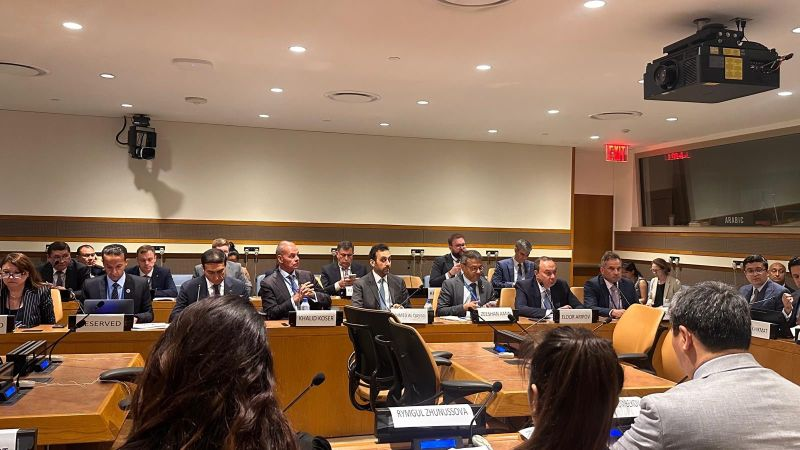
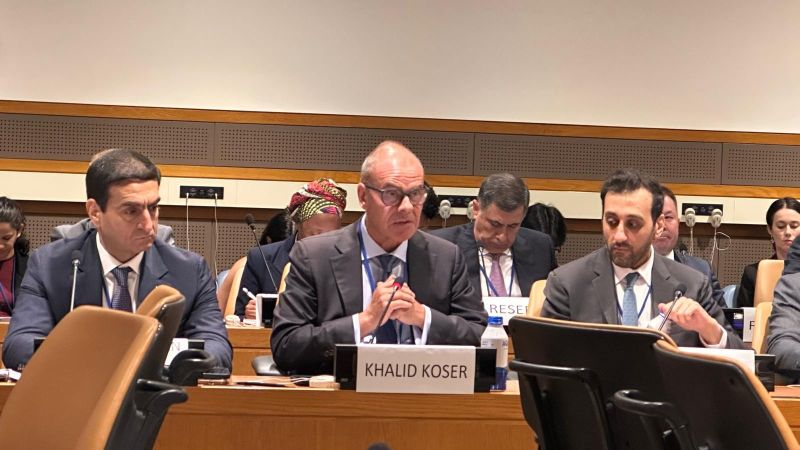
That stark reminder from GCERF's Executive Director @GCERF_ED, Dr Khalid Koser, framed his remarks yesterday at a UN Counter-Terrorism Week side event in New York on the Prosecution, Rehabilitation and Reintegration of Returnees from Conflict Zones.
Kazakhstan, Kyrgyzstan, Tajikistan, and Uzbekistan joined @UN_OCT and @UNRCCA around a shared message: large-scale repatriation can be done responsibly, humanely, and with sustained political will.
Dr Koser highlighted three key lessons from GCERF’s work in the region:
🔹 Reintegration succeeds at the community level
🔹 It requires psychosocial support, education, and livelihoods—not just risk reduction, but restoring belonging
🔹 Central Asia brings real operational experience that can inform global counter-terrorism efforts
GCERF’s role is to bridge national leadership with local delivery—helping community organisations turn strategy into results on the ground.
Central Asia has shown that repatriation at scale is possible. The question now is whether the international community will sustain it through long-term investment.
💐 We are grateful to the European Union for its continued support of this critical work.
@EU_Commission@EU_FPI@Kazakhstan@kyrgyzrepublic@GOVuz@UNOCT@UNRCCA@PalazzoloKatya@GCERF_ED
A child stops seeing friends.
Spends more time online.
Their drawings turn violent.
They insist there's only one truth.
Concerning? Yes. And it's easy to miss.
Our Deputy Executive Director, Dr Lilla Schumicky-Logan, breaks down this subject in her latest piece featured in the 5th issue of The Hub Insights: Emerging Trends in P/CVE, published by @EUPreventionHub.
5 warning signs to watch for:
🔹 Sudden, disproportionate behavioural change
🔹 Rigid, black-and-white thinking
🔹 Justifying or glorifying violence
🔹 Withdrawal & social isolation
🔹 Secrecy + closed online networks
🛡️At GCERF, spotting these signals early — and acting on them — is our work. Across 20+ countries, we support families, schools, faith leaders, and frontline workers to catch the signals before violence escalates.
Read her full piece → https://t.co/xBJumfso5p
@EU_Commission@EUPreventionHub
🌍 The question today is no longer whether prevention works. The question is whether we can sustain it.
At the @UN's 4th High-Level Conference on Counter-Terrorism, GCERF made the case: in fragile, conflict-affected settings, displacement, weak governance & food insecurity are fueling the conditions extremist groups exploit.
For more than a decade, GCERF and our civil society partners have worked at the community level in 20+ countries, demonstrating that community-led prevention builds trust & resilience, even in the hardest contexts.
As Member States undertake the review of the UN Global Counter-Terrorism Strategy, GCERF's call is clear:
→ Sustain investment in prevention
→ Strengthen partnerships with civil society
→ Renew commitment to local ownership
💐 Thank you @UNOCT for the opportunity.
📺 Full remarks: https://t.co/OUE5oTE7ne
#UNiteToCounterTerrorism
@stefanomanservi@GCERF_ED@PalazzoloKatya@UN_OCT