I want to thank everyone that's followed us. This has been a fun story and we've gone down many rabbit holes to discover a lot no one knew. Feel free to comment and retweet. We want this to be a fun and interactive page.
On this day in history, law enforcement arrested Lucky Luciano in Hot Springs, Arkansas in 1936.
While prosecutor Thomas Dewey often received the spotlight, the strategy that brought Luciano down was shaped by assistant prosecutor Eunice Carter. The case centered on allegations that Luciano was the mastermind behind a nationwide sex trafficking operation with prosecutors arguing his organization controlled every level of the multimillion-dollar enterprise.
A grand jury returned nearly 90 indictments—later reduced to 62—made possible by new laws allowing multiple defendants to be tried together. As witnesses began cooperating, Luciano left New York with his girlfriend, Broadway dancer Gay Orlova, and took refuge in Mob-friendly Hot Springs. Notably, he was never officially considered a fugitive, and no wanted posters were ever issued, though authorities knew exactly where to find him and arrested him on April 3.
After briefly fighting extradition, Luciano was taken into custody in Arkansas and transported back to New York under heavy guard. His trial began in May 1936, and by June, Luciano and his co-defendants were convicted.
During the trial, Luciano took the stand himself. Dewey’s cross-examination was relentless, covering everything from finances to alleged criminal connections. In closing, Dewey acknowledged the lack of direct proof, but argued Luciano had risen beyond direct involvement, calling him “the greatest living gangster in America.”
In this photo, Lucky Luciano is seen in custody in Hot Springs, Arkansas, on April 4, 1936. Courtesy of the Cipollini Collection.
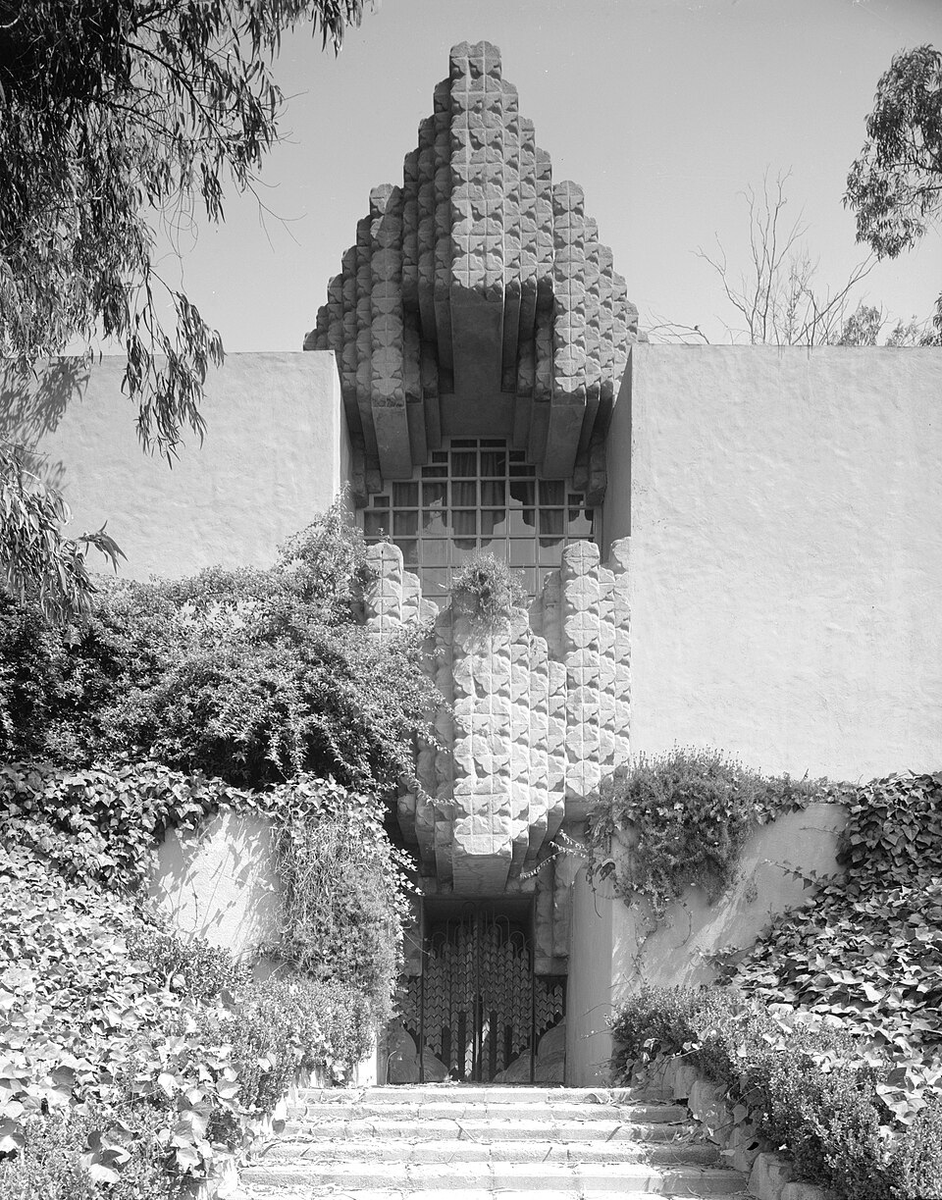
A house this striking was designed to be noticed, but its darkest secrets were meant to stay buried in the basement.
The Sowden House in Los Angeles is a masterpiece of Neo-Mayan architecture, but its beauty hides a jagged past. From 1945 to 1950, it was home to Dr. George Hodel, a primary suspect in the Black Dahlia murder.
His own son, a veteran homicide detective, later became convinced that Elizabeth Short was actually killed and dissected in the basement of this very mansion. While the house has been meticulously renovated into a luxury event space, the heavy, tomb-like atmosphere remains.
Visitors and film crews still report an overwhelming sense of being watched from the shadows of the central courtyard. It is a stunning Hollywood landmark that can’t quite shake the reputation of being an evil place.
What do you think really happened to Elizabeth Short?
In this 1988 photo, men gather outside the Ravenite Social Club in Little Italy, a place where Gambino crime family boss John Gotti regularly did business.
For years, the FBI secretly bugged the Ravenite, capturing hours of incriminating conversations. In 1990, federal agents raided the club, arresting Gotti and several associates, including his lieutenant, Sammy “The Bull” Gravano.
Gotti was charged with racketeering, five murders (including boss Paul Castellano), conspiracy, illegal gambling, loan sharking, bribery, obstruction of justice, and tax evasion. The wiretaps were so damaging that Gotti was denied bail and even two of his longtime defense attorneys were disqualified after prosecutors argued they were effectively part of the criminal enterprise.
Stage & film actress Peg Entwistle was #BornOnThisDay, Feb. 5, 1908. After appearing in 1 film, "13 Women" (1932), battling depression & unemployed she jumped to her death from the "H" on the Hollywood sign 1932, (age 24)#RIP#GoneTooSoon#SuicideAwareness#MentalHealthMatters
𝐌𝐚𝐫𝐢𝐥𝐲𝐧 𝐌𝐨𝐧𝐫𝐨𝐞 & 𝐉𝐨𝐞 𝐃𝐢𝐌𝐚𝐠𝐠𝐢𝐨 on their honeymoon.
They were married on January 14, 1954, at San Francisco City Hall. Their trip to Japan in February, followed shortly afterward.
They were married less than a year.
#MarilynMonroe#JoeDiMaggio
Marilyn Monroe house legal drama: property owners leapfrog over own appeal to file Federal case seeking jury trial. "Worthless" landmark can in fact be moved, maybe the Palisades, where many similar 1920s Spanish homes were lost. https://t.co/Rps9D2Fp2j
Susan Sarandon backed an effort to raise funds for a memorial tribute to Lamarr & her achievements in the world of technology. The grave-side memorial incorporates 88 steel rods representing the 88 frequencies in Lamarr’s patented frequency hopping technology.