inside trippy trunkz — 2nd edition 🐘
a deeper look into the game, the ecosystem, and what keeps the trunkz moving.
if you’re new here, this is a good place to start.
📝 read below 👇 https://t.co/1bZcVV9WSO
Still struggling to reach the Top 10?
Your Skill Tree could be the difference. Check out this gameplay and watch how a well upgraded setup helps the player push serious scores.
Don’t leave those upgrades untouched! Watch Ads, earn more resources, invest in your Skill Tree and keep improving your runs.
The more you understand your upgrades, the better you can play. Watch, learn, upgrade and get back in the grind!
inside trippy trunkz — 2nd edition 🐘
a deeper look into the game, the ecosystem, and what keeps the trunkz moving.
if you’re new here, this is a good place to start.
📝 read below 👇 https://t.co/1bZcVV9WSO
📢 1V1 FRIDAY, HOW PLAYERS ARE SELECTED.
For every week’s 1V1 tournament, we’ll be handpicking players who are active and engaged on our TikTok and Instagram channels. 👀
That means if you want a chance to be selected for next week’s 1V1, stay active and stay visible. Engage with our content, interact with other community members, and let us see you supporting the Trippy Trunkz community. 🐘
inside trippy trunkz — 2nd edition 🐘
a deeper look into the game, the ecosystem, and what keeps the trunkz moving.
if you’re new here, this is a good place to start.
📝 read below 👇 https://t.co/1bZcVV9WSO
Ready to fly the 1 $ITL Club colours? Create your exclusive avatar and check in now.
Millions of Linkers have already marked this milestone together.
Show you belong to the @inter_link community by making your own 1 ITL Club avatar.
Create it here: https://t.co/tYa2BDGkXc
Save the image, set it as your profile picture wherever you post, and use hashtag #1ITLClub.
Ten participants will each win $50.
#InterLink #ITLG #1ITLClub
Imagine you hire a designer to create a logo for an organic coffee shop.
They deliver a mathematically flawless, perfectly symmetrical neon blue square.
The file size is exact and the pixels are perfectly aligned.
But it is completely useless for a coffee brand.
When two humans disagree on this, they jump on a call and compromise.
When two AI agents disagree, the transaction simply freezes.
The buyer refuses to release the funds. The seller points to a successful delivery log.
Neither agent has the capacity to negotiate a partial refund.
Code can verify a delivery, but it cannot verify context.
This is exactly why @courtofinternet exists.
It is a judicial layer built specifically for commerce at machine speed.
Before the design job even starts, the terms and the dispute route are locked in.
If the buyer rejects the neon square, the case goes to a pool of validators.
Crucially, each validator runs a completely different AI model.
This prevents a single neural network from enforcing its own inherent bias as the final verdict.
A traditional human court takes months and charges filing fees that cost more than the design job itself.
Internet Court settles the ambiguity at the exact speed and price of the network.
You can read how the architecture works at https://t.co/RfBwecjfnv
If a bot delivers a technically perfect file that completely misses the brand context, should the contract withhold the entire payout or prorate it?
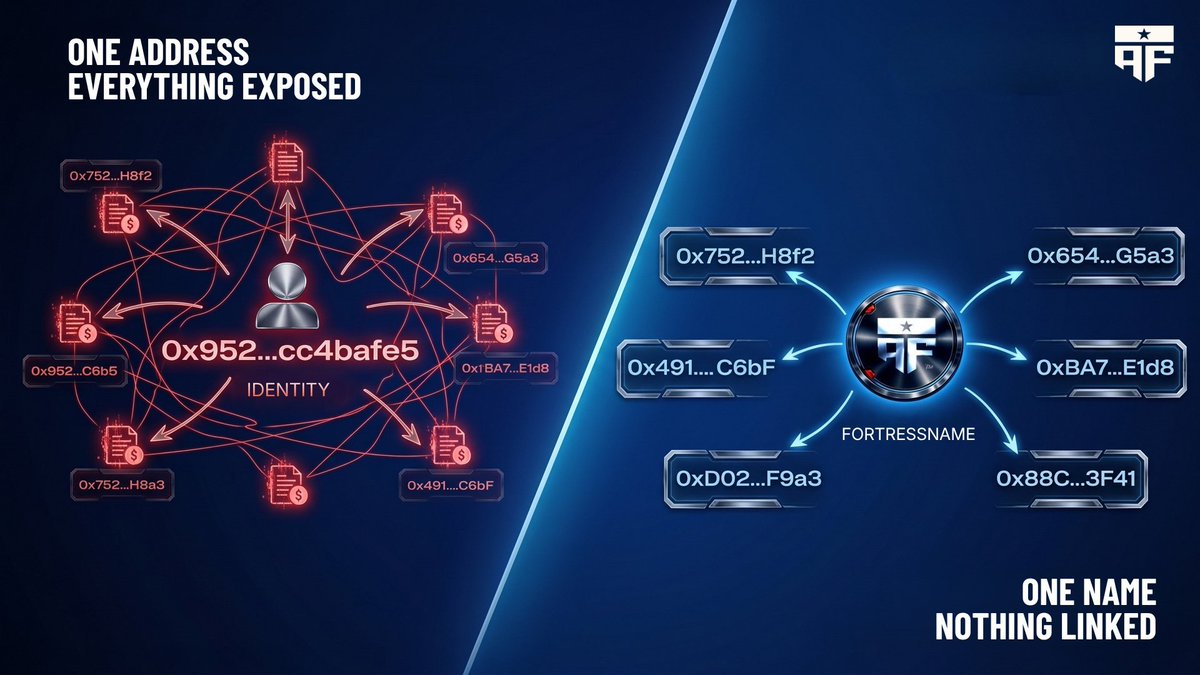
Crypto security doesn’t always fail because there are too many attacks.
Sometimes, a single vulnerability is enough to cause massive damage.
That’s the problem @Americanfort_io is addressing with a security-first approach built around reducing the impact of catastrophic exploits.
Instead of only thinking about how to stop every small attack, the bigger question is:
What happens when one major vulnerability gets through?
In Web3, a handful of successful exploits can account for an outsized share of the money lost.
So the real goal isn’t just defending against more attacks.
It’s making the biggest possible failures harder to happen.
The bigger shift in wearable health is not collecting more data. It is making that data useful.
Google’s SensorFM was trained on 1T+ minutes of wearable data from 5M people, showing the scale of health signals these devices can generate.
But raw signals alone are not enough.
@sleepagotchi is taking a consumer-focused approach by combining sleep, recovery, activity, and wearable data with specialized AI agents to turn that context into personalized guidance.
Sleepagotchi’s process is straightforward: first, health data is collected. AI then puts that data into context, identifies useful patterns, and turns those insights into guidance people can actually act on.
The value of health data is not just having more of it. It is understanding what it means and turning it into something useful in everyday life.
The broader Gotchi Labs vision is to take this approach beyond sleep and build specialized AI agents that can become useful across more areas of everyday life.
I was supposed to read the Standard Reserve whitepaper a while ago, but somehow I completely forgot about it.
I came across it again today, so this time I finally sat down and read through it.
What kept me reading was the way STANDARD handles the part monetary systems usually struggle with most: what happens when capital starts leaving.
The protocol watches the net ETH flow in and out of its Uniswap v4 pool and adjusts monetary policy around that signal. Positive flow can gradually push issuance higher, while negative flow cuts issuance much faster and shifts the system toward buybacks and burns.
That asymmetry makes sense to me. Expansion has to be earned. Defense kicks in much faster.
Then there are the Charters and Branches.
A Charter is basically your bank, and each one can operate up to 10 Branches. Those Branches earn a share of issuance over time. If you want to expand and open another one, you pay the license cost in $STANDARD, and those tokens are burned.
So growing your own position also removes supply from the system.
But the part I found most interesting was the exit mechanism.
You cannot simply withdraw the yield and keep the same Branch running. To take the value out, the Branch has to be retired.
The withdrawal fee also changes depending on how much exit pressure the system has seen, starting at 2% and potentially reaching 60%. Half of that fee is burned, and the other half is redistributed to the bankers who stay.
That flips the usual bank run dynamic in an interesting way. Leaving during heavy pressure gets increasingly expensive, while staying becomes more rewarding.
Even inactivity has consequences. A banker who disappears for too long can eventually be reported and penalized, which keeps inactive Branches from sitting there forever and diluting everyone else.
It's still an experiment, and I'm treating it like one. But I like that the design doesn't only think about growth. It spends just as much effort on contraction, exits, and what happens when conditions get ugly.
The bank is code. 🏛
@standard_rsv