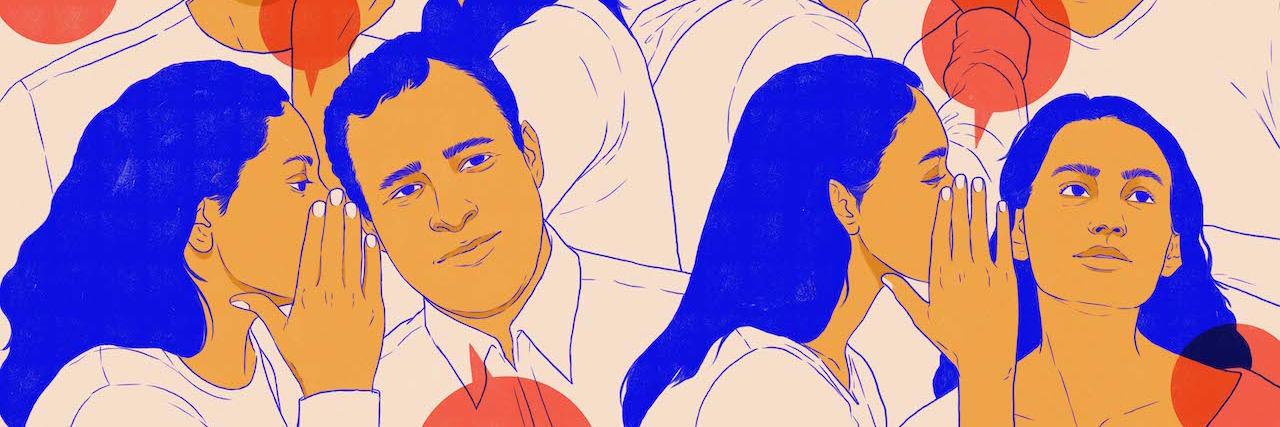
“The biggest thing here is, if you call this fake, it’s just gender inequality. If the roles were reversed, what do you think would happen?” Chirayu Rana, the 35-year-old Nepali American at the center of one of Wall Street’s biggest scandals, told The Juggernaut.
Rana just had a brutal few weeks. On April 27, he had filed a lawsuit anonymously, claiming a female executive at JPMorgan had sexually abused him and called him anti-Brown slurs, only for his identity to be outed. Soon after his interview with us, the world would find out that Lorna Hajdini, the accused executive, had filed a countersuit, claiming that Rana’s allegations were defamatory.
On paper, Chirayu Rana seems like any other child of immigrants. He graduated from Rutgers, played soccer, and worked at prestigious firms like Credit Suisse, Morgan Stanley, and JPMorgan. But his most recent claims, which JPMorgan and Hajdini have vehemently denied, upend that trajectory.
The scandal is a lurid tale that either proves a serious cover-up at one of the world’s largest banking institutions or one of the biggest fabricated accounts in Wall Street history. So: who was telling the truth? The Juggernaut spoke to Chirayu Rana himself, corporate employees, and Rana’s high school friend. We reviewed Rana’s and Hajdini’s court filings as well as leaked screenshots and emails provided to us. What we found was even stranger than fiction.
Read the full story by @TulikaBose_ below 🔗
Additional reporting by @snigdhasur
https://t.co/htM8lsziGF
India says it’s building the world’s largest museum by display size 🏛️
On November 11, India’s Cabinet Committee on Economic Affairs approved a $345 million-plan (₹32.3 billion) for the Yuge Yugeen Bharat Museum in Delhi. The name roughly translates to “India through the ages.”
The project will repurpose the government offices at the North and South Blocks, which British architect Herbert Baker designed in the 1910s. The South Block was home to the Prime Minister’s office from independence until February 2026, when Narendra Modi moved it to Seva Teerth. Now, the buildings will serve as a museum to trace 5,000 years of Indian history, “right from the advent of civilization,” culture secretary Vivek Aggarwal told ThePrint.
The government plans to build more than 1 million square feet of display space. Paris’s Louvre has a display area of about 786,000 square feet while London’s British Museum has only 753,000. In 2024, India’s National Museum enlisted France’s Muséums Développement to assess the project’s feasibility and help decide how to present the the exhibits.
Indian curators have identified around 1.8 million objects for display, drawn from the National Museum, other Ministry of Culture museums, 52 Archaeological Survey of India site museums, state museums, and private collections.
The first gallery, which curators plan to dedicate to “adornment” — how people decorated themselves over time — is expected to open in late 2027. Other planned themes include architecture and cityscapes, mathematics and astronomy, faith and spirituality, languages and scripts, and trade. India hopes to complete building the museum by 2031.
Curators also plan to preserve the historic facades of the North and South Blocks while converting the courtyards, corridors, and rooms into exhibition spaces. Once fully operational, the museum could accommodate up to 10 million visitors per year.
Before it was the James Bond theme, it was a song for an Indo-Trinidadian musical 🎷🕵️
When Albert Broccoli asked Monty Norman to compose the 007 theme, Monty returned to a song with “traditional Indian instruments” he’d written for A House for Mr. Biswas, an unstaged musical based on V.S. Naipaul’s novel.
Monty loved the song, which had a sitar melody. To make it fresh, he split the notes — with the iconic tune debuting in Dr. No (1962).
While in Agra, he described a cremation in a letter: “There are many Europeans on a journey here…they only see the beautiful side of the things, and that’s not the most interesting.”
Passet’s color photos used the Lumière brothers’ autochrome process, which became commercially available only in 1907. The method filtered light on a glass plate with grains of dyed potato starch. The plates needed long exposures, so moving subjects could easily blur. One of Passet’s clearest photos is of Delhi’s Jama Masjid. “The crowd carried out synchronized prostrations…so I now have color images the like of which you have never seen before.”
By the end of Passet’s trip in January 1914, he had 400 color photographs and 49 minutes of silent film, including of people bathing in Varanasi.
Passet kept taking photos, capturing France in World War I; he died in 1941. NatGeo published his China and Mongolia photos, but his India photos were widely available only decades later, at France’s Musée Albert Kahn.
This September marked 25 years since 9/11, a day of horror and heroism. But the date also marked something else: 25 years since her family had seen Sneha Philip, a 31-year-old doctor who had gone shopping at Century 21 the day before and then disappeared. Every explanation for what precisely happened has remained disturbingly grim. In one version, she ran toward the World Trade Center, helping victims and survivors before dying. In another, she left town in a Gone Girl-esque fashion, faking her own disappearance so she could free herself from her responsibilities.
But none of these explanations have ever sat right, including with journalist Jon Walczak and former federal prosecutor Richard Signorelli, who — just a few weeks ago — tweeted at the New York attorney general to reopen Sneha Philip’s case. The Juggernaut spoke to Signorelli and Walczak — and pored through legal documents — to bring you part one of a series on who Sneha Philip was and what the hell happened to her. “This is the hardest story,” Walczak told The Juggernaut. “[It’s] going to frustrate you at certain points…there’s a lot about this story that doesn’t add up.”
GTA VI fans can now listen to Bengali disco, Charli xcx, and more 📻
Players can flip through 23 radio stations, featuring gems like Rupa Biswas’s 1982 disco track “Aaj Shanibar” and Indo-Surinamese singer Wim Damri’s “Ies Manziel,” a 1989 cover of “Careless Whisper.”
You can also hear “Fanga” by Indian American DJ Narasimha, “Good Ones” by Charli xcx, and “Give Me All Your Luvin’” by Madonna feat. Nicki Minaj and M.I.A.
A November 18 Pew Research study estimates that Pakistan will have the largest Muslim population in the world by 2070, overtaking Indonesia 🌏
The report examined how “seven religious groups will change globally between 2020 and 2070 if recent demographic trends continue.” The global population is projected to grow 29%, with only two of the religious groups it analyzed (Muslims and Christians) keeping pace with that growth. “As a result, the size of many religious groups will change relative to the world’s overall population,” Pew wrote.
Other trends include a larger share of people in North America and Europe identifying as religiously unaffiliated by 2070, while Buddhism is expected to experience a significant decline.
In contrast, the global Muslim population is estimated to grow by 80%, totaling 3.6 billion people by 2070. Much of this is due to a higher fertility rate (3.1 children per woman globally compared to 2.0 for non-Muslims). The global non-Muslim population is projected to grow by only 11%. The world’s largest religion by 2035 is expected to be Islam, surpassing Christianity.
Pew also estimated demographics at a country level. By 2070, Indonesia would no longer be home to the world’s largest Muslim population — Pakistan would (461 million), followed by India (334 million), Nigeria (282 million), Indonesia (274 million), and Bangladesh (218 million).
The report expects the global Hindu population to grow to 1.4 billion, while its share of the world population declines from 15% to 14%. India will remain home to the most followers (1.29 billion by 2070), but the Hindu share of its population will decline from 79.4% in 2020 to 75.8% by 2070. Both share declines are largely due to fertility rates being below replacement level.
Because of migration, the U.S. is expected to surpass Indonesia to have the world’s fifth-largest Hindu population, after India, Nepal, Bangladesh, and Pakistan. Pakistan’s Hindu population is also expected to grow.
What do you think of the projections?
Salman Rushdie is the first Indian-born author to win the National Book Awards lifetime achievement award 📖
He is the 39th recipient, for his “exceptional impact on…literary heritage,” joining the likes of Toni Morrison and Stephen King.
Rushdie has written 23 books, including the Booker-winning Midnight’s Children, Shame, and The Satanic Verses, the latter which led to a fatwa. In 2022, Rushdie survived a stabbing, which he recounted in Knife.
Happy 75th birthday to Zeenat Aman, who made revenge look so good 👠🔥
In Don (1978), Aman’s Roma joins Don’s gang to avenge her brother. She serves attitude, action, and impeccable suits. “She was smart, daring, and smooth,” Zeenat Aman wrote. “Who wouldn’t want to embody such a woman!”
The first Indian to win Miss Asia Pacific, Zeenat Aman went on to conquer Bollywood. Now, a new fanbase is obsessed with her Instagram posts.
“‘You look like you’re from the village,’” said Divyanshi Chauhan, a 22-year-old content creator, calling out the “insult” in an Instagram reel. “Everybody’s from the village, Shanaya,” she claps back. “Do you think your ancestors were born in Bandra next to Boojee Cafe? Eating avocado toast? Don’t disrespect somebody else just because you reached the cities faster. We are Indians. Obviously, we’re from villages. Oh my god.”
That one 13-second video, posted on April 19, 2026, took the internet by storm, only to go viral yet again in the past few weeks. By November, Chauhan’s reel had racked up over 36 million views and 2.5 million likes. People have mimicked the audio and made their own versions. “Everybody was once short, Shanaya,” one creator posted. “Everybody has dark skin tone, Shanaya,” another said. “This past week has been fun for me on the internet,” Chauhan told The Juggernaut in her first (!) interview. We chatted about who “Shanaya” is, how she made her viral reel, her favorite reenactments, and much more.