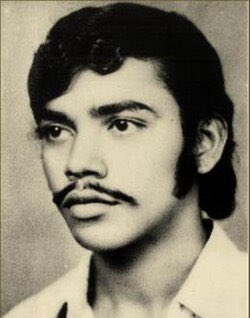
Her name was Shubha Shankaranarayan.
She was 21 years old, a law student in Bengaluru. She was in a relationship with Arun Varma, her 19 year old college junior. Her father did not approve and arranged her engagement to someone else.
On November 30, 2003, Shubha got engaged to B.V. Girish, a 27 year old software engineer. His family celebrated. His future seemed set.
Three days later, Shubha called Girish and suggested they spend some time together before the wedding. She proposed dinner and then a stop near HAL Airport to watch planes take off from the viewpoint on Inner Ring Road. He agreed.
While Girish stood looking at the runway, three men attacked him from behind with a motorcycle shock absorber. Shubha stood nearby and screamed at the attackers to stop, pretending to be shocked.
Girish suffered severe head injuries. He died in hospital the next morning.
His family filed a police complaint. At first, investigators found nothing. Girish had no enemies, and suspicion did not fall on Shubha because the engagement had happened just days earlier.
Then police reviewed the engagement video. Shubha appeared unhappy and disinterested throughout. Her expressions did not match someone who had just gotten engaged.
Investigators dug deeper. They discovered that Shubha had made 73 phone calls and exchanged numerous messages with Arun Varma on the day of the murder.
When confronted with the evidence, she confessed.
The murder had been planned even before the engagement. Shubha wanted to be with Arun Varma, so she, Arun, and two hired men planned to kill Girish.
Girish had been engaged for just three days.
In July 2010, all four were convicted and sentenced to life imprisonment. The Karnataka High Court later upheld the verdict. In 2025, the Supreme Court also upheld all four life sentences.
The Supreme Court observed:
"Shubha chose a tragic and unacceptable route to address her personal issues, which led to the loss of a young and innocent life."
He went to watch planes take off with his fiancee.
He never came home.
Repost this. Some stories should never disappear.
His name was Rajan.
He was a final year engineering student at the Regional Engineering College in Calicut, Kerala. His father, T V Eachara Varier, was a Hindi professor at the Government Arts and Science College in the same city.
On the morning of March 1 1976 the police came to the college campus and took Rajan away.
India was under Emergency. Civil liberties were suspended. Courts had effectively turned away.
His father found out the next day from the college principal.
He went to every police station in the district. No one admitted to having his son.
He met the Home Minister of Kerala, K Karunakaran, directly.
He sent petitions to the Home Secretary of the Government of Kerala three times. Not a single reply or acknowledgement came.
He wrote to the President of India and the Home Minister of the central government, with copies to every Member of Parliament from Kerala.
Nothing.
What Eachara Varier did not know at the time was that his son had been taken to an illegal police interrogation camp at Kakkayam.
He was tortured.
A practice called uruttal was used, where a heavy wooden log is rolled over the body of the victim.
Rajan died from his injuries. His body was disposed of by the police and was never found.
When the Emergency ended in 1977 Eachara Varier filed a habeas corpus petition in the Kerala High Court.
It was the first such petition filed in Kerala after the Emergency.
He did it without legal training, without political backing, without money.
He had spent everything searching for his son.
The court case slowly unravelled the truth.
It forced K Karunakaran to resign as Chief Minister of Kerala in 1978 when the adverse judgment came.
Rajan’s mother became mentally unstable from the grief. She died in 2000 still not knowing where her son was.
Eachara Varier wrote his memoir, Memories of a Father, which won the Kerala Sahitya Akademi Award in 2004.
In its final lines he wrote, “I don’t close the door. Let the rain lash inside and drench me. Let at least my invisible son know that his father never shut the door.”
He died on April 13 2006. He never found his son’s body.
Rajan was picked up from his college campus on a March morning in 1976. He was never seen again.
Repost this. Some stories must not be allowed to disappear.
1. Just got off a call with @UnSubtleDesi. I couldn't be happier for her and both of us couldn't help but discuss the harrowing days of post poll violence in West Bengal in 2021. So I am going to share what happened five years ago just so ppl know what happened. #WestBengal2026.
10 Forts in Andhra Pradesh that are worth a visit
These forts are known for their history, and heritage.
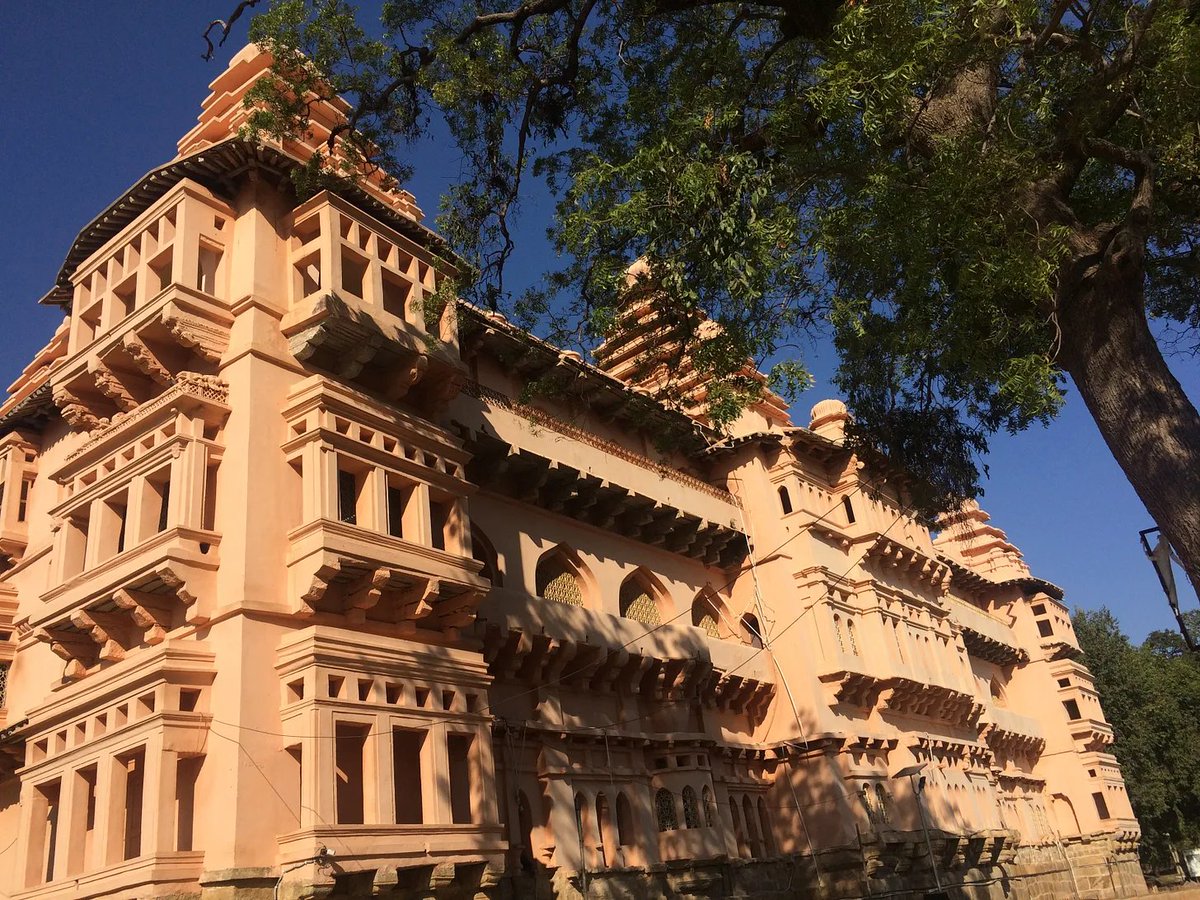
1) Chandragiri
The summer capital of Vijayanagara Empire near Tirupati, originally built by the Yadava rulers in the 11th century later captured by Kapilendra Deva Gajapati. As it was built in an area resembling a half moon at the foothills, the place was named as Chandragiri.
It was taken later by Saluva Narasimha Raya, following which it came into prominence during his time, as the second capital after Hampi. It was also the home town of Timmarasu, aka Appaji, the wise minister of Sri Krishna Deva Raya .
Sri Krishna Deva Raya, lived in Chandragiri as a prince for some time, before his coronation. In fact, he used to stay here whenever he visited Tirumala, the Srivari Mettu an old stone pathway to the hills, starts from here.
Welcome back to Amravati Mr Bill Gates.
Way back between 2009-10 when Andhra Pradesh was still a single state, your Foundation funded HPV Vaccines in the state along with Gujarat.
Over 23,000 girls, mostly from poor tribal and rural families aged 9-15, received doses of Merck’s Gardasil and GSK’s Cervarix. Most of them from Khammam dt, which was then part of AP.
7 died, out of whom 5 were from Andhra Pradesh,other 2 in Gujarat.
Investigation by a standing parliament commitee in 2013, found major lapses.
Consent was often obtained via school principals rather than parents, many illiterate.
No proper counselling, participants lacked insurance.
This actually led to temporary restrictions on the Foundation’s role in national immunization.
In a serious country, your Foundation would be asked to shut down. And you would never be allowed to enter.
But don't worry, we will not only welcome you, but also allow you to influence our Healthcare, Agriculture, Tech policies .
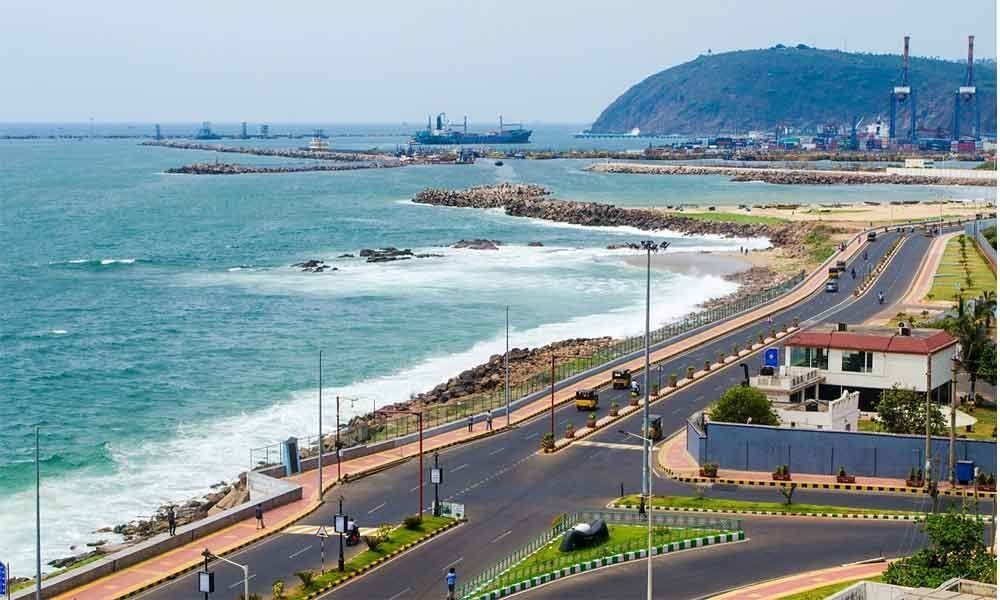
This is not true. AP goverment is focusing on IT and Data centres in #Visakhapatnam.
Actually, Visakhapatnam Rahajmundry NH16/ AH45 is Vajapayee era road. Still in DPR as no pressure on NHAI.
Goverment of AP did not approve Highway connecting new Alluri Sita Rama Raju Airport to core city (beach corridor). No flyovers. No budget. No Semi Ring Road
State focus is on IT & Pvt investments not logistics infra of Visakhapatnam.
High Speed Rail, Outer Ring Road, new roads bridges flyovers all in Amaravati region.
NO, THANKS!🙏🏼
All thanks to central government!!
It was very wrong on your part to author a book on Indo-China conflict 3 years after the event..
Indians gave your respect and love..Tax payers paid salary and perks for your services in the armed forces..Tax payers are still paying for your pension and perks..
Tell me in all this, where does the book come in between?
For thirty pieces of silver you sold your soul..
Shame on us for letting a man of weak character like you, to become our Army Chief.
Thirupparankundram is the First of the Six Abodes of Lord Murugan (Kartikeya). The practice of lighting lamps atop the hill during the Tamil month of Karthigai is an ancient tradition of Hindus. It is sad and ironic that today the Hindus in Bharat have to seek judicial interventions to practice their faith and perform their rituals. If, even after winning a decisive legal battle, devotees cannot perform a simple, peaceful ritual on their own property, then where, in their own country, shall they truly find constitutional justice?
In short and simple, let all the Hindus in Bharat understand this - The bitter truth is - The Chennai High Court affirmed our right to light the Deepathoon - first by a single judge, then upheld by a higher bench. Legally, the battle was won. Yet, practically, we were forced to adjust.
Ask yourself - Can any religious festival be moved a week late? Can a holy day's celebration be shifted to a different time? No. Because the sanctity of religious time and the integrity of every religious calendar is non-negotiable.
Yet, for Sanatana Dharma, the moment—the sacred Karthigai Deepam—was stolen, vanished forever. Why? Because Hindus can be taken for granted. Sometimes it's the governments, sometimes it’s the executive, sometimes it’s the NGOs, sometimes it’s a random pseudo intellectual groups – but every time, it is Hindus who accept the loss and adjust. We secured the right, but lost the ritual. This repeated, systemic denial is why a time has come to demand more than just court victories - We need the Sanatana Dharma Raksha Board where devotees actively manage their own temples and religious affairs.
Mockery of Hindu traditions and rituals has become a norm for certain groups. Do they dare to do the same for other religious events?
Does Article 25 become an optional right instead of a fundamental right to the Hindus? Can a Police Commissioner or a District Magistrate unilaterally nullify a specific High Court Directive? If the High Court confirmed the Deepam lighting was a "harmless religious act" on legally owned land, who decides that this practice constitutes a threat to "communal harmony," and by what legal mechanism? How come HR&CE Department consistently and repeatedly act against the interests of Hindu devotees and their temple's traditions, and how do these officials evade serious accountability?
Hindus should observe the collective spirit and solidarity shown by practitioners of Abrahamic religions (religions of Arabian origin) when religious issues arise. They overcome their ethnic, regional, and linguistic differences for the sake of their faith.
As long as Hindus remain divided by caste, regional, and linguistic barriers, the mockery, insults, and abuses against the Hindu religion and its practices shall continue. If Hindus in our nation don't unite under a common minimum program with the collective spirit of Hindu Dharma (or Aram in Tamil), this spirit will be lost.
I hope for a day when every Hindu from Kashmir to Kanyakumari and Kamakhya to Dwarka wakes up to the humiliation Hindus face in their own land.
#Tiruparakundaram
#SanatanaDharmaRakshaBoard
@Schandillia The knowledge of gun power travelled from India to China you idiot. Do read some primary sources before blabbering on a practise you are not aware of
Vizag being HQ of Eastern Naval Command, a major port, steel plant, PSUs like HPCL, Hindustan Shipyard, BHEL, companies like Coromandel Fertilizers, Essar has seen a large number of people from all over India come here to work and settle down, making it a mini India of sorts, a truly cosmopolitan city. Apart from Telugus, the other main communities.
Odiyas- One of the largest groups, most of them are in Steel Plant, Railways. Also being part of princely Jeypore state, Vizag always had a significant Odiya presence. There are also Telugu Patnaiks, Patros, Mishras mostly Odiyas settled here since long. There is a Jagannath Temple also at Dasapalla Hills.
Bengalis- Very active presence in Railways, and most PSUs here. Durga Puja is grandly celebrated, especially one at Railway grounds. And the Kali temple on Beach Road.
Mallus- Mostly were in nursing, teaching, small businesses. They owned most of the bakeries once, now am not sure. They are well integrated, most Mallu friends I had used to speak Telugu like anyone.
Tamils- Again another group that has integrated well, speak Telugu like anyone, spread into all the fields.
Punjabi Hindus- Majority in Navy, but good number in trading and business too.
Sikhs- They are mostly in Automobile business, check 75 feet road, all shops owned by them. And they do speak fluent Telugu, it's only the turban that distinguishes them.
Anglo Indians- Used to be a fairly large community once, most of them in Port, Shipping, Railways. But most of them have migrated to Australia, Canada, UK. There is a good number still there in Gnanapuram.
Marwaris, Sindhis, Gujjus are mostly in trading and business, there is one Sindhi Enclave in One Town area.
Northies again are mostly in Navy, PSUs, Steel Plant, you find them settled there. And of late most of the migrant labor from Hindi belt too.
There are also Kannadigas, Marathis settled in Vizag though not in very large numbers.
It's actually not that difficult to reform the UPSC
Separate the exams. There is no way in the world that one exam centering around GK, history & Urdu literature can gauge a person's competency to do diplomacy, administration, policing, taxation, manage govt communications or railways.
Each needs its own competencies and has to be evaluated at the screening itself. Not till training.
What this will also do is enhance the prestige of other services. The IRS will be the IRS and not the "I didn't get IAS".
Stop this thing of people who qualify for a service, then take a long leave to attempt the exam again, all for an "upgrade".
This is a disgusting practice
First it defines a hierarchy amongst services where ideally there shouldn't be one.
This also goes against the purported fairness of the exam as a person with a secure govt job is in a much better mental position to perform against a person with no back up & has hitched all hopes on this one exam.
If you want to write again for a "better" service, please do so. But resign from your current position before doing it. At least someone willing may take it up. It is surprising that the govt hasn't shut this loophole till now.
Speaking of hitching all hopes on one exam, Restrict the number of attempts for UPSC.
You can't have a group of young productive people wasting the prime of their years to clear an exam failing which they become unemployable.
Restricting attempts will ensure 99% of the people who will fail, explore other options and not give the exam like Groundhog day.
Restricting the number of attempts will also do two other things
First it will ensure only intelligent people get thru, not the ones who have cracked the exam algorithm thru repeated attempts.
Second it will ensure depressed souls don't enter the service. Because these people then become entitled, treat the public with contempt & believe all that moolah they illegally take is their right.
Then For all services where there are state & central components, unify the exams. Create one merit list and then allocate states to candidates via lottery. This will ensure your bureaucracy is always full and prevent instances where states don't conduct public service exams for years.
Make UPSC like the army SSC where the initial period of hire is 5 years. Post that, for every 1000 people let go 900 and retain the top 10%
Don't airdrop people as DMs, SDMs and other senior levels. Make them start from the lowest possible level and make them work their way upwards.
Remove job permanence
Remove automatic promotions
For the central positions, create a 50 - 50 system where 50% will be industry experts nominated by the govt and the other 50% come from the state services guys who survived
For everyone who comes from state services, they have to go thru another round of testing by industry and academic experts to determine their suitability for central positions
Link Legislature and executive. If you want your elected reps to govern, give them the power to govern.
Because today they have no control.
You ask your MP for a road, he has to forward it to the MLA, who then has to request the corporator who then has to plead with the unelected babu of the municipality, if it gets that far. Mostly it gets lost in the Chakravyuh of Indian babudom.
Create a reporting structure where the bureaucrats report to the MLA with a dotted line reporting to MP. Give them the right to fire babus with cause if they don't perform. Make them responsible for their promotion and appraisal.
Today the executive doesn't have to listen to the legislature. Make them
Take discretionary decision powers away from the babu. It is the remit of the elected to take decisions not unelected babus. Stop all district singhams
Make the govt job as just another job. No cars, no bungalows, no servants and no attendants holding an umbrella in the rain. Make it just another job, where instead of working for a company you work for the govt
Madame @nsitharaman this is not acceptable. You have failed to stamp out systemic corruption in our ports. Please stop this. You are our FM and our PM @narendramodi had promised us corruption free rule. You have also failed to stop TAX TERRORISM. Please see the table you yourself presented in your last budget. I hope you have seen it. Rs 30l cr stuck up in tax disputes, 15 cr said to be recoverable- ~80% + in last 5 years! 15l cr deemed non recoverable- no assets, no assessee. Please act. @FinMinIndia Sad to read this data. @AmitShah
We are sorry….
Col Ashutosh Sharma
Maj Anuj Sood
We are sorry…
Sub Sanjeev Kumar
Paratrooper Chhatrpal
We are sorry….
DSP Humayun Bhat
Hangpan Dada
We are sorry….
Capt Pawan Kumar
Capt Tushar Mahajan
We are sorry….
Capt Vikram Batra
Capt Saurabh Kalia
We are sorry….
Maj Akshay Girish
Sep Suresh Kumar
We are sorry 🙏🏻
We will never be able to look into the eyes of your families
Please forgive us….
#BoycottINDvPAK
#BoycottAsiaCup
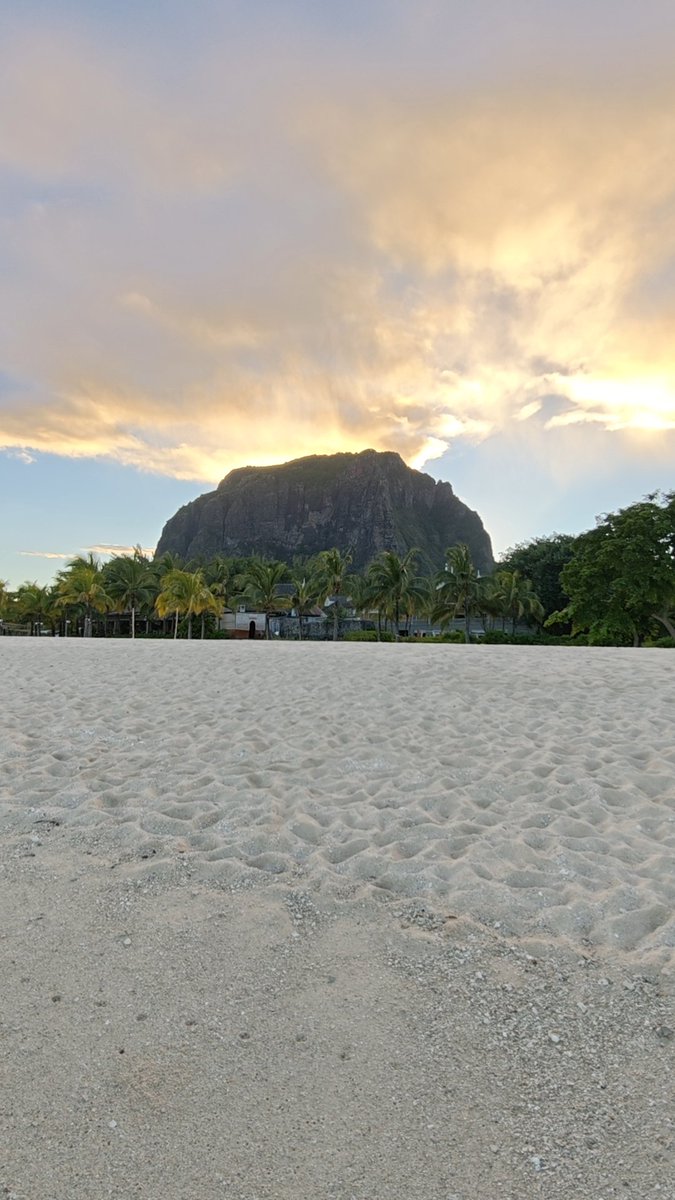
(1/n) Lately, mom & I have travelled to #Mauritius for vacation. 🇲🇺🦤
It was an 11 day long trip to Paradise Island.
This trip was planned to learn the Culture of Mauritius as well as,get some good Rest.
Here is a thread on how we enjoyed a good vacation 🧳
#ccgeek#avgeek
Seeing how some Tamils cling to the Kīļadi legacy, we sympathize, but do remind them that it's still younger than Sinauli, not to mention the RgVeda & Rakhigaŕhi. It's good that Tamils have some sites to be proud of, but it won't change India's history.
https://t.co/0kLHzOZs8i
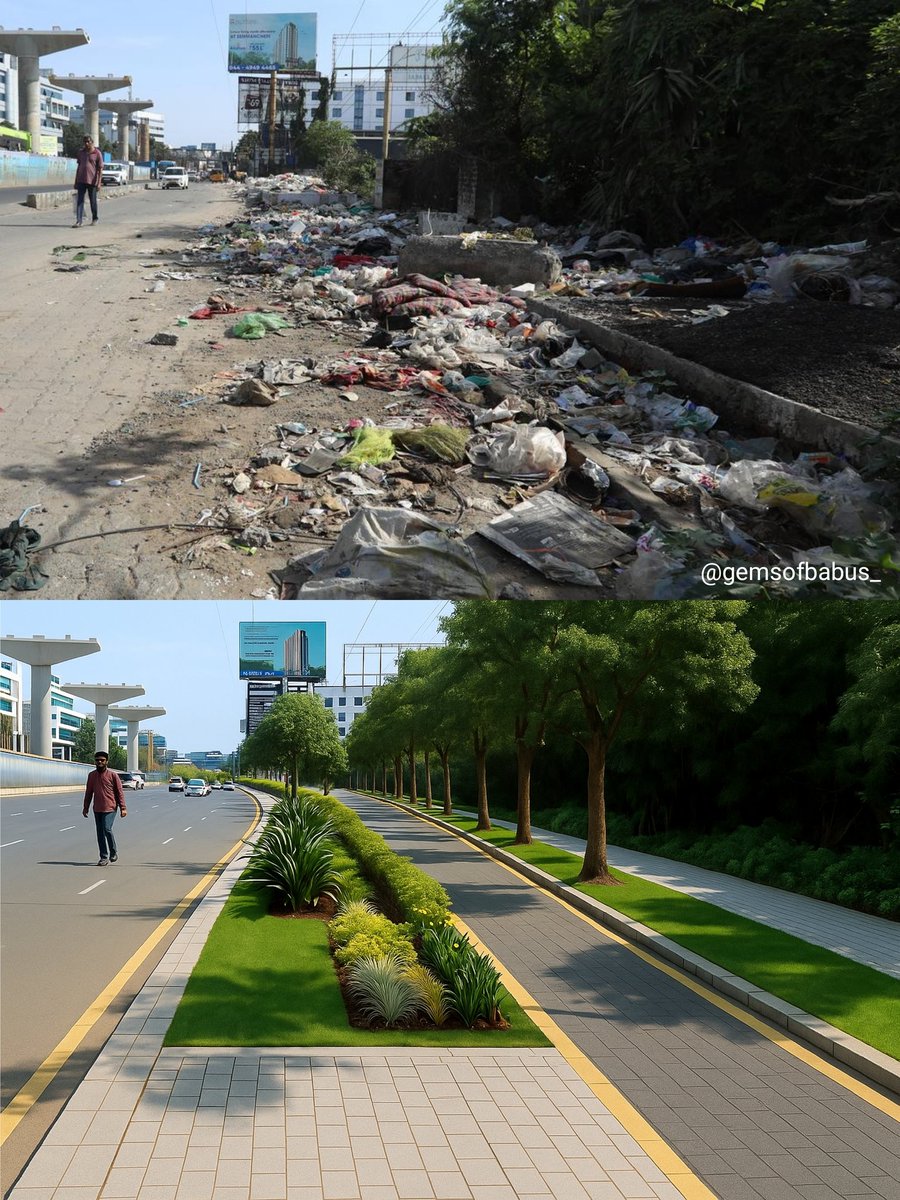
Tamil Nadu might have aced attracting FDI, but completely failed in Waste Management.
This is the IT corridor of Chennai — a capital city with a GDP of around $100 billion. 🤡🤦♂️