After the recent @Kalshi debacle on social media, I'm looking at new potential competitors to @Polymarket.
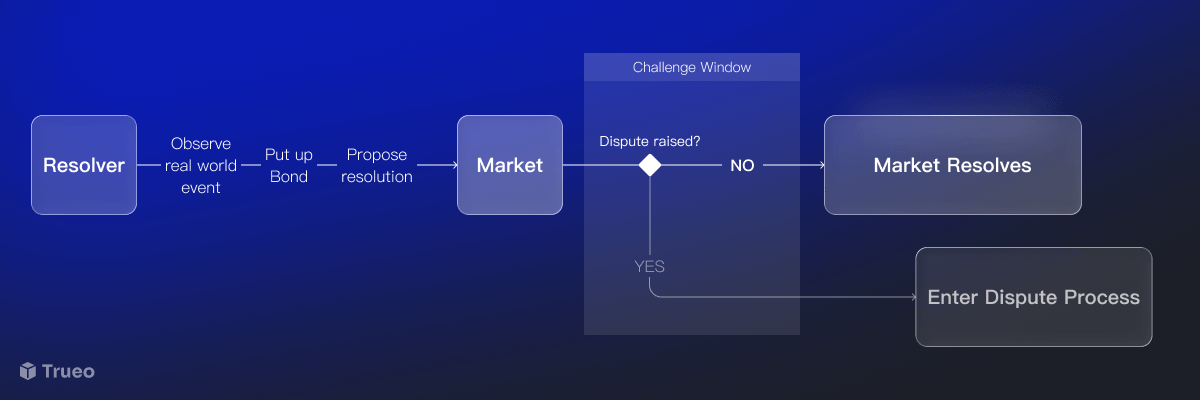
And @Trueo_ might be the one. The most interesting thing I found is their appeals process for disputed markets.
If a result gets challenged, it can move through several layers:
→ Oracle Council
→ $TRUE holders
→ 11 randomly selected, reputable attesters for the final verdict
This feels especially relevant after Polymarket’s $80M+ Strategy market resolved “No”, even though @Strategy had sold 32 BTC during the specified period. The dispute came down to when the sale was publicly confirmed.
Trueo is also moving from Base to Ethereum L1, which makes sense if the oracle is going to be a bigger part of the product. Ethereum gives them access to more liquidity, integrations, and apps that could use it.
Even @VitalikButerin praised their model on X.
It’s still very early, but this is probably the first new PM in a while that feels like it could become a serious competitor.
Glad to see that Ethereum L1 will have a new strong prediction market contender that is dedicated to decentralization, and being ethical and not corposlop, and to actually trying to do interesting and meaningful things with this class of economic primitive.
https://t.co/Rj86ZJl3G4
NEW: The CFTC is examining Kalshi's trades following allegations that the US-regulated prediction market platform inflated ether perp futures volume with repeated ~$5,500 trades, according to WSJ.
In a blog post, Kalshi said wash trading does not exist on the platform, and repeated prints came from market makers posting fixed quotes that faster traders hit.
This thread is 100% gonna blow up and I am gonna look like a salty c****again but @icobeast pissed me off so now it's gonna get ugly
Kalshi fakes their crypto volume and I can prove it
NOTHING pisses me off more than watching a company treat its own customers like complete fucking idiots
Grab some popcorn cause I dissected every piece of evidence one by one until there’s basically no way for him to respond without making this look even worse
Oh and FYI, I left every source at the end so y’all can check the receipts yourselves 😘
1/x
Vitalik Buterin backs @Trueo_ 's plan to make Ethereum mainnet its primary oracle deployment.
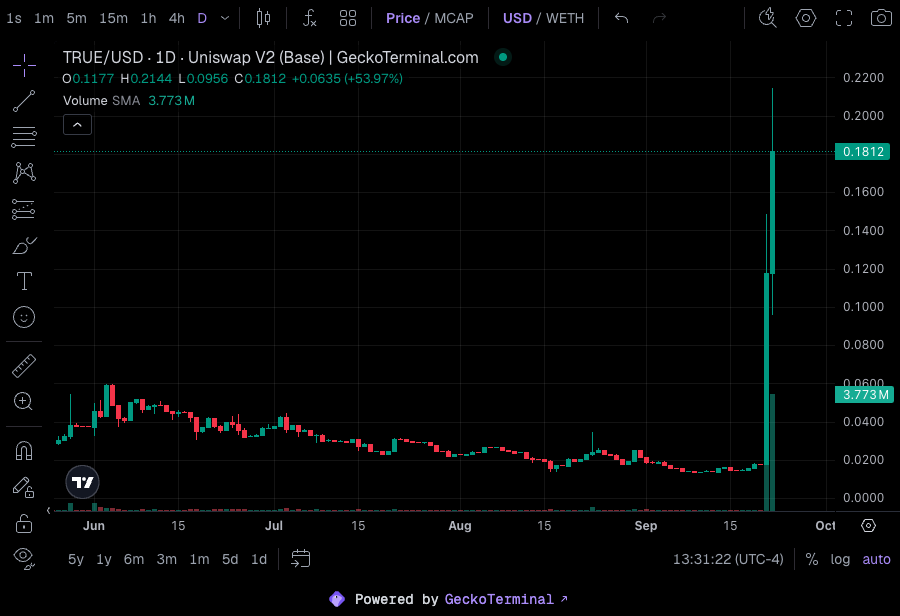
$TRUE token surges 900% in 24h, though contracts remain on Base with no migration timeline yet.
Read more here:
https://t.co/gXqyeJ80CF
so you're telling me that @Trueo_ is the only fully on-chain prediction market, welcomed by @VitalikButerin to Ethereum L1, one of the earliest teams to deploy on @uniswap v4 hooks, and has its native token $TRUE which currently sits at only $13mn market cap. what sort of a joke is this?
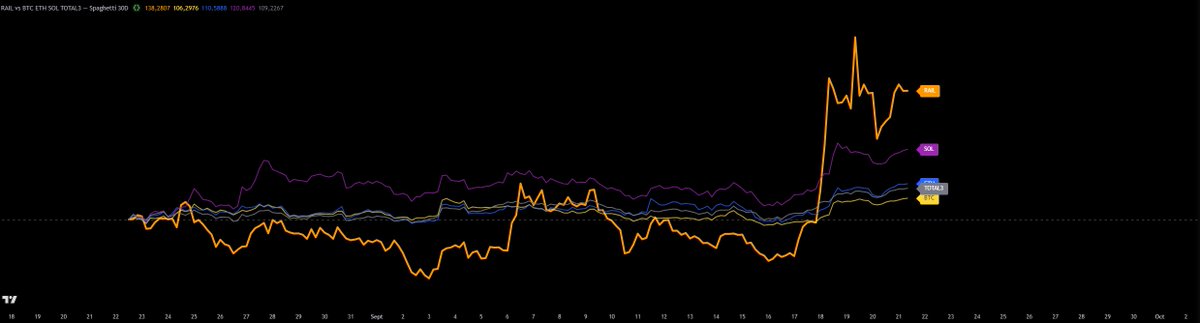
-Price of $RAIL continues to rise
-Myself and a handful of other not interns are the only ones talking about it
-Price to earnings ratio beating every stock
-Printing $ETH at 20%/year
-Private stables, erc20s, DeFi
-Market cap 100x lower than single use privacy coins
Early.
No idea why no one saw it coming
$RAIL was one of the hottest projects a few months ago, everyone was talking about it
Then when the price dropped, everyone stopped, but i didn't
It took some time, but Railgun is starting to be hot again
I love $ZEC, but no one is moving Ethereum DeFi to Zcash, Railgun already exists on top of actual DeFi, and that's what i believe in
$RAIL has done ~$6B private volume
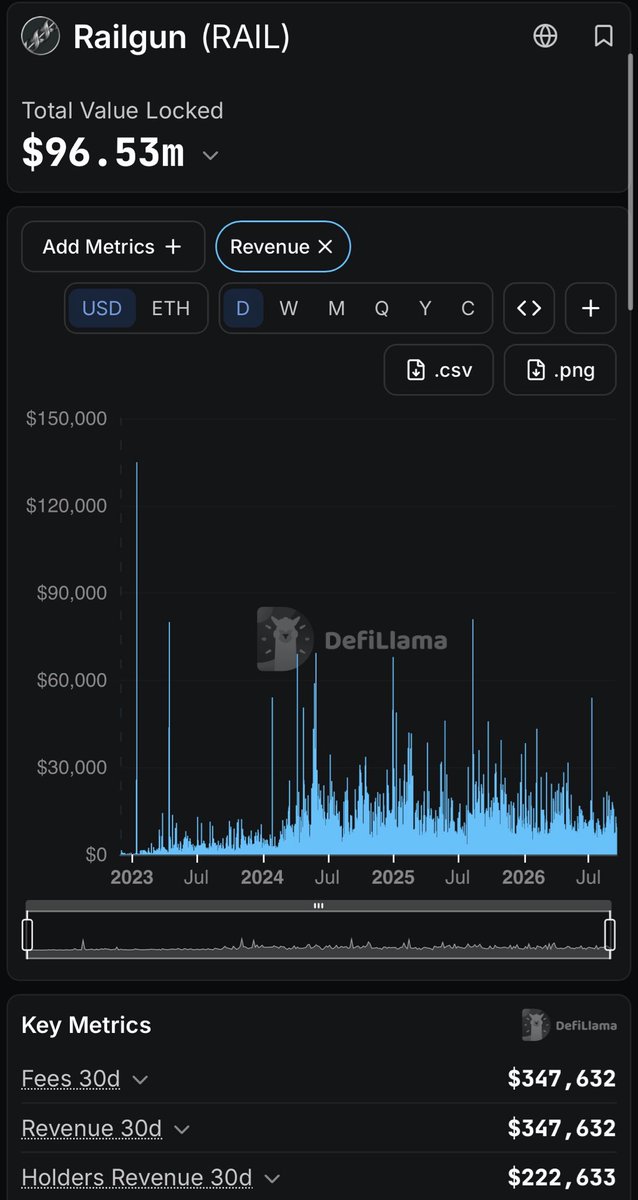
$RAIL does ~$6M/year protocol rev
$RAIL has 35+ third party integrations across 5 chains
$RAIL rewards stakers in double digit $DAI, $ETH, and $RAIL w circulating supply ~70% staked
$RAIL is $ZEC, $XMR, and $ETH beta
Thats the tweet.
I love Zcash and XMR and all things privacy and I'm going to tweet this anyway at risk of triggering one-baggers.
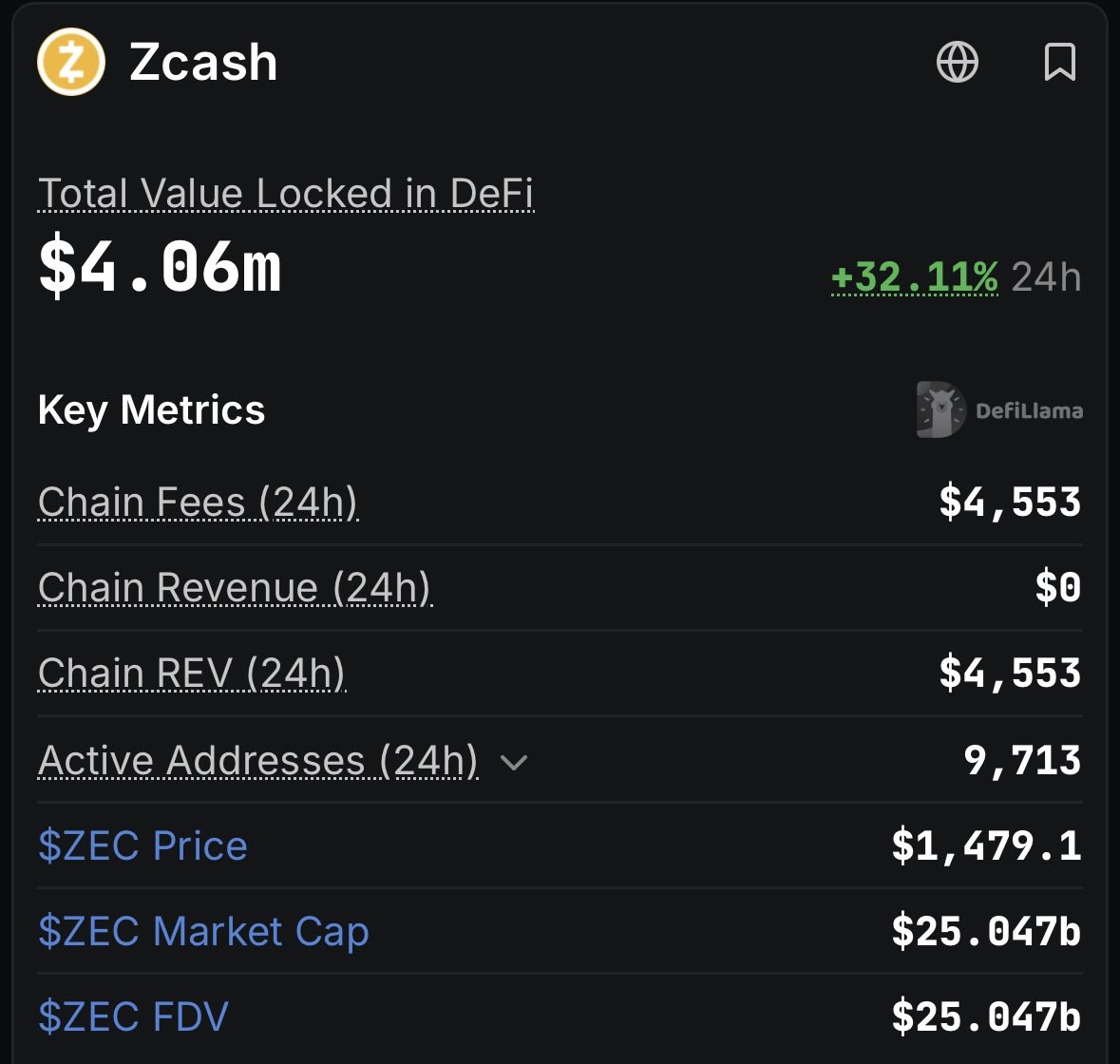
Zcash annual revenue: $400K
Railgun annual revenue: $6M
Zcash mcap: $24B
$RAIL mcap: $130M
the monster has been unleashed. the $RAIL valuation report is live.
40 pages, 40 minute read.
https://t.co/TXYzEbhzGe
it is an enterprise report, so only @MessariCrypto enterprise clients have access. HOWEVER, let's break down the key points:
1) what is RAILGUN?
@RAILGUN_Project is onchain ZK privacy infra for EVM networks. it lets users transact on Ethereum, Arbitrum, Polygon, and BNB Chain without revealing wallet identity, balances, or transaction intent.
the protocol charges a 0.25% fee when assets enter or exit the privacy set (shield/unshield). all fees accrue onchain to the DAO treasury.
2% of the treasury is distributed to $RAIL stakers every two weeks, creating a direct link between usage, treasury growth, and staker cash flows.
2) how does RAILGUN work?
railgun lets users move assets from public ERC-20 balances into a shared private pool (shielding), then transact from that pool without revealing wallet identity, balances, or intent.
assets inside the pool aren’t account balances. they’re represented as private notes, proven valid with ZK proofs instead of being publicly readable onchain.
users keep their normal 0x address, but also generate a private railgun address (0zk…). private transactions are built in-wallet, proven locally, then executed onchain with no link back to the public wallet.
railgun is infrastructure, not a consumer wallet. wallets and apps integrate the railgun contracts and SDK to support private balances and private smart contract execution.
this design keeps users on Ethereum’s existing liquidity and apps, while adding privacy at the settlement layer.
3) what does railgun adoption and revenue look like?
railgun processed $2b in combined shield/unshield volume in 2025. this generated the protocol $5M.
importantly, this revenue is earned without emissions, liquidity incentives, or subsidized activity. users are paying real fees for privacy.
railgun captures nearly 5% of its TVL as revenue, materially higher than most DeFi infra protocols, which typically capture around 0.3-3%.
this reflects the transactional nature of privacy flows as railgun monetizes capital movement, not passive liquidity.
4) what is the Kohaku Wallet SDK and why does it matter for RAILGUN?
kohaku is an open-source wallet privacy SDK being developed under the @ethereumfndn. its goal is to make privacy native at the wallet layer, not a separate opt-in tool.
instead of users going out of their way to use a privacy protocol, wallets can integrate Kohaku and offer private balances and private transactions directly in normal wallet flows.
railgun is already integrated into Kohaku. that means railgun becomes part of default wallet transaction flows.
once Kohaku goes live and tier-1 wallets (like @MetaMask) start integrating it, railgun’s addressable market expands from users who actively seek privacy to a massive share of Ethereum’s wallet-reachable capital.
that shift, from niche tooling to default wallet infra, is the core driver behind the upside scenarios in my valuation.
5) how exactly did I value $RAIL?
i start with Ethereum’s capital base (ETH market cap + stablecoins), model how much of it migrates into RAILGUN’s privacy set over time, and translate that into revenue thru a declining capture rate.
revenue minus operating expenses = operating cash flow. ~52% gets paid to stakers, the rest accumulates in the DAO treasury, and i value both pieces (cash flows + treasury) to arrive at intrinsic $RAIL per token.
the base case intrinsic value provides a clean and defensible anchor for what $RAIL should be worth if adoption plays out as modeled.
$RAIL's current price sits at a significant discount to that base case.
6) disclaimer: i hold $RAIL. this report is meant for informational purposes only. It is not meant to serve as investment advice.
7) railtardio.
- railgun quant