jev is INSANE.
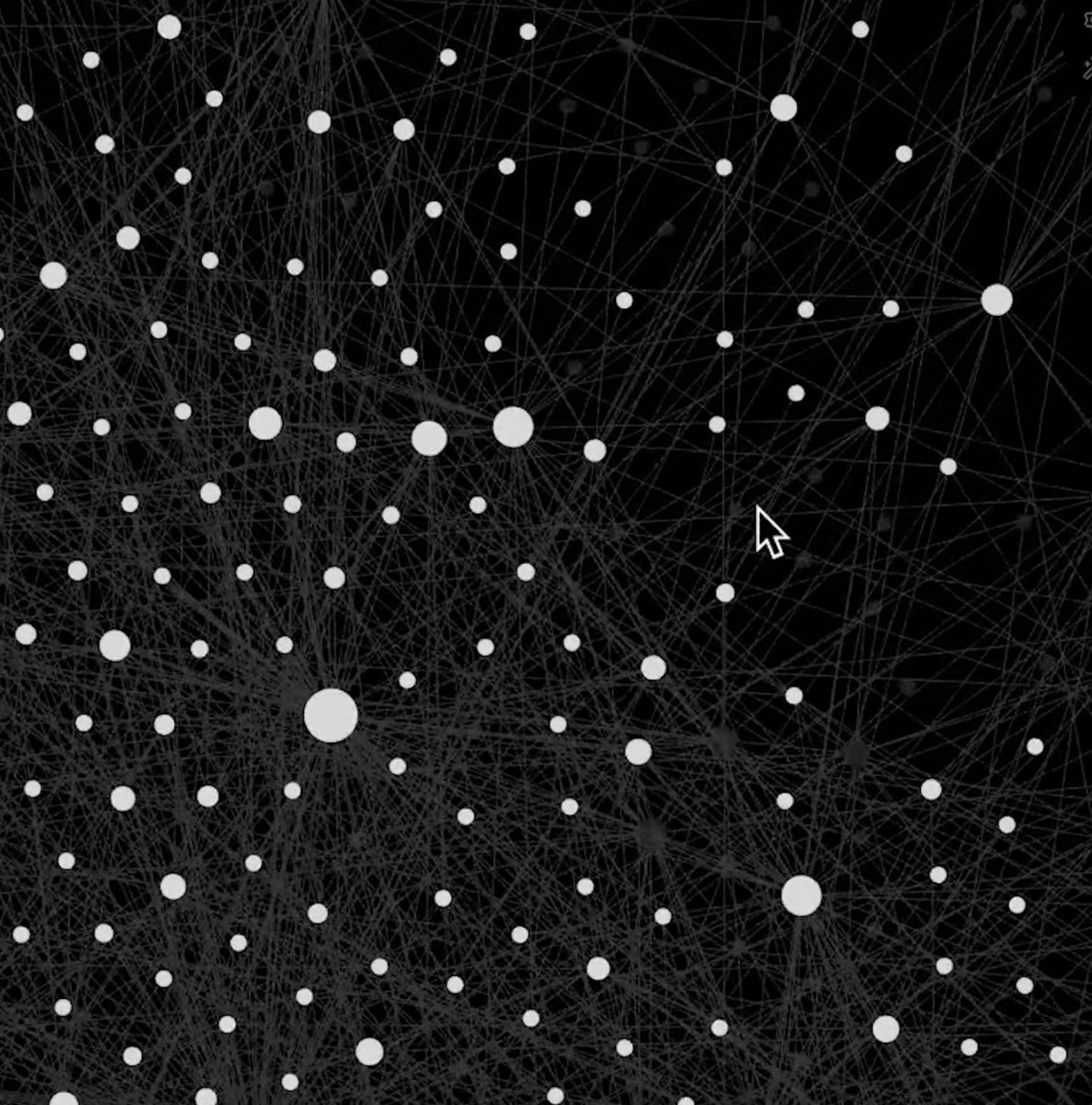
in 40 seconds it broke down 724 live ads from 37 brands.
every hook. every format. offer. cta. awareness stage. landing page mismatch. used 9 cents of tokens.
(will be avail in @stealads + mcp)
how to build an autonomous creator finder agent in 2026:
dont pay for scrapers that dump 2,000 dead handles into a spreadsheet.
follower counts tell you reach. comment intent tells you who actually buys.
heres the build:
1/ seed with winners.
→ feed it 5 to 10 creators who already drove sales for you (or a competitor).
→ pull every creator posting under the exact same sounds and hashtags in the last 30 days.
2/ search wide w/ @virlomain
→ run simultaneous keyword, hashtag, and sound search with a @ScrapeCreators fallback.
→ dedupe into one clean handle queue.
3/ pull the receipts.
→ last 12 posts per creator.
→ whisper audio transcripts of their top 3 videos.
→ top 50 comments on every post.
4/ run the buying intent scoring prompt.
→ rate 1 to 5 on audience match, comment buying intent, on-camera delivery, consistency, and red flags.
→ score: KEEP / MAYBE / CUT with exact comment evidence quoted.
5/ enrich verified contact info.
→ extract emails from bio + Linktree / Beacons edge pages.
→ waterfall through Influencers dot club or @treg_ai for the rest.
6/ draft surgical outreach.
→ 2 line DM where you mention one specific video observation. dont do "love your content about generic thing".
→ one click approval in Slack before go.
7/ loop every Monday.
→ skip already contacted handles.
→ automatically re seed off whoever replied or converted.
cost comparison:
Modash Discovery API starts at $16,200/year.
@virlomain is pay as you go w/ api (and well worth it) @ScrapeCreators is $47 for 25,000 credits ($0.002 per call).
comments show you the wallet.
here's the problem i see with ai on so many real world teams:
half the team is never going to learn claude vs codex or which harness to run when.
and they shouldn't have to.
switch puts the agents in a shared room with everyone. the ai pilled dev, the creative strategist, the growth lead, and the person who still calls every model "chatgpt"
buddy sets the whole thing up. open source. bring your own agents.
Say hi to Switch Buddy 👋
Claude Code writes code. Codex reviews it. Another agent debugs. No copying context or managing handoffs.
Switch AI brings them into shared rooms with your team. Now Buddy helps you set it all up in minutes.
Open source. Your agents. Your choice.
@switch_ai_ claude writing (and being a creative strategist) + codex reviewing is the best setup. great esp for non technical teams who aren't living in harnesses (or copy pasting btwn tabs). and open source always killer move.
vercels 30 team members did 21.1M views on X last month. that's 703K per person.
cognition did 16.7M with 123 people (136K each)
Vercel did 5x the reach per person and you can find out exactly how they do it.
here's how to spy on any competitor's employee program:
step 1: pull their roster
→ open their X profile and hit the affiliates tab
→ every badge there costs $50/mo on top of a $1,000/mo plan. if they're paying for 30, it's a program
→ drop the brand, product + support accounts
step 2: pull 30 days of posts
→ claude + the X API grabs every post and quote from each person
→ skip replies + reposts (same filter the chart uses)
→ save views, bookmarks + replies per post
step 3: find who carries it
→ rank people by total views and median views per post
→ the top 3 are who you study
step 4: find the formats that get read
→ paste this into claude:
"sort every post that beat its author's median views into: built something, demo, early take, launch, behind the scenes, other. 3 examples per bucket, word for word, with views + bookmarks. then tell me which buckets the brand account never posts."
→ one of vercel's CEO's most saved posts this month: their SDKs rendering UI inside slack. 3,086 bookmarks
step 5: hand the formats to your team
→ "here's my team and what each person shipped this month. match each one to a winning bucket. give me 10 post ideas, one line each, with who posts it."
→ they post from their own account, in their own words
step 6: put it on one board
→ run the same pull on your team
→ views per person, you vs them, every month
input: a competitor's handle
output: who carries their reach, the formats that get read + your team's next 10 posts
their whole playbook is sitting in the affiliates tab.
i replaced my $8K/mo creative strategist with an API 😱
the hardest part of meta ads isn't making the ad. it's knowing what to make.
here's the system that tells you:
step 1: spy on your competitors
→ pick 3 to 5 brands. get the name, IG handle, or their ad library link
→ pull their meta ads through stealads or @scrapecreators (@adrian_horning_)
step 2: find the ads worth stealing
→ sort by days running + number of versions
→ see which hooks + formats they keep coming back to
→ label the winners (60-120+ days w/ 3+ variations) vs the tests/flops
step 3: pull the hooks + offers
→ word for word from the transcript, on-screen text + caption
→ every quote tied to the ad it came from
→ open the source + check it yourself
step 4: map what they're selling
→ which promises keep showing up
→ which formats they keep using
→ which objections their ads are ignoring
step 5: find the gaps
→ what EVERY brand is saying
→ which formats are CROWDED
→ the one opening nobody's taken
step 6: ship a winner
→ headline, hook, what to show + the offer
→ built around a specific gap in the ads you found
→ one board you can hand to your designer or use w/ @stealads agent
input: your competitors
output: their winners, their hooks, the gap, your next ad
the old way:
→ foreplay: $149/mo
→ creative strategist: $8K/mo
= $8,149/mo to know what to make
I packaged the entire system as the Ad Spy Kit.
7 claude skills:
- ad-spy-kit (runs it all)
- resolve (finds the right page)
- pull (live ads)
- winners (winner / solid / testing)
- analyze (hooks + offers, word for word)
- counter (your counter ad)
- render (the board)
giving it away free.
comment SPY + like + follow
(must follow so i can DM)
your worst meta ads are spending money right now.
here's the agent that kills them every morning (step 45 below by the big g @gregisenberg):
1. connect claude to the meta marketing API with a system user token.
2. every morning have it pull the last 7 days by ad: spend, purchases, CPA, ROAS, frequency, CTR + learning status. Save this info (esp on big accounts) to a db to avoid heavy reads + overwhelm meta
3. it reads rules dot md:
- kill: spent 2x target CPA with 0 purchases
- scale: 3 day CPA under target = +20% budget, max once every 72h
- refresh: frequency over 3.5 or CTR down 30% = write a new hook
- guardrails: skip ad sets still in learning (this might change depending on your conv goal). never push total spend past your daily cap
4. the prompt: "read rules dot md. sort every ad into kill, scale, refresh or leave. show the numbers and the rule that fired. change nothing until i say approve."
5. have it send the list to slack. you reply approve. it pauses ads and moves budgets through the API, and logs every change
6. new ads always go up paused. you turn them on
that's the whole job now.
Making the most AI pilled company is the whole game:
1. make a second brain. one folder of markdown files on how you think, write and decide (obsidian)
2. talk to it. voice notes all day (wispr), and an agent files every fact, story and decision
3. make a company brain. customers, calls, numbers, pricing, playbooks, past decisions and why you made them
4. record every call and meeting (granola). the transcripts go straight into the brain
5. keep a facts file. true things about you and the company that agents are allowed to say. this kills made-up claims
6. keep a voice file. your 50 best posts, 20 you hate, and the words you never use
7. put all of it in git (github) so every change has a history
8. write one instruction file at the top (CLAUDE.md or AGENTS.md). read these files before any task, never overwrite, always date
9. give agents memory across sessions so they stop starting from zero (claude-mem, mem0)
10. pipe every data source into one warehouse your agents can query (airbyte → clickhouse). ads, analytics, CRM, payments
11. feed it data nobody else has. it's the only part a competitor can't download
the skills
12. don't start from zero. install the good ones first (anthropics/skills, obra/superpowers, mattpocock/skills, addyosmani/agent-skills)
13. grab the marketing ones too (coreyhaines31/marketingskills, cody schneider's graphed skills for static ads and UGC, boringmarketing dot com skills)
14. map every workflow in the company and rank them by money made or saved
15. do each one once while talking out loud, and record it
16. have an agent turn the recording into a skill. when to use it, the steps, the checks, the mistakes to avoid
17. one skill per job. small and boring beats one giant prompt
18. connect your tools with MCPs so agents can act and not only advise (gmail, slack, stripe, linear, notion, posthog, supabase)
19. give agents a browser (browser-use, vercel agent-browser, claude in chrome)
20. give agents a computer of their own for the tools with no API (vercel agent-desktop, orgo)
21. give your best skills away in public. it's the new lead magnet
the agents
22. run an orchestrator that never turns off (grok bot, openclaw, hermes). it manages one agent per project, and each of those runs its own sub-agents
23. use coding agents for the building (claude code, codex, cursor, t3, antigravity)
24. wrap them in a harness so they plan, test and remember (ECC, superpowers)
25. manage the whole fleet in one place (paperclip). every agent gets a job, a budget and a log
26. put the skills on triggers (n8n, scheduled tasks). daily, weekly, on every new lead, on every cancellation
27. route your models (openrouter). the expensive one plans and checks (fable 5.2, gemini 4 carbon), the cheap ones do the volume
28. cut the token bill. shorter outputs, smaller tool results (caveman)
29. run a local model for the data that can't leave your machine (gemma 4)
30. track cost per job. if a job costs more than it earns, fix it or kill it
the factory
31. build the line. spec agent → builder agents in parallel (git worktrees) → test agent → reviewer agent → deploy (vercel, railway)
32. design goes through the same line (paper MCP), and a skill strips out anything that looks AI made (unslop)
33. every annoying task in the company becomes an internal tool by the end of the day
34. every customer request becomes a pull request before a human reads it (tstack for the PR workflow)
35. reviewer agents with a named bar. "would the best team in the world ship this?" reject until the answer is yes
36. keep 50 real cases with the right answer. rerun them every time a new model drops and switch to the winner
37. humans approve, own the outcome and talk to customers. that's the 10% you keep
the loop
38. every finished job writes back to the brain. what worked, what failed, what to stop doing
39. support tickets, analytics and social comments flow in every night
40. every friday an agent rewrites the playbooks from the week's results, and you approve the diff
41. every month, rank everything by profit per human hour. kill one thing and double one thing
the growth
42. research with agents before you spend a dollar (perplexity API, last30days skill)
43. outbound runs itself. find the leads, enrich, verify, send (apollo, million verifier, instantly, phantombuster)
44. send prospects finished work in place of a pitch
45. ads run on a loop. an agent writes the creative, publishes through the facebook ads API, kills the losers and scales the winners
46. agents make the creative too. images (nano banana), video (heygen, fal), voice (elevenlabs), music (lyria 3.5, suno)
47. turn every finished job into content. the story, the number, the prompt
48. every customer makes the brain smarter for the next one. that's your network effect
49. once it works, point it at a new niche. same agents, new context
The models are the same for everyone but your context is the only part that's yours.
Acquire as much of it as you can, as fast as you can.
Build loops like this.
This is the whole game, happy playing.
@ArefBuilder 100%. the hook that never changes is usually about the buyer's problem, not the product. that's why it lasts while everything else gets tested and swapped
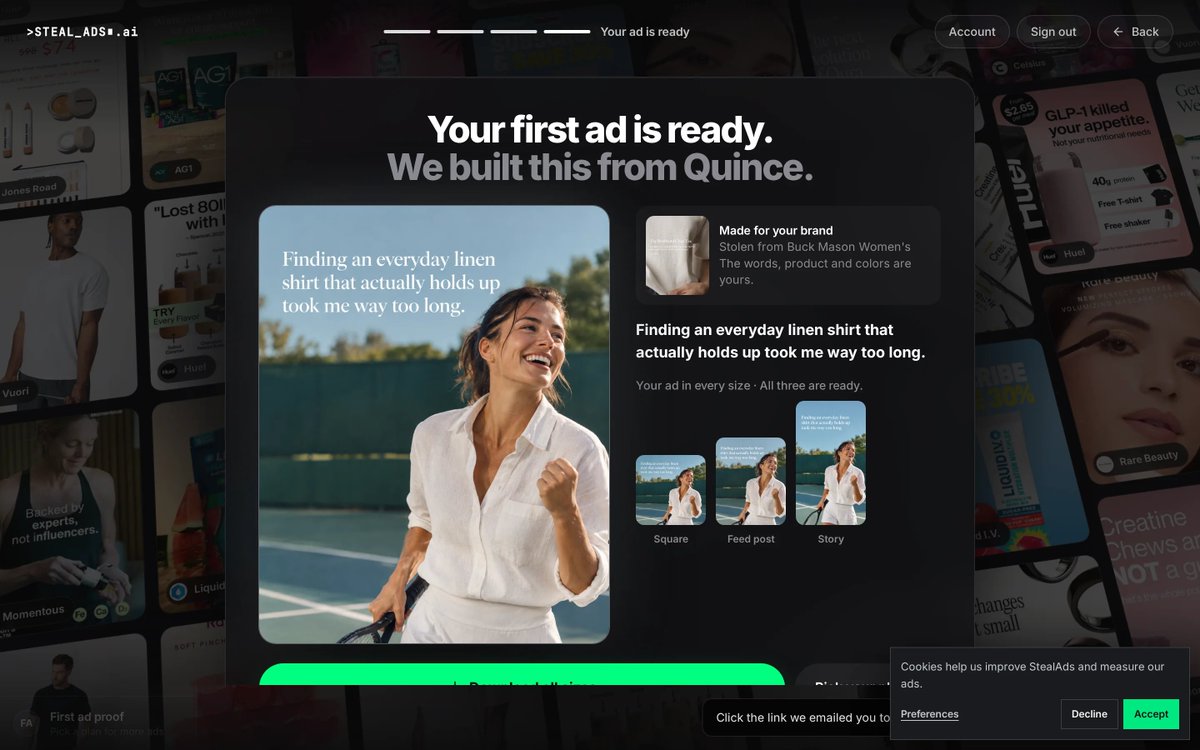
i made 3 brooklinen ads in 58 seconds 🤯
by stealing what already works.
here's how to do it yourself:
1/ pull every ad your rivals run. csv/json with start dates, version counts, copy, format, creative type
2/ find the hook they never change. same opener across version after version = it prints
3/ find what they DO change. visual, offer, length, creator. that's what they're still testing
4/ check the offer. discount or no discount on the ads that run longest vs the ones they're testing
5/ check the format mix. video vs static vs UGC on the long runners
6/ find what they killed fast. anything dead in under a week tells you what not to make
OR dont do any of that. this @StealAds agent does the whole thing for you and drops ready to run ads in your email/slack.