I just finished my PhD and want to share 3 personal survival tips that helped me academically and mentally. These made all the difference in navigating the ups and downs of the PhD journey. 🧵👇
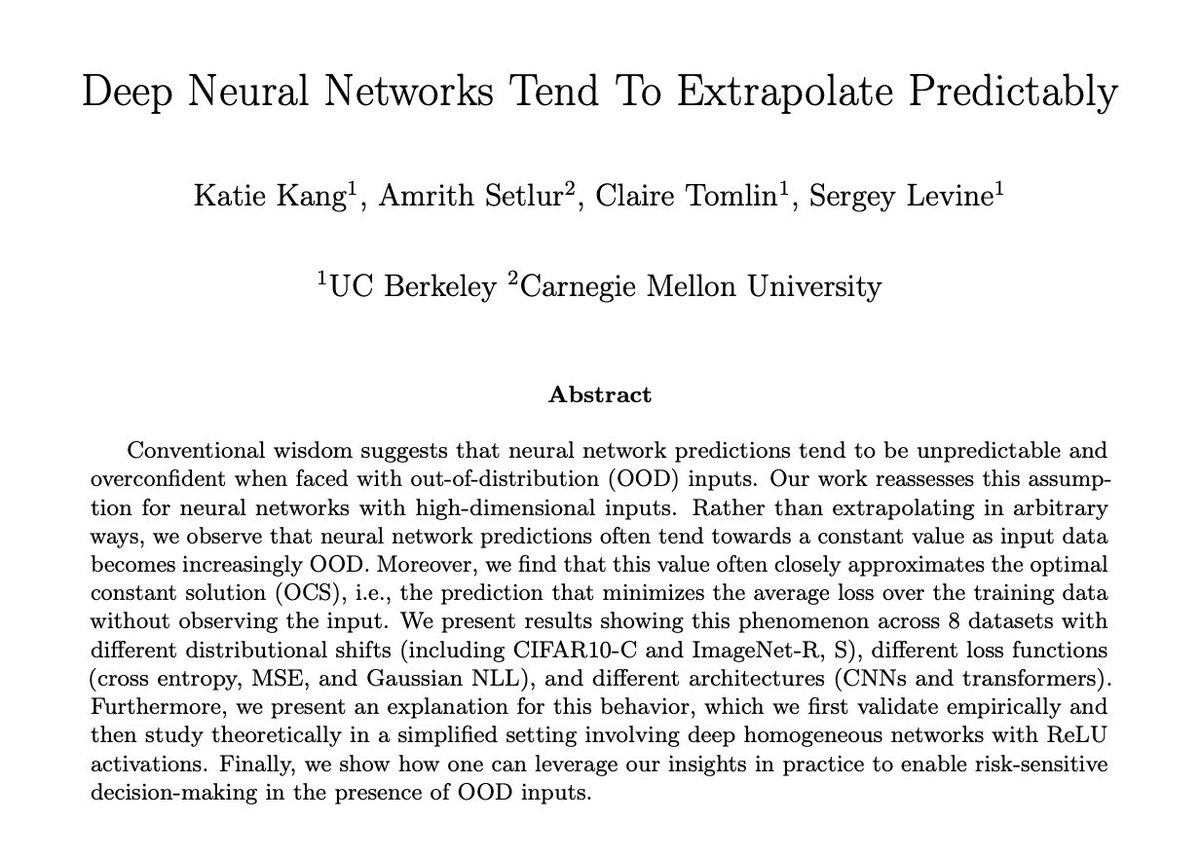
New paper!! We found a pattern in how NNs extrapolate: as inputs become more OOD, model outputs tend to go towards some “average”-like prediction.
What is this “average”-like prediction? Why does this happen? Can we leverage this to better handle OOD inputs? (Spoiler: Yes!)
🧵:
The way you think about the exponential function is (probably) wrong.
Don't think so? I'll convince you. Did you realize that multiplying e by itself π times doesn't make sense?
Here is what's really behind the most important function of all time.
In academia, no matter how much you work, there will always be more that you can do:
-another paper to read
-more edits to the manuscript
-a new committee to serve on
The key is to recognize that *nobody* can do all they want to. Do what you can and know you're doing your best.
One of the challenging things about research is that effort doesn't always result in measurable progress.
However, well-directed effort always results in learning, and in the long run, that can be the key to achieving your goals.
As mentors, we often focus on sharing our positive experiences, but the less positive stories can also be helpful to others.
What were the decisions we regretted?
What would we do differently if given the chance?
What are the obstacles we've had to face and how did we do that?
Leaders, taking time off for rest or hobbies does not make you look weak. It makes you a role model.
If others see your career path and think that it doesn't leave time for life, it may seem impossible to follow. But, by showing balance you can open up possibilities for others.