@mischavdburg The scale down side is where it gets interesting. KEDA dropping replicas sends SIGTERM to workers mid job, so without graceful shutdown or a long enough terminationGracePeriod you get half done rows retried. ScaledJob sidesteps that for long running work.
@samokhvalov the sneaky part is it's usually not the queue code at all. some unrelated job or an idle in transaction session holds back xmin and every consumer pays for it. idle_in_transaction_session_timeout is cheap insurance
Search box bug I keep seeing: type "react", get results for "re".
Two requests go out. The "re" one is slower, lands last, and overwrites the right answer.
Debounce only makes it rarer. Abort the old request on each keystroke and drop any response that doesn't match the input.
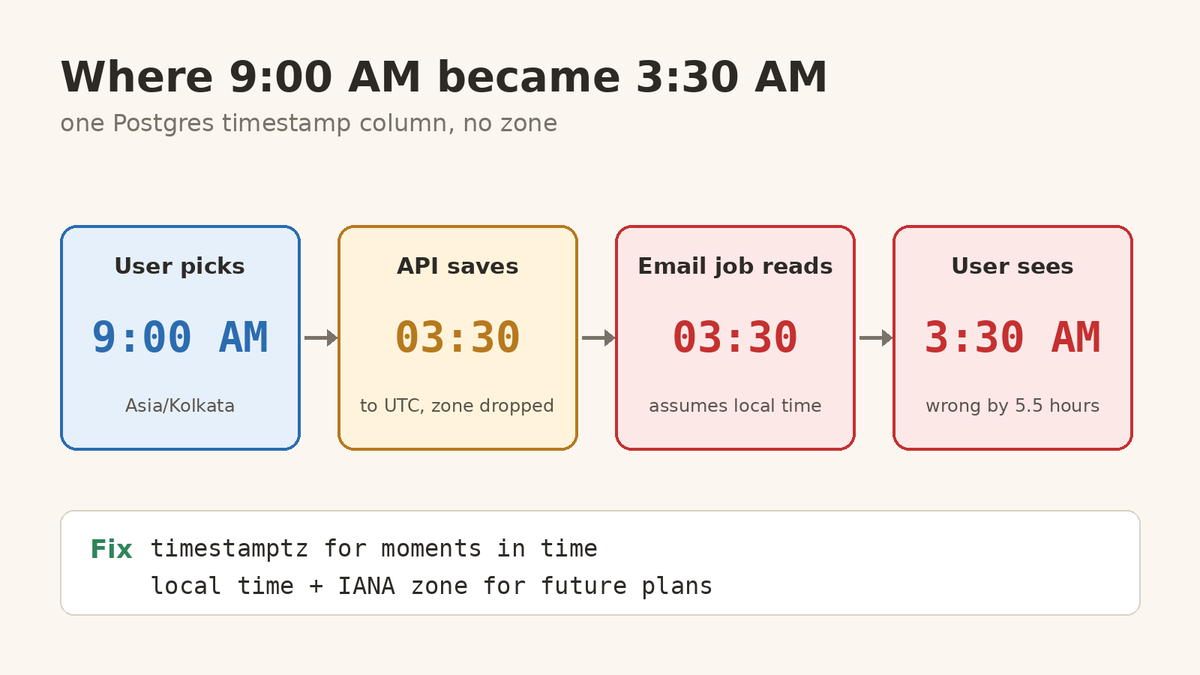
@1mad_dev Yep, that one bites. For recurring stuff I store the local time plus the IANA zone name and work out the next run from those. timestamptz is for the moment it actually happened.
Booked for 9:00 AM. Showed up as 3:30 AM for the user in Mumbai.
The column was Postgres timestamp, not timestamptz. No zone stored, so every layer guessed.
Fix: timestamptz for moments in time. For future local events, also store the user's zone, like Asia/Kolkata.
@RoundtableSpace Checks first is the right instinct. The failure I keep seeing is the agent writing a test that happily passes against its own bug. Making it state the expected output before it runs anything catches more than another green check.
@aslambeg84 Postgres is free. Backups you have actually restored, failover at 3am, major version upgrades and point in time recovery are not. That is the bill. Self hosting is great once you have run a restore drill and know what you signed up for.
@Dimillian 90% accept is wild. The interesting part is the other 10%. Curious whether it ever nudges you into a prompt you would have rephrased if you had to type it yourself.
@theo Multi-step refactors that must stay buildable halfway. Local patches are easy. Keeping the half-migrated tree honest is where it still falls over.
I kept wondering why CI reinstalled node_modules on every PR.
The Dockerfile had COPY . . before npm ci.
Lockfile first. Install next. Source last. Cache hits came back without a bigger runner.
@addyosmani The part that matters for me is the instructions file. Long running work only stays coherent if the agent can reread why a decision was made, not just what the code looks like now.
@housecor Exactly. If the only brake is a 60 minute E2E run, you find out too late and start treating red as weather. Fast checks keep the fail signal honest.
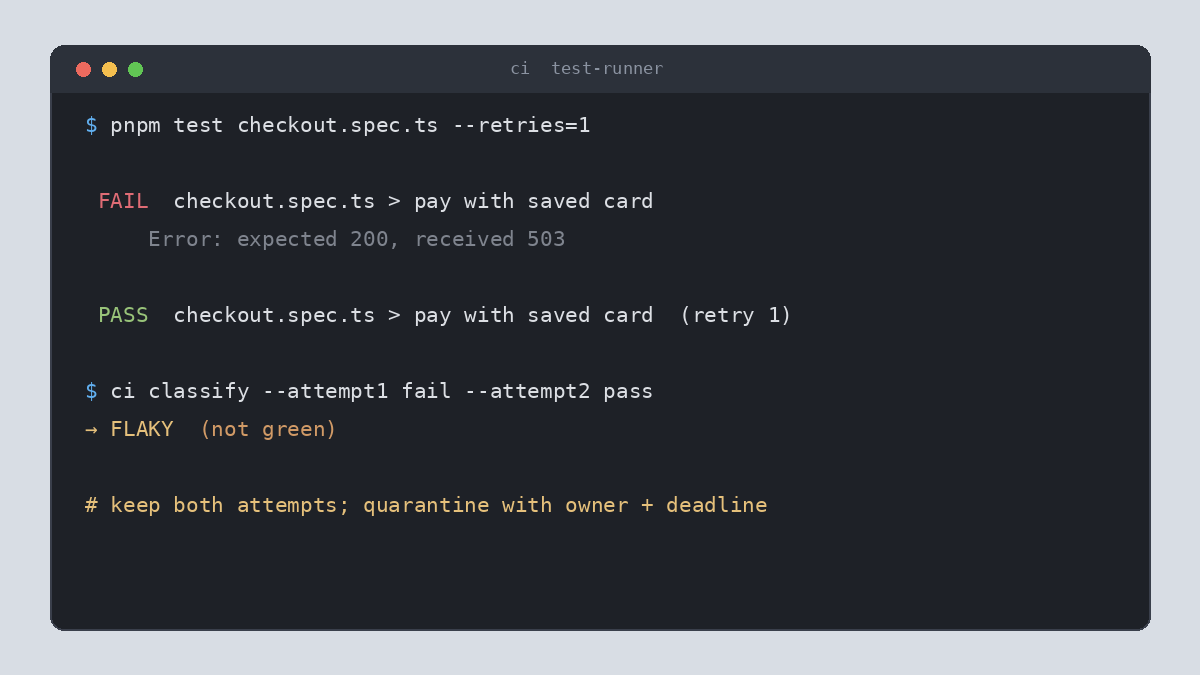
CI said green. The log said fail, then pass on retry.
That is not green. That is a flake wearing a badge.
Keep both attempts. Mark it FLAKY. Quarantine with an owner and a deadline. Blind retries just teach everyone to ignore the suite.
@theo Kanban is the easy part. The hard part nobody builds is review: what changed, which tool call touched what, and a cheap way to say no. Most of these forks skip that.
@poteto Volume only counts if review keeps up. PR count works as a throughput signal, but the number I'd watch is how many get reverted or reworked a week later.
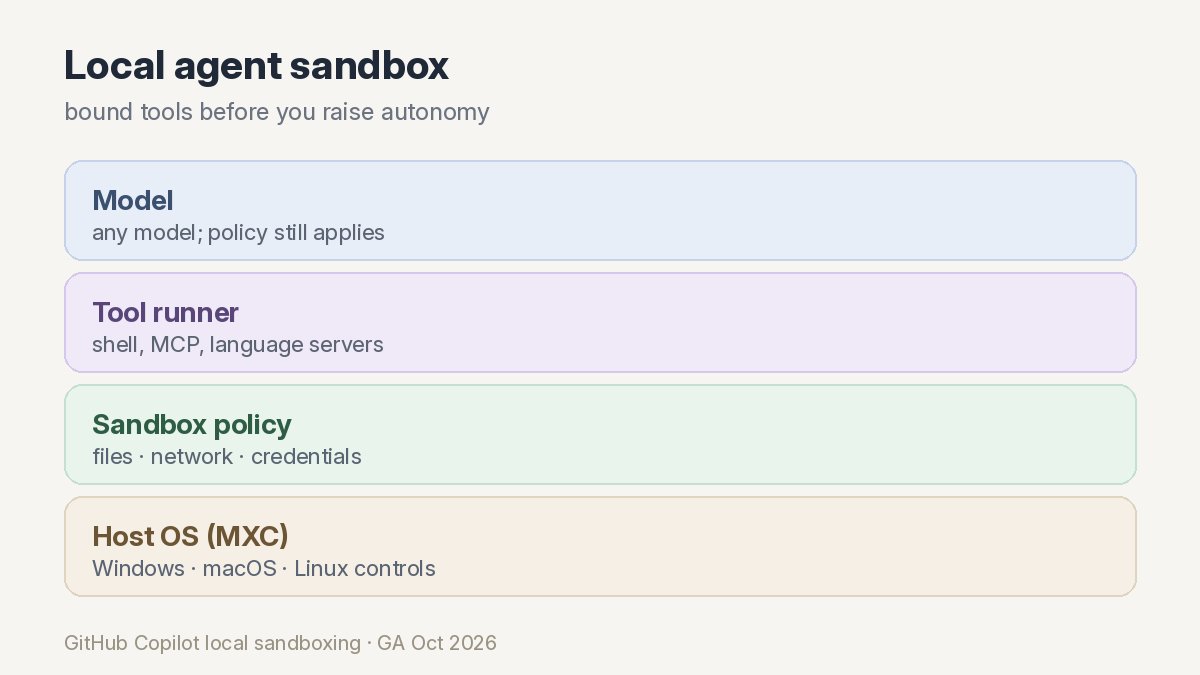
An agent with shell and no sandbox is one bad prompt from reading .env or hitting prod.
Copilot local sandboxing just went GA. Bound filesystem, network, and git credentials before you raise autonomy.
Model choice and tool isolation are separate. Lock the tools first.
@RoundtableSpace The part I care about is the review layer. A fast model writing code is cheap, the expensive bit is catching the confident wrong diff before it merges.