@theglowstitches When you come to Christ, you're like someone on an all-expense paid trip.
Everything that concerns you has been covered. Yours is to take it.
For, "We fight from victory, not for victory"
More people need to know about @fccpcnigeria.
I had an issue with a house agency that withheld ₦80k from my refund, claiming it was non-refundable. I filed a complaint with FCCPC, and barely 20 minutes after they contacted the agency, I got a message from the agency saying they were willing to refund me 🤣
If you ever find yourself dealing with a scam or some ridiculous no-refund policy from vendors or agencies, don’t let it slide. Contact FCCPC.
Complaint link here: https://t.co/Bi8QS4MX1d
After filing complaint, also send them a mail with your case number.
What Žižek really gets wrong is that I’m neither left wing nor right wing. I’m above those labels that were born out of seating arrangements in the French National Assembly during the Revolution.
I’m a man of God. Your tiny political labels cannot shackle me.
Before I started importing cars, I had often wondered what the behind the scenes looked like.
One of the biggest surprises for me was how organised the port was, I had always thought inside the port would be a roudy place.
This is a day in the life of a Nigerian car importer.
This is why most Nigerian politicians avoid interviews.
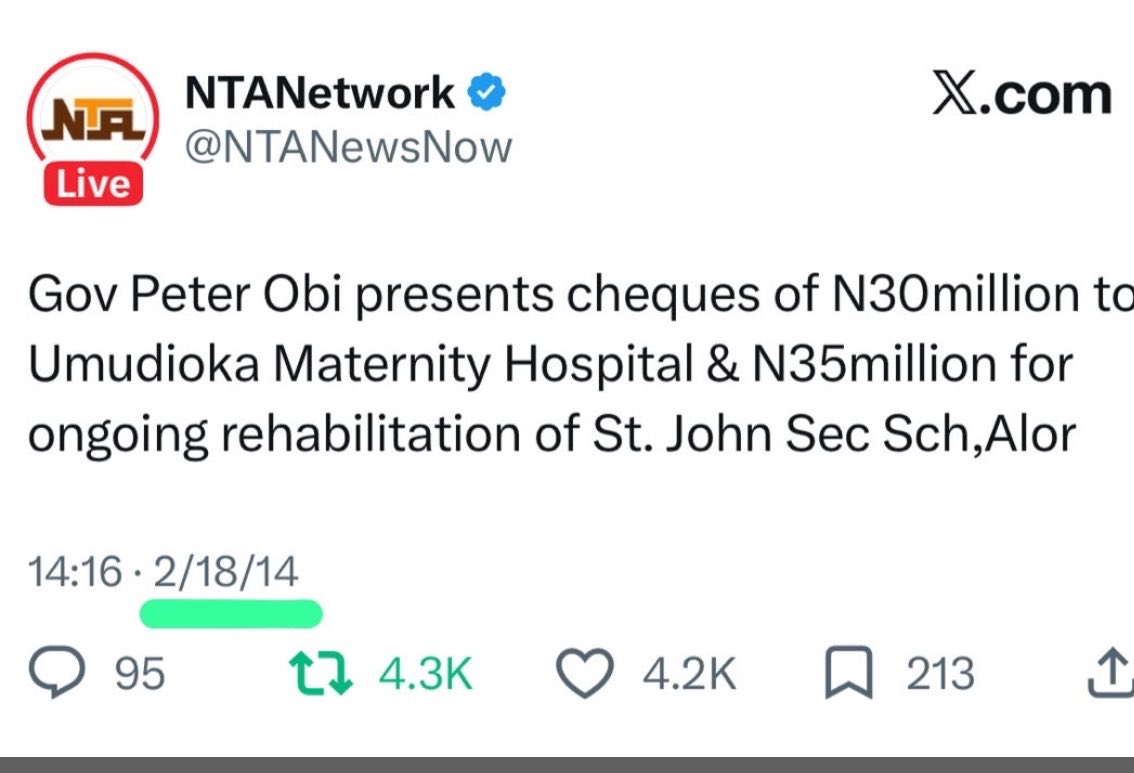
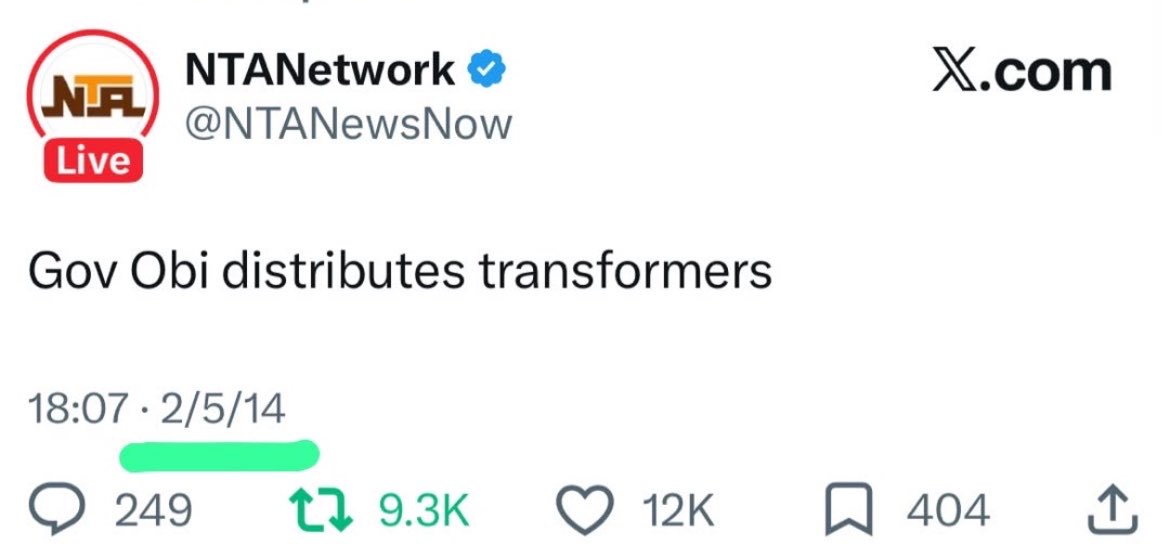
See, you people need to respect Peter Obi.
This is just about Makinde's second one-on-one interview, and he is already throwing around tribalism and the so-called "Igbo coup."
This is highly disappointing coming from Makinde. From this interview alone, one can begin to understand why he supported Tinubu in 2023.
Atiku told Northerners to vote for him because he is a fellow Fulani man.
Tinubu ran with "Vote for me because it is my turn."
Now, Makinde is essentially saying people should vote for him because the North and the Southwest have a good political alliance, while invoking the narrative that "the Igbo coup" killed predominantly Northern and Southern political leaders. Using something that happened in 1966 as a reason for Nigerians to vote for him in 2026, 60 years later.
Only one candidate in this election cycle is boldly saying, "Vote for me because of what I have done and what I can do and nothing else"
That candidate is Peter Obi.
If it's not Panadol, aswear, e no fit be like Panadol.
Update to Solar Planner:
About a week ago, I launched Solar Planner, a free tool to help Nigerians plan their solar installations.
Select your appliances, choose your state, and it estimates the inverter, battery and panel sizes you need, what they cost, and which system design fits your budget.
It also gives you a parts list, wiring diagrams and setup guidance.
Since my last post, I've made quite a few improvements. It now accounts for your location, electricity tariff and when you use power. I've also added two plug-in solar kits for smaller setups.
Here's what changed, why I made those decisions, and where the numbers come from.
https://t.co/AB4YcU3xne
He was returning from work last night got caught in a heavy traffic gridlock while playing one of Obi-Kwankwaso's popular campaign songs. People around the area recognised the song and immediately started dancing. He then parked his car, and some of them climbed onto the car and continued dancing😭😭
NIGERIANS, GO AND VERIFY (5)
CONNECTING COMMUNITIES, UNLOCKING PROSPERITY: OUR ROAD INFRASTRUCTURE RECORD
Peter Obi
Another critical foundation of development is infrastructure, particularly road construction and maintenance.
Infrastructure is not just about constructing roads, bridges, and buildings. It is about connecting people, opening up economic opportunities, reducing poverty, and enhancing the well-being of ordinary citizens. A road that connects a farmer to a market, a patient to a hospital, a child to a school, or a manufacturer to a distribution centre is an investment in economic and human development.
This thinking informed our approach under the Anambra Integrated Development Strategy (ANIDS). We set out to connect all 177 communities in the State with motorable roads, paying particular attention to rural communities that had suffered years of neglect. Our objective was to build an interconnected road network that served the entire State, rather than concentrate projects in major cities or politically important locations.
I. The Road Revolution: Over 900 Kilometres of Road Projects
Between March 2006 and March 2014, during my two-term tenure in office, my administration asphalted over 900 kilometers of roads. These projects were deliberately distributed across the three senatorial zones of Anambra State to connect communities, facilitate commerce, and enhance transportation.
I acknowledge that Dr. Chris Ngige started the road revolution in Anambra State, and I commend the efforts his administration made in initiating several road projects. When we assumed office in 2006, we recognised the importance of continuing worthwhile projects rather than abandoning them simply because they had been initiated by a previous administration.
Among the roads we inherited from Ngige and completed were the Owerri–Ezukala–Umunze–Umuchu–Amesi–Uga–Igboukwu Road, where his administration stopped around Umuchu and we continued through Amesi, Uga, and onward to Igboukwu; the Iseke–Orsumoghu–Ukpor–Utu–Nnewi–Awka-Etiti Road, where his administration stopped at Ukpor and we continued towards Awka-Etiti; and the Ideani-Otuocha where work stopped around Awkuzu before our administration continued the project from Nteje to Otuocha.
There were also roads, such as Mmili John and Nkwelle Ezunaka bypass, which had been awarded before we took over, but on which no payment had been made by the time we assumed office. We took over these projects, assessed their status, and proceeded with the work. This was our approach to continuity in governance: acknowledging what had been started, distinguishing between projects merely awarded and those on which work and payment had actually commenced, and ensuring that important infrastructure projects were carried forward.
Some of the major roads and corridors included Amansea–Ebenebe Road; Aguleri–Umueze Anam–Mmiata Road; Nnewi–Ozubulu–Okija Road; and the Old Onitsha–Awka Road.
Other important projects included:
Awka and its Environs: Zik’s Avenue, Awka; Adazi-Nnukwu–Obeledu–Neni Road; 33 Junction–Nwafor Orizu College of Education Road; roads within the Awka Government Reserved Area (GRA); and the Old Nkpor–Amawbia Road.
Nnewi and Surrounding Communities: Nnobi–Nnewi Road; roads within Nnewi town; Akwaeze–Oraeri–Igboukwu Road; and Ekwulobia–Nkpologwu–Akpo–Achina–Umuchu Road.
Onitsha and its Environs: Bridge Head–Umunya Road; over 30 roads in other parts of Onitsha; more than 25 roads within the Onitsha GRA; over 20 stone-based roads within Harbour Industrial Estate, Onitsha; and the Nkwele Ezunaka Bypass.
Other Communities and Strategic Corridors: Awgbu–Amaokpala Road, with the Odor Bridge; Aguluezechukwu–Ogboji–Ajalli Road; Awkuzu–Igbariam Road, passing through the university; Owerri–Ezukala–Umuchukwu Road; Ugwuoba–Obosi Road; and Lilu Road.