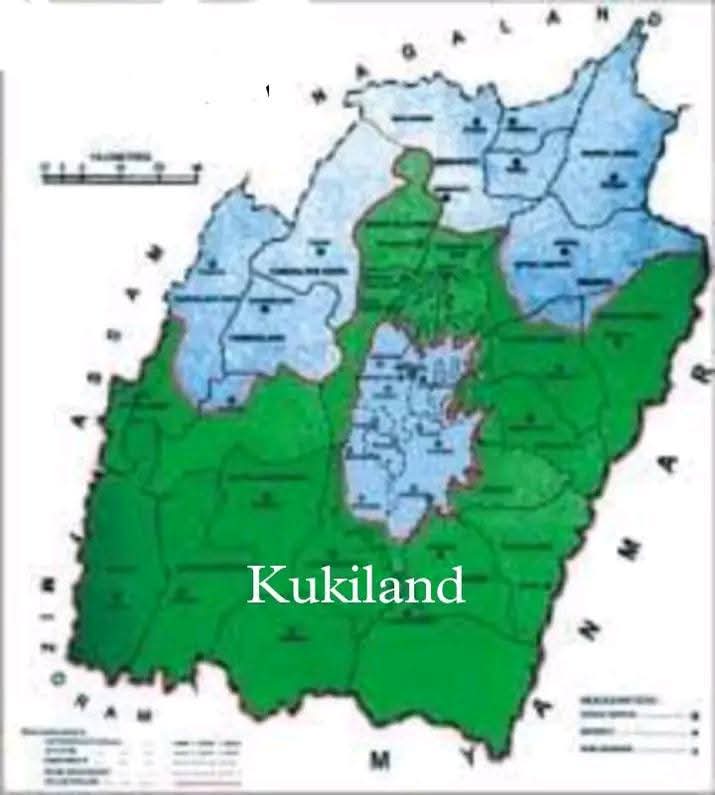
Defending Kuki heritage, and the 1904 British Map of Kuki Country - the North-west Myanmar, North-east lndia and the Chittagong Hill Tracts is Kukiland.
History Cannot Be Changed: Tribals in Chittagong Hill Tracts, Northeast India, and Western Myanmar are Kukis
By: Ms. Kimneihoi Haokip
The Kuki people possess a rich and documented history that long predates British colonial rule. The name ‘Kuki’ appears in ancient texts, including the _Mahabharata_ and the _Tripura Rajmala_, with references dating back to the 6th and 7th centuries — centuries before the British arrived in India. In the 17th century, the British colonial administration formally recognized and recorded the tribals inhabiting the Chittagong Hill Tracts in present-day Bangladesh, Northeast India, and parts of western Myanmar as ‘Kuki’.
This recognition was not merely administrative. In 1904, British authorities drew a political map identifying the independent hill tracts of the community as the ‘Kuki Independent Hill Country’, or Kukiland. This historical mapping is central to understanding the Kuki identity and the community’s distinct territorial and political claims in the region. For the Kuki History & Identity Protection Committee, such records affirm a continuity of peoplehood and land that colonial policy acknowledged.
The post-colonial period, however, saw shifts in nomenclature and identity politics. In the 1950s, the term ‘Mizo’ emerged in the Lushai Hills — now Mizoram — under the leadership of Laldenga. In recent years, the term ‘Zo’ has gained currency in some circles as a pan-tribal identity. This, in our view, is a misinterpretation. ‘Zo’ is derived from ‘Mizo’, a designation specific to one tribe in Mizoram. It does not historically encompass the Kukis of India, the Chins of Myanmar, or the Bawms of the Chittagong Hill Tracts in Bangladesh. No historical record or government document acknowledges ‘Zo’ as a pan-tribal identity. As a derivative of ‘Mizo’, its political usage should remain confined to Mizoram.
There are no historical records of ‘Zo’ or ‘Zoland’ in ancient texts, colonial archives, or pre-colonial chronicles. Unlike ‘Kuki’, which appears in the _Mahabharata_, _Tripura Rajmala_, and British ethnographic surveys from the 17th century onward, ‘Zo and Zoland’ is a recent construct composed by some writers and commentators without documentary or archaeological basis. We must know the real history of the Kuki. The historical record has already proved that Kuki is our nation and identity. To substitute that legacy with newly coined terms erases centuries of documented peoplehood and the sacrifices made to defend it. Political narratives cannot override primary sources, gazetteers, and maps that consistently identify this land and its people as Kuki.
Further, claims linking ‘Zo’ to the Chinese term ‘Zhou’ have no historical or etymological basis. The Kuki nation existed as a distinct entity long before British rule. Our forefathers defended this homeland valiantly, notably in the Kuki War of 1860-1861 and the Anglo-Kuki War of 1917-1919. These conflicts reflect a deep-rooted commitment to sovereignty and self-determination that defines Kuki political history.
The Kuki nation has a well-documented history and territorial claim that must be recognized on its own terms, distinct from newer nomenclatures that have emerged in recent decades. The Kuki people have a proud heritage, and preserving and acknowledging this unique identity is essential. Let us stand united in protecting our history and asserting our rights. May the Kuki nation prosper, and may our identity remain a beacon for generations to come.
Source: The Kukiland Express
Kuki Village Volunteers Dismantle Some Illegal NSCN-IM refugee Camps in Ukhrul During ‘Operation All Clear’
Songpi: April 29, 2026
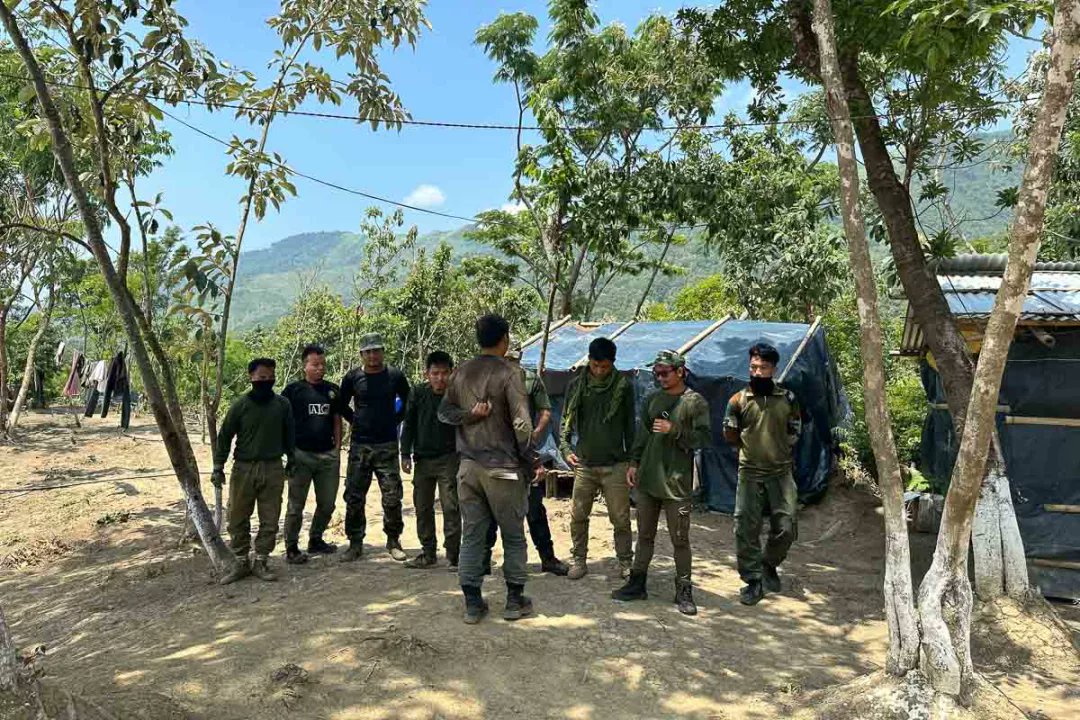
Kuki Village Volunteers conducted ‘Operation All Clear’ across Kuki areas of Ukhrul district on April 28 and 29, 2026, removing some alleged illegal camps of NSCN-IM Tangkhul Kacha-Naga, Chinese refugee cadres. The volunteers said the action was taken to secure vulnerable villages amid ongoing insecurity in the region.
According to local sources, the Kuki community in Ukhrul district has received no effective protection from the Centre or the state government, forcing residents to organize their own defence. Community leaders stated that repeated appeals for security deployment had gone unanswered, leaving villagers exposed to threats in the foothill and border areas.
The volunteers asserted that the operation was aimed at ensuring civilian safety and preventing further encroachment in Kuki inhabited areas. They reiterated calls for government intervention to provide lawful protection and restore normalcy for residents affected by prolonged conflict in the district.
Edited by Kukiland Media
Know More About The Anglo-Kuki War (1917-1919)
1. In January 1917, the British Indian government had ordered the MahaRaja, of Manipur to supply non combatants to serve in the “Great War”. While several hundred were recruited from the Valley, the Kukis refused to comply and the various tribal chiefs held a series of conclaves.
In March 1917, according to Kuki accounts, four chiefs from the tribe performed a ritual sacrifice that declared war. They were led by a fifth chief, Tintong, who became commander of the Kuki warriors.
2. For the Kukis, World War 1 was crucial because of their refusal to join the Labour Corps. The British had demanded recruits to the corps, and the Manipur king promised 2,000 men. However, Kuki chiefs refused to join and instead declared war on the colonisers in 1917.
The conflict that followed lasted for three years and claimed many lives. It has been variously called the “Great Kuki Rebellion”, the “Kuki Rising”, the “Anglo-Kuki War”
3. The British marked out the region as “disturbed” and divided it up into six theatres of operation. The Assam Rifles and the Burma Military Police were deployed initially, but by November 1918, the British Indian Army had to be called in.
In three years of battle, it is said, there were short, sharp skirmishes between British troops and Kuki contingents. Some of these were face to face encounters but Kuki warriors also made use of guerrilla warfare tactics.
4. In the end, Kuki militias were outnumbered and worn down by the constant flow of British troops into the region. Kuki chiefs and leaders were jailed or exiled, and the British launched a policy of “disarming” the martial tribe. Many of them were made to enter the begar system of forced labour and the British government began to take a closer interest in the previously “unadministered areas”.
5. Kuki unity was forged by the battles of 1917 to 1919. With Independence, regions considered Kuki ancestral lands were split up among the freshly minted nations of India, Burma, and what was then East Pakistan.
In 1946, the Kuki National Assembly, a pan-Kuki organisation, had already been formed to demand a single administrative unit.
6. This Anglo-Kuki war significantly plays an important role in why British colonization ends in India ,and why The Kuki Ancestral land remained unharmed. So, To commemorate the 100 years of this historic period (Anglo-Kuki War) The Kuki chieftains are erecting a memorial stone inscribing "IN DEFENCES OF OUR ANCESTRAL LAND AND FREEDOM"
This period (1917 to 1919), became one of the most important and iconic period, because Kukis from different places unite themselves, as one with bare hands just to defend their freedom to live in their Ancestral Land.
~Kukiland Media
The Origin of Meitei and Tangkhul (Kacha Naga)
By Sasang Haokip
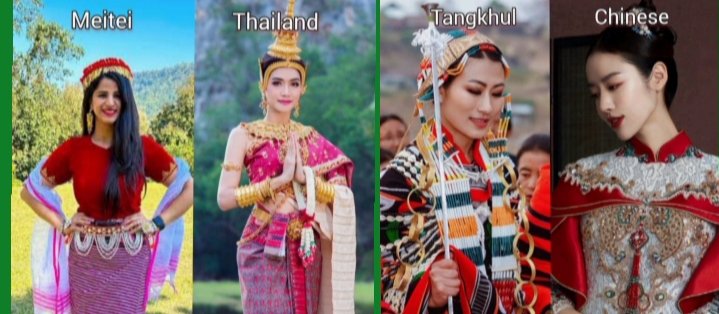
When we look at origins, I see the Meiteis as having come from Thailand. They were forced to leave, then moved to Burma, and were again displaced before finally arriving in Manipur. The Meitei and Thai communities share many similar cultural practices and traditions. This connection is often highlighted through official exchanges. Thailand’s Princess Maha Chakri Sirindhorn visited Imphal in 2018, where she witnessed the Sangai Festival and toured historical sites such as Kangla Fort, Loktak Lake, and Keibul Lamjao National Park.
Cultural exchange between Thailand and the Meitei community in Manipur is a growing area characterized by shared historical, artistic, and culinary ties. These links are frequently celebrated through official visits and cultural performances, which reinforce the sense of a common heritage between the two communities.
The Tangkhul community, also known as Kacha Nagas, trace their roots to Yunnan Province in China. They followed a similar path of displacement through Burma before reaching Manipur. Even today, Tangkhuls from the Somra region in Burma attempt to enter Manipur. These movements matter because they shape how each group sees its place in the state.
The involvement of Chinese influence on the NSCN-IM and the Indian Government’s political talks is evident in recent history. Tangkhul Naga leader Thuingaleng Muivah was sent to China in 1967 in a high-profile diplomatic role with plenipotentiary power. With his credentials well acknowledged by China, he was sent again in 1974. There have also been reports of NSCN-IM militants being trained by the Chinese army, the PLA, and supplied with arms and uniforms. Tangkhul scholars like Dr. Nelson Vashum and Kharingyo Shimrah have stated that Tangkhuls originated from Yunnan Province in China and migrated to Manipur in the 13th century, along with other Kacha Naga tribes.
History, identity, culture, and origin have proved that Meitei and Tangkhul (Kacha Naga) are the real refugees or illegal immigrants of Manipur state. Their migration routes through Thailand and Burma, and through Yunnan and Burma, show a pattern of displacement and resettlement that came much later than the indigenous inhabitants of the land. The continued cultural alignment of Meiteis with Thailand and the documented ties of Tangkhul leaders with China further confirm external roots. Given these facts, India should be very careful about this issue, because recognizing who is native and who arrived as a migrant is central to resolving land disputes, political representation, and the future stability of Manipur.
UNC Bandh Draws KHRC Ire After Water Line Cut in Kuki Village
Songpi: April 22, 2026
The Kuki Human Rights Council on Tuesday condemned what it called the illegal enforcement of a United Naga Council bandh in S. Changoubung Kuki village, Kangpokpi District, after volunteers allegedly cut the village’s main drinking water supply.
KHRC said UNC volunteers from the Tangkhul Kacha-Naga community entered S. Changoubung on Monday without consent to enforce the shutdown despite objections from residents. The Council stated the coercive act sparked fresh inter-community tension and disrupted normalcy across the district.
Citing credible reports, KHRC said the drinking water pipeline to the village was deliberately severed during the bandh enforcement. The rights body termed the act a “gross violation of fundamental human rights” that breaches international humanitarian law, noting women, children and the elderly suffer most when civilian infrastructure is targeted.
“No civil society or community organisation has legal or moral authority to impose its agenda through intimidation, trespass, or denial of basic services,” KHRC said, asserting that Kuki rights to life, dignity and safe drinking water on ancestral land are inviolable.
The Council urged the Government of India and Kangpokpi District Administration to restore water supply immediately and take legal action against those who destroyed civilian infrastructure. It also asked the UNC and Tangkhul Kacha-Naga bodies to halt coercive bandhs outside their jurisdiction, stressing that lasting peace requires dialogue and rule of law, not collective punishment.
Edited by Kukiland Media
We Are Kuki, Not Zo or Zomi
By: Kimneihoi Haokip, Human right activist
The ongoing debate over nomenclature and identity in the region has created confusion both within the community and in official discourse. According to the Indian and Manipur governments, Zomis are considered illegal immigrants or refugees who entered India from Myanmar during or after the 1990s. This classification carries serious implications for citizenship, land rights, and political representation, and it underscores the urgent need to distinguish historical identities from recent political constructs.
The term “Zo” originated from the Mizo tribe in Mizoram. It does not include the Kukis of India, the Chins of Myanmar, or the Bawms of the Chittagong Hill Tracts in Bangladesh. In fact, there are no historical records or government documents that acknowledge the term “Zo” as an umbrella identity. As a derivative of Mizo, the term “Zo” should be confined to Mizoram state politics only.
The name Kuki was not given by British or Bengali writers. The Kukis had already settled in Northeast India, Western Myanmar, and the Chittagong Hill Tracts of Bangladesh in the 6th–7th century, long before the British arrived in India, Bangladesh, and Burma (now Myanmar).
In the 17th century, the British recognized the tribal communities living in northwest Myanmar, northeast India, and the Chittagong Hill Tracts of Bangladesh as Kukis. The United Nations (UN) has also recognized the name “Kuki”, and the 1904 British map of Kuki country stands as evidence.
History cannot be changed. History cannot be altered at one’s wish. The unrecognised new nomenclature has no political rights, has no land rights, and is not recognised by governments or the UN. Therefore, whether you like it or not, we are all Kukis.
UNC Volunteers Attack Kuki Village, Forcibly Impose Shutdown on Kuki Area
Kangpokpi: April 21, 2026
Clashes broke out in S. Changoubung Kuki village, Kangpokpi District, on Monday after United Naga Council (UNC) volunteers allegedly sealed the village gate and attempted to forcibly shut local shops as part of a bandh. The volunteers, said to belong to the Tangkhul Kacha-Naga group, faced resistance from Kuki residents who opposed the shutdown being enforced in their village.
Local sources said villagers asked the volunteers not to impose the bandh in S. Changoubung. The confrontation intensified when the UNC volunteers allegedly pelted stones at residents, causing panic and raising fears of a larger inter-community flare-up. Eyewitnesses reported that women and children took shelter indoors as the situation grew volatile.
Police teams rushed to the location and brought the crowd under control. District officials confirmed that the situation has returned to normal and no major injuries were reported. Security has been stepped up in the area as a precaution.
Forcing a bandh or blockade on another community is unacceptable and threatens peace in the region. Community leaders from Kangpokpi have appealed for calm and urged all groups to resolve differences through dialogue rather than confrontation.
Reported & Edited by Kukiland Media
Hun: A Kuki Old Traditional Worship of Ghost, Snake god and Pagan
By: Sasang Haokip
The Hun is an ancient ritual worship practiced by the Kuki people, centered around the appeasement of ghosts, snake god, and pagan spirits. This traditional practice seeks blessings and protection for the family, involving the sacrifice of a white chicken and offerings to the spirits. The ritual is typically performed by the head of the family, with the help of a village priest, who offers prayers and sacrifices using sacred objects like doikhom and doibom.
The Hun ritual is a deeply rooted tradition in Kuki culture, but it's been misconstrued as a festival by some unwise Thadou clan leaders, leading to controversy, particularly among Christian communities who view it as incompatible with their faith. The ritual is meant for family purposes, seeking blessings and protection, not as a communal celebration or festival.
The use of a white chicken and their unbroken bones as an offering is believed to appease the spirits, bringing prosperity and safeguarding the family from evil forces. The head of the family and village priest play a crucial role in conducting the ritual, ensuring traditions are upheld and spirits are appeased.
The controversy surrounding the Hun ritual stems from its misinterpretation as a festival, leading to disagreements within the community. While some view it as an integral part of their cultural identity, others see it as conflicting with their Christian faith. The Hun ritual remains a sensitive topic, with its practice and significance varying among different Kuki clans and families. Ultimately, it's a deeply personal and traditional practice aimed at seeking blessings and protection for the family.
Farmer Injured as Tangkhul Militants and Volunteers Attack Mongjang Kuki Village in Ukhrul
Songpi: April 17, 2026
Thanglenmang Doungel, a Kuki farmer from Mongjang village, was injured on Friday after Tangkhul Kacha-Naga militants and their volunteers attacked him in Ukhrul district. Local sources said the assault occurred while Doungel and his family were working in their field, marking another incident of violence against Kuki civilians in the conflict-affected hill district.
Doungel was rushed for medical treatment, though the extent of his injuries was not immediately known. The attack has renewed concerns over the safety of Kuki civilians in Ukhrul, with residents calling for immediate security deployment to prevent further targeting of unarmed villagers engaged in agricultural work.
The attack has again raised the same question among villagers: why do Tangkhul militants of the NSCN-IM and their volunteers always attack civilians? Many are asking if they are really afraid to face the Kuki army, and instead choose to target unarmed farmers and villagers. Locals called the attacks on civilians by the Tangkhul Kacha-Naga militants of the NSCN-IM shameful and condemned the act. Authorities have not issued any statement on the motive behind the assault.
Edited by Kukiland Media
Michael Lamjathang Haokip: A Person Who Was Disowned by His People
1. Disowned by his people and society: There are claims that Michael Lamjathang Haokip has been disowned by his community and society.
2. Driven out of his land by his people: Allegations suggest he was asked to leave his land by his own people.
3. Hiding in Imphal to save his life: There are reports indicating he is currently in Imphal, reportedly for safety reasons.
4. Claims about his mental health: There are claims about his mental health status, describing him as not being in a normal state of mind.
5. Allegedly hired by former CM N. Biren Singh to act against his own Kuki people: Allegations have been made that he is being paid by former Chief Minister N. Biren Singh to act against his own Kuki people.
6. Self-styled leader of Thadou Inpi and TSA: He is reportedly from the Haokip clan but has been posing as a leader of the Thadou clan, allegedly working against the interests of the Kuki community through these organizations.
7. Allegedly given Manipur BJP spokesperson role by Biren Singh: Allegedly, he was given the role to act against the Kuki community.
8. Runs multiple self-styled organisations in the name of the Thadou clan: Lamjathang has allegedly run many self-styled organisations in the name of the Thadou clan, including Thadou Student Association (TSA), Thadou Community International (TCI), Thadou Inpi Manipur (TIM), Thadou Human Rights Advocacy (THRA), Etc.
Note: Given these allegations, media houses should verify facts before reporting on Michael Lamjathang Haokip's statements or news, as they are reportedly propaganda.
By: Haominlun Guite, Karbi Anglong, Assam
Separate Administration for Kukis Is the Only Path to Peace in Manipur
By: Sasang Haokip
Peace in Manipur cannot be restored without a separate administration for the Kuki people. The ethnic violence that erupted in May 2023 has laid bare a deep and irreconcilable divide between the Kuki community and the Meitei majority. Years of political marginalization, territorial disputes, and the failure of the state machinery to protect Kuki lives and property have destroyed the foundation for co-existence under a single administrative setup. Trust in the Manipur government has collapsed completely among the Kuki, and no amount of peace talks or security deployments can paper over that reality. The demand for separation is not a bargaining tactic; it is a condition for survival.
The events of the past three years have proven that the existing buffer zones and central force deployments are only temporary bandages on a festering wound. Kuki villages remain vulnerable, displaced families cannot return home, and government institutions in Imphal are viewed as partisan and hostile by the hill population. The continued presence of Meitei officials in Kuki areas and repeated attempts to dilute the buffer zones only deepen the insecurity. As long as the Kuki remain under the same administrative framework with the Meitei community that has failed to protect them, the cycle of violence, blockade, and retaliation will continue. A separate administration is the only mechanism that guarantees security, dignity, and political self-determination for the Kuki people.
Therefore, any roadmap for lasting peace must begin with the Government of India recognizing the Kuki demand for separate administration, whether as a Union Territory or a separate state. Development packages, compensation, or symbolic gestures cannot substitute for political separation. The Kuki have made it clear through their civil society organisations, elected representatives, and mass movements that they will not accept reintegration under the current state structure. Until a separate administration is granted, Manipur will remain fractured, the hills and valley will remain divided by buffer zones, and genuine peace will remain impossible.
If Prime Minister Modi and Home Minister Amit Shah fail to grant a Kuki state or Union Territory, there will be more conflict, and it will be worse than the May 2023 conflict between Kuki and Meitei. The unresolved political question will continue to drive escalation, and the cost of inaction will be paid in further instability, displacement, and loss of life across the region.
No Entry for Meiteis in Kuki Ancestral Land Without Separate Administration
Dated: Chandel, April 13, 2026
The Kuki History & Identity Protection Committee (KHIPC) reaffirms its unwavering stand to protect the Kuki boundary, history, identity, and the existing buffer zone. We declare that safeguarding the ancestral land, cultural heritage, and political rights of the Kuki people is our foremost commitment, and we shall make no compromise on these fundamental issues.
We state clearly that no Meitei individual or organisation, including the Chief Minister of Manipur, Y. Khemchand Singh, shall enter Kuki land or Kuki areas, which include Churachandpur, Pherzawl, Chandel, Tengnoupal, and Kangpokpi districts, until the Government of India grants a separate Kuki State or Union Territory. The buffer zone must be strictly maintained to prevent further conflict and to protect Kuki lives, property, and identity. We urge all Kuki people and CSOs to stand strong, remain united, and defend our ancestral land.
We call upon all authorities and communities to respect this position in the interest of peace and justice. The KHIPC will continue to defend the rights and territory of the Kuki people through all democratic and constitutional means until the legitimate political aspirations of the Kuki people are fulfilled.
Issued by:
Department of Information & Publicity
Kuki History & Identity Protection Committee (KHIPC)
Kuki Inpi Warns Against Replacing Central Forces, Says Move Threatens Safety in Manipur Hills
Songpi: April 14, 2026
The Kuki Inpi Manipur has issued a strong objection to the Manipur Government’s proposal to replace Central Security Forces with state forces across hill and foothill regions, calling the move a direct threat to the safety of the Kuki community. The statement comes in response to recent remarks by the state’s Home Minister suggesting a change in security deployment in conflict-affected areas.
In its official communication, the Kuki Inpi stated that the Kuki community would “categorically reject” any attempt to withdraw Central forces, arguing that such a decision could severely aggravate the already fragile security situation on the ground. The organisation alleged that the proposal is intended to project an image of normalcy while effectively consolidating the state government’s control over Kuki-inhabited territories, which it views as a continuation of systemic oppression and subjugation.
The apex Kuki body underscored what it described as a complete loss of credibility and accountability on the part of the state government amid ongoing ethnic tensions. It cautioned that altering the existing security framework at this stage of volatility risks escalating confrontations and could lead to renewed clashes between communities. “The Kuki people view any attempt to replace Central forces as a direct threat to their safety and security,” the statement read, reflecting deep mistrust toward state-administered forces.
Reaffirming the community’s position, the Kuki Inpi emphasised that Central Security Forces have been instrumental in maintaining neutrality and providing a measure of protection to vulnerable populations throughout the crisis. The organisation credited their presence with preventing further deterioration of law and order in the hill districts, and warned that withdrawing them would remove a critical stabilising factor and could plunge the region into greater instability.
The Kuki Inpi concluded by urging authorities to exercise restraint and maintain the current deployment of Central forces in all Kuki-inhabited areas. It appealed to the state government to refrain from unilateral decisions affecting Kuki land and security arrangements, stressing that preserving the existing setup is essential for peace and stability in the conflict-prone region.
Edited by Kukiland Media
A Call to Safeguard Our Future: Protect the Buffer Zone
Dear Kuki brothers and sisters,
I, Sasang Haokip, urge you to remain steadfast in protecting the buffer zone, a crucial boundary between Kukiland and Manipur. It's unacceptable that Meitei CM Khemchand travels through this zone with heavy security, while our Meitei neighbors are denied passage. This stark disparity highlights the urgent need for us to prioritize our safety and assert our territorial claims. We cannot afford to compromise on our security and sovereignty.
We must safeguard the buffer zone at all costs. It's our lifeline, and our future depends on it. Let's remain united and vigilant, ensuring that the buffer zone remains secure until our demands for a Kuki state or Union Territory are met. We owe it to ourselves, our children, and our ancestors to protect our land and our rights. Our leaders may fall, but let the people stand together to fight for our freedom and our ancestral land. Let the sacrifices of our brothers, sisters, and loved ones not go in vain. Their martyrdom demands that we persevere and continue to strive for our rights and dignity.
Brothers and sisters, let us protect the buffer zone, our culture, land, and rights. No one will safeguard our interests if we don't do it ourselves. Let's be cautious, be prepared, and be united in our quest for a secure and prosperous future. We must demonstrate our resilience and determination to the world. Let us march forward together, with courage and conviction, towards a brighter future for ourselves and for generations to come.
Sincerely,
Sasang Haokip
Kuki Community Pays Tribute to Fallen BSF Constable Mithun Mandal
Kanggui: April 13, 2026
The Kuki civil society organisations and villagers in Ukhrul district's Mongkot Chepu village paid a heartfelt tribute to slain BSF constable Mithun Mandal, who lost his life in a tragic incident on April 10. Mandal, a personnel of the Border Security Force's 170 Battalion, was hit by a stray bullet during an exchange of fire between suspected Kuki and Tangkhul Kacha-Naga militant NSCN-IM and village volunteers.
The incident occurred around 4:45 pm at Mongkot Chepu village under Litan police station, sparking tensions between the communities. A solemn candlelight vigil was held in the village to honour the fallen constable, organised by the Kuki CSO Working Committee (WCKCSOs) and the local village authority.
The Kuki community has asserted that Mandal's "supreme sacrifice" must not be misrepresented, highlighting the need for clarity amidst conflicting reports.
The incident has sparked concerns about escalating tensions in the region, with calls for peace and restraint from various quarters. The Kuki community has demanded justice and accountability, urging the government to take decisive action.
Mandal's sacrifice has been widely acknowledged, with condolences pouring in from across the state. The BSF has also expressed deep condolences to the bereaved family, reiterating its commitment to maintaining peace and security.
Edited by Kukiland Media
Condemnation on MLA Nemcha Kipgen and KNF Leader Semtinthang Kipgen for Dictatorial Rule in Kangpokpi
Dated: Chandel, April 11, 2026
The Kuki History & Identity Protection Committee (KHIPC) today unequivocally condemns MLA Nemcha Kipgen and her husband, KNF leader Semtinthang Kipgen, for subjecting the public to threats and enforcing dictatorial control over Kangpokpi district. Their actions constitute a flagrant violation of democratic principles, an assault on the collective voice of our community, and an infringement of the Kuki people’s inalienable right to live free from fear and coercion. Public office and political influence exist to serve the people, not to be weaponised against them.
Multiple credible reports from across Kangpokpi document a consistent pattern of intimidation, arbitrary decrees, and abuse of authority by Nemcha Kipgen and Semtinthang Kipgen. Their unilateral interference in community affairs and their administration of the district as a personal fiefdom contravene the foundations of representative governance and undermine the customary authority of village chiefs and traditional institutions. No individual or family possesses the mandate to override the collective will of the people or to dismantle the community structures that have safeguarded Kuki identity, ancestral land, and history for generations.
Kangpokpi belongs to its people, not to any single household or political interest. Attempts to consolidate power through threats and to secure compliance by undermining local chiefs, civil society organisations, and public opinion are acts of dictatorship with no place in a free society. Such conduct erodes public trust, fractures social unity, and sets a dangerous precedent whereby personal dominance replaces the rule of law, customary governance, and accountability to the community.
KHIPC demands the immediate cessation of all threats and coercive interference by Nemcha Kipgen and Semtinthang Kipgen in the affairs of Kangpokpi district. We urge both individuals to respect the sentiments, dignity, and democratic will of the people. The citizens of Kangpokpi must be free to exercise their rights without hindrance, and village authorities and community bodies must function without fear of reprisal. We call upon all democratic institutions, civil society organisations, and citizens to reject this culture of intimidation and to stand united in defence of Kangpokpi’s autonomy, our shared heritage, and the democratic values of the Kuki nation.
Sd/-
Ginpu Haokip
Chairman, Kuki History & Identity Protection Committee (KHIPC)
Sd/-
Lunkhothang Kipgen
General Secretary, Kuki History & Identity Protection Committee (KHIPC)
ITLF Reaffirms Buffer Zone Ban for Meiteis, Announces 'Separation Day' Commemoration on May 3
Songpi: April 12, 2026
The Indigenous Tribal Leaders’ Forum (ITLF) has reiterated that restrictions on crossing the buffer zone between Kuki and Meitei communities in Manipur remain in force until a political solution is reached. The directive bars members of the Meitei community from entering Churachandpur district.
Citing Meeting Resolution No. 3 dated February 12, 2026, the ITLF said the measure is intended to prevent untoward incidents and maintain peace and stability in the region. It urged all concerned to respect and strictly adhere to the buffer zone demarcation.
In the same public notice, the ITLF announced that a "Grand Program" will be observed on May 3, 2026, to mark "Separation Day" at the Wall of Remembrance. The date coincides with the anniversary of the ethnic violence that erupted in Manipur in May 2023.
According to Meeting Resolution No. 2 dated May 3, 2026, the solemn occasion is dedicated to honoring the memory of those the ITLF describes as martyrs. The forum said their sacrifices continue to inspire courage, resilience, and collective resolve among the community.
The ITLF called upon citizens, friends, and well-wishers to stand together in unity and solidarity for the commemoration. It requested support to ensure the observance is conducted in a manner befitting the sacrifices being remembered.
To fund the program, the ITLF Women Wing will undertake fundraising activities. The forum shared payment details for contributions: UPI ID sentei910@okaxis and GPay number 8132819037.
The buffer zone restrictions and the May 3 commemoration come amid ongoing efforts to address the ethnic tensions in Manipur. The ITLF stated that the bar on movement will continue until a political settlement is achieved.
Edited by Kukiland Media
Kuki Inpi Manipur Rejects HAC’s Plan for Temporary Hill District Panels, Calls Move “Legally Impermissible”
Songpi: April 12, 2026
The Kuki Inpi Manipur (KIM) has come out strongly against a recent Hill Areas Committee resolution that proposes setting up temporary Administrative Committees across the state’s hill districts.
In a statement released from its secretariat, the apex Kuki body described the March 12, 2026 HAC resolution as “unprecedented, untenable, and legally impermissible” within the framework that governs hill administration.
The resolution recommends constituting 24-member Administrative Committees in each hill district. The proposed composition includes former Autonomous District Council members, local governance experts, eminent persons, intellectuals, and two government nominees.
KIM categorically rejected the plan, stating that the Autonomous District Councils Act makes no provision for forming such Administrative Committees through selection or nomination.
Calling it a “clear deviation” from statutory provisions, the organization argued that the move lacks legal foundation and amounts to an arbitrary administrative experiment.
According to the statement, the proposal undermines constitutional safeguards put in place to protect tribal autonomy in Manipur’s hill areas, particularly those under Article 371C of the Constitution.
KIM also pointed to long-pending tribal demands for amendments to the ADC Act that would grant councils substantive powers. It cited the stalled ADC Bill, 2021 as an example of the state government’s inaction on tribal empowerment.
The body said the absence of meaningful powers has already weakened ADCs to the point that tribal organizations had previously opposed holding council elections under the current framework.
Warning against any ad hoc arrangements that bypass existing law, KIM said such mechanisms are unacceptable and cannot address the political aspirations of tribal communities. It termed the HAC’s proposal “superficial administrative intervention.”
Reaffirming its core political demand, the organization said it remains committed to seeking a Union Territory with Legislature for the Kuki people under Article 239A. It described the demand as “steadfast, unequivocal, and non-negotiable,” adding that it will not be distracted by diversionary tactics.
The statement was issued by Janghaolun Haokip, Secretary of Information and Publicity, Kuki Inpi Manipur, who stressed that the group’s focus remains on securing genuine political empowerment and structural justice for tribal communities.
Edited by Kukiland Media
Kangpokpi's Cry for Freedom: Nemcha and Semtinthang's Dictatorial Tactics Spark Criticism
By: Sasang Haokip
As a concerned citizen, I am compelled to express my profound disappointment and concern over the actions of Nemcha Kipgen and Semtinthang Kipgen, leaders of the KNF. Their alleged use of gun power and dictatorial tactics in Kangpokpi district, despite being under the Suspension of Operations (SoO) agreement with the Government of India, constitutes a stark betrayal of the people's trust. It is distressing to witness them prioritizing personal interests over the welfare of the community.
The SoO agreement was designed to facilitate the integration of militant groups into the mainstream and pave the way for peace talks. However, Nemcha and Semtinthang's reported actions are in blatant contravention of this spirit, causing widespread concern among citizens and the government alike. The people of Kangpokpi were threatened with violence by the KNF for daring to protest against Nemcha's appointment as Deputy CM, a move that has been strongly opposed by the Kuki community. I earnestly urge them to respect public sentiment and adhere to democratic principles, ensuring that their actions align with the Indian Constitution. It is imperative that they assume responsibility for their actions and work towards the greater good.
I also respectfully request the Government of India to enforce the SoO ground rules and take necessary action against any violations. Upholding the rule of law and democratic values is crucial for achieving lasting peace in the region. The people of Kangpokpi district deserve to live without fear of oppression, and it is high time Nemcha and Semtinthang prioritized the greater good over personal interests.
The Kuki community continues to demand Nemcha Kipgen's resignation from the Manipur Deputy Chief Minister post, citing betrayal and personal interest. This move is seen as a response to her alleged actions, which are perceived to be antithetical to the people's sentiment. The community feels that her continuation in the post would be a betrayal of their trust and an affront to the democratic values of the country. It is imperative that Nemcha Kipgen listens to the voices of her people and takes necessary steps to address their concerns.
Furthermore, I urge the Government of India to consider granting statehood or union territory status to the Kuki community, addressing their long-standing aspirations and grievances, paving the way for a brighter future for the community.