The transition to a green economy is no longer a distant goal. It is reshaping every sector.
In a recent @IndiaToday Masterclass on green careers https://t.co/PDRgKWmtg4, our President & CEO, Ms. Priyanka Sharma, explained why sustainability is becoming central to the entire economy, with the biggest opportunity lying in the greening of traditional industries.
For young professionals, this means pairing core skills with green expertise where green skills can be built at any stage of a career, and they offer what young people increasingly seek: work with meaning and purpose.
At Mobius Foundation, we believe environment and development go hand in hand. Building a skilled green workforce is essential to a future that is both sustainable and economically viable.
Watch the full conversation on our YouTube channel.
#GreenEconomy #GreenCareers #GreenSkills #IndiaToday#MobiusFoundation
What if the people best equipped to understand climate change aren't reading climate reports, but living its realities every day?
The farmer adapting sowing schedules to changing monsoons. The homemaker managing scarce water. The potter finding ways to keep water cool without electricity. The fisherwoman reading the waves before the weather forecast does.
They may not have formal titles or recognition as climate experts, but their everyday knowledge, skills and adaptations are helping communities navigate a changing climate.
With only 5.9% of India's jobs classified as green, it is important to recognise that climate solutions extend far beyond laboratories and boardrooms. They are also found in our fields, kitchens, construction sites and coastal communities.
At Mobius Foundation, we believe that a sustainable future must recognise, include and empower the people who are already contributing to climate resilience.
Because some of our most important climate leaders are the ones we rarely call experts.
#MobiusFoundation #ClimateAction #ClimateResilience #GreenJobs #JustTransition #Sustainability
One policy change can create a lasting environmental impact.
Seohara in Bijnor, Uttar Pradesh, is proving just that. The Municipal Council, led by Executive Officer Vijendra Singh Pal, has made it mandatory for every newly constructed house to include a nesting space for sparrows.
As urbanisation leaves sparrows with fewer places to nest, this simple step could help bring them back.
Seohara offers a powerful reminder that development and environmental conservation can go hand in hand. With thoughtful policies, we can build towns where both people and nature thrive.
Sometimes, a greener future begins with making room for a nest.
@NppSeohara@SeoharaNpp913@NagarVikas_UP@CMOfficeUP@UPGovt
#MobiusFoundation #SustainableHomes #SustainableLiving #UrbanBiodiversity #GreenCities
Local voices. Young leaders. Climate action.
Through Mobius Young Climate Leaders (MYCL), young people across Nagaland and the Himalayan Northeast are gaining the knowledge, skills and platforms to lead environmental action.
The future of climate action starts with empowered youth.
#MFICSE2026 #MYCL #MobiusFoundation #YouthClimateLeaders #ClimateAction
8 million tonnes of temple flowers go to waste every year. Some are becoming incense, compost and even leather. Where do the flowers at your temple go? Tell us below.
#FloralWaste#CircularEconomy#MobiusFoundation
8 million tonnes of temple flowers go to waste every year. Some are becoming incense, compost and even leather. Where do the flowers at your temple go? Tell us below.
#FloralWaste#CircularEconomy#MobiusFoundation
What happens after a product is sold?
The Think Tank on EPR explores how responsibility, accountability and incentives can work together to strengthen India’s circular economy.
From products to post-consumer responsibility.
#MFICSE2026#EPR#CircularEconomy#WasteManagement #Sustainability
What if one of the building blocks of a cleaner energy future was found in something as fundamental as water?
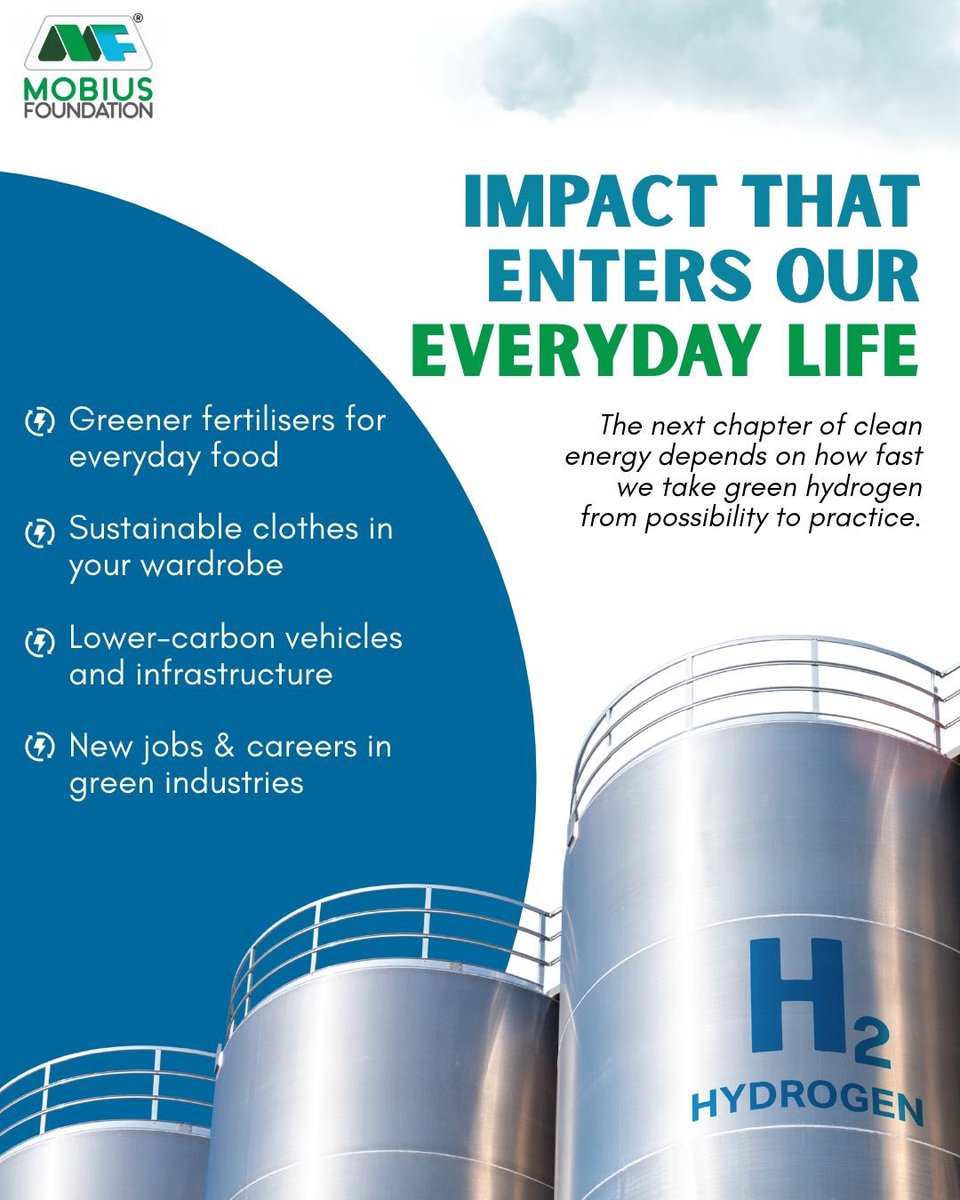
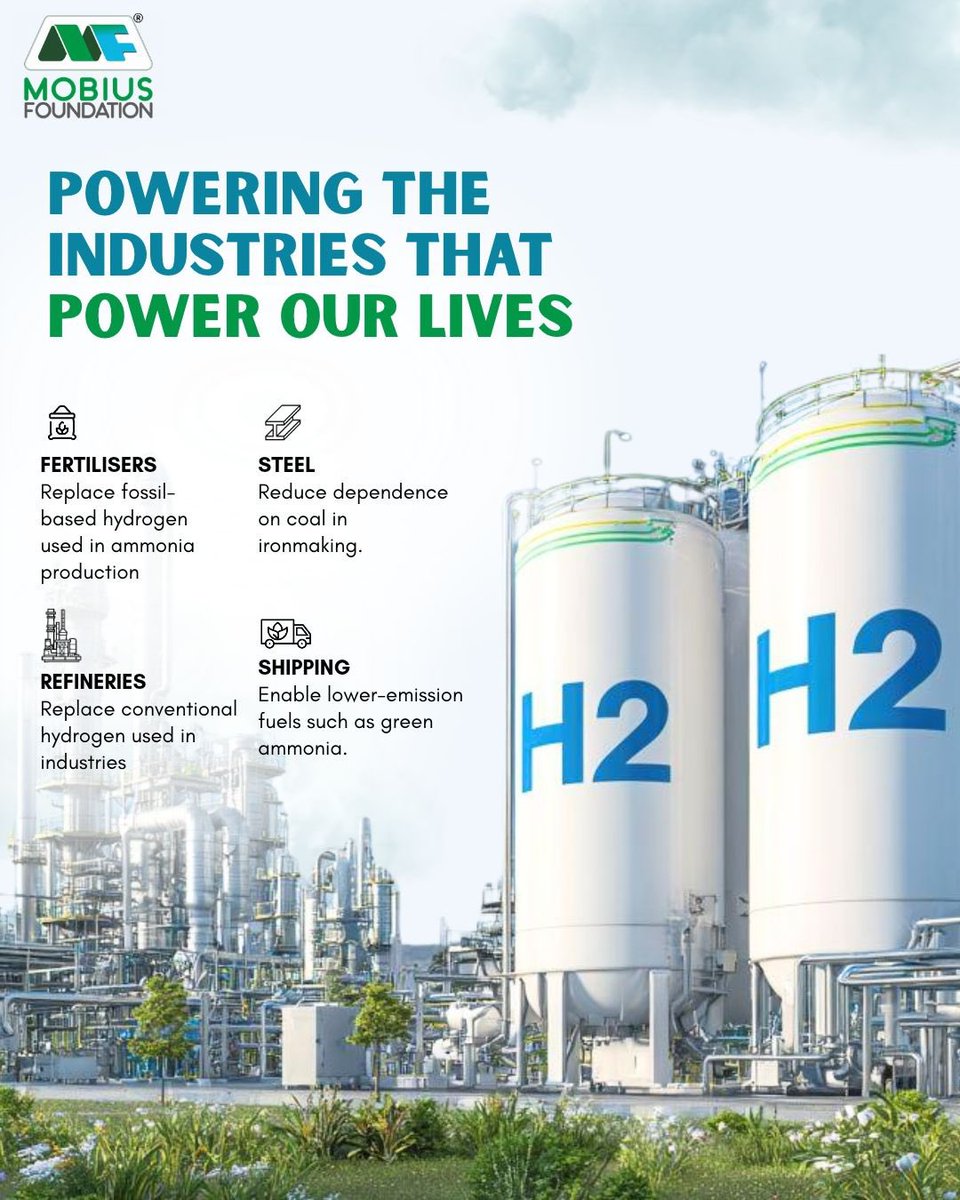
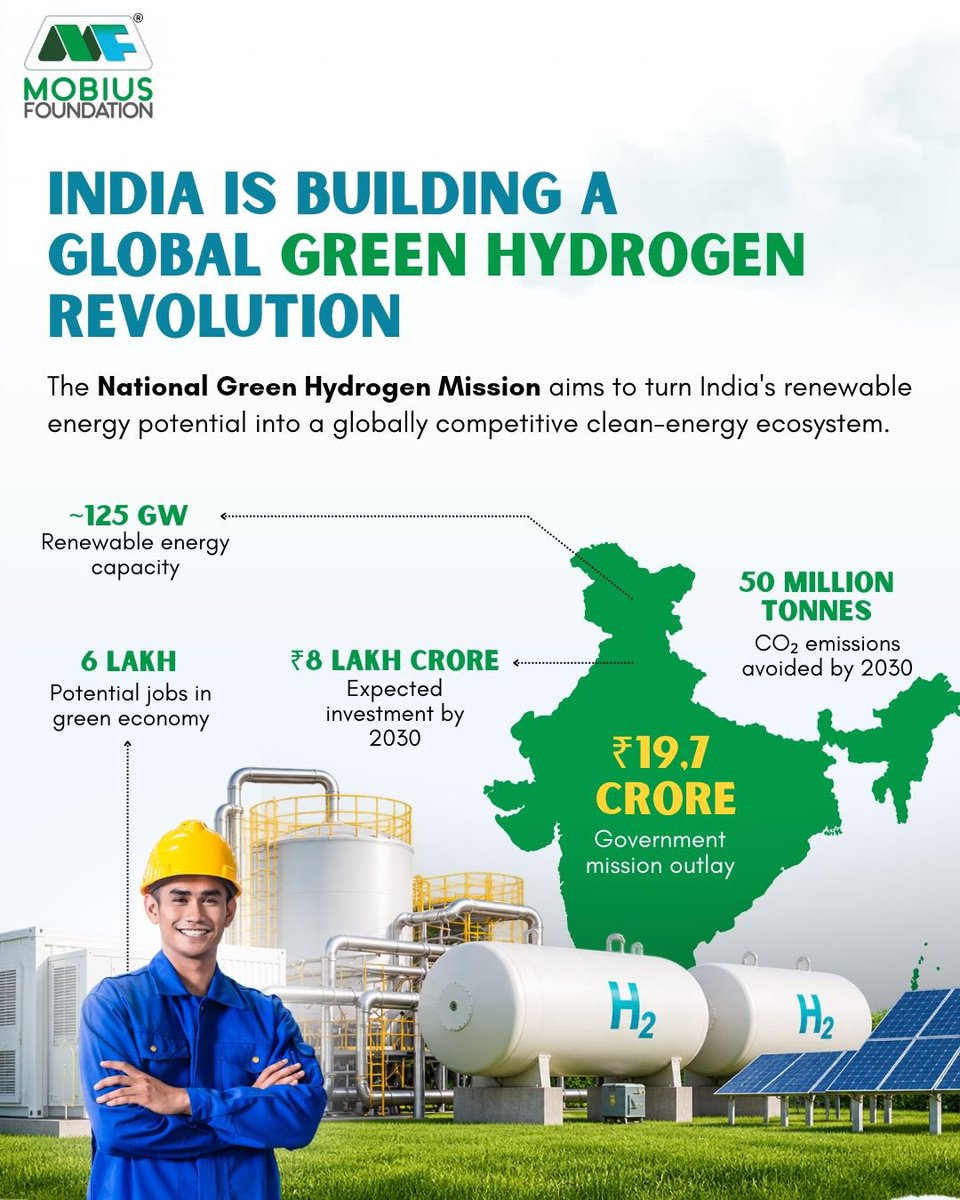
Green hydrogen, produced by splitting water using renewable electricity, could help decarbonise industries that are difficult to power sustainably, from steel and fertilisers to shipping.
From the food we grow and the goods we use to the infrastructure we depend on, its impact could reach our everyday lives in ways we may not immediately see. It could mean cleaner production, lower-carbon products and new green jobs shaping the future of work. For India, the National Green Hydrogen Mission presents an opportunity to turn this into industrial transformation, new livelihoods and a more sustainable energy future.
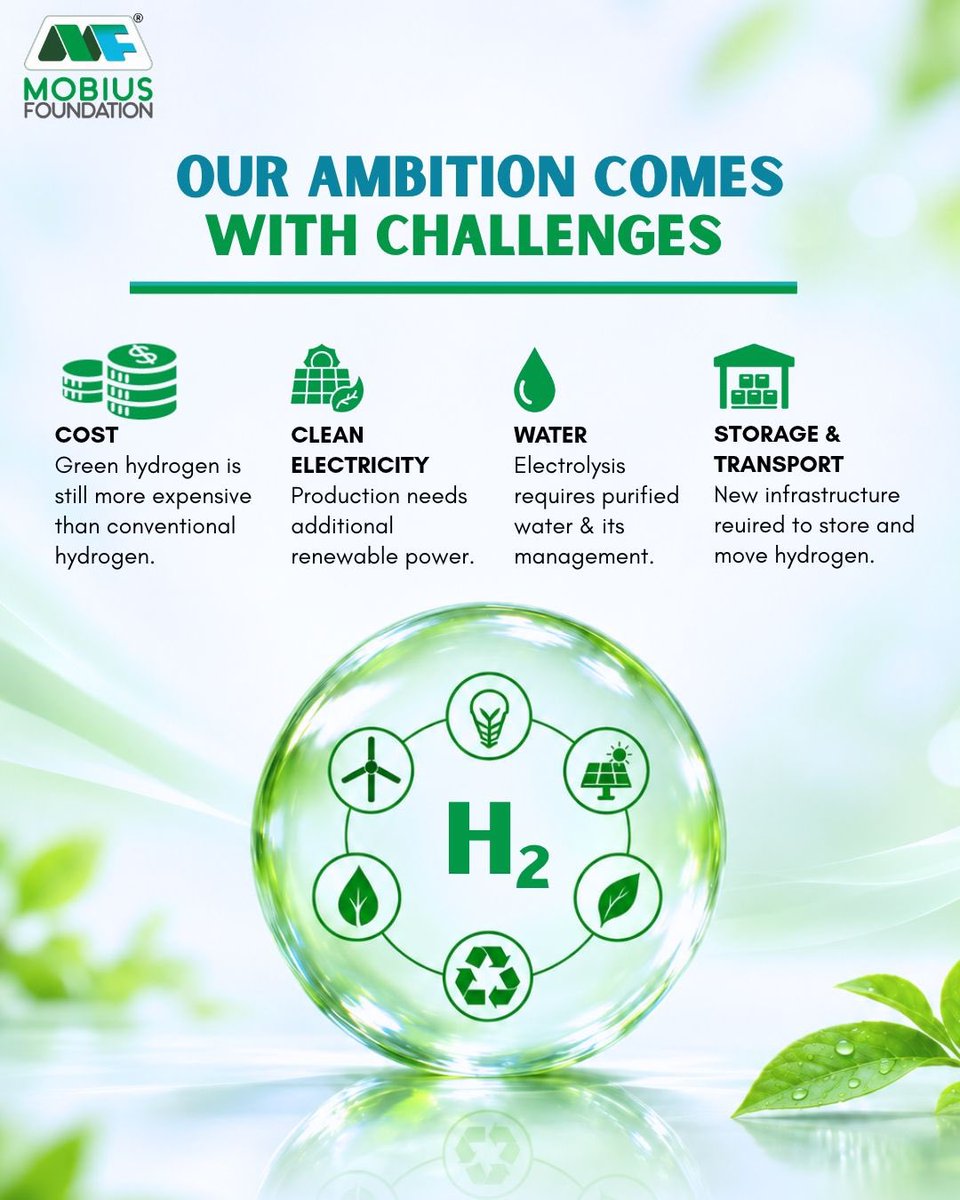
But the real test lies in making green hydrogen affordable, accessible, and scalable.
#GreenHydrogen #EnergyTransition #CleanEnergy #MobiusFoundation #ExplainedbyMobius
Educate a girl. Empower a generation.
Through Gyaan Kanya Shakti, Mobius Foundation is strengthening foundational learning and expanding educational opportunities for girls across Uttar Pradesh and Madhya Pradesh.
Because every girl deserves the opportunity to learn, participate and shape her future.
#MFICSE2026 #GyaanKanyaShakti #MobiusFoundation #GirlsEducation #EmpoweringGirls
What happens thousands of kilometres away in the Pacific Ocean can influence the food on your plate.
El Niño may begin with warmer ocean waters, but its effects travel far beyond the tropics. By disrupting global weather patterns, it can influence India's monsoon, affect agricultural production, and put pressure on food prices.
From the fields where our food grows to the markets where we buy it, climate and food security are more connected than we think.
From the Pacific Ocean to your dinner plate, discover the far-reaching impact of El Niño.
#MobiusFoundation #ExplainedbyMobius #ElNino #ClimateChange #FoodSecurity
Informed choices. Accessible care. Stronger communities.
Through Aakar, Mobius Foundation is strengthening reproductive health awareness and access across high-TFR communities in Uttar Pradesh and Bihar.
Because reproductive health begins with access, awareness and choice.
#MFICSE2026 #Aakar #MobiusFoundation #ReproductiveHealth #FamilyPlanning
At the 8th International Conference on Sustainability Education, Ms. Shreelata Krishnan, Director of the School of Policy & Governance, emphasized that as policymakers, continuous engagement in the learning process is essential to staying updated.
Her insights highlight a core systemic gap: static governance cannot keep pace with a rapidly evolving climate crisis. How do we build adaptive, knowledge-driven policymaking that responds effectively to environmental realities?
#MFICSE2026 #SustainabilityEducation #EnvironmentalPolicy #ContinuousLearning #GoodGovernance
The snow leopard is more than a elusive big cat. It is the guardian of the high mountains, and its survival tells us how healthy those landscapes really are.
Across the Himalayas and Central Asia, these mountains support wildlife, freshwater sources and the communities who live alongside them. When the snow leopard is threatened, the whole ecosystem is at risk.
Protecting them takes collective action. Travel responsibly in the mountains, say no to wildlife products, choose reusables over plastic and share only verified conservation stories.
This International Snow Leopard Day, let’s remember that protecting the snow leopard ultimately means protecting the mountains that make life possible.
#InternationalSnowLeopardDay #SnowLeopard #SaveTheSnowLeopard #GhostOfTheMountains #SnowLeopardConservation
Are our children bearing the heaviest burden of a changing climate?
At the 8th International Conference on Sustainability Education, Mr. Bo Beiskjaer, Chief of Resource Mobilization and Partnerships at UNICEF, introduced the critical topic of climate change, emphasizing how profoundly detrimental it is to children.
His observations point to a larger question: how do we protect the most vulnerable generations from a crisis they did not create? Sustainability education is vital to equipping young minds with the resilience, knowledge, and agency needed to secure a livable future.
#MFICSE2026 #SustainabilityEducation #ClimateAction #ChildRights #FutureGenerations
Is sustainability education truly enough to drive systemic change?
At the 8th International Conference on Sustainability Education, Prof. Bhaskar Vira, Pro-Vice-Chancellor for Education and Environmental Sustainability and Professor of Political Economy at the University of Cambridge, raised a probing question about the limitations and reach of current educational frameworks.
His inquiry prompts a deeper reflection: how do we move beyond conventional classroom teachings to spark genuine ecological transformation? Integrating deep-seated values with systemic economic and social change is essential to making sustainability education a true catalyst for action.
#MFICSE2026 #SustainabilityEducation #PoliticalEconomy #SystemicChange #EnvironmentalLeadership
When can we truly solve the challenges of poverty and the environment?
At the 8th International Conference on Sustainability Education, Mr. Kartikeya Sarabhai, Padma Shri Awardee and Founder Director of the Centre for Environment Education (CEE), issued a powerful reminder that we cannot eradicate poverty without healing the environment, nor can we fix the environment while ignoring poverty. He underscored India's historic role in championing this inseparable link on the global stage at Stockholm in 1972.
His insights challenge us to confront a fundamental reality: true progress is impossible when we treat development and ecology as separate fights. By uniting economic wellbeing, conscious lifestyles, and sustainability education, we can move past fragmented efforts and build an equitable, resilient future where no one is left behind.
#MFICSE2026 #SustainabilityEducation #ClimateAction #EnvironmentAndPoverty
What can a river tell us about the health of a city?
At the 8th International Conference on Sustainability Education, Ms. Sunita Narain, Director General, Centre for Science and Environment (CSE), drew attention to the Yamuna’s deteriorating ecological health, highlighting zero dissolved oxygen levels as a measure of the scale of the challenge.
Her observations point to a larger question: how do we translate environmental evidence into collective understanding and meaningful action? Sustainability education is central to this effort, connecting scientific knowledge with the awareness, critical thinking and responsibility needed to shape a more sustainable future.
@CSEINDIA
#MFICSE2026 #SustainabilityEducation #EnvironmentalAwareness #WaterConservation
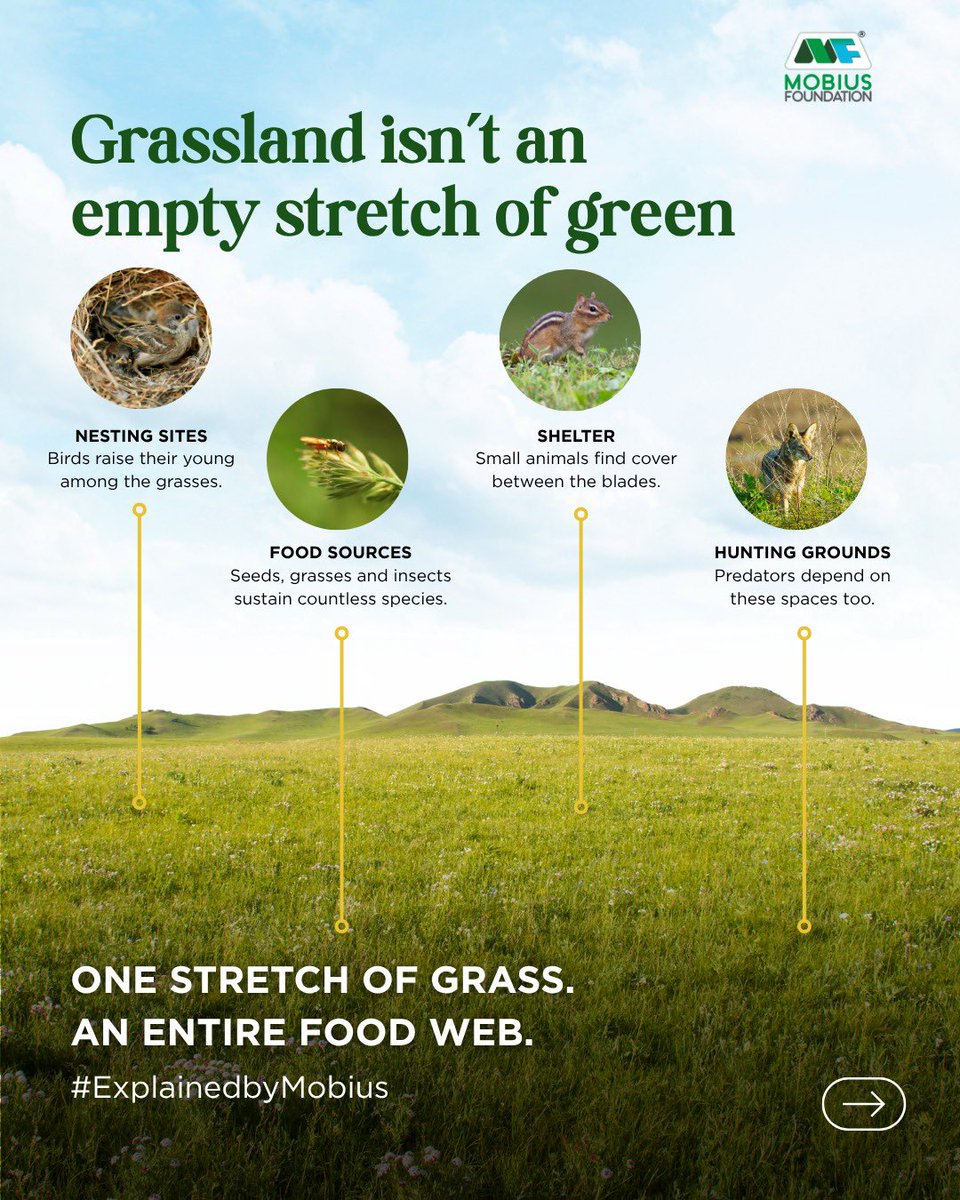
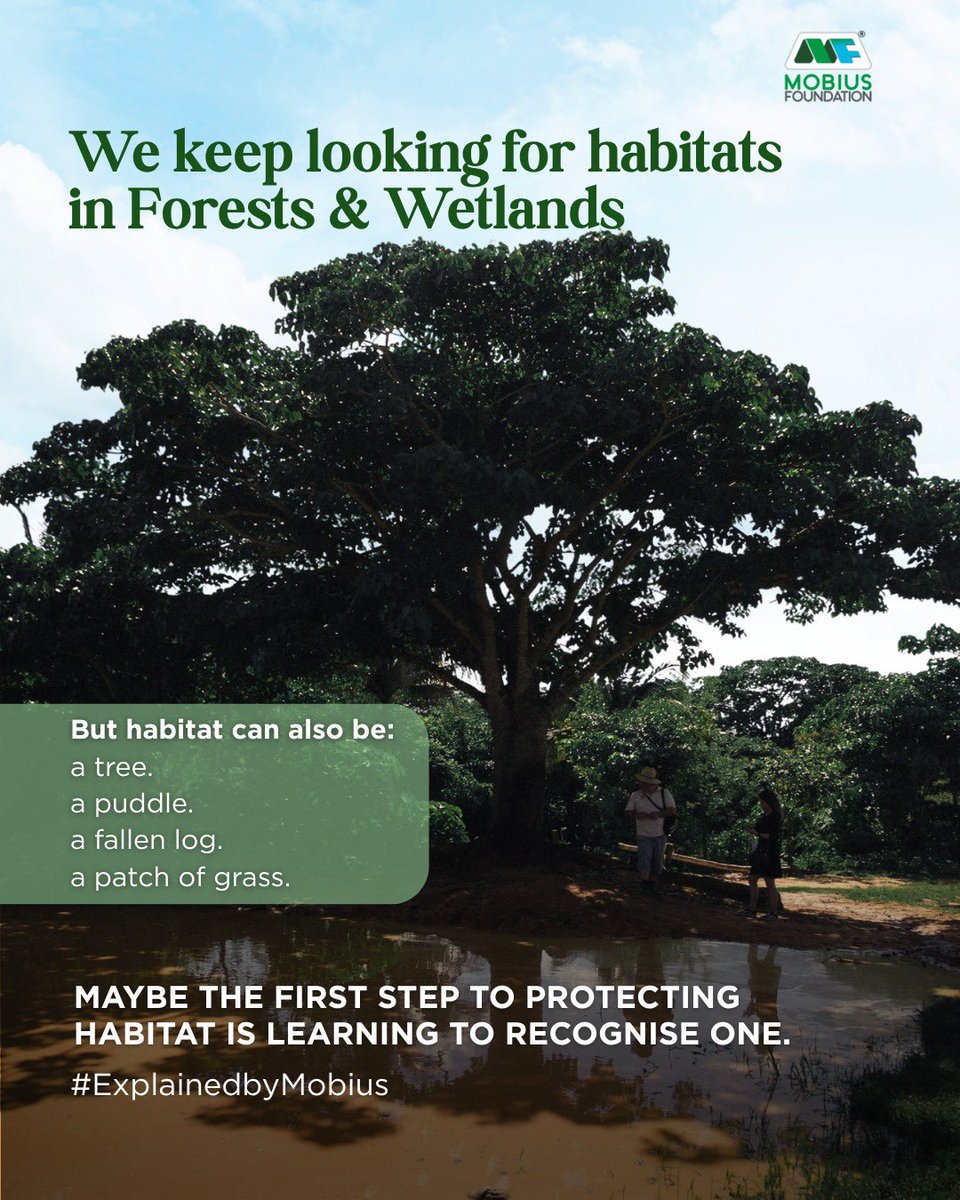
We tend to think of habitats as places: forests, wetlands, grasslands, ecosystems that appear large enough to deserve the name.
But nature does not draw those boundaries.
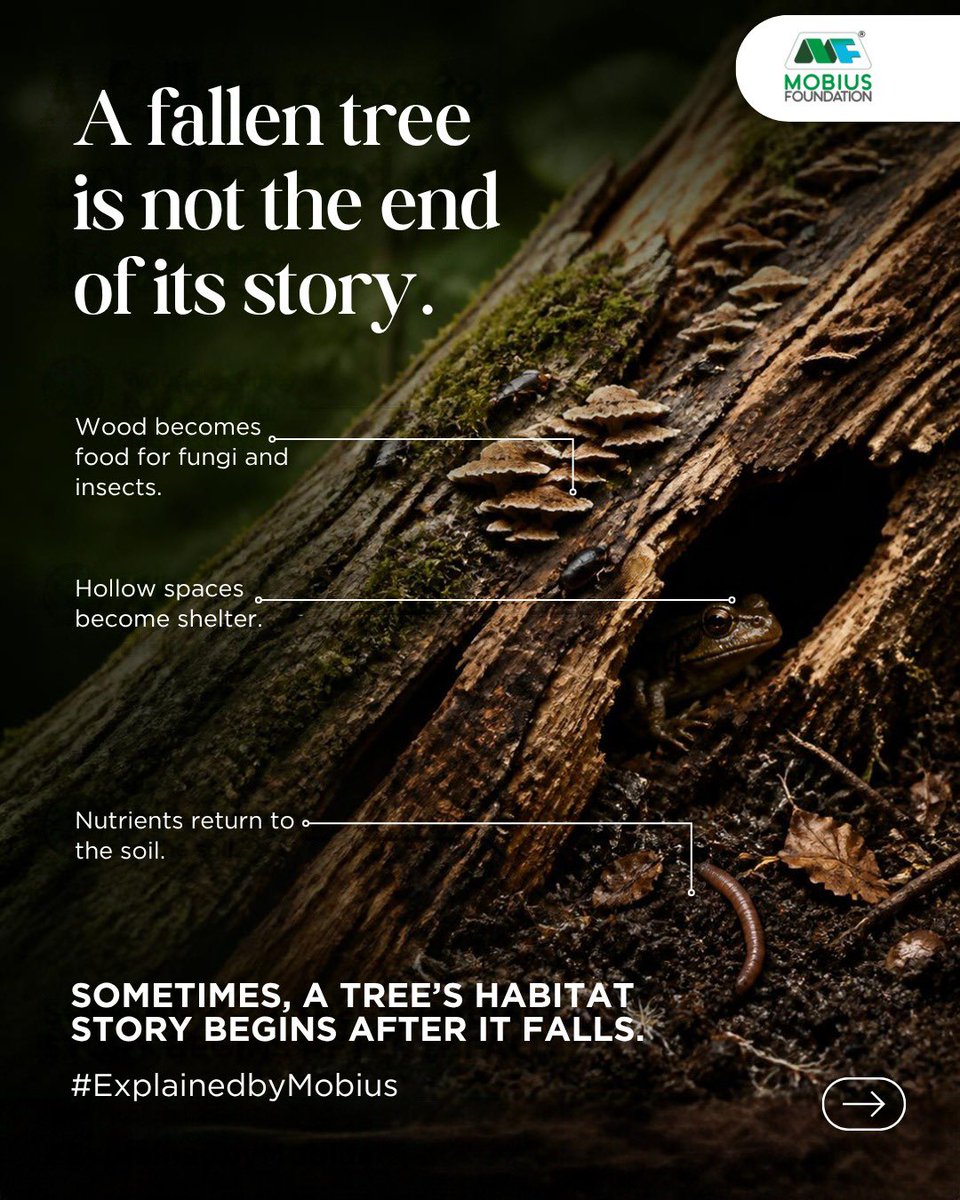
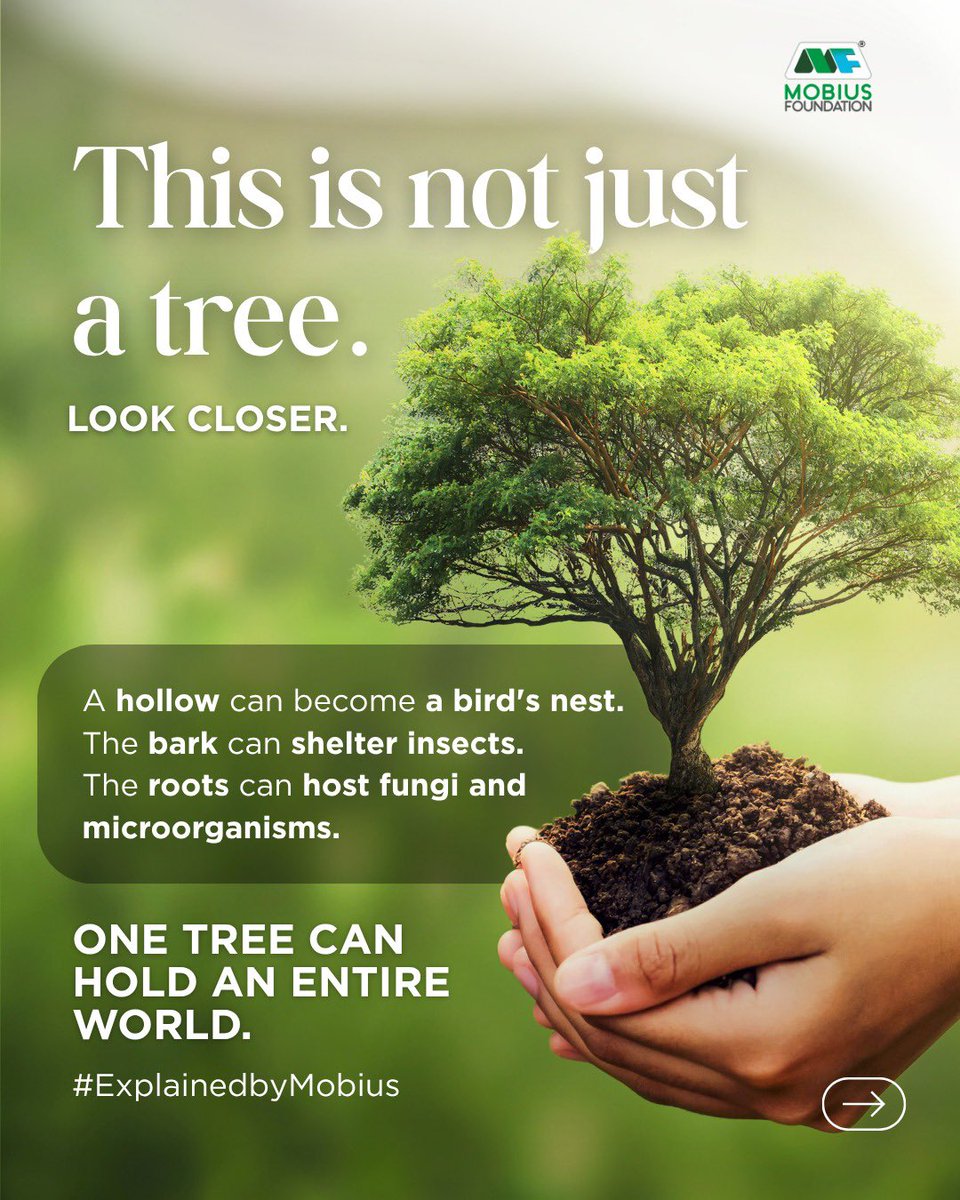
A hollow in a tree can be shelter.
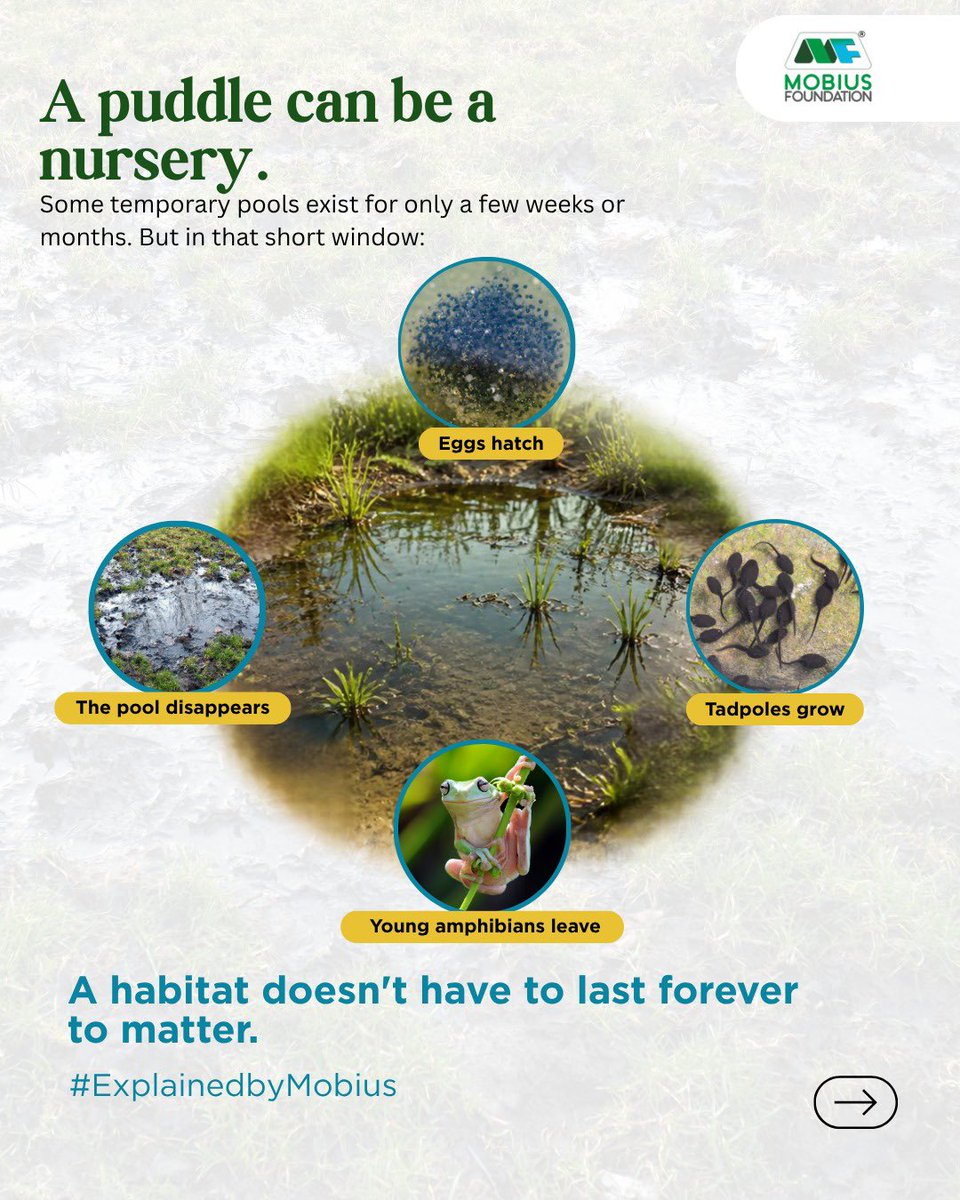
A puddle can be a nursery.
A fallen log can become a thriving ecosystem.
A patch of grass can sustain an entire food web.
Some habitats last for centuries. Others disappear in weeks. Some are visible from a distance. Others exist in spaces we barely notice. What matters is not how large a habitat looks to us, but how it sustains life.
#MobiusFoundation #Biodiversity #Habitats #Conservation #ExplainedbyMobius