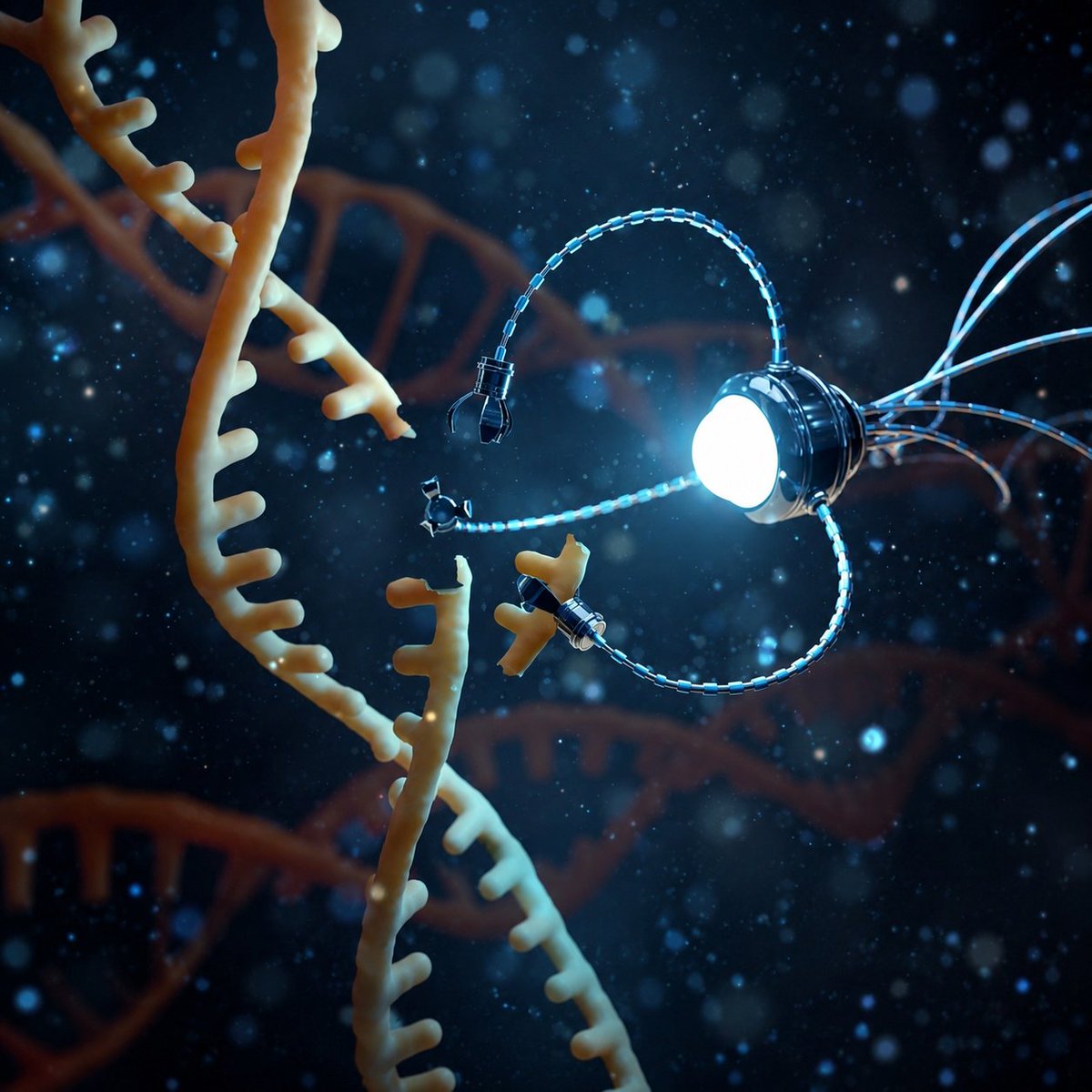
Imagine destroying a tumor by turning it into ice.
Doctors in Australia are using a breakthrough technique that freezes cancerous tumors into a solid ice ball, causing the damaged cells to die off.
No major incisions.
No traditional surgery.
Just extreme cold targeting the tumor with remarkable precision.
A glimpse of what the future of cancer treatment can look like.
It's a friday night (sat morning?) miracle, we're back up and running!
Raise a glass to the tech crew for their hard work on fixing, and I raise one to all of you for fun chats while we waited 🥂
landy will be okay landy will be okay landy will be okay landy will be okay landy will be okay landy will be okay landy will be okay landy will be okay landy will be okay landy will be okay landy will be okay landy will be okay landy will be okay landy will be okay landy will be
In the body, many cancer cells are coated with a dense layer of sugar molecules on their surface. This coating helps tumors conceal their identity and evade detection by the immune system.
Researchers from the Massachusetts Institute of Technology and Stanford University have reported a new and promising experimental cancer treatment strategy that aims to help the immune system recognize and destroy tumors more effectively.
The goal of this approach is to disrupt the sophisticated “camouflage” cancer cells use to avoid immune attack.
Many cancer cells display large amounts of surface sugars known as glycans, particularly sialic acid. This sugar layer acts as a biological shield that interferes with immune recognition.
When these sugars bind to Siglec receptors on immune cells, they trigger inhibitory signals that cause immune cells to reduce their activity rather than attack the tumor. This mechanism helps explain why tumors can continue growing even when immune cells are present nearby.
To counter this effect, the research team developed a hybrid molecule called AbLecs. These molecules combine a cancer-targeting antibody with a lectin, a protein that binds strongly to specific sugar molecules on tumor cells.
This two-part design allows AbLecs to precisely target cancer cells and bind to their sialic-acid-rich surface, effectively blocking or masking the sugar signals that suppress immune activity.
By neutralizing this sugar-mediated inhibition, immune cells such as macrophages and natural killer cells can become active again and more effectively attack tumor cells.
In mouse experiments using metastatic lung cancer models, AbLecs demonstrated stronger anti-tumor effects than standard antibody therapies alone.
When compared with trastuzumab by itself, a commonly used antibody drug for breast and gastric cancers, treatment with AbLecs resulted in significantly fewer metastatic tumors in the lungs. This suggests that disrupting the sugar-based camouflage can enhance both immune responses and antibody effectiveness.
Another advantage of AbLecs is their modular design. The antibody portion can be swapped to target different cancer types, such as breast, stomach, or colorectal cancer, while the lectin portion can be adjusted to address different tumor-associated sugar patterns.
To advance this technology toward clinical use, the researchers have formed a startup company with the aim of initiating human clinical trials within the next few years.
If future studies are successful, AbLecs could offer a new option for patients who do not respond to existing immunotherapies and deepen scientific understanding of how cancers evade immune defenses.