Teacher of 25+ years in Ontario. Math, reading and the learning conditions that help every child think. Free tools for teachers and families at the link.
Before you correct a wrong answer, ask this
A wrong answer gives us a choice.
We can correct the answer, or first find the thinking behind it.
One question helps:
“Walk me through how you got that.”
The quick, kind thing is to steer a child to the right answer. We all do it. There are twenty other children waiting and a lesson to finish.
But the quick fix has a cost we rarely see.
When we correct straight away, we fix the answer and miss the thinking. The child learns that wrong answers get taken off their hands. Next time they're unsure, they wait for us, or they guess and watch our face.
Over a term, the room learns something bigger: being wrong is something to hide. And a room where children hide their thinking is a room where we can't see what they understand.
Ask the question instead, and often one of three things happens.
1. They find the mistake themselves, halfway through explaining. The correction belongs to them.
2. They show you a rule used in the wrong place. Now you know exactly what to reteach, and it's one small thing.
3. They show you they understood something different from what you taught. That one is the easiest to miss, because explaining it again the same way might not have reached it.
A wrong answer isn't the end of the thinking. It's a window into it.
A few things that make the question work:
- Ask it after right answers too, so it never means “you're wrong.”
- Keep your face and voice the same either way.
- Wait. Give them the quiet to get there.
- If a child has no starting point at all, teach first. The question needs something to look at.
I've taught for 25+ years, from Mumbai to a Grade 2 room in Ontario. If I could keep only one question, it would be this one.
This is what I mean when I say adults create conditions and children do the growing. The question is small. What it builds is a room where it's safe to think out loud. In The Learning Conditions I call that Cultivate Safety, and most of the rest grows from it.
Each week I share one small question like this, to help us hear what children are thinking.
Try it tomorrow with one child, and do let me know what you notice.
Ms Mamta
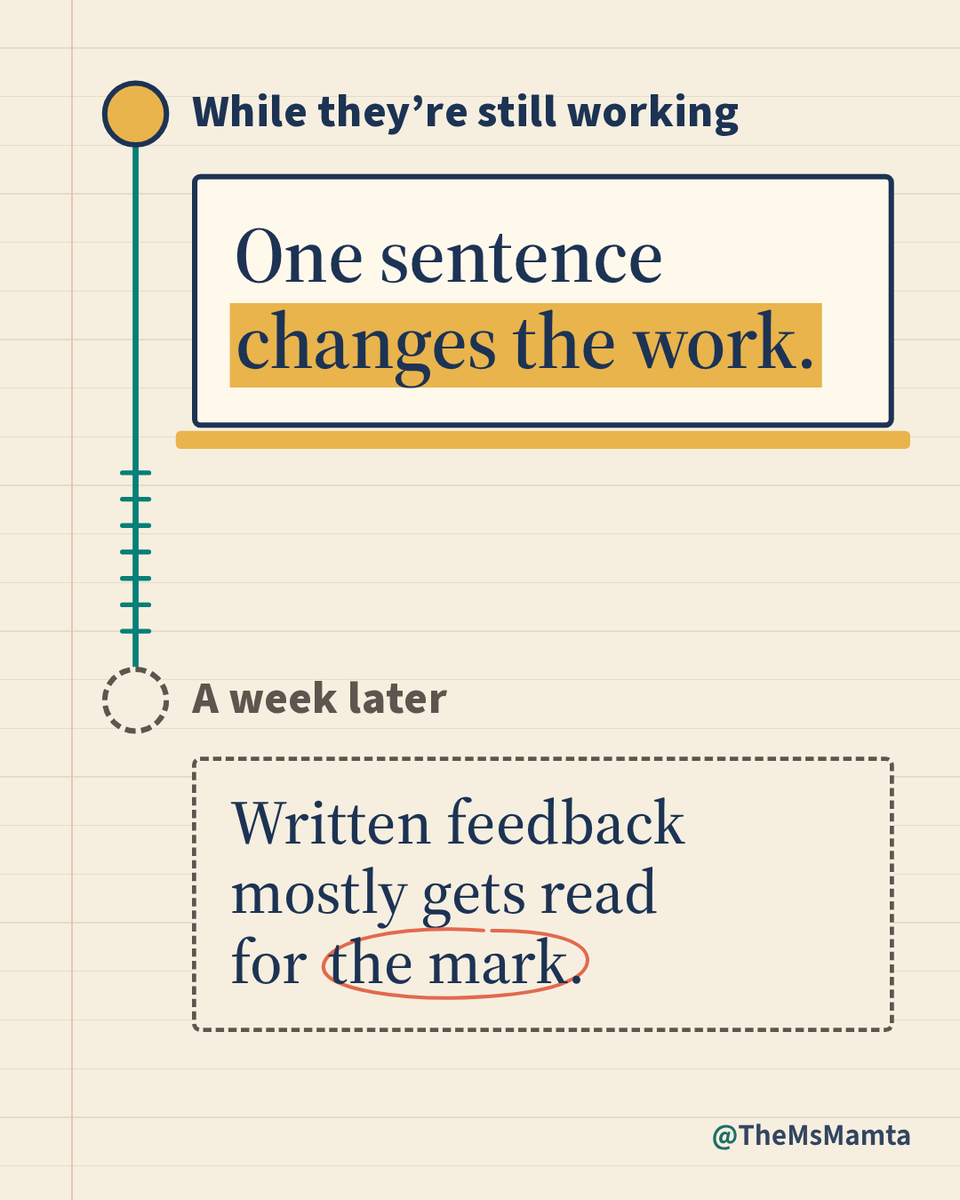
I'm not sure the comments we write a week later get read. Most children find the mark and move on.
One sentence beside them, while the pencil is still moving, changes the work. The paragraph in the margin rarely does.
@ElectronJacob Jacob, I missed this one 🙈
You said pictures save you, so lean on that. Phasor diagrams turn those sine waves into arrows you can actually see.
And when a problem goes wrong, find the exact step where it broke. That step is your study plan.
@PapaPelkey83 Honestly? I'd want more picture books that leave a page turn for the child to guess what happens.
And I'd rather the lesson wasn't spelled out on the last page. Let them find it.
@TitilayoEbunol2 I'd frame your line about "useful information" for every parent.
A note home saying "stuck on question 3, we stopped here" tells the teacher far more than a beautiful exercise book.
@HelpfulTeacher_ Well, I'm with you on this one.
What makes or breaks it is the adults. If one classroom lets it slide, children spend the whole day testing every other room.
Here's a test I like for classroom routines: would they survive a supply teacher?
Ask the class, "Who can show our visitor how our class works?" If nobody can, the routines live in you, not in them 👇
@TolentinoTeach 'Relaxed alertness' is the perfect phrase for what the silly ones do! I'd add one thing: children learn the most about difference when they see the serious teacher and the silly one genuinely respect each other.
@Kensetsu6 They really do learn the strategies from us. How we handle frustration teaches more than anything we say about it, so staying calm in the hard moment is the lesson that sticks.
@UpperMerionSD Fraction circles are perfect for this. Holding a third next to a fourth and asking which is bigger clears up the idea that a bigger number means a bigger piece.
@usofiahowad Stories without books matter just as much. A child who hears a story with no pictures has to build the pictures in their own head, and that is real reading work.
@davidihuang Processing time is the one I would protect first. A few quiet minutes to think before anyone answers tells a child their thinking is worth waiting for.
@GreatGraceB Children often forgive one broken promise, but a pattern of them sticks. Fewer promises, kept every time, teach more than any talk about honesty.