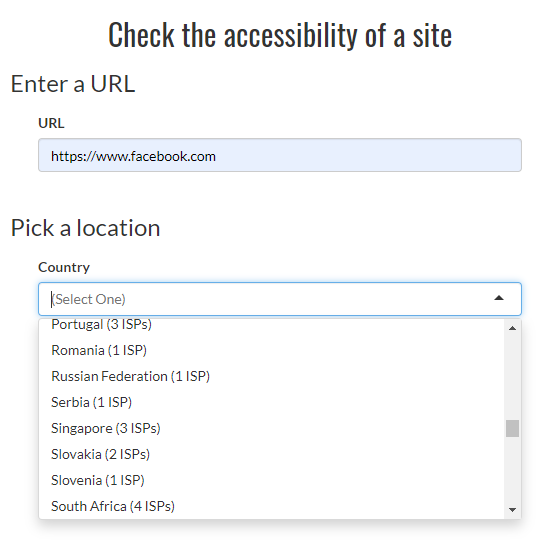
The Internet Monitor project @BKCHarvard is excited to announce the launch of AccessCheck, a tool that allows people to test the accessibility of websites in countries around the world in real time: https://t.co/NEOjVcO6lu
To what degree is English-language Wikipedia successful in moderating harmful speech? A BKC research team explored this question and more 👇👇👇https://t.co/szMYtsGXIs
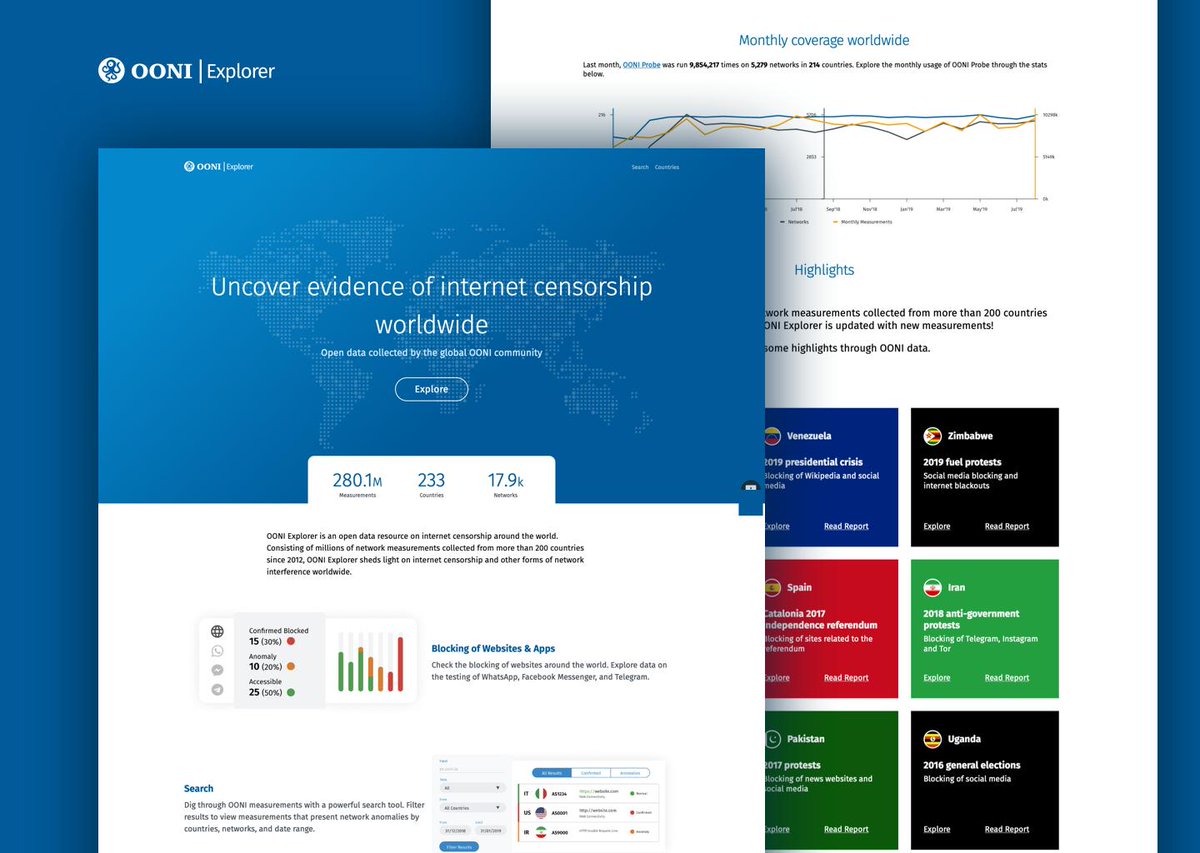
Next Generation OONI Explorer Launched! 🎉🐙🚀✨
https://t.co/Nl3ZgAWXDU
Uncover evidence of internet censorship worldwide. 🌍
Open data by the global OONI community. 💙
Learn what's new in OONI Explorer 2.0: https://t.co/vEHTKpCHCL
#censorship#OpenData
How do you know if a website has gone dark in another part of the world? Try out https://t.co/BCpctsKPre, a new tool from @thenetmonitor
Learn more in our weekly newsletter:
https://t.co/eOkJhztJjB
New: Our @thenetmonitor project just launched AccessCheck, a tool that allows people to test the accessibility of websites in countries around the world in real time. Learn more:
https://t.co/tiyRNU6PfV
AccessCheck is powered by data collected from VPNs, VPSs, and from measurements collected by @openobservatory and ICLab. If you’re interested in signing up and providing feedback, learn more at https://t.co/T2wQZsthsG.
The Internet Monitor project @BKCHarvard is excited to announce the launch of AccessCheck, a tool that allows people to test the accessibility of websites in countries around the world in real time: https://t.co/NEOjVcO6lu
I wrote about how Internet protocols can advance or hinder the protection of human rights online for @HarvardKSR.
The article is out now, check it out! https://t.co/yMaOf79wRG
The Clinic filed an amicus brief in the Ninth Circuit this week, supporting @cironline in a case re: FOIA and access to gov't databases. Amici include data journalists, journalism profs, and media-related organizations. https://t.co/C1JpJT2rIJ
The BKC/@medialab Assembly cohort is coming together to tackle ethics and AI. Check out the crew of 17 technologists, managers, policymakers, and other professionals who will be joining us for the next 4 months! https://t.co/qbSFYYAJRW
Several Sudanese govt websites (https://t.co/8EbJs3xLyV) have been offline. Anonymous claimed responsibility in December shortly after the start of street protests https://t.co/bnLbizf7i2
A new project is looking to hire part-time researchers to help improve url testing lists for select countries in the MENA region and Turkey, Pakistan, China and Iran: https://t.co/TYEG3Cguwp
Fascinating study on Middle Eastern & North African states using internet censorship
for #geoeconomic and political goals--e.g. blocking rival companies' websites & filtering out rival politics, via @thenetmonitor@helminoman
https://t.co/K6A3BSjlLv
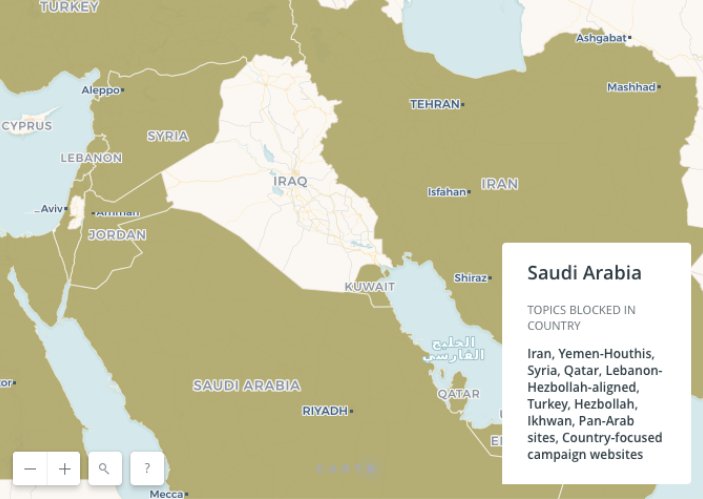
ICYMI: the latest report from @thenetmonitor and @helminoman investigates how adversarial relationships between states in the MENA region translate into Internet censorship practices. https://t.co/iFVy34RMBA
Internet censorship in the MENA region includes censoring sites and content from other nearby governments. Saudi Arabia, Bahrain, UAE, and Egypt block Iranian content and vice versa, and SA and UAE's Qatari boycott extends to a number of Qatari sites, including sports networks.
NEW: @thenetmonitor’s latest report from @helminoman analyzes how conflicts between states in the Middle East & North Africa region translate into Internet censorship practices
https://t.co/5aa3kberO8
How do conflicts between states in the MENA region translate into Internet censorship practices? Internet Monitor's latest report, by @helminoman, finds that governments are increasingly blocking content from rival states: https://t.co/noSE5t7iej