Spot on, Tony. “Learning by doing” is how real judgment is built, not from theory, but from fixing bugs, talking to customers, and walking the factory floor. AI should accelerate that messy apprenticeship, not shortcut it. Otherwise we risk a generation without seasoned experts.
Nobel Prize winning economist Kenneth Arrow wrote about "learning by doing" decades ago. He knew that productivity and expertise improve through experience.
The messy, repetitive works is often where you learn the patterns that eventually become judgment. Knowledge can be taught, but judgement is built through lived experience.
The first draft you rewrite. The customer call you listen to. The bug you fix and fix again. The factory floor you walk.
Small decisions you make every day teach you judgement. And, judgement is the thing everyone wants from senior people in the workplace. If we automate away every entry-level task without replacing the learning loop, we are removing a part of the process that creates experts.
The goal should be to use AI to accelerate learning, remove friction, and give people better tools to build expertise faster.
https://t.co/MpFZzCk1An
Thanks @Fortune & @tbove4 for sharing this story. Link in the comments.
Nobel Prize winning economist Kenneth Arrow wrote about "learning by doing" decades ago. He knew that productivity and expertise improve through experience.
The messy, repetitive works is often where you learn the patterns that eventually become judgment. Knowledge can be taught, but judgement is built through lived experience.
The first draft you rewrite. The customer call you listen to. The bug you fix and fix again. The factory floor you walk.
Small decisions you make every day teach you judgement. And, judgement is the thing everyone wants from senior people in the workplace. If we automate away every entry-level task without replacing the learning loop, we are removing a part of the process that creates experts.
The goal should be to use AI to accelerate learning, remove friction, and give people better tools to build expertise faster.
https://t.co/MpFZzCk1An
Thanks @Fortune & @tbove4 for sharing this story. Link in the comments.
All Paid Courses (Free for First 4500 People)
𝗣𝗮𝗶𝗱 𝗖𝗼𝘂𝗿𝘀𝗲 𝗙𝗥𝗘𝗘 (PART - 1)
1. Artificial Intelligence
2. Machine Learning
3. Prompt Engineering
4. Claude,Chatgpt,Grok
5. Data Analytics
6. AWS Certified
7. Data Science
8. BIG DATA
9. Python
10. Ethical Hacking
(72 Hours only )
To get-
1. Follow me to get DM
2. Like + RT
3. Reply " All "
Finance analysts earn $95k–$250k/year.
The ones using Claude AI close work 3x faster.
📘 Claude AI for Finance Professionals — 120+ institutional-grade prompts for equity research, DCF, fixed income, portfolio strategy, earnings analysis, and IB workflows. Excel models included.
Normally $189 → 100% FREE for 48 hrs
Like + RT + comment 'Ebook'
Must Follow me so I can DM you.
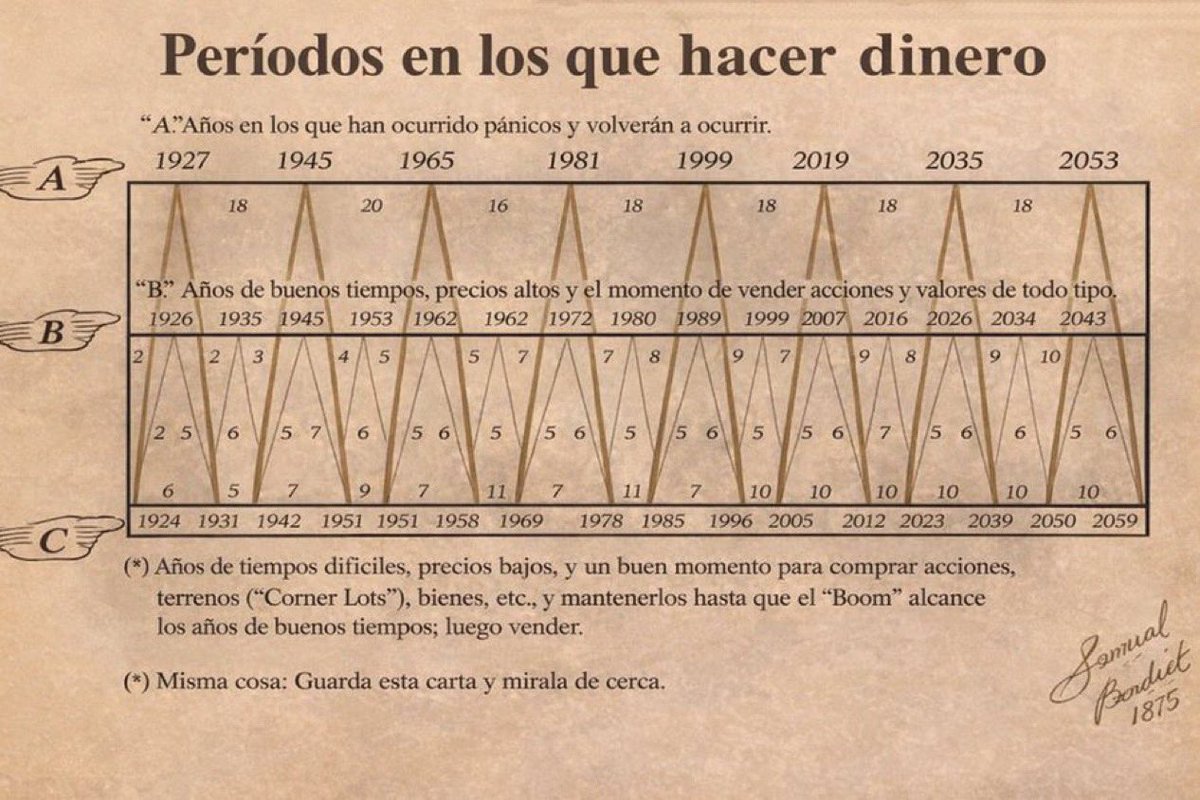
Este gráfico fue creado en 1875.
Hace 150 años.
Sin internet.
Sin Reserva Federal moderna.
Sin redes sociales.
Y aún así predijo:
2000 — burbuja tech
2008 — colapso financiero
2020 — pánico pandémico
2023 — acumulación silenciosa
Ahora viene lo importante:
2026 = EUFORIA
(precios disparados, todos comprando por miedo a perderse el tren)
2035 = ANIQUILACIÓN
(corrección brutal, pánico vendedor masivo) Es el mismo ciclo de siempre.
El dinero no se crea.
Se transfiere. De los impacientes que venden en el miedo o compran en la cima, a los disciplinados que acumulan en silencio cuando nadie quiere tocarlo.
Hoy acumulas (oro físico, mineras de calidad o ETFs a precios "razonables" en correcciones).
En 2026…
Ellos te comprarán mucho más caro (o te venderán en pánico si ya estás posicionado).
Y en 2035…
Volverán a suplicar por salir a cualquier precio.
La historia no se repite.
Pero rima.
@SimFubaraKSC Your Excellency @SimFubaraKSC,
The progress at Creek Road Market is impressive! You're giving our people a safe, modern trading environment.
As a proud Abua/Odual son, ignore the noise and keep delivering. We're solidly behind you.
Rivers is proud of you!
#FubaraIsDelivering