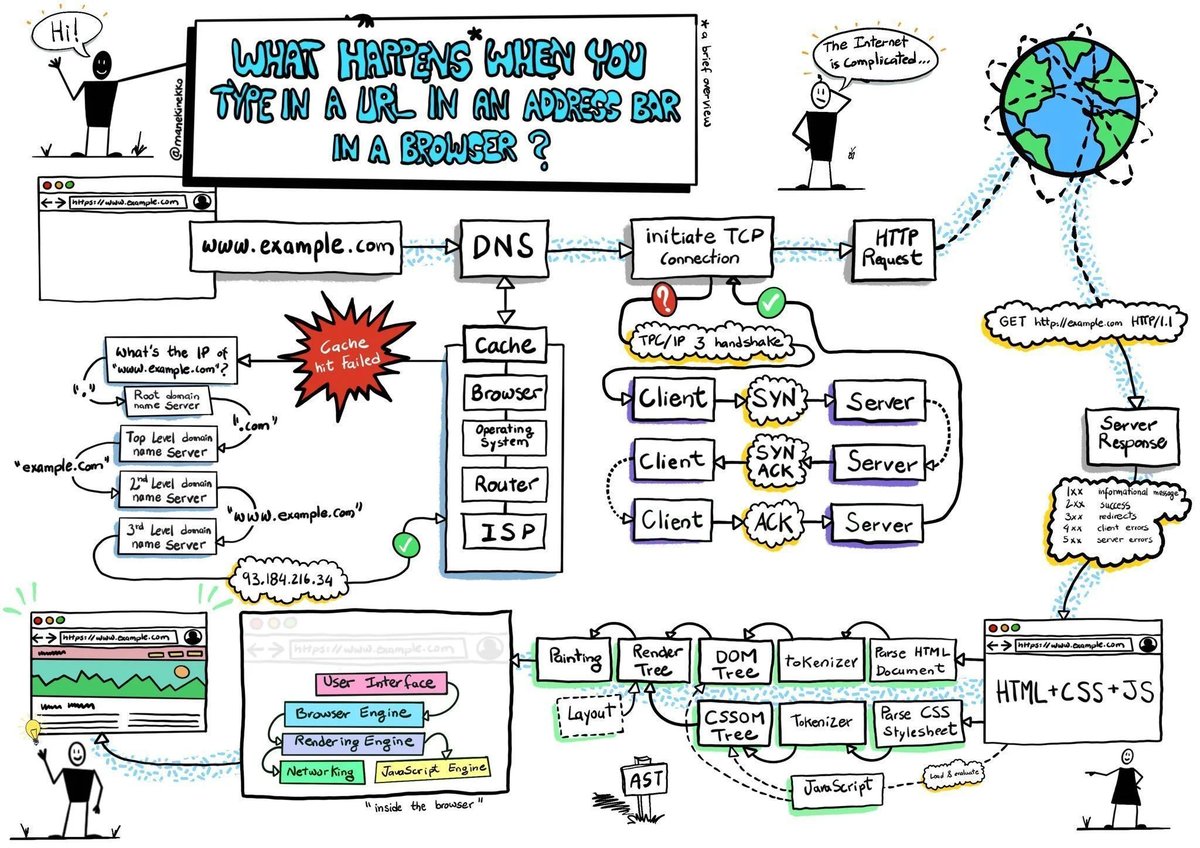
𝗪𝗵𝗮𝘁 𝗵𝗮𝗽𝗽𝗲𝗻𝘀 𝘄𝗵𝗲𝗻 𝘆𝗼𝘂 𝘁𝘆𝗽𝗲 𝗮 𝗨𝗥𝗟 𝗶𝗻𝘁𝗼 𝘆𝗼𝘂𝗿 𝗯𝗿𝗼𝘄𝘀𝗲𝗿?
The process involves the browser, your computer’s operating system, your internet service provider, the server where you host the site, and the services running on that server.
𝟭. 𝗬𝗼𝘂 𝘁𝘆𝗽𝗲 𝗵𝘁𝘁𝗽𝘀://𝘀𝗼𝗺𝗲𝘄𝗲𝗯𝘀𝗶𝘁𝗲.𝗰𝗼𝗺/𝗽𝗮𝗴𝗲 𝗶𝗻 𝘆𝗼𝘂𝗿 𝗯𝗿𝗼𝘄𝘀𝗲𝗿 𝗮𝗻𝗱 𝗽𝗿𝗲𝘀𝘀 𝗘𝗻𝘁𝗲𝗿
Here, https:// is a scheme that tells the browser to connect to the server using TLS. somewebsite. com is the site's domain name pointing to a specific server IP address. And /page is a path to the resource you need.
𝟮. 𝗕𝗿𝗼𝘄𝘀𝗲𝗿 𝗹𝗼𝗼𝗸𝘀 𝘂𝗽 𝗜𝗣 𝗮𝗱𝗱𝗿𝗲𝘀𝘀 𝗳𝗼𝗿 𝘁𝗵𝗲 𝗱𝗼𝗺𝗮𝗶𝗻
After you’ve typed the URL into your browser and pressed enter, the browser needs to figure out which server on the Internet to connect to. It must look for the IP address of the server hosting the website using the domain you typed to accomplish that. DNS lookup is used to do this. Here, it determines whether we can locate it in the cache; if not, DNS must search domain name servers from the root to the third level.
𝟯. 𝗕𝗿𝗼𝘄𝘀𝗲𝗿 𝗶𝗻𝗶𝘁𝗶𝗮𝘁𝗲𝘀 𝗧𝗖𝗣 𝗰𝗼𝗻𝗻𝗲𝗰𝘁𝗶𝗼𝗻 𝘄𝗶𝘁𝗵 𝘁𝗵𝗲 𝘀𝗲𝗿𝘃𝗲𝗿
Transmission control protocol, more formally known as TCP, is used throughout the public Internet routing infrastructure to route packets from a client browser request through the router, the Internet service provider, through an Internet exchange to switch ISPs or networks, and finally to find the server with the IP address to connect to. This is an inefficient route to take to get there. Instead, many websites employ a CDN to cache static and dynamic material closer to the browser.
𝟰. 𝗕𝗿𝗼𝘄𝘀𝗲𝗿 𝘀𝗲𝗻𝗱𝘀 𝘁𝗵𝗲 𝗛𝗧𝗧𝗣 𝗿𝗲𝗾𝘂𝗲𝘀𝘁 𝘁𝗼 𝘁𝗵𝗲 𝘀𝗲𝗿𝘃𝗲𝗿
Now that the browser is connected to the server, it complies with the HTTP(s) protocol's requirements for communication. The browser sends an HTTP request to the server for the page's contents. The body, headers, and request line of an HTTP request are all present. The server can determine what the client wants to do using the information in the request line.
𝟱. 𝗦𝗲𝗿𝘃𝗲𝗿 𝗽𝗿𝗼𝗰𝗲𝘀𝘀𝗲𝘀 𝗿𝗲𝗾𝘂𝗲𝘀𝘁 𝗮𝗻𝗱 𝘀𝗲𝗻𝗱𝘀 𝗯𝗮𝗰𝗸 𝗮 𝗿𝗲𝘀𝗽𝗼𝗻𝘀𝗲
The server accepts the request and determines how to handle it depending on the data in the request line, headers, and body. The server receives the material at this URL for the GET /page/ HTTP/1.1 requests, builds the response, and then delivers it back to the client with an HTTP status code.
𝟲. 𝗕𝗿𝗼𝘄𝘀𝗲𝗿 𝗿𝗲𝗻𝗱𝗲𝗿𝘀 𝘁𝗵𝗲 𝗰𝗼𝗻𝘁𝗲𝗻𝘁
After receiving the server's response, the browser examines the response headers for instructions on rendering the resource. The Content-Type header informs the browser that an HTML resource was received in the response body.
Image credits: manekinekko.
#technology #softwareengineering #programming #techworldwithmilan #web
Concepts Every Developer Should Know: Concurrency is NOT Parallelism
Parallelism and concurrency are two terms that often create confusion.
As Rob Pyke (one of the creators of GoLang) succinctly put it:“ Concurrency is about dealing with lots of things at once. Parallelism is about doing lots of things at once."
One is about managing multiple tasks at once, intermixing them to optimize resource usage.
The other involves executing multiple tasks simultaneously, typically on multiple processors or cores.
What is concurrency?
Managing several tasks on a single processor by intermixing them, giving the appearance of simultaneous execution is called concurrency.
It refers to the system's ability to switch between multiple tasks rather than performing them at once, creating an illusion of parallel execution.
Concurrency effectively utilizes processor time, especially when tasks must wait for others to finish.
What is parallelism?
Parallelism involves performing multiple tasks simultaneously.
This works by efficiently utilizing multiple processors or cores in a computing system.
The distinction between concurrency and parallelism has a direct impact on application performance and efficiency.
Because it supports simultaneous task execution, parallelism is particularly useful for compute-intensive applications that distribute tasks across multiple processors.
Asynchronous programming is used to achieve concurrency in single-threaded environments.
This approach enables a program to initiate tasks without waiting for previous ones to finish, managing multiple tasks in a non-blocking manner.
One great example is Node.js, which handles concurrency in a single-threaded model with callbacks and event loops.
Meanwhile, multi-threaded environments exploit both concurrency and parallelism.
They facilitate both concurrent task execution on a single processor and true parallel execution across multiple processors or cores simultaneously.
Multi-threaded programming languages like C# provide the framework for developers to take advantage of these features.
Understanding concurrency and parallelism is an important distinction for building high-performing and efficient software solutions.
~~
A big thank you to our partner Postman who keeps our content free to the community.
Who doesn’t love a custom theme? Postman released custom themes in their v11 release. Check it out: https://t.co/eZGOHiTy2P