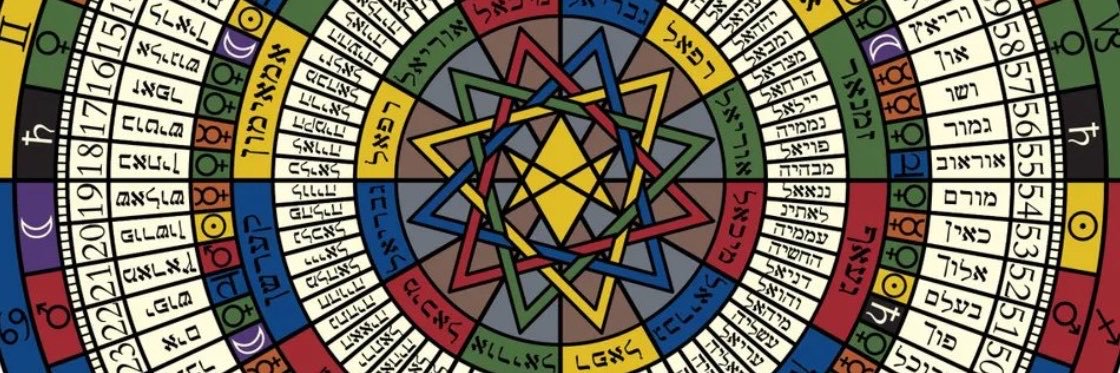
Reading the old esoteric traditions from their primary sources: Hermetic, Pythagorean, Eleusinian, Gnostic, Kabbalistic, alchemical.
Every post quotes a text, links it, and keeps three things apart: what the tradition teaches, what legend adds, and what scholars can show.
Zohar iii 61b and i 245b, as translated in C. D. Ginsburg, The Kabbalah: Its Doctrines, Development, and Literature (Routledge 1920 printing), public domain: https://t.co/pOQLb93NXl
Kabbalah teaches that real learning is recognition: the Zohar says what the soul learns below it "knew already" before it came. The king sends his son to the country to grow up, then brings him home. What did you learn this year that felt like remembering? Source below.
When Lady Philosophy finds Boethius in prison, her diagnosis is forgetting: he has ceased to know his own nature. Yet one true judgment left in him is the spark, and from such "weak embers" the heat is kindled again. What true thing in you is still lit tonight? Source below.
The one others can point at, judge, and gossip about is not the one living in you. In Scipio's Dream the elder Africanus says "the spirit is the true self," moving the body as God moves the world. What in you tonight stays untouched by what was said of you? Source below.
Illustrations of Masonry, William Preston (London 1861 ed.), p. 69, on the working tools: "What the mallet is to the workman, enlightened reason is to the passions; it curbs ambition, depresses envy, moderates anger" https://t.co/cY4V81OlKY
The rough edges are worked on so joy can come through. "What the mallet is to the workman, enlightened reason is to the passions," and what it leaves is not grimness but "the soul's calm sunshine." Which edge in you most needs the mallet tonight? Source below.
The Sophic Hydrolith (anon.), in The Hermetic Museum, tr. A. E. Waite (1893), vol. I, pp. 75-76: "you, too, should be true, single-hearted, patient, constant, pious, forbearing, and, in short, a new and regenerate man." https://t.co/bRgEZKAkAO
To know Nature, the alchemist had to come to resemble her. She is "true, simple, and perfect," so the seeker must become "true, single-hearted, patient, constant" before her working opens to insight. Which of those would your own work ask of you first? Source below.
@WorldAndScience Arms drawn by a field no eye can see echo an old picture. Plotinus said nature shapes matter as light radiates from fire, "without pushing it, or moving it as by levers." A magnetic field isn't his soul, but where else have you watched form arrive without force?
Olympiodorus, Commentary on Plato's Gorgias, as quoted in Thomas Taylor, The Eleusinian and Bacchic Mysteries (ed. Wilder 1891), pp. 90-91: "he afterward lived in day, that is, in truth and light." https://t.co/sqNqUFLsoX
The Isles of the Blessed are more than a place on a map. Olympiodorus read them as a condition "raised above the sea," and Hercules' last labor in the West as a soul that beat a dark, earthly life and "lived in day." What labor stands between you and that day? Source below.
Golden Verses and Hierocles' commentary (anon. tr. 1756, spelling modernized): "Wherein have I done amiss? what have I done? what have I omitted that I ought to have done?" and, p. 141, "as a hymn of praise for us to sing to God, at our going to bed" https://t.co/kKUbbSin1M
The Pythagorean night review is a court, but not only a court. Ask what you did amiss, what you did, what you left undone; reprove the wrong and rejoice in the good. Hierocles called it "a hymn of praise." What one question do you ask yourself before sleep? Source below.
@konstructivizm A dance too slow to watch is an old problem. The Timaeus calls it vain to tell "all the figures of them circling as in dance" without a visible model. Snapshots are our model. Does a frame of something billions of years long make your span feel smaller, or more held?
Zohar ii 97a and i 168a, as given in C. D. Ginsburg, The Kabbalah (Routledge 1920 printing): "is united with them by a loving kiss" ... "This kiss is the union of the soul with the substance from which it emanated." https://t.co/pOQLb93NXl
The soul's last return, in the Zohar, is not a verdict but a kiss. Purified souls enter the Palace of Love, and the kiss is the soul rejoining "the substance from which it emanated." If your return were a homecoming, what would you stop carrying now? Source below.
@konstructivizm A spiral 55 million light-years away, still making stars, is close to what Hermes tells Tat would be the most blessed sight: everything beneath one sway, "the motionless in motion," the unseen made visible as order. Does a view like this quiet you, or stir you?
Valentinian teaching as reported by its opponent Irenaeus, Against Heresies I.5.4 (ANF tr. Roberts & Rambaut): "Thus the earth arose from her state of stupor; water from the agitation caused by her fear; air from the consolidation of her grief" https://t.co/tdanqK1IxF
The Valentinians taught that the world is a mother's sorrow made solid: earth from Sophia's stupor, water from the agitation of her fear, air from her grief, with ignorance hidden in all three. Where in you has an old grief hardened into ground you stand on? Source below.