@FischerKing64 Anne Applebaum was born into a Reform Jewish family in Washington, D.C
Her parents are Harvey M. Applebaum and Elizabeth Applebaum; she is the eldest of three daughters. Multiple biographical sources, including her Wikipedia entry and profiles, note her Jewish background.
>"JD, if you expect Trump to wage Night and Fog Dirty War on the Red Diaper Brigades, you're just not being realistic."
"You can choose a ready guide
In some celestial voice
If you choose not to decide
You still have made a choice"
Joseph Smith’s Platonic Concept of Priesthood
1. Neoplatonic Theurgy (especially Iamblichus)
Neoplatonic theurgists in Late Antiquity explicitly framed ritual specialists as wielding a cosmic power that is not merely symbolic but ontologically effective. Iamblichus taught that the priest‑theurgist, through divinely revealed rites, could activate the descending powers of the gods and harmonize the soul with the cosmic hierarchy. This made priesthood simultaneously:
- ritual authority (only the properly initiated could perform the rites), and
- cosmogonic participation (the rites reenact and channel the structure of the divine cosmos).
Heidi Marx‑Wolf’s study of Platonist ritual authority shows how these philosophers positioned themselves as high priests of the highest gods, claiming access to cosmic forces through ritual taxonomies.
This is structurally similar to Joseph Smith’s view that priesthood ordinances operate because they are keyed to the actual architecture of heaven and the eternal order of divine beings.
2. Ancient Near Eastern Sacral Kingship
In many ancient cultures, kings and priests were believed to embody or channel cosmic order. Britannica notes that sacral kings often claimed descent from divine ancestors and were thought to guarantee fertility, prosperity, and cosmic stability through ritual action.
Here again, ritual authority is inseparable from cosmogonic function: the priest‑king’s rites uphold the world.
Joseph Smith’s theology echoes this in his teaching that priesthood keys govern not only ecclesiastical functions but the laws by which worlds are organized and governed.
3. Jewish and Christian Angelic‑Priestly Cosmologies
A recent comparative study of Abrahamic traditions argues that angelic cosmologies often serve as templates for institutional authority, including priesthood. In these systems, priestly authority mirrors the heavenly hierarchy, and ritual action is understood to participate in the cosmic order.
This resonates strongly with Smith’s idea that priesthood quorums correspond to heavenly councils and that ordinances operate because they are embedded in the cosmic structure of divine governance.
4. Hermetic and Gnostic Traditions
Hermetic priests and certain Gnostic groups saw ritual knowledge (names, seals, sigils, ascension rites) as both:
- ritual authority (only the initiated possess the keys), and
- cosmogonic force (the rites literally navigate or manipulate the cosmic realms).
This parallels Smith’s teaching that priesthood keys grant access rights to heavenly domains and powers.
What These Traditions Share
Across these traditions, priesthood is not merely administrative or symbolic. It is:
- ritual authority grounded in divine revelation,
- cosmic participation in the structure of reality,
- a technology of ascent or divine communication, and
- a mechanism for maintaining or accessing cosmic order.
Cea Weaver, Zohran Mamdani's appointed tenant advocate have previously said things like:
• “Elect more communists”
• “Seize private property!”
• “Private property, including and kind of ESPECIALLY homeownership, is a weapon of white supremacy…”
When they tell you who they are, believe them.
Drug use.
Pharmakeia (φαρμακεία): Galatians 5:20 and Revelation 9:21.
While it is the root of the modern word “pharmacy,” in the first century, it did not refer to medicine. Instead, it described the use of potions, drugs, or complex ritual formulas to manipulate individuals or bind the will of others.
A Sufi reading of Patañjali transforms:
- Dualism → Monism
- Isolation → Union
- Witness consciousness → Divine light
- Mental cessation → Ego annihilation
- Liberation → Return to the One
It becomes a mystical ascent through emanated levels of being, culminating in union with the divine.
1. Yogaḥ citta‑vṛtti‑nirodhaḥ
Classical meaning: Yoga is the cessation of mental fluctuations.
Sufi/Neoplatonic meaning:
Yoga is the annihilation of the soul’s veils (fanāʾ al‑nufūs) so that the divine light (nūr) can shine unobstructed.
● The “mind” (citta) becomes the nafs, the lower soul.
● Its “fluctuations” (vṛttis) become the veils (ḥujub) that obscure the heart.
● Nirodha becomes fanāʾ — annihilation of egoic motion.
2. Puruṣa
Classical meaning: The pure witness, distinct from prakṛti.
Sufi/Neoplatonic meaning:
Puruṣa becomes rūḥ — the spirit, the divine breath, the primordial human essence.
● It is the luminous image of God (ṣūrat al‑nūr) within the human being.
● It corresponds to the Neoplatonic Intellect (Nous) and the Sufi “true self” (al‑ḥaqīqa al‑insāniyya).
3. Prakṛti
Classical meaning: Material nature, the source of mind and matter.
Sufi/Neoplatonic meaning:
Prakṛti becomes the lower emanation of being — the realm of multiplicity (kathra).
● It is not co‑eternal with puruṣa; instead, it is an emanated level (martaba) in the hierarchy of existence.
● The guṇas become cosmic qualities shaping the descent of being.
4. The Guṇas (sattva, rajas, tamas)
Classical meaning: The three qualities of prakṛti.
Sufi/Neoplatonic meaning:
The guṇas become the three modes of manifestation:
- Sattva -> nūr (light, clarity, angelic nature)
- Rajas -> ḥaraka (motion, desire, egoic turbulence)
- Tamas -> ẓulma (darkness, heaviness, materiality)
They are not metaphysical absolutes; they are energetic states of the soul.
5. The Eight Limbs (aṣṭāṅga yoga)
Classical meaning: Ethical, physical, and meditative disciplines.
Sufi/Neoplatonic meaning:
The eight limbs become the graded ascent (miʿrāj) through the levels of being:
1. Yama → purification of the lower soul (tazkiyat al‑nafs)
2. Niyama → cultivation of virtues (faḍāʾil)
3. Āsana → bodily stillness (sukūn al‑jasad)
4. Prāṇāyāma → regulation of breath (tartīb al‑nafas)
5. Pratyāhāra → withdrawal of senses (jamʿ al‑himma)
6. Dhāraṇā → concentration (jamʿ al‑qalb)
7. Dhyāna → contemplation (tafakkur)
8. Samādhi → annihilation in the divine (fanāʾ fī al‑Ḥaqq)
The limbs become a Sufi path of ascent from body -> soul -> spirit -> divine presence.
6. Dhyāna -> Samāpatti -> Samādhi
Classical meaning: Deepening stages of meditative absorption.
Sufi/Neoplatonic meaning:
Dhyāna
Continuous inward attention.
● Becomes muraqabah — watchfulness of the heart.
Samāpatti
Mind coalesces with its object.
● Becomes ittihād — alignment of the soul with the divine attributes.
Samādhi
Complete absorption; cessation of mental activity.
● Becomes fanāʾ — annihilation of the ego in the divine presence.
7. Kaivalya
Classical meaning: Isolation of puruṣa from prakṛti.
Sufi/Neoplatonic meaning:
Kaivalya becomes baqāʾ — abiding in God after annihilation.
● Not isolation, but union (waṣl) and subsistence (baqāʾ) in the divine reality.
● The dualism of Sāṃkhya is replaced by monistic emanationism.
---
8. Siddhis (supernormal powers)
Classical meaning: Powers arising from samādhi.
Sufi/Neoplatonic meaning:
Siddhis become karāmāt — spiritual gifts granted to the purified heart.
● They are signs of the soul’s ascent, not goals.
● They arise from the unveiling (kashf) of hidden realities.
9. Ishvara‑praṇidhāna
Classical meaning: Devotion to the Lord.
Sufi/Neoplatonic meaning:
Becomes tawḥīd — surrender to the One.
● Ishvara becomes the Neoplatonic One / Sufi God (al‑Ḥaqq).
● Devotion becomes annihilation of self‑will (fanāʾ al‑irāda)
"Son of Man" and "Heavenly Adam"
The “Son of Man” in 1 Enoch is one of the direct ancestors of the Gnostic Adamas and Anthrōpos.
Gnosticism takes the Jewish idea of a heavenly primordial human — already present in Enoch, Philo, and early Christianity — and reworks it into a Platonic myth of emanation, fall, and redemption.
1. The Enochic Son of Man: a heavenly, pre‑existent primordial human
In the Similitudes (1 Enoch 37–71), the Son of Man is:
- pre‑existent before creation
- enthroned beside the Ancient of Days
- judge of the world
- the archetype of humanity
- the revealer of hidden knowledge
- the one in whom the righteous find their identity
This is not simply a messianic king.
He is a cosmic, heavenly Human — a primordial human — who exists before earthly Adam.
This is the exact conceptual space later occupied by Adamas and Anthrōpos in Gnostic doctrine.
2. The bridge concept: the “Heavenly Adam” tradition
Between Enoch and Gnosticism lies a Jewish interpretive development:
- Philo distinguishes the heavenly Adam (the divine image) from the earthly Adam (Genesis 2).
- Second Temple texts speak of Adam’s lost glory, cosmic size, angelic nature, and pre‑fall radiance.
- The Dead Sea Scrolls expect believers to regain Adam’s heavenly image.
- Early Christianity (Paul especially) identifies Christ as the “Last Adam,” the heavenly man.
This tradition creates a two‑Adam schema:
1. Heavenly Adam — pre‑existent, luminous, divine image
2. Earthly Adam — created, fallen, mortal
The Enochic "Son of Man" fits squarely into the “Heavenly Adam” category.
Gnostic doctrine inherits this schema and pushes it further.
3. How Gnosticism transforms the Enochic figure
Adamas
In Sethian texts (e.g., Apocryphon of John, Gospel of the Egyptians):
- Adamas is the heavenly primordial Man.
- He exists before creation.
- He is the archetype according to which earthly Adam is made.
- He is enthroned in the highest aeon.
- He is the father of the spiritual race.
This is a direct structural parallel to the Book of Enoch "Son of Man":
- pre‑existent
- enthroned
- archetypal human
- revealer
- eschatological judge (in Enoch) / revealer of gnosis (in Gnosticism)
The Gnostics simply relocate him into a Platonic‑style aeonic cosmology.
Anthrōpos
In Valentinian and Sethian systems:
- Anthrōpos is the primordial divine Human.
- He is an aeon within the Pleroma.
- He is the image of the invisible Father.
- He is the template for all spiritual beings.
- His fall or division explains the origin of the cosmos.
Again, this is the Book of Enoch "Son of Man" reinterpreted through Platonic metaphysics.
4. The key conceptual link: “the Image (eikon) of God”
In 1 Enoch, the Son of Man is:
- the one who embodies the divine image
- the one in whom the righteous find their true form
- the one who reveals the hidden heavenly identity of the elect
In Gnostic doctrine:
- Adamas/Anthrōpos is the divine image
- earthly humans are copies or shadows of this heavenly Man
- salvation is awakening to one’s identity in the primordial Human
This is the same logic, but expressed in a different cosmology.
5. The decisive continuity
The Book of Enoch "Son of Man" is:
- a heavenly, pre‑existent human archetype
- enthroned beside God
- the eschatological judge
- the revealer of hidden knowledge
- the true identity of the righteous
The Gnostic Adamas/Anthrōpos is:
- a heavenly, pre‑existent human archetype
- enthroned in the Pleroma
- the source of spiritual humanity
- the revealer of gnosis
- the true identity of the pneumatic elect
The functions match point for point.
The difference is cosmological framing:
- Enoch: Jewish apocalyptic + heavenly throne room
- Gnosticism: Platonic emanation + aeonic hierarchy
But the underlying figure — the Heavenly Man — is the same lineage.
Yoga And Sufism
Sufi translations of yogic materials are interpreted Sāṃkhya through a Neoplatonic lens.
This is one of the most important and least‑discussed features of the Amṛtakunda -> Ḥawḍ al‑Ḥayāt transmission and the broader Indo‑Islamic engagement with Yoga.
1. The translators were already Neoplatonizing Sufis
By the time yogic texts were translated into Persian and Arabic (12th–16th centuries), Sufi metaphysics had already absorbed:
- Plotinian emanationism (One → Intellect → Soul)
- Proclean hierarchical cosmology
- The idea of ascent through levels of being
- The notion of the soul’s return to its source through contemplative practice
So when Sufis encountered Sāṃkhya–Yoga, they naturally interpreted it through the intellectual framework they already used.
This was not accidental — it was the only conceptual vocabulary available for explaining Indian metaphysics to an Islamic audience.
2. Sāṃkhya dualism was reframed as a Neoplatonic hierarchy
Classical Sāṃkhya is dualistic: puruṣa and prakṛti are co‑eternal and fundamentally distinct.
But in the Persian Sufi translations:
- puruṣa was interpreted as a luminous, immaterial soul
- prakṛti was interpreted as a lower ontological principle, analogous to the Plotinian Soul or even the material emanation
- the guṇas were treated as cosmic qualities shaping the descent of being
- tattvas were reorganized as levels of manifestation, resembling Neoplatonic hypostases
This is not faithful to Sāṃkhya, but it is exactly what a Neoplatonizing Sufi would do.
The translators were not trying to preserve Indian philosophy; they were trying to fit it into the Islamic philosophical universe.
3. Yogic liberation was interpreted as henōsis (union), not kaivalya (isolation)
In Patañjali:
- Samādhi -> Kaivalya = isolation of puruṣa from prakṛti.
In the Sufi translations:
- Samādhi -> fanāʾ = annihilation of the self in the divine
- Kaivalya -> baqāʾ = abiding in God after annihilation
- The final state was described as union, not isolation.
This is a direct Neoplatonic reinterpretation:
- Plotinus: the soul ascends and unites with the One
- Sufis: the soul annihilates itself and abides in God
- Yogic samādhi was mapped onto this structure
Thus, the translators replaced Sāṃkhya’s dualistic liberation with Neoplatonic monistic union.
4. The metaphysical vocabulary was explicitly Neoplatonic
In the Persian versions of yogic texts, we find:
- nūr (light) used for puruṣa
- ʿaql (intellect) used for buddhi
- nafs (soul) used for manas
- tawḥīd (unity) used for samādhi
- sudūr (emanation) used for the tattvas
- marātib al‑wujūd (grades of being) used for the guṇas and evolutes
These are not Sāṃkhya terms.
They are Neoplatonic–Sufi metaphysical terms.
The translators were not neutral transmitters; they were interpreters who reshaped Yoga into a form compatible with Islamic philosophical theology.
5. The Shattariyyah Sufis made the Neoplatonic reading explicit
Muhammad Ghawth (d. 1562), the most important Sufi interpreter of Yoga, explicitly:
- equated yogic ascent with the Sufi ascent through the levels of being
- interpreted yogic subtle anatomy (cakras, nāḍīs) as Sufi laṭāʾif
- described samādhi as union with the divine light
- framed yogic metaphysics as a foreign expression of the same truth taught by Sufism
This is a fully Neoplatonic reading of Yoga.
---
6. The result: a Neoplatonized Sāṃkhya–Yoga
The Persian Sufi translations did not preserve Sāṃkhya as a dualistic system.
They transformed it into:
- a hierarchical emanationist cosmology
- a monistic metaphysics of unity
- a mystical psychology of ascent
- a practice system leading to union with the divine
The Intellectual Bridge between India and Plotinus
Alexander the Great’s encounters with Indian philosophy helped shape the broader intellectual climate that later nurtured Plotinus. Although this was not a direct line of transmission, it formed part of a chain of intercultural exchanges that created the vibrant Hellenistic environment in which Neoplatonism emerged.
*
1. Alexander’s Campaigns and Early Greco–Indian Contact
Alexander’s campaigns opened the first sustained philosophical dialogue between Greece and India. His entourage met Indian gymnosophists (naked ascetics) and Brahman sages—encounters carefully recorded by Strabo, Plutarch, and Arrian. These meetings went beyond curiosity; Greek observers made genuine efforts to understand Indian asceticism, metaphysics, and concepts of the self.
Two figures in particular—Calanos (Kalyana) and Dandamis—are often cited as conveying core Upanishadic ideas to their Greek interlocutors. Their teachings stressed:
- the nature of the true self (*ātman*)
- radical detachment from worldly power
- rigorous ascetic discipline
- profound metaphysical unity
Greek philosophers in Alexander’s retinue, including Anaxarchus, Onesicritus, and Pyrrho, engaged seriously with these concepts.
2. Transmission into the Hellenistic World
Historical sources indicate that Alexander’s philosopher companions carried elements of Indian metaphysical thought back to the Mediterranean. Pyrrho’s skepticism, for example, is widely regarded by scholars as having been influenced by these encounters, particularly by early Buddhist and Upanishadic ideas.
The post-Alexandrian expansion turned the Hellenistic world into a cross-cultural philosophical zone in which Greek, Persian, and Indian ideas circulated freely in major centers such as:
- Alexandria
- the Seleucid territories
- the Greco-Bactrian and Indo-Greek kingdoms
This cosmopolitan setting encouraged new syntheses of metaphysics, mysticism, and cosmology.
3. Plotinus and the Cosmopolitan Intellectual Climate
Plotinus (third century CE) studied in Alexandria, a city shaped by centuries of Greco–Indian cross-pollination. Although his metaphysics is firmly rooted in the Platonic tradition, his notions of the One and the soul’s ascent show striking thematic parallels with Indian thought, especially concerning:
- the transcendence of multiplicity
- the ultimate unity of being
- contemplative ascent
- the interiorization of the divine
There is no evidence that Plotinus read Indian texts directly. The historical context does show, however, that:
- Indian ideas entered Greek philosophical discourse in the wake of Alexander;
- these ideas influenced intermediate Greek thinkers who helped form the intellectual world Plotinus inherited;
- Alexandria remained a lively hub of intercultural philosophical exchange well into his lifetime.
The connection is therefore indirect, yet historically real and deeply rooted.
4. What Can Be Claimed
- Alexander’s companions actively engaged with Indian metaphysics.
- Indian motifs and concepts subtly entered the Greek philosophical vocabulary.
- Hellenistic thought became more universalist, mystical, and metaphysically ambitious, partly as a result of these exchanges.
- Plotinus inherited this broadened, cosmopolitan intellectual environment.
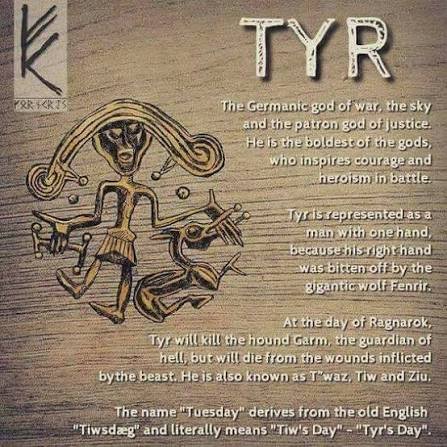
The Rig Veda deity Dyēus Pitr (Dyaus Pitar) becomes the Old Norse god Týr.
This is one of the most important transformations in Indo‑European religious history: the original sky‑father becomes a diminished but still recognizable reflex in Germanic myth.
Rig Veda (Indo‑Aryan)
Dyēus Pitr / Dyaus Pitar - “Sky Father” - Bright sky, daylight, father of gods
Direct reflex of Proto‑Indo‑European Dyēus Pitr̥
Proto‑Indo‑European (root stage)
Dyēus - “Bright sky, daylight sky”
Chief deity of the PIE pantheon
Root meaning: radiance, daylight, sky‑vault
Proto‑Germanic
Tīwaz - Meaning shifts from “sky‑father” to “god, deity, divine one” - Still a reflex of Dyēus, but no longer the chief god
Proto‑Norse
Tīwaz → Tīw
Loss of final ‑az ending - Name becomes shorter, more specialized
Associated with law, oaths, and formal combat
Old Norse
Týr - Final Norse form - A god of law, oaths, and heroic battle
No longer the sky‑father — Odin has taken that role
But Týr preserves the name and some functions of PIE Dyēus
Old English
Tiw - Survives in weekday name:
Tuesday = “Tiw’s day”
Dyēus Pitr (Vedic) → Dyēus (PIE)
The Vedic form is the most conservative Indo‑Aryan reflex of the PIE sky‑father.
It preserves both the name and the function.
Dyēus → Tīwaz (Proto‑Germanic)
This is the crucial transformation:
- Grimm’s Law: PIE d becomes Germanic t
- PIE yēu becomes Germanic ī
Thus Dyēus → Tīwaz
The meaning shifts from “sky‑father” to “god” in general.
Tīwaz → Tīw → Týr
Germanic religion reorganizes:
- Odin rises as the chief god
- Thor becomes the storm‑warrior
- Týr becomes a god of law, oaths, and single combat
The name remains the direct linguistic descendant of Dyēus.
Týr is the Old Norse reflex of the Proto‑Indo‑European sky‑father Dyēus, transformed through regular Germanic sound laws into Tīwaz, then Tīw, and finally Týr, with his role reduced from chief sky‑father to a god of law and heroic combat.
@jd_sauvage