Chinese EVs are cheap and popular — so why not let them flood western markets? Soumaya Keynes and Paul Krugman weigh the arguments on whether the US and Europe should embrace China's comparative advantage in the sector. https://t.co/3lmqJJ34oV
"Men are graduating from college at declining rates and are 10 percentage points less likely to hold bachelor’s degrees than women; their median hourly wage, adjusted for inflation, is lower today among the working class than it was 50 years ago"
https://t.co/9Ba9CMd5gs
also per @mckonomy - it was September of 1969 that we last saw jobless claims (which were also released this morning) were this low.
talk about "low-fire, low-hire"... unreal.
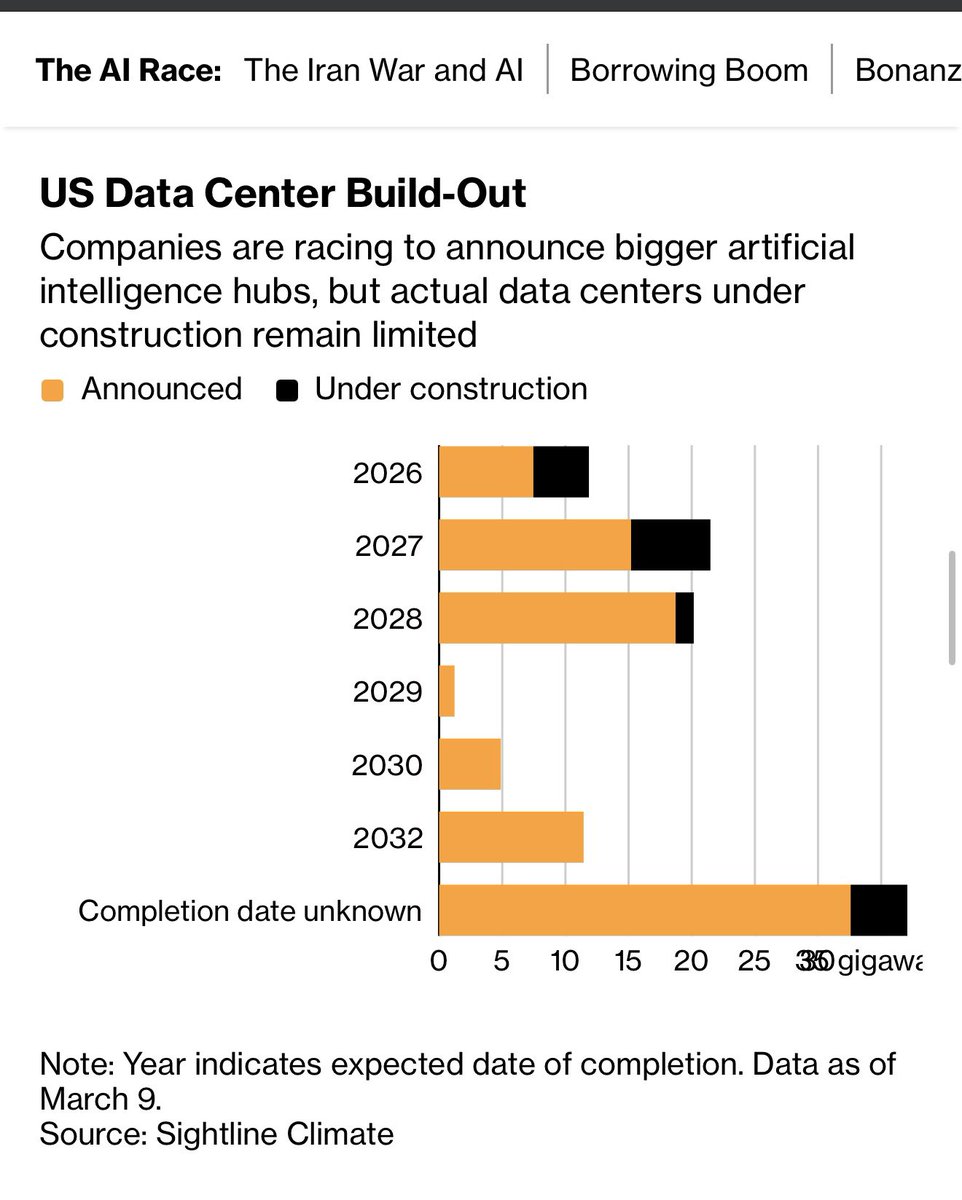
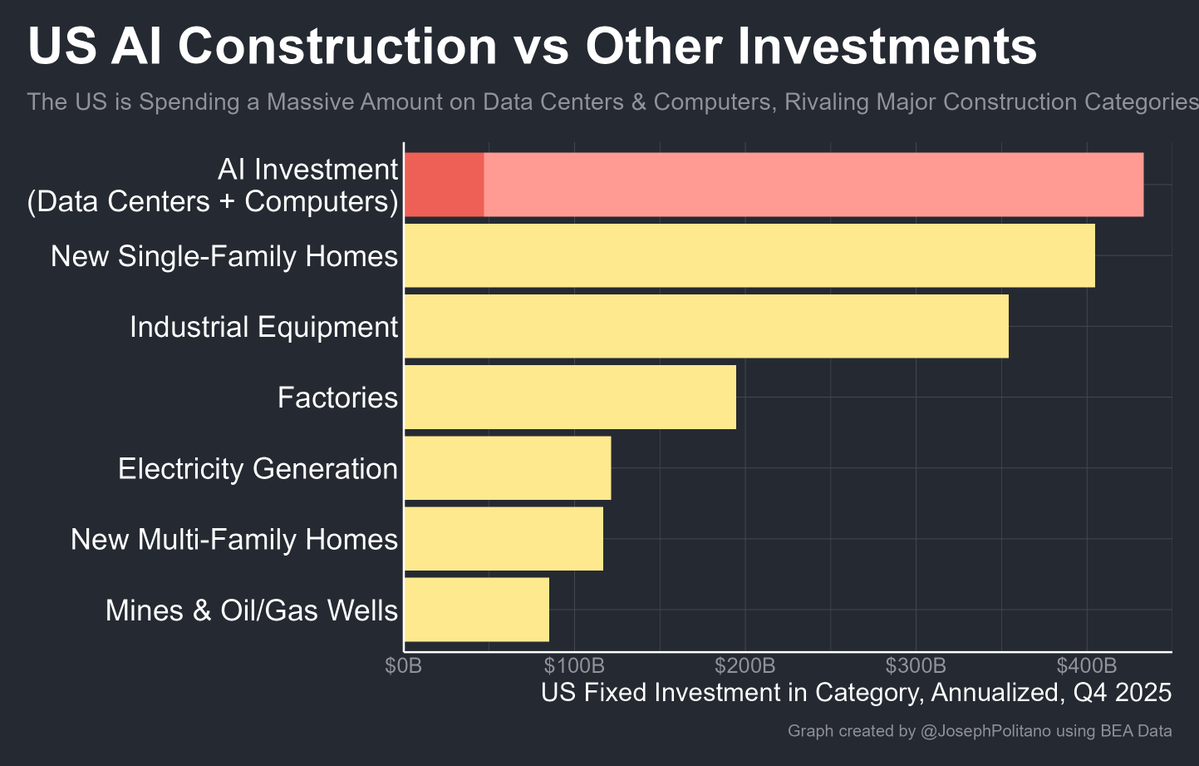
US spending on data centers & computers has grown so much that it's larger than basically all other physical investment categories—more than all single-family housing construction, factories, power plants, industrial equipment, apartments
I'm running out of points of comparison
Is AI killing jobs?
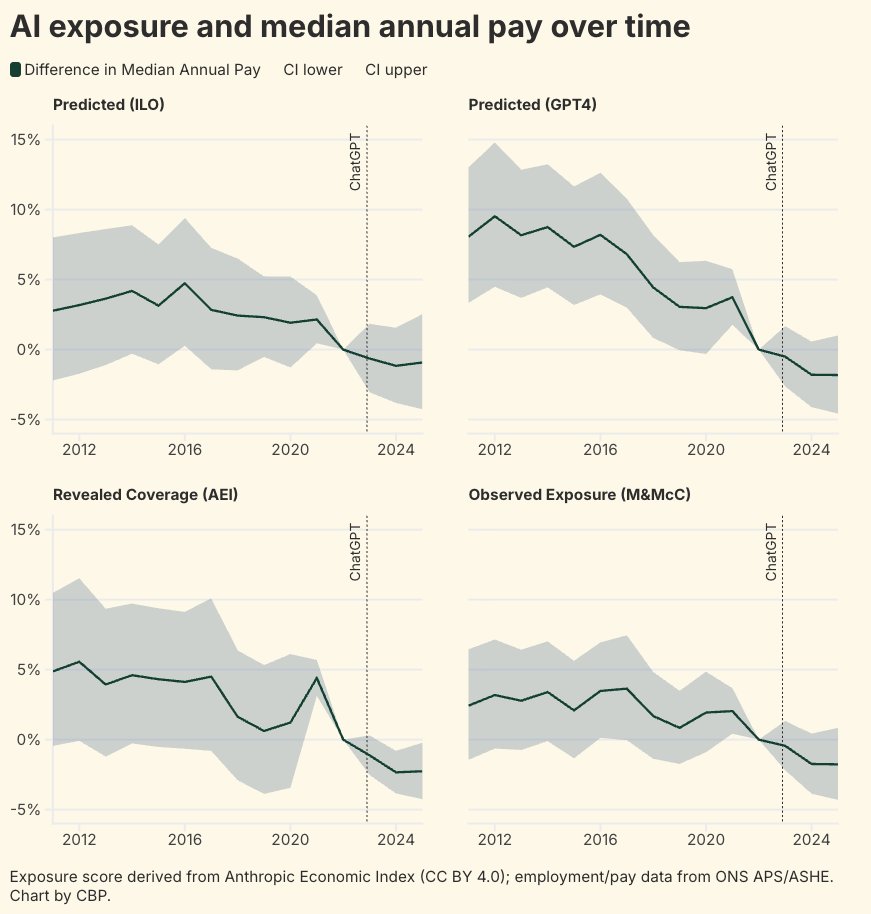
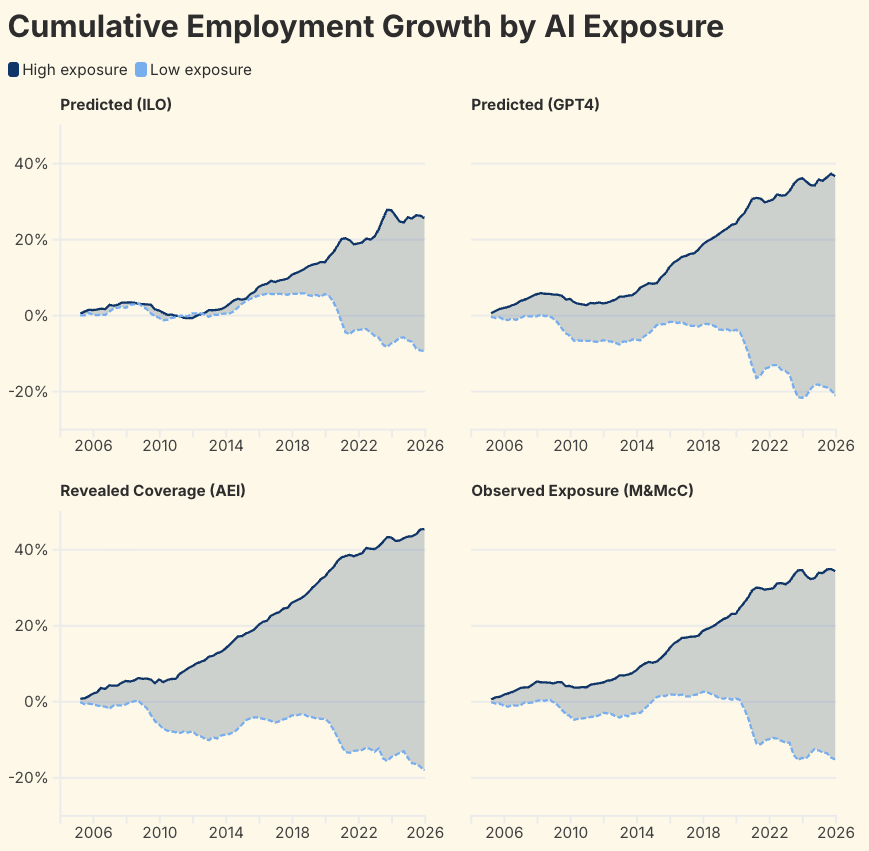
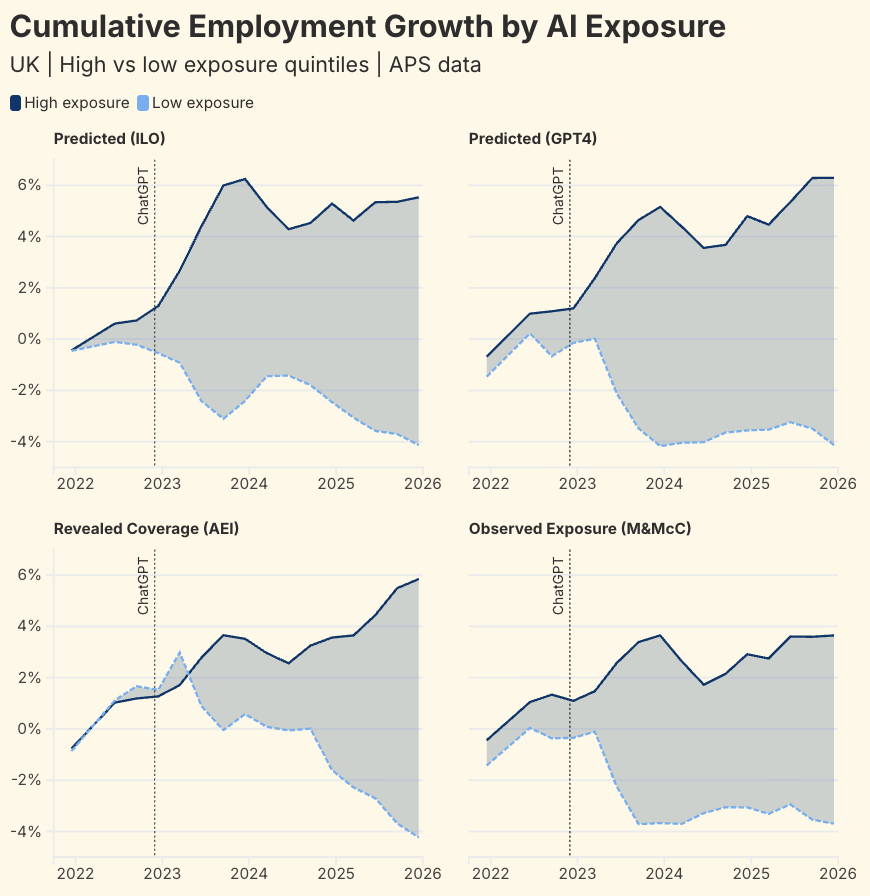
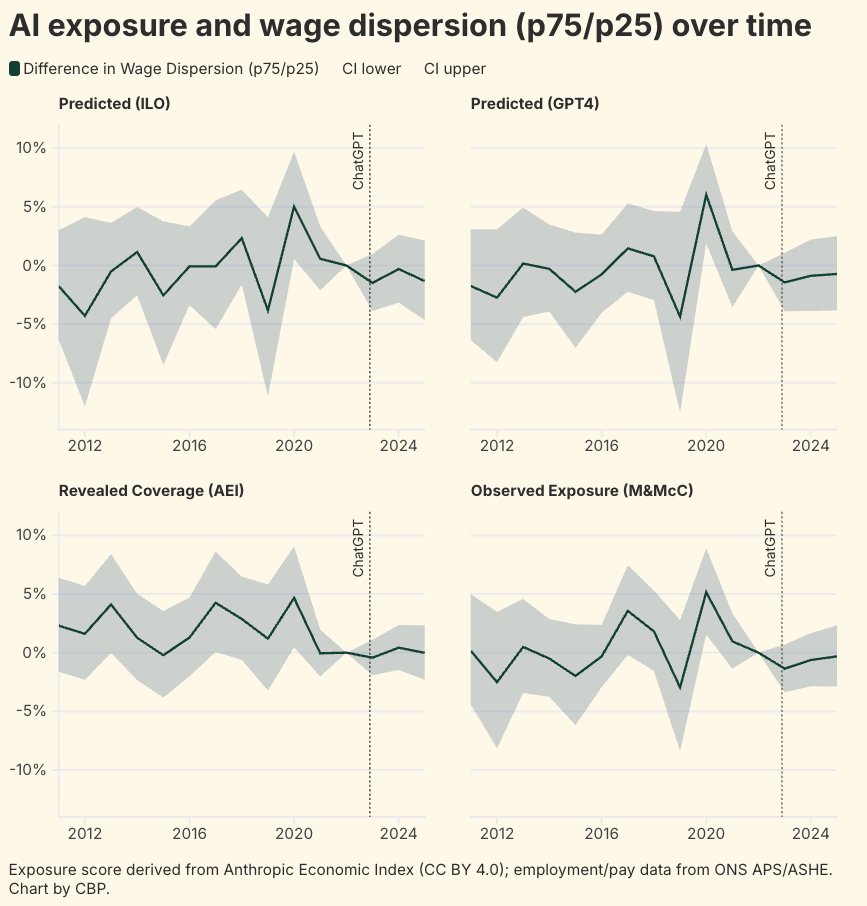
New data shows that, more than three years after the release of ChatGPT, there is no evidence for a significant impact of AI on overall employment in the UK.
In our new report, we break down the labour force into different occupations and use four measures of AI exposure to determine how likely they are to be affected by the technology.
Surprisingly, occupations with higher exposure to AI have grown faster than least-exposed ones, not slower. This holds across all four measures, and across two different data sources.
The wage picture is different. Pay in AI-exposed occupations has lagged the rest of the labour market since 2019.
But that gap opened three years before ChatGPT, which makes AI an unlikely candidate for the observed wage compression.
This flattening of the wage structure is visible across the within-occupation distribution and strongest at the top quartile, which is consistent with labour market dynamics that predate generative AI.
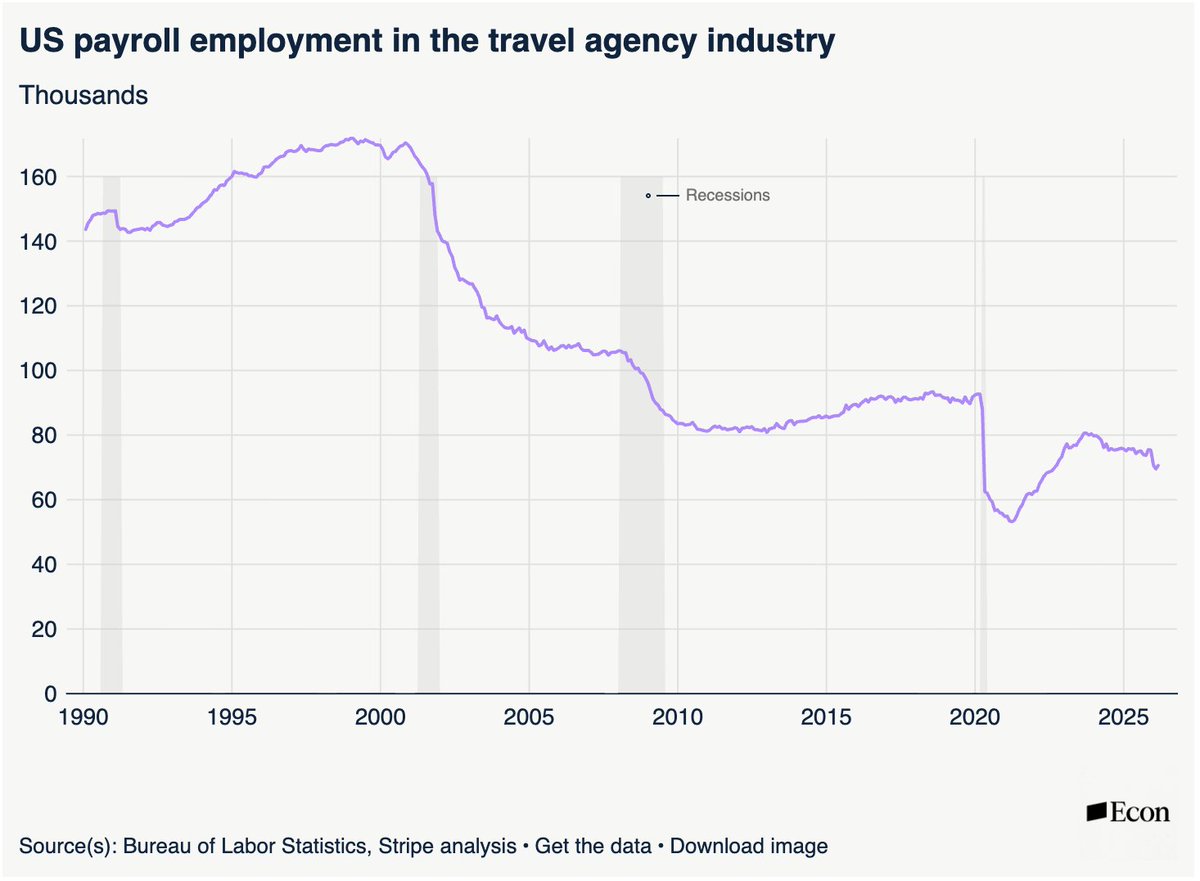
Much like you said Travel agents were displaced in the advent of technological advances and traveling drops during/post recession. Not necessarily AI displacement. Most travel agents pivot to high net worth clients instead of your average consumer so they remain relevant
New from @Stripe Economics today:
One of the biggest labor market uncertainties is whether AI will displace human work at scale. Evidence so far is still early & mixed. The story of travel agents—a clear case of tech displacement—is instructive. And not entirely bleak. 🧵 /1
great paper from Kieran Douglass at UC Davis documenting something that we had long suspected using AI lit review techniques-
the rainfall IV fails the exclusion restriction pretty hard!
@UChi_Economics we have had incoming PhD students visit us over the past two days. Lots of great discussion and questions. One question that I really enjoyed was: what does every graduate sequence miss when it comes to training economists?
In light of the fact that we live in an era of accelerating AI and automated analysis, I felt that my traditional response to this type of question has grown even stronger today: Experimental Economics belongs in every graduate sequence.
Let me make my case. Many PhD programs teach econometrics as the art of extracting signal from data that already exists. That is great stuff. Yet, especially with the recent AI push, it does permit a certain dangerous habit of mind. How? Because students learn to work with the data that we have rather than asking what does an optimal data set look like? Experimental economics corrects this at the root.
Designing an experiment, even hypothetically, forces a precision that reading dozens of academic papers or creating an AI prompt never will. If you cannot specify the experiment that would cleanly test your theory, then your theory may not be as sharp as you think. Experimental design is a lie detector for vague ideas.
But the argument doesn't stop with theory-testing. Consider the applied scientist who wants to change the world. Their question is slightly different: what data can I generate to provide evidence that is actionable?
In both cases, whether testing theory or informing optimal actions, the best experiment delivers the same two key insights: it measures whether it works and for whom (the moderators) and provides mechanisms explaining why and how it works (the mediators). A treatment effect without a mechanism is a black box. A mechanism without heterogeneity analysis is a fiction about an average person who doesn't exist. Teaching students to design experiments teaches them to demand both, always.
This leads to a third, underappreciated, benefit. And, this is where the case becomes even stronger. The student who understands the value of controlling the assignment mechanism also understands exactly what assumptions their regression is making. Experimental thinking doesn't serve to replace, rather to discipline.
Of course, a well-designed experiment not only explores does it work here, but asks will it work there, for them, at the scale required to matter? Experimental economics forces students to think about external validity not as an afterthought but as a design input. Such questions are under deep consideration from the beginning. That habit of mind is what we strive for in our experimental training: when fast thinking is promoted via new technologies, we need our best thinkers to slow down a bit.
We teach students to be sophisticated consumers and producers of econometric methods. We should teach them with equal seriousness to be sophisticated designers of the evidence those methods analyze.
I built a Shadow Debt Indicator covering 225 countries to try to catch the next one before it blows up.
Live map + ranking: https://t.co/FbwlCk3rqW
Full piece on what shadow debt is, how it works, and who to watch:https://t.co/42702bXV7x
In April 2024, Senegal got a new president. He audited the books.
The real debt-to-GDP wasn't 74%. It was closer to 100%, and climbing.
The IMF had been in the country the entire time. They missed it.
How do they hide it?
Off-budget SOEs. Special purpose vehicles. Central bank swaps. Resource-backed loans routed to offshore accounts.
Every Chinese loan contract since 2014 contains a confidentiality clause. Every single one.
"The parts of the blue-collar labor market occupied primarily by men have been slowing for over a year. Jobs in sectors that include the trades, such as manufacturing and construction, have racked up roughly 150,000 net losses."
@talmonsmith:
https://t.co/S9aQ9v4zcu
We are launching a big project today with MIT —
The Electricity Price Hub!
You can view monthly electricity prices per kwh and avg. bills for every major utility in the country going back to Jan 2020.
https://t.co/xcyd51Z8cy