Are you tired of returning serves that barely clear the net, giving your opponents easy third-shot drops? Imagine flipping the script—unleashing returns that rocket deep into the court, forcing errors and seizing control from the start. For 3.5+ players who already nail deep returns consistently, this guide unlocks the next level: adding raw power and speed without sacrificing depth.
Master the Mental Shift First
The foundation of a powerful return isn't technique—it's mindset . Stop viewing the serve as a defensive moment; instead, adopt an attack mentality before the ball even leaves your opponent's paddle. Visualize striking back with equal or greater force, turning their serve into your weapon. This shift primes your body for aggression, reducing hesitation and boosting reaction time.
In practice, repeat a simple mantra pre-serve: "Attack deep." Over time, this rewires your brain from reactive to proactive. Players who make this change report feeling more confident, often pressuring servers into faults right away.
Leverage the Incoming Ball's Power. With deep returns already in your arsenal, start by borrowing speed from the serve itself. Don't generate power from scratch—meet the ball with a firm, compact swing that mirrors the incoming velocity....
⬇️Read the full article
https://t.co/2AnzuTc44z
#pickleball
While pickleball players often focus on perfecting their dinks or mastering the third-shot drop, the real edge comes from reading your opponent like a dog-eared playbook. Some players—bless their competitive hearts—fall into predictable patterns that are as brittle as a stale cracker. Spot these habits early, often within the first five points, and you can crack their game wide open . Below, we dive into three common pickleball patterns that crumble when you target their weaknesses, including one you can sniff out during the warmup. Let’s get to the court!
You’re casually rallying during the warmup, lobbing soft shots to get the blood flowing. Your opponent’s forehand shots are crisp, confident, even a little cocky. But when you send a ball to their backhand side, their paddle wobbles, their feet shuffle awkwardly, and the return limps back like a wounded duck. Congratulations—you’ve just found their kryptonite.
Many pickleball players, especially intermediates, lean heavily on their forehand to mask a shaky backhand. They’ll contort their bodies to avoid hitting a backhand, running around shots or angling their stance to keep everything forehand-friendly....
⬇️Read the full article
https://t.co/Je8GEclJh1
#pickleball
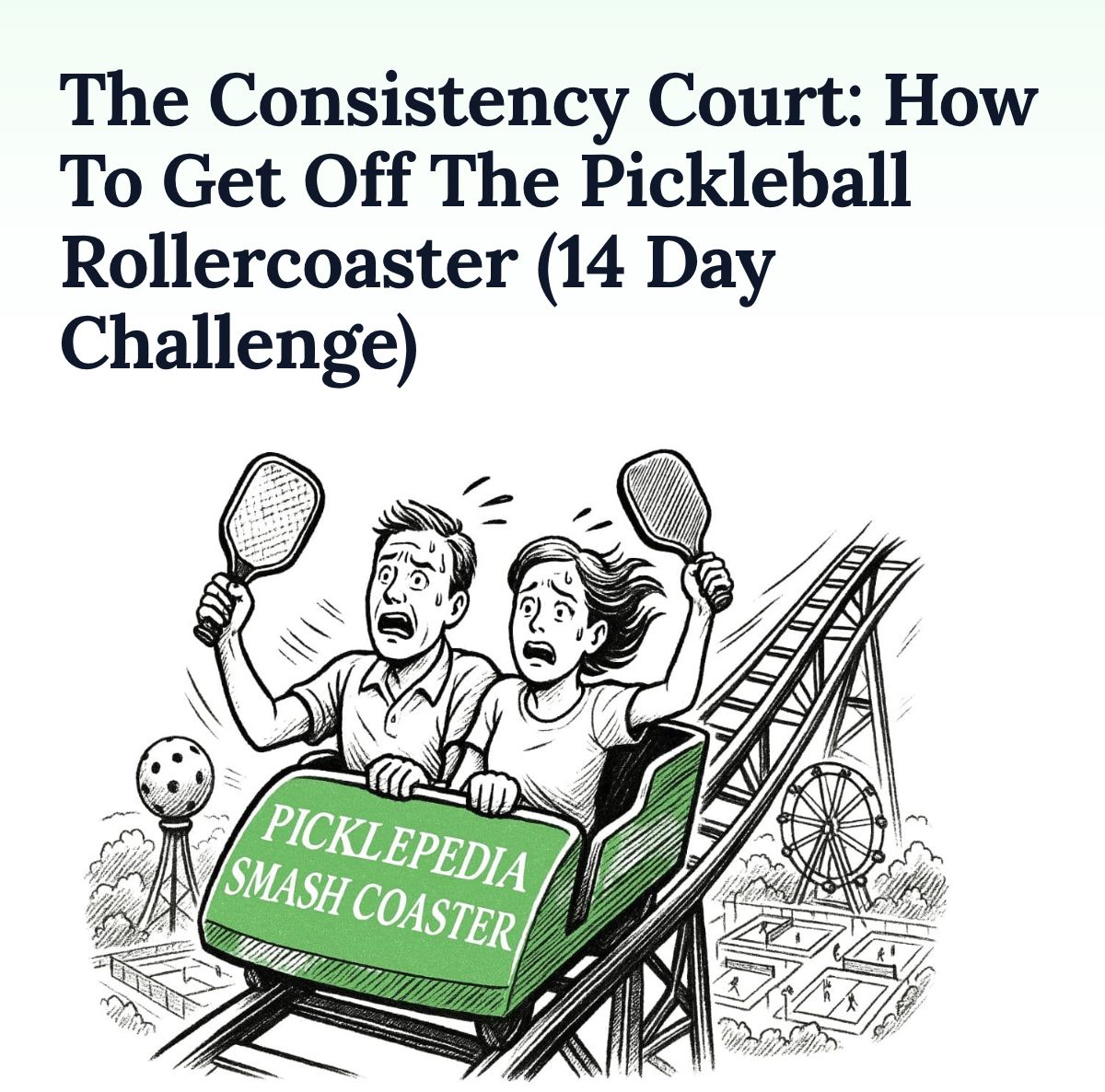
Pickleball’s blend of strategy, precision, and social buzz hooks players, but inconsistency— nailing dinks one day, shanking them the next—can feel like a gut punch . This guide offers a science-backed path to reliable performance, tackling mindset, technique, lifestyle, and the critical but often-avoided role of drilling. It’s for players tired of erratic play, blending practical steps with the “why” behind them, drawing on sports science.
Inconsistency stings because it betrays your potential. Pickleball’s 20×44-foot court amplifies small errors —a 5-degree paddle tilt sends a dink wide. Consistency means fewer mental swings and more fun. A 2023 study on racket sports found consistent players win 68% of points via opponent errors, not winners. Sports psychology shows stable performance boosts confidence by creating a feedback loop. In pickleball , staying steady is your edge.
Consistency relies on neural and behavioral stability. Motor learning research shows repeated actions strengthen brain-muscle pathways, cutting shot variability by 15-25% in weeks. A 2024 tennis study found consistent players had lower heart rate variability under pressure, signaling better stress control . James Clear’s Atomic Habits argues 1% daily improvements compound to 37x gains yearly. Charles Duhigg’s The Power of Habit shows cue-routine-reward loops (e.g....
⬇️Read the full article
https://t.co/6c1LW7sAcZ
#pickleball
Here's what actually happens when a ball bounces into your hip, skids through low, or suddenly curves off the court: your brain is processing spin it was never taught to read.
Most players know something is happening. They just can't name it fast enough to do anything about it.
There are three types of spin in pickleball — topspin, backspin (slice), and sidespin. Each one leaves clues. In the hitter's swing. In the ball's flight path. In the bounce. Learn to read those clues in sequence and you stop reacting and start anticipating.
That's the Spin Triangle. Three spins. Three stages. See It. Read It. Weaponize Your Return.
Once you understand the Spin Triangle, you'll never look at an incoming ball the same way again.
Topspin is generated when the paddle brushes upward across the back of the ball, causing it to rotate forward toward the net — the top of the ball spinning in the direction of travel. It's the spin that looks like it's going out, then suddenly dips.
See It: Watch the opponent's swing path — low to high, with a follow-through that finishes above the shoulder....
⬇️Read the full article
https://t.co/NhdQzrRrIl
#pickleball
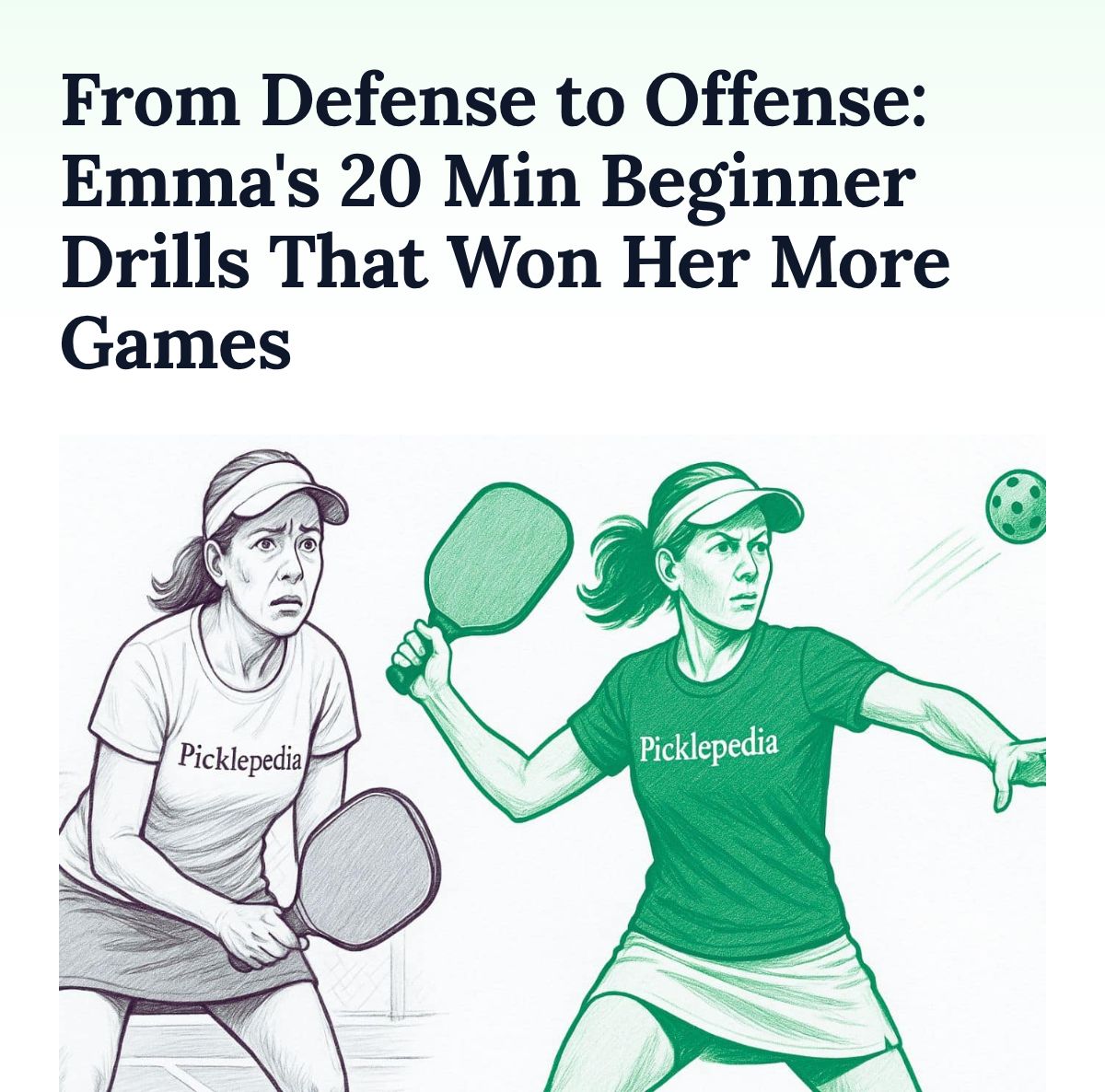
Emma Larson stood at the edge of the pickleball court, her paddle dangling loosely in her hand. At 35, she’d only been playing for seven months, lured by the chatter and laughter of the Willow Creek community center’s pickleball nights. A high school math teacher with a love for puzzles, Emma thought the sport’s blend of strategy and speed would suit her . But today, facing a pair of aggressive players who owned the net, she felt outmatched.
Their volleys came hard and fast , forcing her to the baseline, her returns frantic and weak. “I’m just surviving out here,” she sighed after a point ended with her lob smashed back. Determined to shift from defense to attack, Emma decided to master a soft , precise shot she’d heard about—a drop shot that could slow the game and let her dictate the rally . Over the next month, she embarked on a journey to transform her game, guided by three drills she devised to hone this skill, each building her ability to reset points and seize the offensive.
Emma’s first focus was precision. She knew a good drop shot had to land softly in the kitchen—the non-volley zone just over...
⬇️Read the full article
https://t.co/XvLHcdBjvZ
#pickleball
This 30-day pickleball workout plan extends the foundational exercises from our popular article Top 10 Exercises To Make You Lightning Fast At Pickleball to boost your pickleball court coverage through targeted strength, agility, and endurance training.
It’s designed for players aiming to move faster and more efficiently, with flexible schedules (2, 3, or 5 days per week) for beginners to advanced athletes . Each session includes warm-ups, progressive exercises with simple how-to instructions, and cooldowns, all presented in tables for clarity. The plan explains why each exercise improves your game and includes progressions of original exercises (lateral lunges, squat jumps, high knees, mountain climbers) plus new ones for explosive power and lateral quickness.
Pickleball requires quick side-to-side movements, fast reactions, and stamina for long rallies. This plan targets:
Lower-body power : For explosive sprints to reach shots. Lateral agility : To mimic court side-steps. Core stability : For balance during serves and volleys. Cardiovascular endurance : To stay strong in long matches. Injury prevention : Through dynamic warm-ups and cooldowns for flexibility and recovery.
Progressions gradually increase intensity to build strength and speed safely. Warm-ups prepare muscles for explosive moves, and cooldowns reduce soreness, helping you play more often.
Equipment...
⬇️Read the full article
https://t.co/mbFqMPFkwb
#pickleball
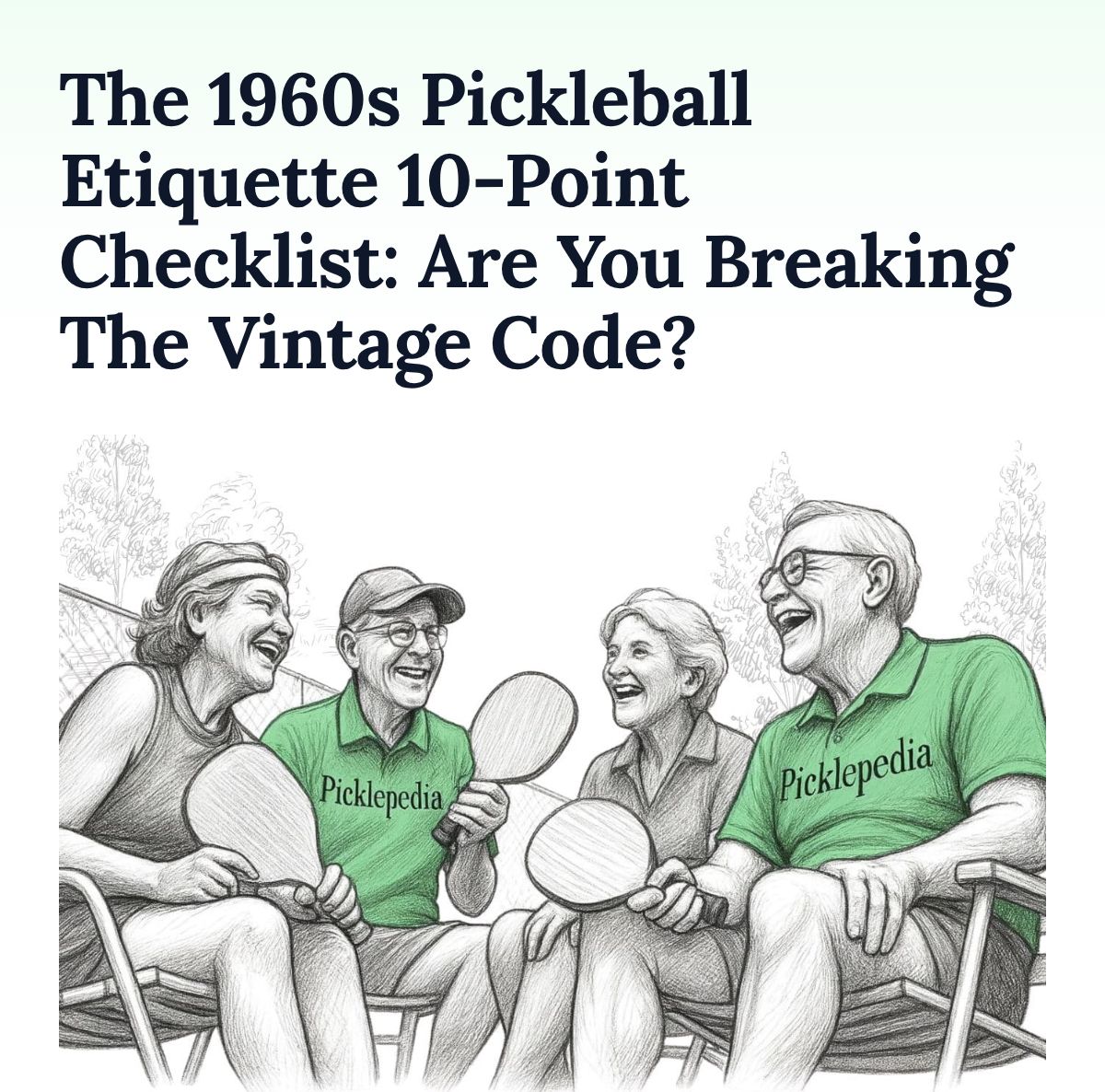
Pickleball began in 1965 as a simple backyard game designed for family fun, characterized by casual play, natural goodwill, and assumed respect among neighbors and friends. Unlike today’s organized, highly popular sport played by millions worldwide, early pickleball required little in the way of formal etiquette because respect flowed naturally from community bonds.
However, as the sport expanded rapidly in the 1970s and especially in recent years , new challenges such as crowded courts, gatekeeping, and disputes over court time and behavior have arisen.
Players began to recognize the need for explicit etiquette guidelines—rules not just for gameplay, but for behavior to keep the game friendly and inclusive. Thus, the informal community spirit of the 1960s gave way to more structured social norms designed to manage this broader, more complex playing environment.
A glance at modern pickleball discussions on social media reveals several recurring issues:
“Court Police”: Self-appointed enforcers control court behavior aggressively, sometimes reprimanding others for minor violations like paddle placement or rotation line-cutting. This enforcement often creates discomfort rather than community harmony, even driving players to less desirable courts to avoid conflict.
Beginners Excluded : New players share stories of being told they don’t belong or being discouraged...
⬇️Read the full article
https://t.co/zelYbezKEy
#pickleball
In pickleball, where strategy and precision often outshine raw power, the backhand flick is a game-changer—a sly, wrist-driven shot that can turn the tables in an instant. Like a wizard’s subtle charm, this move shifts defense to offense, catching opponents off guard with its speed and spin. Whether you’re locked in a dink rally at the net or countering a low ball, the flick is your secret weapon to dominate the court. This guide reveals why the backhand flick is so effective, how to execute it with finesse, a 7-day drill plan to master it, and ways to scale and combine it with other shots. Get ready to harness the flick’s magic and elevate your game.
The backhand flick’s strength lies in its ability to disrupt opponents with minimal effort. Here’s why it’s a must-have shot:
Sudden Speed : The flick’s quick wrist snap delivers unexpected pace, catching opponents off guard, especially in close net play, as the ball zips by before they react. Spin Versatility : The flick lets you add topspin, sidespin, or backspin, altering the ball’s flight and bounce to confuse opponents....
⬇️Read the full article
https://t.co/mNCSrpYoxx
#pickleball
Picture this: you’re on the pickleball court, paddle in hand, heart racing, and the ball’s coming your way. Where do you hit it to make your opponent sweat, miss, or just look plain silly? If you’re tired of flailing shots that land out or get smashed back, mastering ball placement is your ticket to playing like a pro—and feeling like one, too. Pickleball’s a game of strategy, not just power, and precise placement can transform you from a beginner dinking nervously to a confident shot-maker who controls the point. Whether you’re new to the game or leveling up, these tips will guide you from random hits to pro-level precision. Let’s dive in and make your shots land with purpose.
When you first grip a pickleball paddle , it’s all about survival—keep the ball in bounds, clear the net, and avoid embarrassment. Beginners prioritize consistency , mastering soft dinks into the kitchen (the non-volley zone) or lobbing to stay in the rally. As you gain confidence, you shift to control , aiming for specific zones rather than just “anywhere in.” This is where strategy kicks in....
⬇️Read the full article
https://t.co/U4CguqFsfS
#pickleball
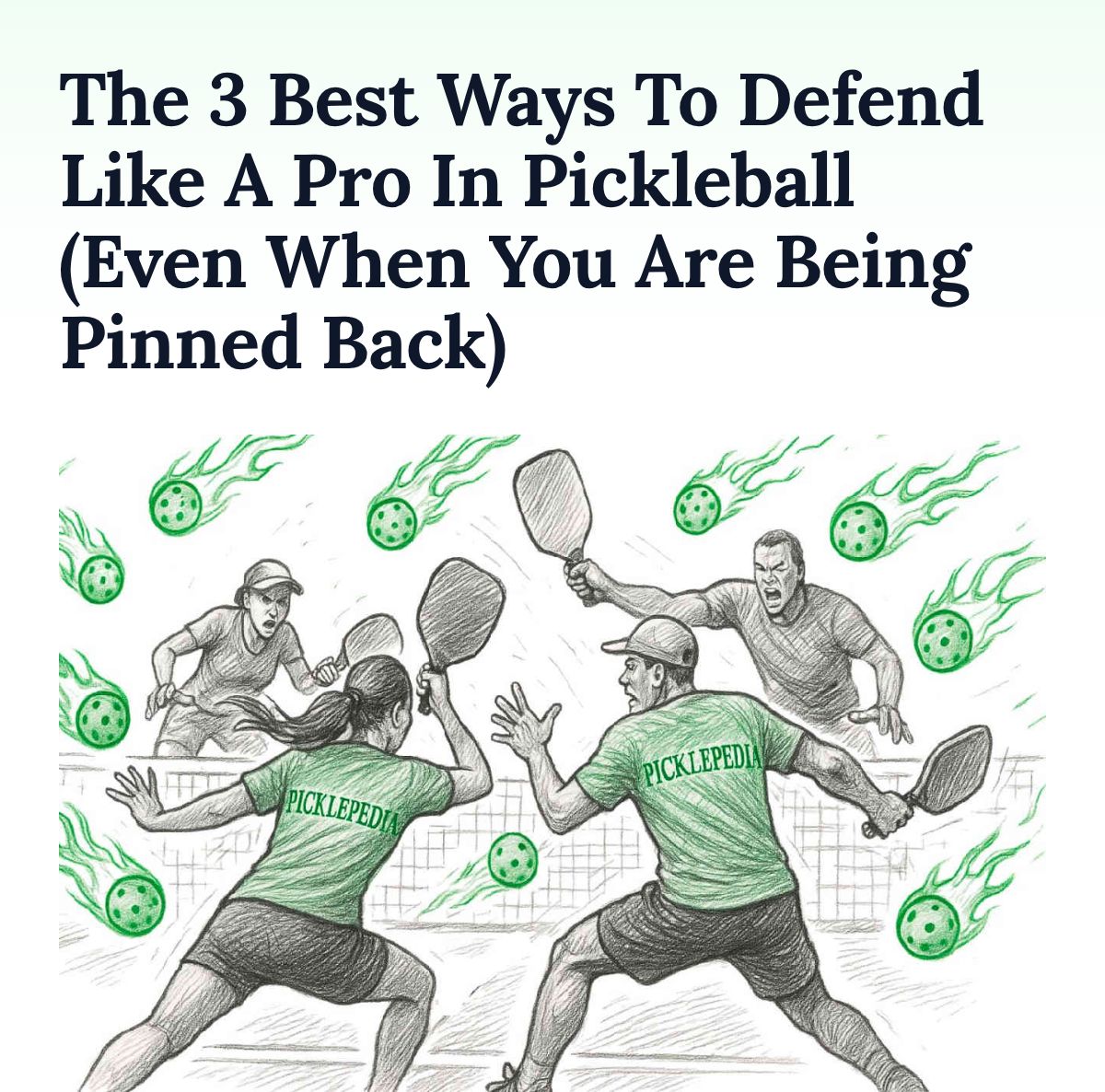
That feeling in an intense pickleball rally, your opponent blasting powerful shots at you from the baseline and you just can't seem to move up.
What if you could turn those defensive scrambles into offensive opportunities, swiftly returning to the kitchen line without losing control? In this guide, we'll uncover the three best strategies to defend like a pro, even under heavy fire, helping you regain your position and dominate the game.
Many players struggle when opponents unleash hard drives or smashes, forcing them away from the net. According to official USA Pickleball rules, the NVZ prevents aggressive volleys close to the net, making it crucial to reset your position efficiently. Bold key insight: Proper footwork and anticipation are foundational to effective defense.
Defensive play isn't just about survival; it's about transitioning to offense. Players like Ben Johns, a top-ranked professional, emphasize resetting the point by softening the ball and moving forward. This approach reduces errors and increases winning chances.
💡 Key Insight: In competitive play, returning to the kitchen line after a defensive shot can increase your point-win probability by allowing more controlled dinks and drops.
Common challenges include poor positioning, slow recovery, and panic under pressure....
⬇️Read the full article
https://t.co/m59FzX5yxi
#pickleball
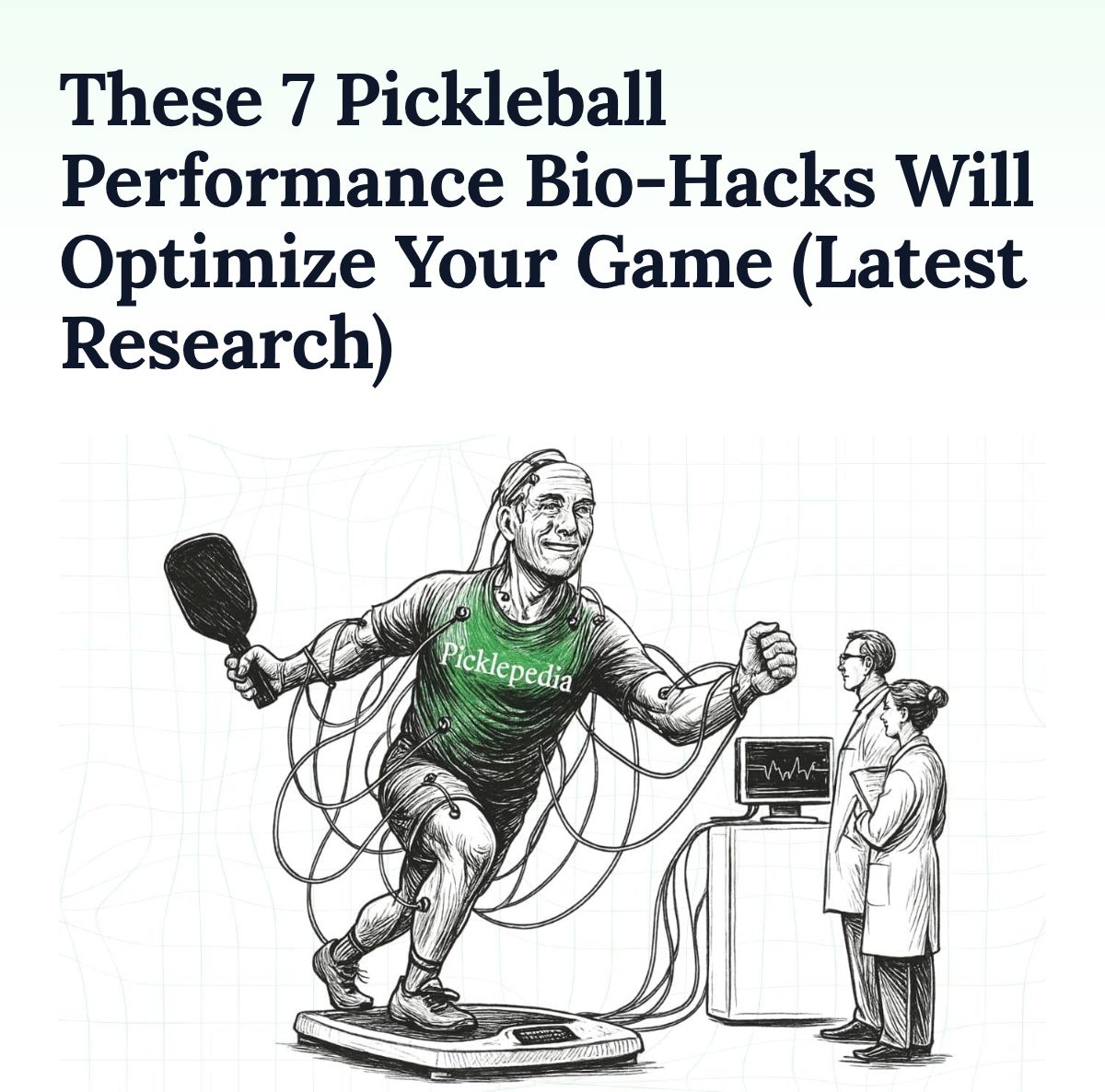
For serious players (and tech nerds) striving to maximize every minute on and off the court, optimization transcends practice alone. It requires deeply understanding and refining how your brain, body, and recovery systems work together to produce sustainable, peak performance. The following bio-hacks are curated from the latest 2025 research to give you precise, science-backed strategies that improve focus, agility, endurance, and recovery efficiently, without unnecessary grind.
Pickleball’s explosive growth and evolution demand smarter training. Whether you’re climbing competitive ranks or mastering longevity in the sport, these seven bio-hacks form a holistic framework for consistent gains and injury resistance.
Mental acuity sets the foundation for every great match. Recent studies demonstrate that brief, targeted cognitive warm-ups—such as AI-driven reaction drills or augmented reality games—enhance dopaminergic pathways and motor cortex readiness. This primes your nervous system for rapid information processing, shot anticipation, and strategic adaptation.
Application:
Allocate 2-3 minutes to engage with apps that train visual tracking and reaction speed. Use devices that adjust difficulty based on live performance data for optimal neural activation.
This sharpens decision-making and reduces cognitive lag under pressure—a critical advantage in fast-paced pickleball play.
Tools:
BrainHQ : Offers custom brain-training exercises scientifically designed to enhance processing...
⬇️Read the full article
https://t.co/mAEOImWAxf
#pickleball
Fiona had always loved pickleball, but her punch volleys were a disaster—popping up like easy lobs for opponents to smash. That all changed when her coach stepped in with game-changing advice.
Fiona stepped onto the pickleball court that sunny Saturday morning, paddle in hand, ready for another casual game with her friends. She'd been playing for about a year, drawn in by the sport's mix of fun and strategy. But there was one shot that haunted her: the punch volley . Every time she tried it, the ball would sail high or weakly into the net, turning what should be an aggressive play into a giveaway point.
She remembered her last tournament vividly. Facing off against a duo who dominated the net, Fiona's attempts at punch volleys kept failing. Her frustration boiled over as yet another ball floated harmlessly to her opponents, who gleefully put it away. "Why can't I get this right?" she muttered under her breath, feeling like the weak link in every match.
It wasn't for lack of trying. Fiona practiced endlessly, watching tutorials and mimicking pros. But something was missing. Her shots lacked the crisp, controlled power that made punch volleys so effective....
⬇️Read the full article
https://t.co/1tb1wXtGkG
#pickleball
Congratulations on choosing to dive into pickleball! You’re joining millions who’ve fallen in love with this exciting, accessible, and downright fun. Whether you’re picking up a paddle for the first time or eager to build a solid foundation, you’re in the right place – welcome to our pickleball 101 beginners guide . Pickleball’s compact 20×44-foot court, lightweight paddles, and perforated ball make it welcoming for beginners of all ages and fitness levels. Its simple rules and vibrant community mean you’ll be rallying with confidence in no time. Celebrate this moment—you’re about to embark on a journey that’s as rewarding as it is enjoyable!
This guide is your ultimate roadmap, packed with 101 beginner-focused tips to help you start smarter. Designed specifically for newcomers, it covers everything you need to thrive: from cultivating the right mindset and mastering core rules to nailing fundamental techniques and developing smart strategies. Each section is crafted to be clear, scannable, and practical, with bold headings, tables, and detailed explanations of how and why behind the tips . You’ll learn not just what to do but why it matters, ensuring you build skills with purpose.
Pickleball’s charm lies in its simplicity, but its depth can feel...
⬇️Read the full article
https://t.co/7mOaTSQWd8
#pickleball
In today’s pickleball scene, the trend of relentless driving dominates. Players lean on powerful drives and aggressive smashes to overpower opponents with speed and force. If this barrage of hard shots frustrates you, the soft game is your perfect counter . By mastering dinking, resets, and patience, you can neutralize aggressive play, exploit opponents’ overzealous tendencies, and turn their strength into a liability. The soft game emphasizes control, precision, and mental warfare, letting you dictate the pace and force mistakes. This article outlines five soft game hacks to disrupt aggressive drivers , expose their weaknesses, and give you a competitive edge. Each hack leverages the psychological and tactical advantages of the soft game, making it essential for players at any level.
The soft game isn’t just defensive; it’s a strategic tool to control the court and manipulate opponents’ decisions, especially against drive-heavy players. Here’s why it’s critical:
Neutralizes Power : Soft shots absorb pace, forcing aggressive players to slow down and play your game. Mental Pressure : Dinking rallies test opponents’ patience, often triggering impulsive errors from those eager to drive. Tactical Control : Soft shots let you set the rally’s tempo and positioning, exposing weaknesses in footwork or touch....
⬇️Read the full article
https://t.co/qYoLKDLtAS
#pickleball
Many players think that just playing more pickleball will automatically build strong, resilient knees. Unfortunately, it doesn’t work that way. Pickleball mostly uses the muscles and movement patterns you already have, without strengthening all the supporting muscles or protecting against overuse.
Without targeted training, you’re loading the same tissues in the same way over and over — which can actually increase your risk of knee pain or injury.
The sport doesn’t provide the progressive overload your muscles, tendons, and ligaments need to grow stronger, and it rarely builds the deceleration strength required to absorb the forces of sudden stops. If you want knees that can handle more games, harder rallies, and years of play, you need more than court time — you need strength, stability, and resilience work off the court.
Stretching is important for knee health because tight muscles can pull on the knee joint and alter how it moves, increasing strain on ligaments, tendons, and cartilage. In pickleball , where there’s constant stopping, lunging, and quick direction changes, these muscles can tighten quickly, limiting mobility and forcing your knees to absorb more stress than they should.
Why stretching matters:
Restores proper alignment → Tight muscles can tilt or...
⬇️Read the full article
https://t.co/ZXn7Rbtxhr
#pickleball
Have you ever left the pickleball court with a heavy heart, replaying moments where you and your partner just couldn’t find your rhythm? The sting of missed shots, unspoken tension, or that quiet walk to the car—it hurts. Deep down, you might wonder if the disconnect starts with you. It’s a vulnerable question, but asking it is the first step toward becoming the kind of partner who lights up the court, win or lose.
Building a great pickleball duo is like nurturing a close friendship: it takes trust, empathy, and a shared commitment to shine together. This guide dives into the emotional and practical sides of pickleball doubles, helping you transform tension into teamwork and self-doubt into confidence. From heartfelt communication to staying resilient under pressure, you’ll learn how to be the partner everyone wants by their side, creating a duo that’s unstoppable and a bond that makes every game unforgettable.
Pickleball doubles is a dance of coordination, trust, and strategy. When partners are in sync, it’s a thing of beauty—fluid rallies, seamless communication, and shared triumphs. But when things go south, it’s a recipe for tension, blame, and awkward post-game silences.
Mismatched expectations often spark conflict....
⬇️Read the full article
https://t.co/IwIppYBg6g
#pickleball
Molly had been looking forward to open play all week. Between work, parenting, and the constant rush of daily life, those few hours on the court were her reset—a space where laughter replaced responsibility and movement felt like freedom.
But that Saturday came with a challenge named Brian. A talented player with a short fuse, Brian was known for his fiery reactions when things didn’t go his way. Most people avoided partnering with him.
At first, things went smoothly enough. But after missing an easy volley, Brian muttered, “What the hell was that?” loud enough for everyone to hear. Molly smiled politely and tried to move on, but the tone of the game shifted. A few rallies later, a missed dink, a slammed paddle, a sigh that hung in the air. The tension thickened.
Then came the breaking point. A miscommunication on a lob led to a lost point. “Come on, Molly! You gotta call it!” Brian barked.
Her body tensed. That old instinct to shrink, to keep the peace, rose up. But then she remembered something from an Authentic Connection class she’d taken months earlier:
“When someone loses their center, don’t lose yours. Extended eye contact—where presence is potent—can...
⬇️Read the full article
https://t.co/rBkwJ2FQnB
#pickleball
You’re up 8–7 in a tight game. The rally before was messy, your pulse is still high, and you can feel your opponent pushing harder on every return. One mistake here, and that small lead evaporates.
Most players react to this moment by swinging harder or changing everything about their serve — trying to force a breakthrough. But the players who consistently win at the intermediate level know something different: it’s not about power, it’s about momentum management .
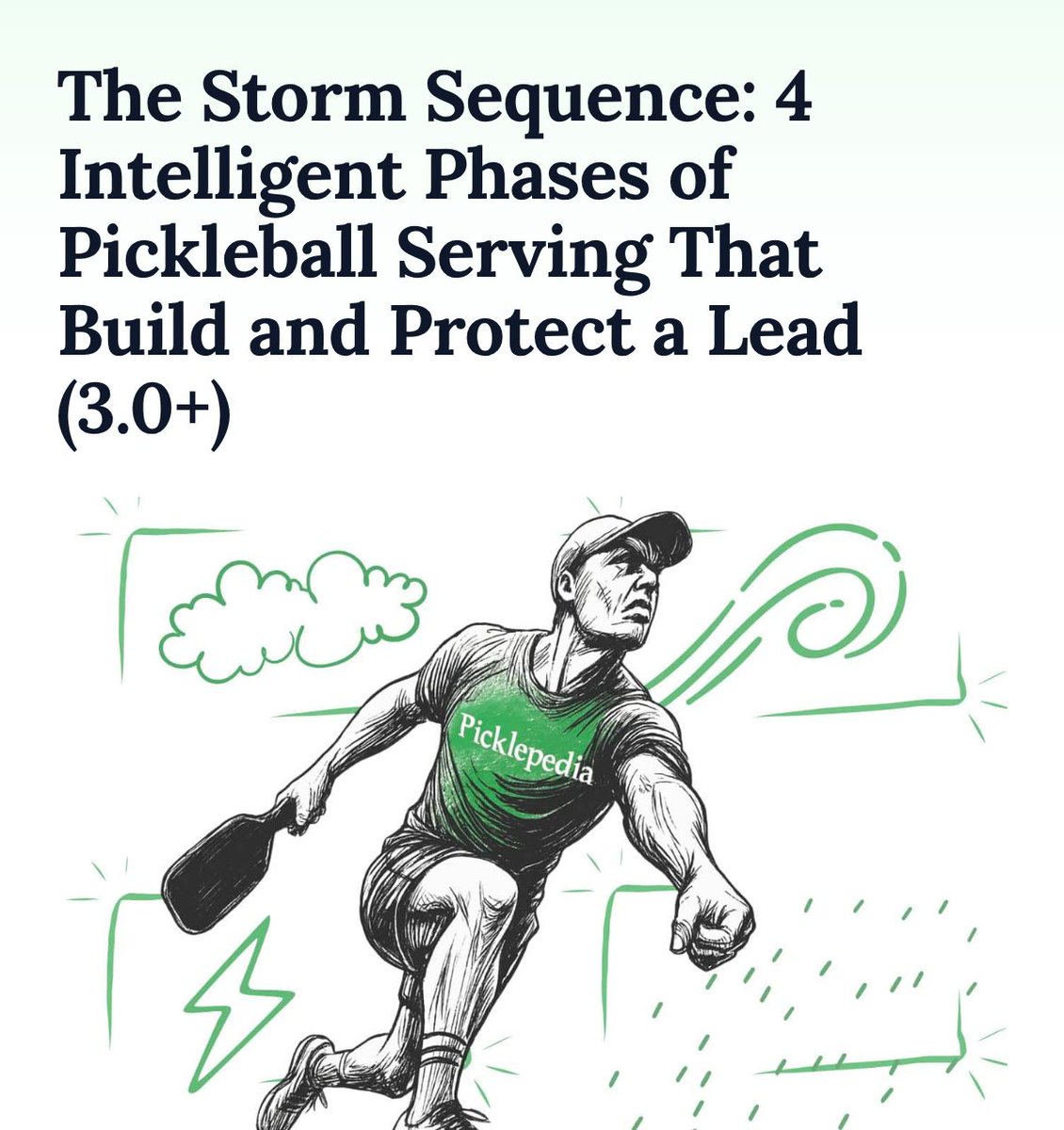
The Storm Sequence is a four-phase serving framework designed for players who already have solid technique but want to serve with purpose, not impulse. It helps you understand when to stay safe, when to adjust, and when to apply pressure — turning a one-point edge into a stretch of confident, high-percentage points.
In pickleball , the serve is the only shot you control entirely — yet most players treat every serve the same, regardless of score or situation. The Storm Sequence fixes that. It teaches you to read the scoreboard, recognize momentum shifts, and use your serve to guide the rhythm of the match.
You don’t start by blasting aces. You build a foundation first....
⬇️Read the full article
https://t.co/fwJ5DkBMyh
#pickleball
Imagine stepping onto the pickleball court with unshakable confidence, knowing your daily habits have prepared you to be the very best you can be. What if the secret to mastering pickleball lies in small, atomic habits you cultivate every day? Drawing from the best-selling book Atomic Habits by James Clear, this article offers five actionable tips to transform your pickleball game through the power of daily rituals.
In Atomic Habits , Clear argues that tiny changes, when consistently applied, lead to remarkable results. This principle is perfectly suited to pickleball , a sport requiring precision, strategy, and consistency. Whether you’re a beginner or a seasoned player, these habits can elevate your game.
Success in Pickleball hinges on consistent execution of skills like serving, dinking, volleying, and strategic positioning. Clear’s story of the British cycling team, which transformed from mediocrity to dominance through incremental improvements, mirrors how small habits can revolutionize your pickleball performance.
Clear’s first law of behavior change is to make habits obvious by designing your environment to cue desired behaviors. In pickleball, this means creating a space that encourages regular practice.
Set up a dedicated practice area, whether at a court or at home with a portable net...
⬇️Read the full article
https://t.co/vCE7dWSxge
#pickleball
While pickleball players often focus on perfecting their dinks or mastering the third-shot drop, the real edge comes from reading your opponent like a dog-eared playbook. Some players—bless their competitive hearts—fall into predictable patterns that are as brittle as a stale cracker. Spot these habits early, often within the first five points, and you can crack their game wide open . Below, we dive into three common pickleball patterns that crumble when you target their weaknesses, including one you can sniff out during the warmup. Let’s get to the court!
You’re casually rallying during the warmup, lobbing soft shots to get the blood flowing. Your opponent’s forehand shots are crisp, confident, even a little cocky. But when you send a ball to their backhand side, their paddle wobbles, their feet shuffle awkwardly, and the return limps back like a wounded duck. Congratulations—you’ve just found their kryptonite.
Many pickleball players, especially intermediates, lean heavily on their forehand to mask a shaky backhand. They’ll contort their bodies to avoid hitting a backhand, running around shots or angling their stance to keep everything forehand-friendly....
⬇️Read the full article
https://t.co/Je8GEclJh1
#pickleball