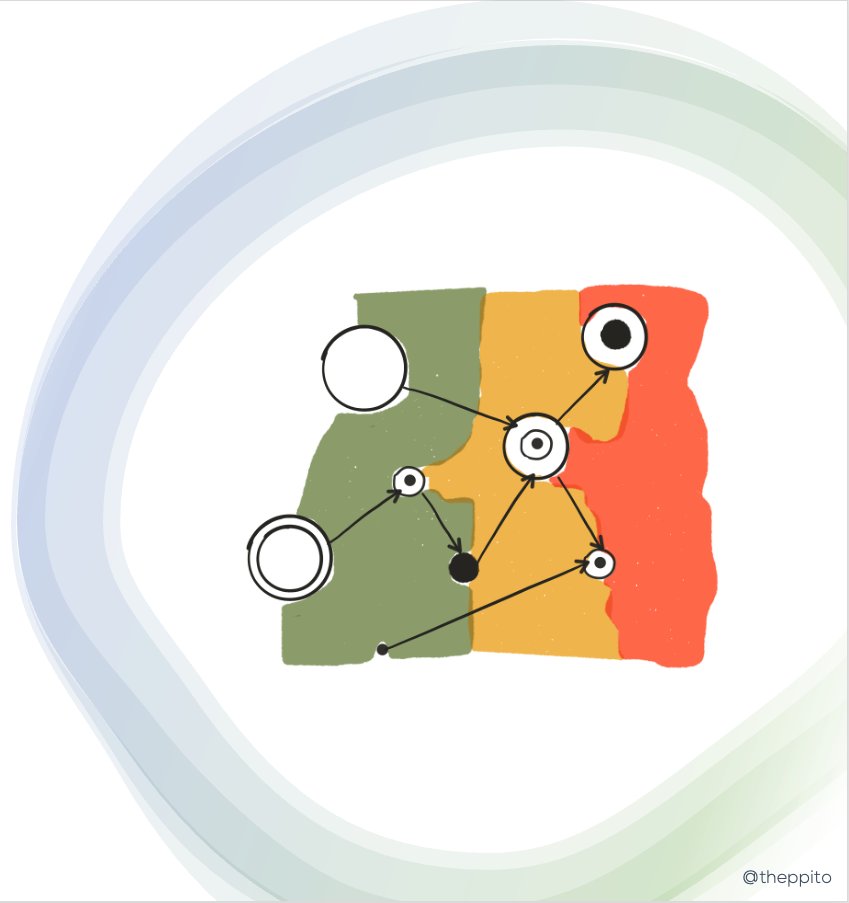
AI-first engineering increasingly operates in the complex domain, where predefined best practices don’t always apply. In this short piece, I explore how the Cynefin framework can help navigate this shift.
https://t.co/KtxyYbIqAN
Metrics don’t replace trust. They sharpen it. Here's my take on how we can use metrics as mirrors — not hammers.
If you're a leader, a builder, or just someone who cares about doing meaningful work, I hope this resonates.
https://t.co/YCiAcVQmF5
Predictability in software projects depends on foundational practices such as roadmaps, backlog management, team shaping, and workflow discipline. The hard work is beneath the surface, within the foundations. I hope you'll enjoy reading What Lies Beneath.
https://t.co/eSaf3iD9cT
Much like a muscle, the brain benefits from warming up before engaging in creative work. Just as a warm-up prepares a muscle for physical activity, stimulating the brain with exercises or activities can enhance its creative capacity.
OKRs are a powerful, simple, on the surface, but a hard-to-implement concept. When done right, they provide alignment and direction in a complex setup. Can you master them? Here is a brief guide.
https://t.co/hNjRLc2ckO
Look beyond delivery mechanics in software development planning. There are bigger questions to answer than how many sprints or story points you deliver. Find those harder questions that lead you to better answers. Read my thoughts here:
https://t.co/EdzqMDNuHv
Having done a similar software implementation previously matters less if the new context is different - and often is. Use the advantage of newcomers. With fundamental aptitudes in place, doing it for the first time can trigger higher energy levels and lead to novel solutions.
Control and predictability are by-products of effective and thoughtful ways of working and are not, despite often being portrayed as such, at odds with agility.
https://t.co/Ls3cSGfZEk
Digital transformations are complex. To succeed, we should focus on identifying and controlling the success influencer. Here is my take on what they are.
https://t.co/d0xEmmlrMp
Interweave new organisational roles like product managers, service designers, user researchers, UX and UI, agile coaches, DevOps by creating learning and knowledge factory organisations rather than pitting them against existing ones.
https://t.co/VheN1bSzLo
Story points or story count? Teams often waste energy on which approach they should take to measure progress and estimate future deliveries. Read my take on which approach to adopt and why.
https://t.co/1p38FuhUY3
For instance, team dependencies can be caused by poor work decomposition, wrong org structures or suboptimal roadmap sequencing. The high-leverage activity is finding and fixing the root cause.
Causality, the relationship between cause and effect, catches us out often. When dealing with a problem, we're dealing with the effects caused by something else. We won't eradicate the problem if we don't fix the cause.
The responsibilities for emerging roles (such as Chief Digital Officer) can be fuzzy. Here is my take on using an alternative approach to RACI - a more meaningful way to define them because we are so much more than our job titles.
https://t.co/RxDfPalVul