We are looking for contributors (guest/regular) to author original, high-quality articles on the topics of privacy, cybersecurity and digital freedom. If you know journalists, academics or infosec professionals who could be interested, contact us/share: https://t.co/n8Gguxzwn3
Our new blog post covers the why's and how's of data collection, hard-to-solve privacy issues and suggested next actions. "Just use a VPN" won't suffice for fixing the collective privacy problem. https://t.co/LT2S3zU9Tx
If you want better privacy online, use a VPN, but don’t expect perfect protection - no matter what certain services promise. We explore this issue in the next post of the blog series about our industry: https://t.co/nlMfafP0MU
Read ‘Why you don’t need a VPN’ - the first post in our blog series ‘VPN Worst Practices’. It covers misleading marketing messages and common misconceptions on what VPNs are useful for. https://t.co/5rvMflMEuF
As we face an unprecedented situation due to the #COVID19 pandemic, various actors have developed mobile apps. We actively tracks new Android apps that are published in response to COVID-19 and analyses them for security & privacy.
Our technical reports: https://t.co/2r9zE8WgGj
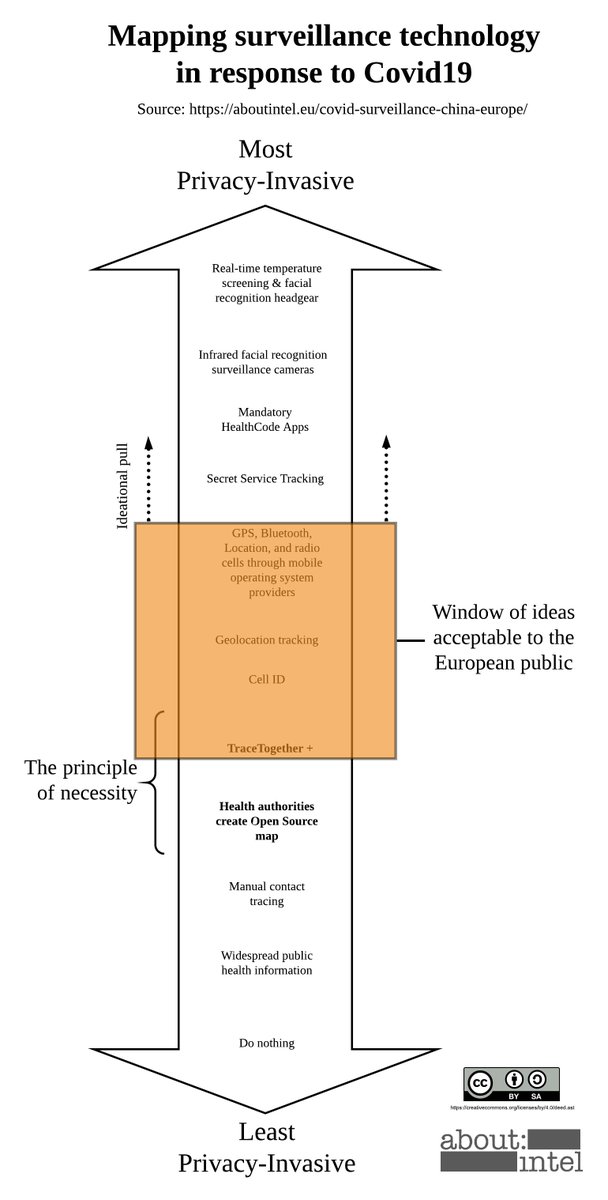
I've mapped some of the (possible) uses of surveillance against #Covid19, tried to identify the window of ideas currently acceptable to the European public, and suggested how it might respond to two factors: China & the principle of necessity.
Read more: https://t.co/6vypg9XYeo
latest piece by @ZitterWriter for @ThePrivacyIssue "Will biometric technology... emerge as the champion of public safety and order? Or will this ubiquitous surveillance reveal a more sinister side... amplifying the injustices that already exist?" #privacy https://t.co/LE6Vwa32N6
Face surveillance is progressing at an incredible pace, due in no small part to #COVID19. We take a look at current trends and where they may be going.
Feat. expert commentary by nash of @eff and @spivackjameson of @GeorgetownCPT https://t.co/zGv0ojIJkR
'Instead of investing in what is required – investigation teams, lab testing and protective gear for staff – they are constantly busy with geolocation.' #COVID19#privacy https://t.co/2OyBxKIsQ4
This might become default in other countries as well unless we start to resist. Buying an Amazon Ring means you might be compelled to participate in a surveillance network. Don't do it and don't let others do it, either.
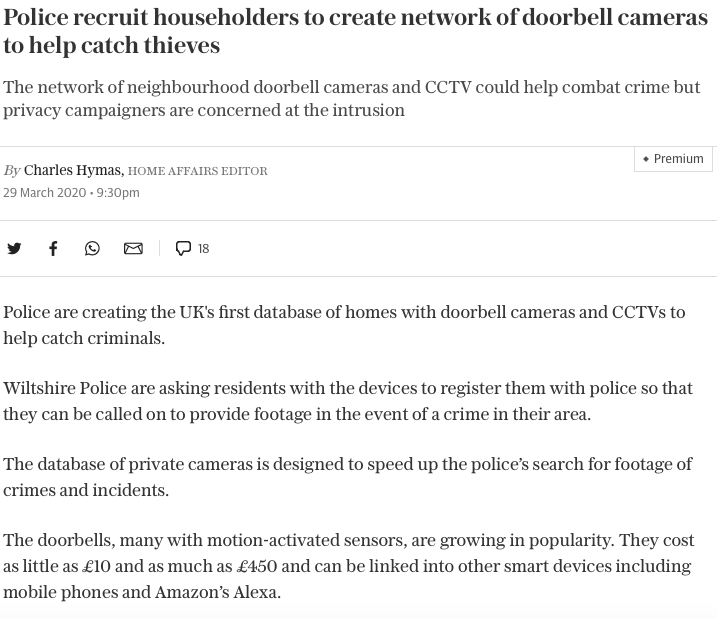
Police in the UK are asking Amazon Ring owners to register them with the police.
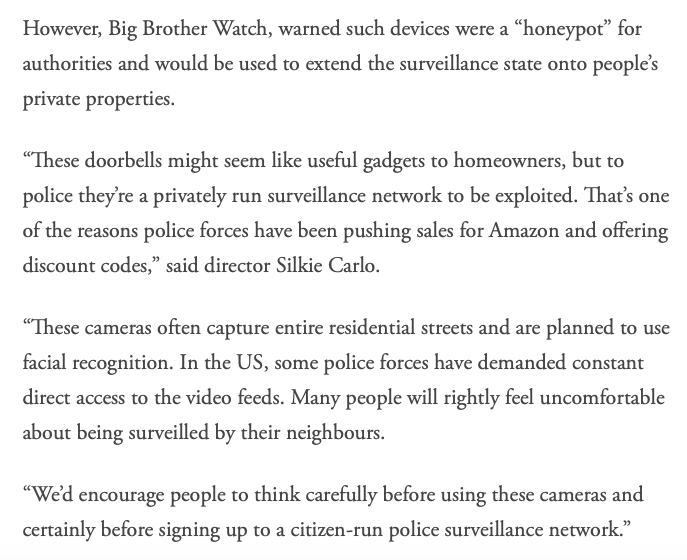
Think twice before you buy one. We’ve long warned that these are a honeypot for authorities + will be used to extend the surveillance state onto people’s private properties.
https://t.co/Yjdra8cKOL
This shows the location data of phones that were on a Florida beach during Spring Break. It then shows where those phones traveled.
First thing you should note is the importance of social distancing. The second is how much data your phone gives off.
When the world recovers from #COVID19 it will have changed dramatically. After the crisis subsides, supercharged surveillance may become the new normal. Our latest feature by @annadorotheaker https://t.co/P3THlgVRCq
"ratcheting up surveillance to combat the pandemic now could permanently open the doors to more invasive forms of snooping later. It is a lesson Americans learned after the terrorist attacks of Sept. 11, 2001..." https://t.co/JBC41EUJXe
.onion: https://t.co/lrmhgAl6C4
This privacy problem is of their own making.
For years, @Google used #flutrends as a justification for their retention policies for search arguing that the social benefit from 'big data' offsets the privacy invasions.
(Which was later mostly disproved: https://t.co/Wj83vpoEkZ