Attending weddings is an economic investment.
From fabric to social expectations, the costs accumulate in ways we rarely calculate until the music stops.
We explore the true price of staying connected in our series on the Owambe Economy. Link in bio.
Attending weddings is an economic investment.
From fabric to social expectations, the costs accumulate in ways we rarely calculate until the music stops.
We explore the true price of staying connected in our series on the Owambe Economy. Link in bio.
BBnaija winners are only a reflection of a much bigger problem of parasocial relationships and the “celebritization” of influencers. We discuss this in our creator economy piece.
There's one takeaway from Ycees' interview with the Afropolitan podcast, and the statement on the #olodouprising. It's the celebration of the Olodo culture in Nigeria. Our current systems do not celebrate intellectualism. We push the people with the most clout, not the smartest..
What stories are hiding beneath the headlines?
We're back with new ideas, new conversations, and a renewed commitment to making sense of the world around us.
Follow us as we continue asking difficult questions and documenting the changes shaping Africa in real time.
#TheRapport
We've been exploring the issues that shape our societies, cultures, and politics, asking questions that don't always have easy answers:
What happens when systems change faster than we notice? How does technology reshape culture? Who gets left behind when economies shift?
Ever searched for a party and thought, “But where’s the vibe?”
Where’s the Afrobeats night with actual Afrobeats? The rooftop bash where you won’t be the only Black person in the room?
That’s where @Shoobsonline comes in. This week on our Product Spotlight, we’re spotlighting Shoobs, the go-to platform for discovering and booking culturally relevant events across the UK.👏🏾
Founded by @LouiseBroni , Shoobs was built to make nightlife more inclusive, and to put Black-led experiences front and center. From hip-hop concerts and amapiano nights to meetups and theatre shows, Shoobs is the plug for urban culture.🚀
With Shoobs, you can:
- Find events that match your vibe
- Buy and store tickets securely
- Discover spaces where you feel seen
- Even list your own events if you’re a promoter
Shoobs isn’t just a ticketing platform, it’s a cultural connector.
Want to know more about Shoobs? Read the full spotlight here → https://t.co/yxUmkkVDEw
What do you think Genius and Duolingo would create if they had an African child? 🤔
Well think no further, episode 2 of our podcast is out 🥳 @SamuelBiokpo had a talk with our host @LongLiveDumi on about what he and his co-founder, Ore Sami, are building with @Lyric_Chief.
If you’ve ever wanted to really understand your favourite Afrobeats songs, this is for you, this platform explains and translates Afrobeats lyrics so fans can get the real meaning behind the music.🎶
In this episode, we talk about some really interesting things, like:
- Why most of their users are in Nigeria and the US, even though Afrobeats is made right here in Nigeria.
- How they spot and ride viral moments, like when the Ogechi remix blew up during Davido’s wedding, to get more people using the app.
- How parents use Lyric Chief to help check which songs are okay for their kids to listen to.
🎧 Watch the full episode here → https://t.co/ABZKZVCn7w
(2) But Wemimo’s drive to solve real problems goes beyond fintech. Before Esusu, he founded Clean Water for Everyone, providing safe drinking water to over 250,000 people in Nigeria, Ghana, and Nepal. He’s been recognized by Forbes 30 Under 30, TIME100 Next, and the World Economic Forum.
He reminds us that innovation isn’t just about new technology, it’s about creating access and equity where there was none before. And that the best solutions are often the ones rooted in lived experience.
Wemimo Abbey is building more than credit scores. He’s building a future where opportunity isn’t defined by where you’re from, but what you do with it.👏🏾
(1) Meet Wemimo Abbey, co-founder and co-CEO of @getesusu , the fintech platform turning rent payments into credit-building power for millions of immigrants and underserved communities.
Wemimo’s story starts in Nigeria, and continues in New York, where he moved with his mother at 17. With no credit history, his family faced sky-high loan rates, his mom once had to take a loan with 400% interest just to get by. That injustice stuck with him.
Determined to build solutions that break down these financial walls, Wemimo co-founded Esusu in 2018 with Samir Goel. Fast forward to today, Esusu is a unicorn, one of the first Black-owned fintech companies in the U.S. to reach a $1 billion valuation. ✨
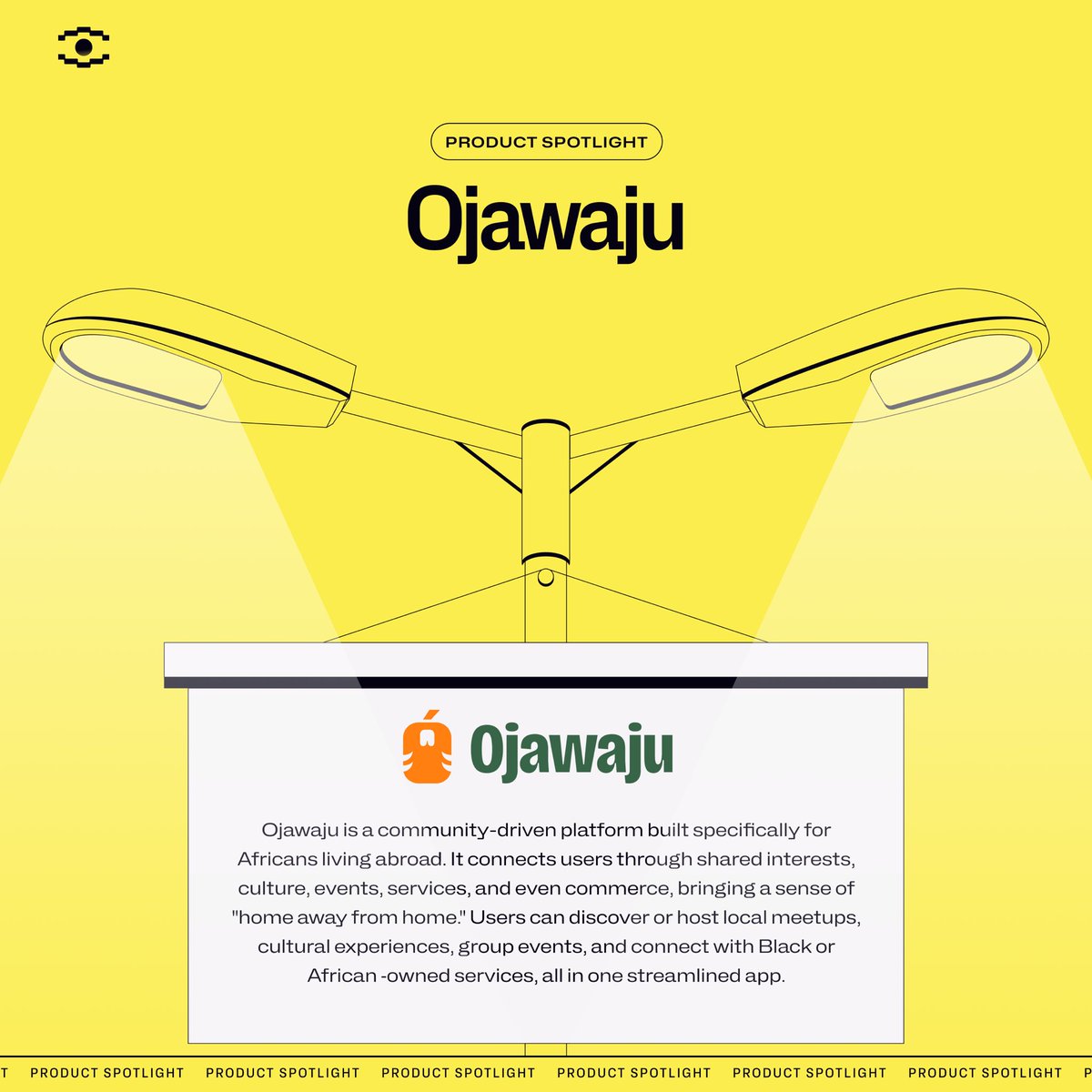
Ever landed in a new city and wondered “Where are my people?”
Where’s the pepper soup joint? The Afro beats party? The local plug for palm oil or suya?🤔
Moving abroad is one thing, feeling at home is another. That’s where @Ojawaju comes in. This week in our Product Spotlight, we’re sharing Ojawaju, the app helping Africans in diaspora 👏🏾
With Ojawaju, you can find or host cultural events, discover Black-owned businesses, meet new friends who share your roots, and stay connected to your culture wherever you are.
So, if you’re abroad and missing home, just maybe Ojawaju can help you bring a piece of home closer. 😉
A reminder that you’re not alone, and that community can be one tap away.
Want to know more about how Ojawaju works? Read all about it here: https://t.co/BU8ZrQEgAs
The second part of our JapaTech series is out! 🚀
This week, we’re talking about the Build of Migration-as-a-Service (MaaS) in Africa, the tech movement that’s quietly dismantling the hush-hush culture of migration and replacing it with something revolutionary: transparency, accessibility, and end-to-end digital solutions.
In this article, we break it all down, from how platforms like @VestiOfficial are powering end-to-end immigration support (visas, banking, community) to how startups like @boxpaperapp, @eMigr8visa, and @blumefy_ng are leveraging AI to make migration smarter and more personalized.
We also explore a fascinating shift: e-migration, where Africans are earning foreign income from home through remote work.
There’s even more in this issue, from the rise of reverse japa (returning to build) to how data is turning migration into a system rather than a gamble.👏🏾
👉🏾Read the full article here: https://t.co/pScNCmbB6L
The second part of our JapaTech series is out! 🚀
This week, we’re talking about the Build of Migration-as-a-Service (MaaS) in Africa, the tech movement that’s quietly dismantling the hush-hush culture of migration and replacing it with something revolutionary: transparency, accessibility, and end-to-end digital solutions.
In this article, we break it all down, from how platforms like @VestiOfficial are powering end-to-end immigration support (visas, banking, community) to how startups like @boxpaperapp, @eMigr8visa, and @blumefy_ng are leveraging AI to make migration smarter and more personalized.
We also explore a fascinating shift: e-migration, where Africans are earning foreign income from home through remote work.
There’s even more in this issue, from the rise of reverse japa (returning to build) to how data is turning migration into a system rather than a gamble.👏🏾
👉🏾Read the full article here: https://t.co/pScNCmbB6L