Feeling positive, gained Communication Access UK accreditation - training was free and took under an hour to complete! Great advice for how to communicate over the phone too.
Thank you @RCSLT! 🎓💻🗣☎️
https://t.co/aESNriYbVj
#communication#access#disability#AHP#SLT
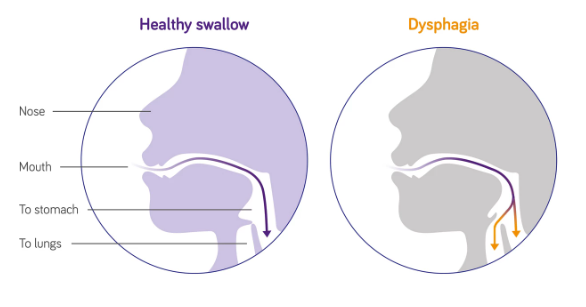
Attending Scotland Dysphagia CEN talk on aspiration pneumonia given by Dr John Ashford, who says:
"Muscle weakness is the number 1 underlying cause of oropharyngeal dysphagia"
🤕🏥🥤
#swallowaware2025#dysphagia#aspiration
Just went to my SLT alma mater for a riveting topical panel discussion on potential for AI in Health. Especially enjoyed Dr Hyunsun Yoon's research relating to older populations using technology.
🎓👩🏫📊🏥
#WeAreCityStGeorges
Crushing medicine can make the key ingredient *inactive*! ⚠️💊
For #stroke patients with #dysphagia (swallowing difficulties), Prof David Wright advises professionals to review meds with DRFTAR: Deprescribe, Route, Formulation, (don't) Tamper, Authorise + Record. 🧠🤕 #UKSF24
Currently, 1 in 7 strokes are young stroke.
But strokes in people under 55 are increasing at a higher rate than in older people… and the prognosis of stroke in younger patients is “not benign”.
“Worrying change in epidemiology of younger stroke”.
Linxin Li at #UKSF24.👆
Stroke can affect vision. 🧠➡️👁👁
If a stroke survivor has a weaker side, where they find it harder to see, vertical up/down resources can be more accessible rather than side-to-side scales. 👓↕️
#WorldStrokeDay2024#SLT#Mood
Many stroke survivors are affected by #Aphasia. 🧠🏹
Aphasia can make it harder for them to understand information, or express themselves. 👓📖🗨
Please be considerate, patient, kind, and try using other methods to communicate, such as pictures. 💗🕑✍️🖼
#WorldStrokeDay2024
Saying your name can be a huge challenge for some people who stammer 💁♀️🗨⚠️
Be considerate and give them time to speak 🎁🕑
Please check out Stamma's guide on supporting people who stammer to order 📖🤝☕️
https://t.co/ZcRv6kBPxL 👨💻
#ISAD2024#Dysfluency#StutteringAwarenes
Just thoroughly enjoyed a night at @Wimbookfest discussing themes of friendship, challenges of early adult life, and how fiction can empathise with our own experiences. Thanks to Dawn O'Porter, Caroline O'Donoghue and the wonderful Bryony Gordon
Re: evidence, experience and empathy, SLT & bioethicist Elissa Larkin from @AbilityLab shared the concept of "Epistemic Humility" at our latest @MC_CEN_SaLT event. 🌿🧠
Epistemic humility = valuing patient experience, promoting pt voice in their care. 🩺👩⚕️🗨
#RCSLT#Bioethics
Taste and smell are interpreted by receptor cells in the nose and mouth. These receptor cells send this information through nerves to the brain.
When this pathway is disturbed by a stroke, it can change your sense of taste and smell.
To find out more: https://t.co/Z1X9NdWJjX
Thank you again to @TheStrokeAssoc for this year's conference. Today's take-home point: stroke survivors who need assistance accessing computers for social and rehab activities, can get help through @AbilityNet!
https://t.co/NQzaEA9xnC
#stroke#computer#Accessibility