Judging by my tl there is a growing gap in understanding of AI capability.
The first issue I think is around recency and tier of use. I think a lot of people tried the free tier of ChatGPT somewhere last year and allowed it to inform their views on AI a little too much. This is a group of reactions laughing at various quirks of the models, hallucinations, etc. Yes I also saw the viral videos of OpenAI's Advanced Voice mode fumbling simple queries like "should I drive or walk to the carwash". The thing is that these free and old/deprecated models don't reflect the capability in the latest round of state of the art agentic models of this year, especially OpenAI Codex and Claude Code.
But that brings me to the second issue. Even if people paid $200/month to use the state of the art models, a lot of the capabilities are relatively "peaky" in highly technical areas. Typical queries around search, writing, advice, etc. are *not* the domain that has made the most noticeable and dramatic strides in capability. Partly, this is due to the technical details of reinforcement learning and its use of verifiable rewards. But partly, it's also because these use cases are not sufficiently prioritized by the companies in their hillclimbing because they don't lead to as much $$$ value. The goldmines are elsewhere, and the focus comes along.
So that brings me to the second group of people, who *both* 1) pay for and use the state of the art frontier agentic models (OpenAI Codex / Claude Code) and 2) do so professionally in technical domains like programming, math and research. This group of people is subject to the highest amount of "AI Psychosis" because the recent improvements in these domains as of this year have been nothing short of staggering. When you hand a computer terminal to one of these models, you can now watch them melt programming problems that you'd normally expect to take days/weeks of work. It's this second group of people that assigns a much greater gravity to the capabilities, their slope, and various cyber-related repercussions.
TLDR the people in these two groups are speaking past each other. It really is simultaneously the case that OpenAI's free and I think slightly orphaned (?) "Advanced Voice Mode" will fumble the dumbest questions in your Instagram's reels and *at the same time*, OpenAI's highest-tier and paid Codex model will go off for 1 hour to coherently restructure an entire code base, or find and exploit vulnerabilities in computer systems. This part really works and has made dramatic strides because 2 properties: 1) these domains offer explicit reward functions that are verifiable meaning they are easily amenable to reinforcement learning training (e.g. unit tests passed yes or no, in contrast to writing, which is much harder to explicitly judge), but also 2) they are a lot more valuable in b2b settings, meaning that the biggest fraction of the team is focused on improving them. So here we are.
Prediction: In less than 90 days, all channels that we thought were safe from spam & automation will be so flooded that they will no longer be usable in any functional sense: iMessage, phone calls, Gmail.
And we will have no way to stop it.
Before I rip Mark a new asshole, I'll say he isn't wrong in the narrow, psychological sense. Baseline temperament, coping styles, meaning-making, whatever, are relatively stable across income changes
However, Elon's OP is a weary observation from someone who's clearly fatigued by hitting the ceiling and realizing there's nothing above it except more responsibility and more heat
Elon creates enormous positive externalities (EV adoption, private spaceflight, satellite internet, open technical ambition, getting to Mars, allowing people to *see and walk again* trying not to let the tiny candle of light that is life go out etc etc) and absorbs an equally enormous amount of social aggression, and that asymmetry matters psychologically
Humans are not built to be constant targets of millions of hostile narratives, many of which are bad-faith, flattened, or outright false. Status doesn’t immunize you against that, if anything, it amplifies it
Mark is talking from the tier of wealth where money mostly buys comfort, insulation, and applause. Private jets, courtside seats, optional relevance. A long-running TV show where wannabe entrepreneurs pitch novelty sponges for equity. That’s rich, but it’s still human-scale rich. You can log off, be liked... be a fun billionaire!
Meanwhile, Elon is treated like a moral hazard while operating at civilizational scale. Sustained public contempt paired with sustained responsibility is a uniquely corrosive psychological environment. No amount of money solves that. Different animal entirely.
At Elon's level, money isn’t about lifestyle, it’s about responsibility density. Millions of people, governments, markets, activists, and ideologues projecting onto you at once. You don’t get to be “happy” or “miserable” in the way Mark is describing bc your inner life is constantly being stress-tested by forces that don’t exist at Mark’s altitude
The regional pilot explaining turbulence to the astronaut is laughable
If Mark Cuban retires, Luka gets traded. If Elon retires, we miss out on Kardashev II
Nobody has fought harder for full release of the Epstein files and prosecutions of those who abused children more than I did, knowing full well that the legacy media, far-left propagandists and those who are actually guilty would:
1. Admit nothing
2. Deny everything
3. Make counter-accusations against me
I knew that I would be smeared relentlessly, despite never having attended his parties or been on his “Lolita Express” plane or set foot on his creepy island or done anything wrong at all.
Nonetheless, the extreme pain of being accused of being the opposite of who I am was worth it.
The strong must protect those cannot protect themselves, especially vulnerable children. I will gladly accept any amount of future pain to do more to protect kids and give them a chance to grow up and have happy lives.
What the fuck is this obsession with having an Indian neighbor?
The guy lives in the neighborhood — not in your house, not on your couch. He pays his fucking taxes. His kids do well in school. They mind their business, work hard, and treat people with respect. That’s literally the deal in a civilized society.
If someone’s skin color bothers you more than whether they’re productive, law-abiding, and decent human beings, then immigration isn’t your problem — you are.
And if you want to live in some fantasy land where only one race exists, America is not for you.
You’re free to fuck off and find that place somewhere else.
After a certain age, your parents slowly become your children.
They ask simple questions, repeat stories, and depend on your patience the way you once depended on theirs. Very few understand this role reversal. What looks like innocence or inconvenience is really time coming full circle. Don’t correct them harshly. Don’t rush them. Care for them the way they once protected you. This is not a burden. It is repayment, quietly wrapped as love.
Last quarter I rolled out Microsoft Copilot to 4,000 employees.
$30 per seat per month.
$1.4 million annually.
I called it "digital transformation."
The board loved that phrase.
They approved it in eleven minutes.
No one asked what it would actually do.
Including me.
I told everyone it would "10x productivity."
That's not a real number.
But it sounds like one.
HR asked how we'd measure the 10x.
I said we'd "leverage analytics dashboards."
They stopped asking.
Three months later I checked the usage reports.
47 people had opened it.
12 had used it more than once.
One of them was me.
I used it to summarize an email I could have read in 30 seconds.
It took 45 seconds.
Plus the time it took to fix the hallucinations.
But I called it a "pilot success."
Success means the pilot didn't visibly fail.
The CFO asked about ROI.
I showed him a graph.
The graph went up and to the right.
It measured "AI enablement."
I made that metric up.
He nodded approvingly.
We're "AI-enabled" now.
I don't know what that means.
But it's in our investor deck.
A senior developer asked why we didn't use Claude or ChatGPT.
I said we needed "enterprise-grade security."
He asked what that meant.
I said "compliance."
He asked which compliance.
I said "all of them."
He looked skeptical.
I scheduled him for a "career development conversation."
He stopped asking questions.
Microsoft sent a case study team.
They wanted to feature us as a success story.
I told them we "saved 40,000 hours."
I calculated that number by multiplying employees by a number I made up.
They didn't verify it.
They never do.
Now we're on Microsoft's website.
"Global enterprise achieves 40,000 hours of productivity gains with Copilot."
The CEO shared it on LinkedIn.
He got 3,000 likes.
He's never used Copilot.
None of the executives have.
We have an exemption.
"Strategic focus requires minimal digital distraction."
I wrote that policy.
The licenses renew next month.
I'm requesting an expansion.
5,000 more seats.
We haven't used the first 4,000.
But this time we'll "drive adoption."
Adoption means mandatory training.
Training means a 45-minute webinar no one watches.
But completion will be tracked.
Completion is a metric.
Metrics go in dashboards.
Dashboards go in board presentations.
Board presentations get me promoted.
I'll be SVP by Q3.
I still don't know what Copilot does.
But I know what it's for.
It's for showing we're "investing in AI."
Investment means spending.
Spending means commitment.
Commitment means we're serious about the future.
The future is whatever I say it is.
As long as the graph goes up and to the right.
INDIA, INTERNET, INTERNATIONAL
If you're Indian, don't move to America.
Because the US left hates technocapitalists.
And the US right wants no more immigrants.
Moreover, as the sovereign debt crisis worsens...
It only gets worse. Possibly murderously worse.
So: Indian immigrant technocapitalists need alternatives. And there are three options: India, Internet, and International.
1. India
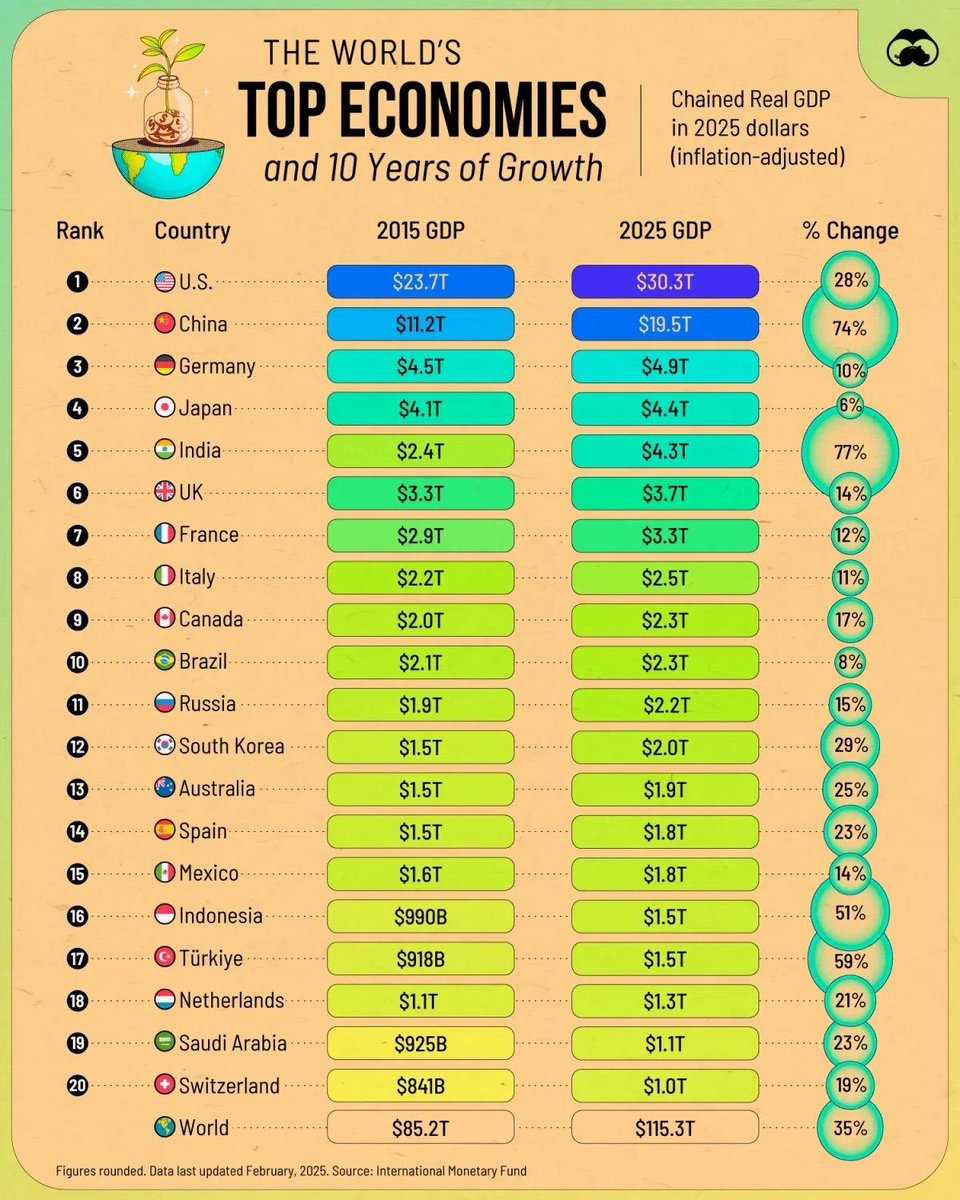
India itself is the world's fastest growing economy, with the #1 growth rate in the world over the last 10 years. Every major company is investing in India. So you can do well in the Indian economy:
2. Internet
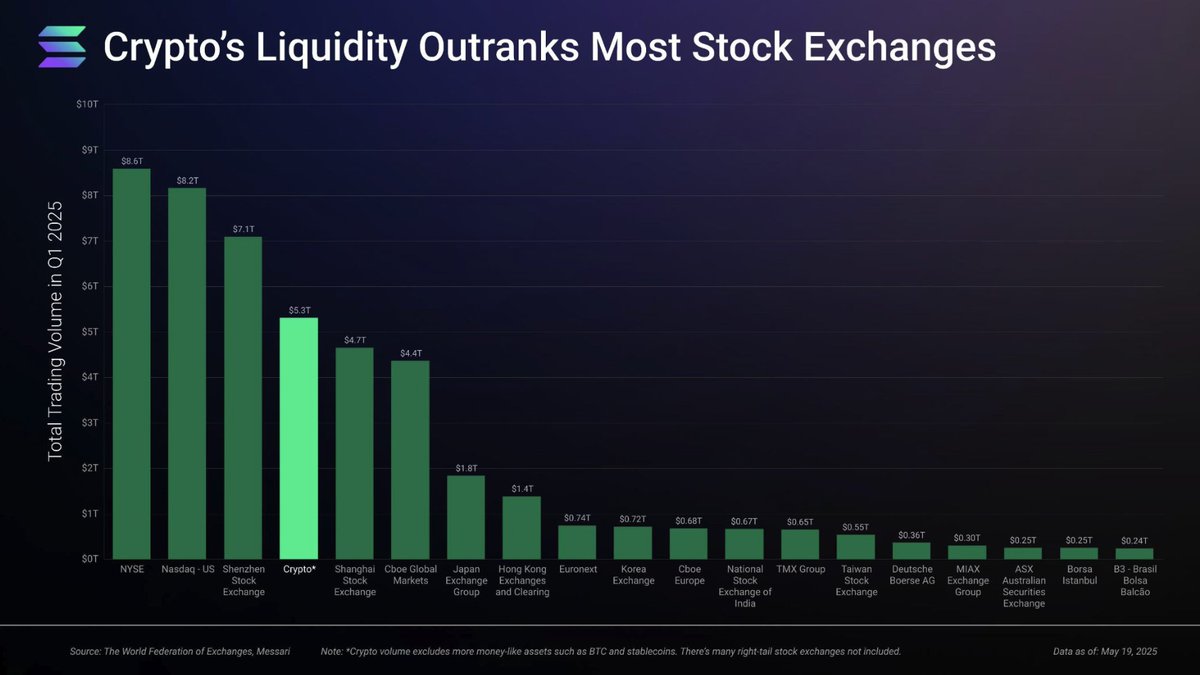
The Internet is taking over from a fading NYSE/NASDAQ as the world's largest capital market. The decline of Delaware and NYC accelerate this; everyone from Elon to Elad Gil to a16z to Dropbox have moved out of Delaware for incorporation, and Mamdani is catalyzing a capital exodus to Miami.
So: the US is no longer a stable place for capital formation. And Solana and Ethereum already put Indians on a level playing field with the entire world, with digital rule-of-law. No one can discriminate against you in a smart contract simply for being Indian, so you can do well in the Internet economy:
3. International
Finally, at the exact moment that the US has stopped recruiting tech talent while India is generating enormous amounts of it, the rest of the world is opening their doors to digital nomads.
Dozens of places from the UAE to Singapore have created many different kinds of talent visas. And so Indian technologists have begun rerouting there, especially to Dubai and Singapore. So that's the third option: the International economy:
In short: do not expect the US to suddenly become more friendly towards immigrant capitalists. The long-term financial outlook is not good, so America is unfortunately no longer a good place to build a stable life and a career. Which is why Americans themselves are in a zero-sum mentality.
You can't fix that.
Instead, if you're an Indian technologist, rely only on TCP/IP rather than H-1B. And build yourself up in India, on the Internet, or internationally.
@airindia Your response:
“Hi, we empathize with your experience. Our endeavor has always been to provide a seamless experience throughout to all passengers. Your concern has been duly noted and has already been shared internally. Hope to serve you better in the near future.”
Very helpful
Lots of people talk about cloning von Neumann, but more should talk about cloning Ramanujan.
He came from a horrible environment and spent ~80% of his life in it, yet he was so brilliant that his random notebook discovered a half-century after he died contained novel insights.
Engagement -> Retention -> Monetization used to be the funnel of building products & companies.
Monetization -> Engagement -> Retention is the order that I'm seeing founders prioritize today in the AI age.
I love monetization & spent 5 years of my life waking up every day trying to increase subs/a la carte purchases while leading the revenue team at the top grossing app in the world.
So you would think I'd agree that monetization is what everybody should spend their time thinking about, but the answer is far more nuanced.
We hear the words "Vibe Revenue" or "Experimental Revenue" being thrown out a lot this year in podcasts and newsletters, and those are accurate terms to describe what so much of monetization feels like today.
In prior cycles, founders had to earn the right to focus on monetization by building a great product first.
A great product can be subjective - we use the words 'taste' and 'craft' a lot, but you can also measure it by looking first at engagement & then studying retention.
The problem with focusing on monetization too early is that you create a false sense of success, especially if you haven't seen renewal cycles yet.
I am guessing there is a significant percentage of new companies who stare at their engagement and retention data all day long (which might be going up & to the right) & know there are deep flaws in their product.
But they lean on monetization ($0-$10m in a year!) to make it seem like they've found product-market fit with their own teams & investors.
It's a lot of fun to make money. I had the most fun ever in my operating career leading revenue teams. It can be addicting at times.
But the only reason we became the top-grossing app in the world is because we had best-in-class engagement and retention metrics for our category. We earned the right to monetize.
I hope we get back to a world where everything starts with engagement and retention. Then we can talk about revenue.
The reason I’m in America along with so many critical people who built SpaceX, Tesla and hundreds of other companies that made America strong is because of H1B.
Take a big step back and FUCK YOURSELF in the face. I will go to war on this issue the likes of which you cannot possibly comprehend.