It's still crazy to me how so many boring niches are completely undervalued and slept on by money twitter
There are guys out there making almost half a million a month arbitraging video to written content
but because they don't have fancy dashboards or post Porsche pictures nobody cares
I was tired of seeing SEO prompts on X that are straight up slop so I spent a few hours building one on Claude that actually does something different.
Instead of just "write me an article about X," it goes to Google, pulls the top 5 results for your keyword, opens every single one, and analyzes what they're doing:
Structure, headings, images, links, everything.
Then it finds what ALL of them are missing.
And builds you a content template that covers everything they cover + the gaps none of them address.
I tested it for our own software (Arvow) on "best SEO tools for agencies."
The top results were all listicles with 13-15 tools.
The prompt analyzed them all and produced a template with 4 unique angles nobody in the entire SERP was covering.
The article it generated looks like a senior content strategist spent a full day on it but took me 5 minutes.
Best part is the template has variables so you can reuse it across niches.
Agencies, freelancers, e-commerce, local businesses, all is possible with it.
I'm giving it away. Reply "prompt" and I'll send it.
Most e-commerce stores are invisible to ChatGPT and they don't even know it.
When someone asks AI "what's the best [product] for [need]," the answer ALWAYS comes from specific sources.
If your store isn't one of them, your competitors get recommended instead.
So how do you fIx it?
There are 2 ways:
1. Hijack citations
- type your target prompts into ChatGPT (or use an LLM tracker like Arvow's to track the responses for each prompt across all AI models)
- open every source it cites,
- contact those sites, get your brand included.
Usually $50-200 per placement or free via link exchange.
2, Create the content yourself
for every prompt you're not cited for, publish a blog post that directly answers it. FAQs, comparison tables, structured content.
Combine both and you get double signal.
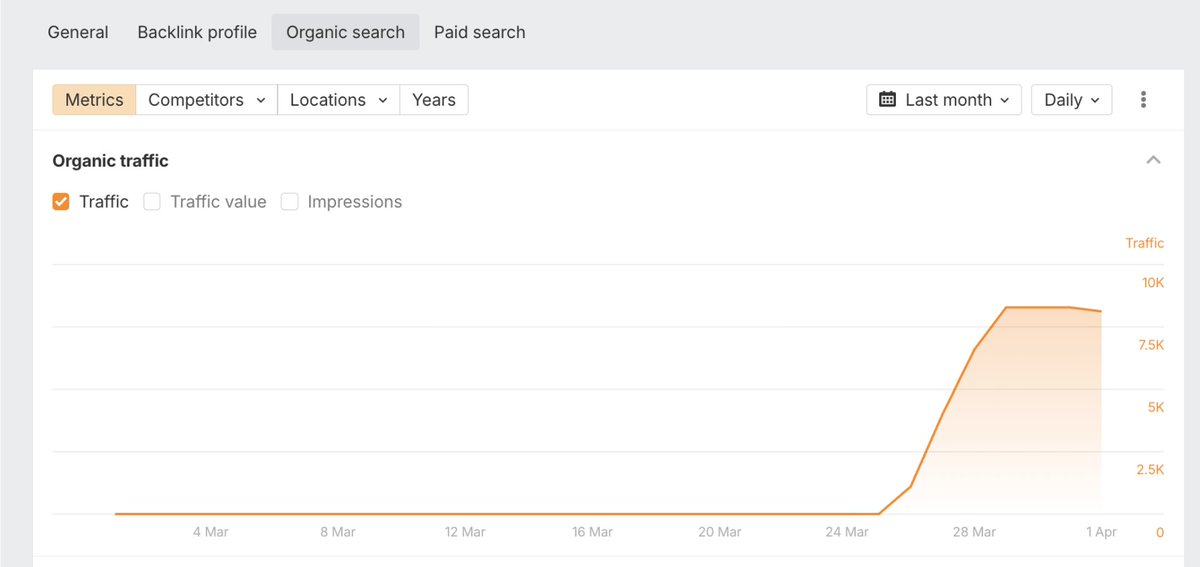
One store went from zero citations to 22K organic visitors/month doing exactly this.
This works for any e-commerce niche btw 😉
Cloudflare just released a free tool that scores how ready your website is for AI agents.
It lets you check if ChatGPT, Perplexity, and other AI models can actually find, read, and recommend your site.
According to them, they already scanned 200,000 websites and almost none passed.
One of them could be yours.
And if your site isn't agent-ready, you're invisible to a growing chunk of how people search in 2026.
It takes 10 seconds and if you fail, they give you skills.md to paste into Claude to fix it automatically.
Now that chatgpt images 2.0 can fake any dashboard or metrics into perfection
What will happen to all the fake ecom and saas gurus on X?
generational scamming or generational extinction incoming?
We were giving Ahrefs more screen time in our marketing videos than our own product for free.
Basically, in every tutorial, every case study, just to show two features - site overview + top pages.
So we built a Chrome extension with Claude Code that replaced those two features.
Then we kept adding stuff - AI citation scores, local SEO audits, schema checks, GSC integration.
Now it's literally the only SEO tool I open daily.
But the smart part is that now the whole extension funnels into Arvow.
The extension is free but it's basically the top of our sales funnel now.
Free tool -> daily usage -> "fix this with Arvow" -> paid customer.
Already has 47 users in little more than a week and feedback has been great.
Should've done this a year ago tbh.
Introducing Claude Opus 4.7, our most capable Opus model yet.
It handles long-running tasks with more rigor, follows instructions more precisely, and verifies its own outputs before reporting back.
You can hand off your hardest work with less supervision.
ChatGPT is recommending your competitors right now instead of you.
I found out exactly why, and fixed it in 15 minutes with one Claude prompt.
Full tutorial just dropped 👇
We gave a potential client (marketing agency in India) free access to our platform as a good faith gesture so they could try it properly before committing.
We never do this but they had some legit concerns about the workflow so we opened the exception.
Weeks go by - no purchase.
They're using it for their own clients btw.
So we send them an email: "Hey, if you're not planning to subscribe we'll need to remove your access."
No reply...
So we removed it.
Within hours they email us - but not to buy.
To complain they lost access lmaoooo
Bro you're literally an agency making money off our tool and you can't pay for a plan?
We warned you and you ghosted the email.
You were on OUR account for free as a favor.
Anyway 10 minutes after we explained the plans they bought the agency tier.
But makes me wonder is this a cultural thing?
Grok is trash-talking SEMrush and they probably don't even know it.
We ran their brand through an LLM monitor and here's what came back:
For "best competitor analysis tools" - 71% visibility, positive sentiment across most LLMs.
All good.
For "how to track website performance" - only 13% visibility.
Claude, Gemini, and Perplexity aren't mentioning them at all.
For a tool that literally does website performance tracking.
But the worst part?
When LLMs do mention a brand negatively, most businesses have zero clue it's happening.
There's no notification.
No alert.
No Google Search Console for AI answers.
It's just quietly happening in the background while thousands of people ask LLMs what to buy.
And unlike a bad Google review you can respond to, a negative LLM citation is baked into the model's behavior until the sources feeding it change.
That's why tracking sentiment (not just visibility) is becoming critical.
Being mentioned 100 times means nothing if the AI is saying "beware, don't use this."
So what do you actually do about it?
For prompts where you're not showing up at all - the fix is content.
The AI models aren't citing you because your site doesn't have enough information to answer that specific prompt.
- Create an article that directly addresses it.
- Include FAQs that match how people phrase questions to AI.
- Publish it.
The models re-crawl constantly and pull you in.
For prompts where the sentiment is negative, you need to trace it back to the sources.
LLMs don't make up opinions. They pull from articles, reviews, forums.
Find the source feeding the negative citation, address it (update the info, get in touch with the publisher, create counter-content), and the sentiment flips.
We track this for our own brand using Arvow's LLM monitor.
Last month we caught Grok saying negative things about us for a specific prompt.
Traced it back to the source, addressed the issue, and flipped the sentiment within weeks.
If we hadn't been tracking it, we'd still be losing leads without knowing why.





![therealobsty's tweet photo. Most e-commerce stores are invisible to ChatGPT and they don't even know it.
When someone asks AI "what's the best [product] for [need]," the answer ALWAYS comes from specific sources.
If your store isn't one of them, your competitors get recommended instead.
So how do you fIx it?
There are 2 ways:
1. Hijack citations
- type your target prompts into ChatGPT (or use an LLM tracker like Arvow's to track the responses for each prompt across all AI models)
- open every source it cites,
- contact those sites, get your brand included.
Usually $50-200 per placement or free via link exchange.
2, Create the content yourself
for every prompt you're not cited for, publish a blog post that directly answers it. FAQs, comparison tables, structured content.
Combine both and you get double signal.
One store went from zero citations to 22K organic visitors/month doing exactly this.
This works for any e-commerce niche btw 😉](https://pbs.twimg.com/media/HGrZkGkWMAArM5a.jpg)


