𝗧𝗛𝗥𝗢𝗪𝗕𝗔𝗖𝗞 🔙
People think Mamelodi Sundowns only recently became known for building from the back..._
This move from the 90s shows Masandawana patiently playing out from defence, keeping possession and slicing Orlando Pirates open before finishing off a brilliant team goal.
The philosophy has always been there. The identity never changed.
"Shoe Shine & Piano" wasn't just a slogan—it was a way of playing. 🎹
South Korea has instituted a parliamentary investigation over their World Cup loss against South Africa.
The melodrama is unnecessary.
Were they promised easy victory against South Africa or is the anger because they had grossly underestimated South Africa?
"I'm Not Giving You a Platform to Hold a Rally" – Adv. Sello Challenges Dr. Mashazi
During proceedings at the Madlanga Commission, Adv. Sello interrupted Dr. Mashazi, saying:
"What will not happen—I'm sorry, Dr. Mashazi—I'm not giving you a platform to have a rally. I asked you a specific question, and so far you have not answered it. Why, on your own version, if you say it was a cost-cutting measure, did you ensure that only attorneys listed on the approved panel were used?"
#MadlangaCommission #AdvSello #DrMashazi #AfricanVibeMedia
ZZ2 Family Business is a one Massive Empire :
+100 year old Billion empire 🫣
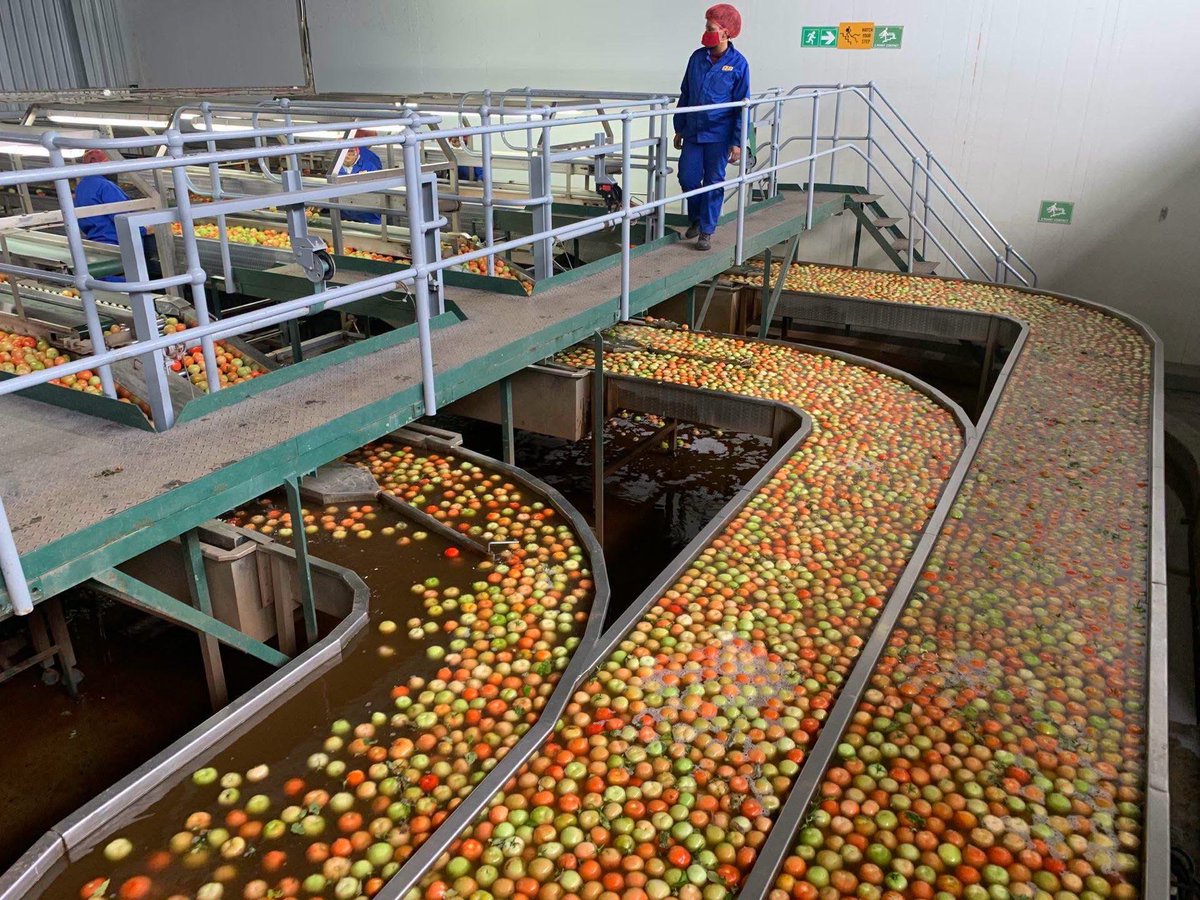
The ZZ2 exports not only the familiar “brand” of tomatoes but also onions, mangoes, avocadoes, blueberries and dates, among others.
ZZ2 empire founder and pioneer Mr Willem Van Zyl started his empire . The Birth of ZZ2 brand name.Its 1902 & the Anglo-Boer War just came to a brutal end, many lives were lost and a new act came to play where farmers received a registered number (branding iron) with which to brand their livestock.
- The code "ZZ2" was given Van Zyl family In 1903 the code ZZ2 was awarded to Burt van Zyl, the grandfather of Bertie van Zyl!Mr Bertie van Zyl decided to formally register the entity "ZZ2 Farming Enterprise" which is the company we know of today in 1966!
Taking over from his father in 2005 Mr Tommie van Zyl (Master of Science in food and resource economics), inherited a +60 000hectares The ZZ2 Farming Enterprise we know The Multi Billion rand conglomerate after 2005
ZZ2 is not just farming in Limpopo alone or rather in South Africa but has branches in countries like Namibia .The hectares under production is +60 000ha = Johannesburg size
The ZZ2 Farming Enterprise farms are located in :
1. Limpopo
2. Eastern Cape
3. Western Cape
4. Gauteng
5. North West
6. Mpumalanga
7. Namibia
and growing...The Production
Game Farming
-Game farm is +23,721ha of conservation land, where youll find game animals like : white rhino, nyala, gemsbuck, red hartebeest, giraffe, impala, kudu, Burchell’s zebra and eland.
Tomatoes
- The produce that made all this possible!
- Produced on +2000 hectares
- Harvesting happens al year round with 1ha yielding of 160 000kgs on average!!!
- The company has over 96 trucks
- 40 trucks are on the road daily, transporting nearly 8,2million kgs of tomatoes every week😅😅😅
Livestock
- Livestock alone is worth +R100 million
Net worth
-ZZ2 Farming enterprise is estimated to be valued at
+R5.5 Billion
6. The CEO of ZZ2 Farming Enterprise
- The current CEO is Mr Tommie van Zyl
7. Employees
- It is estimated the the company employs over 8,000 people in South Africa
Dr Pali Lehohla says South Africa’s economy should be 3x what it is, but the government is too stupid, corrupt and greedy.
Dr Lehohla’s assessment resonate with many people because because it presents a straightforward diagnosis that if you simply root out corruption and adopt better ideas, the potential of the economy will be unlocked.
By saying that it’s just stupidity, corruption and lack of “imagination”, Dr Lehohla appears to disregard how South Africa’s economy is structured.
For starters, South Africa’s policy strategy, particularly since 1996 and especially in 2000 with the introduction of inflation-targeting, has relied heavily on attracting foreign portfolio flows to cover its chronic current account deficit.
This is what has largely kept South Africa as Africa’s leading economy. The steady flow of hundreds of billions of dollars helps South Africa cover its foreign currency shortages which it desperately needs to trade in international markets.
Now, to keep these financial inflows coming, National Treasury and the South African Reserve Bank must prioritise high real interest rates and financial market stability to reassure foreign bondholders that SA is a safe space for their dollars, pounds and euros.
Although these high interest rates attract foreign bond buyers, they also make borrowing expensive for local businesses, which stifles job creation, hence SA’s high unemployment rate.
To National Treasury and the Reserve Bank, these are just the costs of doing business.
The point is that contrary to popular belief, the Treasury isn’t acting out of ignorance or lack of vision. They are aware that if they were to deviate too sharply to pursue aggressive growth policies, they would risk a currency collapse, soaring inflation and other quite serious economic problems they would rather not deal with.
Someone may argue that adopting these policies all those years ago in the first place *is* the stupidity Dr Lehohla is lamenting. This may very well be the case, but still, there were reasons beyond just a lack of imagination.
For one, when the original GNU took office in 1994, it inherited an economy that had been isolated by sanctions, burdened by high public debt and severely capital-starved. The South African Reserve Bank had virtually no foreign exchange reserves to defend the currency or finance international trade.
The SARB had no reserves because its senior officials had pilfered and looted the money when it started looking apparent that the White minority government would collapse.
Because of this, South Africa had gone from an economy designed to comfortably serve 10% of the population, to one that had to service tens of millions more overnight. But the internal savings were far too low to finance the massive infrastructure and industrial development needed for this.
To grow the economy and meet these new social goals, South Africa needed to import capital equipment and consumer goods. However, the country needed to importing far more than it was exporting which created a persistent current account deficit and without domestic savings to bridge the gap, the government had to desperately attract foreign capital. That’s how the foreign investors came swooping in.
But there was also something that happened in the early 1990s that spooked the ANC and convinced leadership at National Treasury and the Reserve Bank that the country was hyper-vulnerable to foreign currency shortages.
In early 1996, South Africa experienced a sudden capital outflow when rumours and market uncertainty caused foreign investors to pull short-term capital out of the country. As a result, the Rand depreciated by over 20% in a few months and because official foreign exchange reserves were so low, the Reserve Bank was powerless to defend the currency.
So, to prevent currency collapses that would spark runaway inflation and destroy purchasing power, the government concluded it had to prioritise foreign investor confidence above everything else.
So, in response to the 1996 crisis, the ANC shifted away from the state-led Redistribution and Development Programme and introduced GEAR which committed the country to the public budget and removing foreign exchange controls to reassure foreign investors that they could move their money in and out freely.
In short, South Africa adopted the current way of doing things as a deliberate strategy to solve the fundamental dilemma of how to finance a growing, open economy with insufficient domestic savings and low foreign exchange reserves.
Now, to be fair to Dr Lehohla, he could be saying they were stupid and spineless for caving to foreign pressure when they could have stood their ground and doubled down on state-led industrial development. In which case, I tend to agree.
I would go a bit further and say what Treasury is doing may have been a necessity in 1996, but was already unnecessary by 2006, let alone in 2026.
South Africa now has $75 to 80 billion in gross reserves vs. almost zero in 1996. So, the original scarcity rationale is diminished. Yet Treasury has continuously been running an austerity programme, even during commodity booms like in the 2000s when it could have built fiscal buffers and invested in infrastructure.
So Dr Lehohla’s lack of imagination accusation appears to land when you ask *why* the ANC government never adapted its strategy throughout the decades as conditions changed.
The answer to this question is disheartening. The reality is that if the government, through Treasury, were to attempt to change its economic trajectory, what happened in 1996 would repeat.
Vested interests would pull capital, short the rand, spread negative news and systematically suffocate the economy until the government falls back in line.
Still, Dr Lehohla is correct that the ANC has been stupid for a while. In the last twenty years they could have built countervailing power like through a sovereign wealth fund, a regional payment system outside dollar dominance, strategic reserves of essentials or diversified trading partners to reduce USD dependency.
Instead, they accepted dependence on short-term foreign dollars, which is why they now have to keep going back to the IMF and World Bank to borrow more of those dollars.
Similarly, the National Treasury has internalised the market’s preferences so completely that they now believe austerity is good policy instead of coercion. As Antonio Gramsci warned, the dominant ideology has now become common sense.
His name is Nathanzinho. Nike have already signed him at 9-years old. 🤯🇧🇷
He'll probably be playing for Flamengo in Brazil in five years time and Real Madrid will probably sign him for £60M two years later. 🔮🔜⭐️
🎈‼️🔥 The whole of South Africa fell silent for 12 minutes. 🙈
A shocking telephone recording between Adv Andrea Johnson and Ms Ramsamy has been played before the Commission.
Adv Andrea Johnson is heard making mockery of the Commission and Commissioners 😳
#MadlangaCommission
General Khan and Andrea Johnson are very close. They call each other "gorgeous", "I miss you".
Adv. Sello had been generous enough to say she won't flight the cellphone chats. But when the issue of General Khan visiting her office, as a friend, to discuss whether the Hawks were investigating her, she advised him to use the VIP entrance and not sign the register.
She wanted to say, every senior SAPS official uses that entrance.
That's when Advocate Sello threatened to actually flight the chats. 🤣😂😂
#MadlangaCommission
This is a serious takedown by Justice Madlanga. Advocate Andrea Johnson finally concedes that the decision to charge General Masemola and join him with Matlala and others was unlawful. It is worse than a Shakespearean tragedy. Andrea Johnson and Shamila Batohi—both part of the Thuma Mina Brigade brought in to "clean up"—now find themselves accused of contaminating the system even further. Something is rotten in this Thuma Mina administration.
@eNCA@News24@CowansView@PieterDuToit were actively part of this tragedy