@CChauYu Honestly that's the whole thread in one sentence. Exposure vs. replacement is a cleaner way to say what I was getting at with the routine/judgment split - might steal that phrasing next time
You've probably heard "AI is killing jobs."
The data says something more specific.
Harvard Business School analyzed nearly all US job postings from 2019 to March 2025.
After ChatGPT launched, postings for highly AI-exposed routine roles fell 13%.
Postings for analytical, technical, and creative roles rose 20%.
Same economy. Same tools. Opposite directions.
PwC found a similar pattern across nearly a billion job ads worldwide.
Even in AI-exposed occupations, jobs grew 38% between 2019 and 2024. In less-exposed ones, they grew 65%.
Workers with AI skills earned an average 56% wage premium in 2024. The year before, it was 25%.
So what's actually happening?
It isn't "jobs vanish." Routine work is getting cheaper, and judgment-heavy work is getting more valuable.
Most people picture AI taking their whole job in one go.
That's not really what's happening.
Anthropic looked at how people actually use its AI. A bit over half the time, people were using it to help with something. Less than half the time, it was doing the task for them.
It also found that only about 4% of jobs had AI involved in three-quarters or more of their tasks.
Most jobs are a mix. Some tasks AI is good at, and some it isn't.
Think of the boring, repetitive parts of your week. The formatting, the first drafts, the same three questions from clients. That's where AI is closest.
The parts where you make a judgment call, or where someone is trusting you? Much harder for it.
So instead of asking "will AI take my job?", it's more useful to look at your week and ask which tasks it could take.
Being good with AI mostly comes down to knowing where checking costs less than doing.
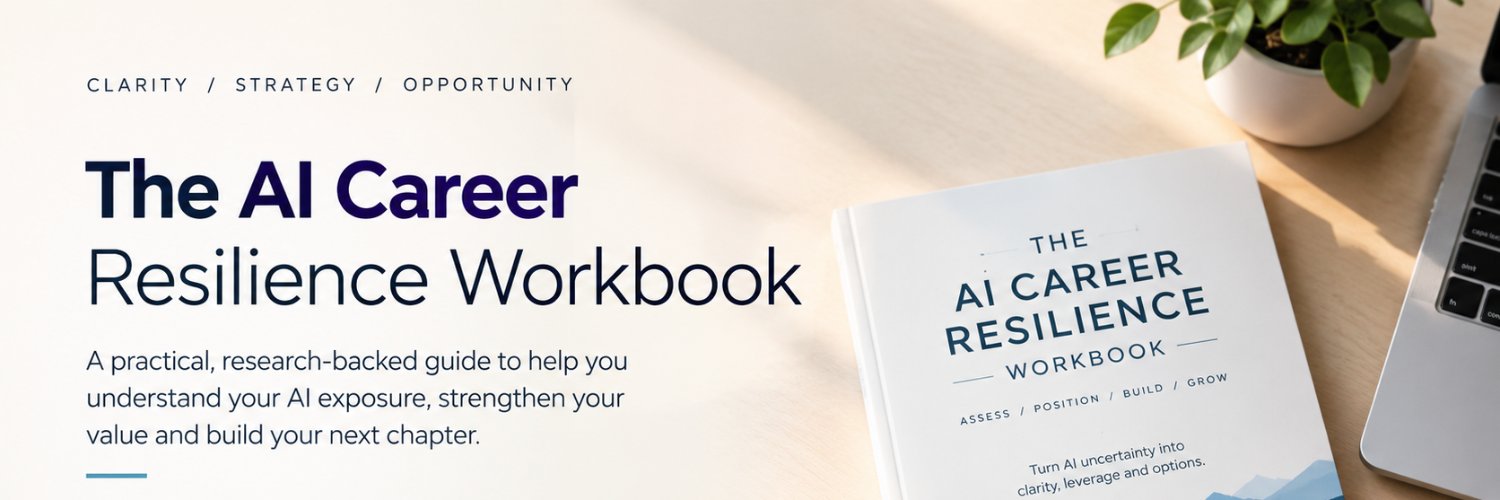
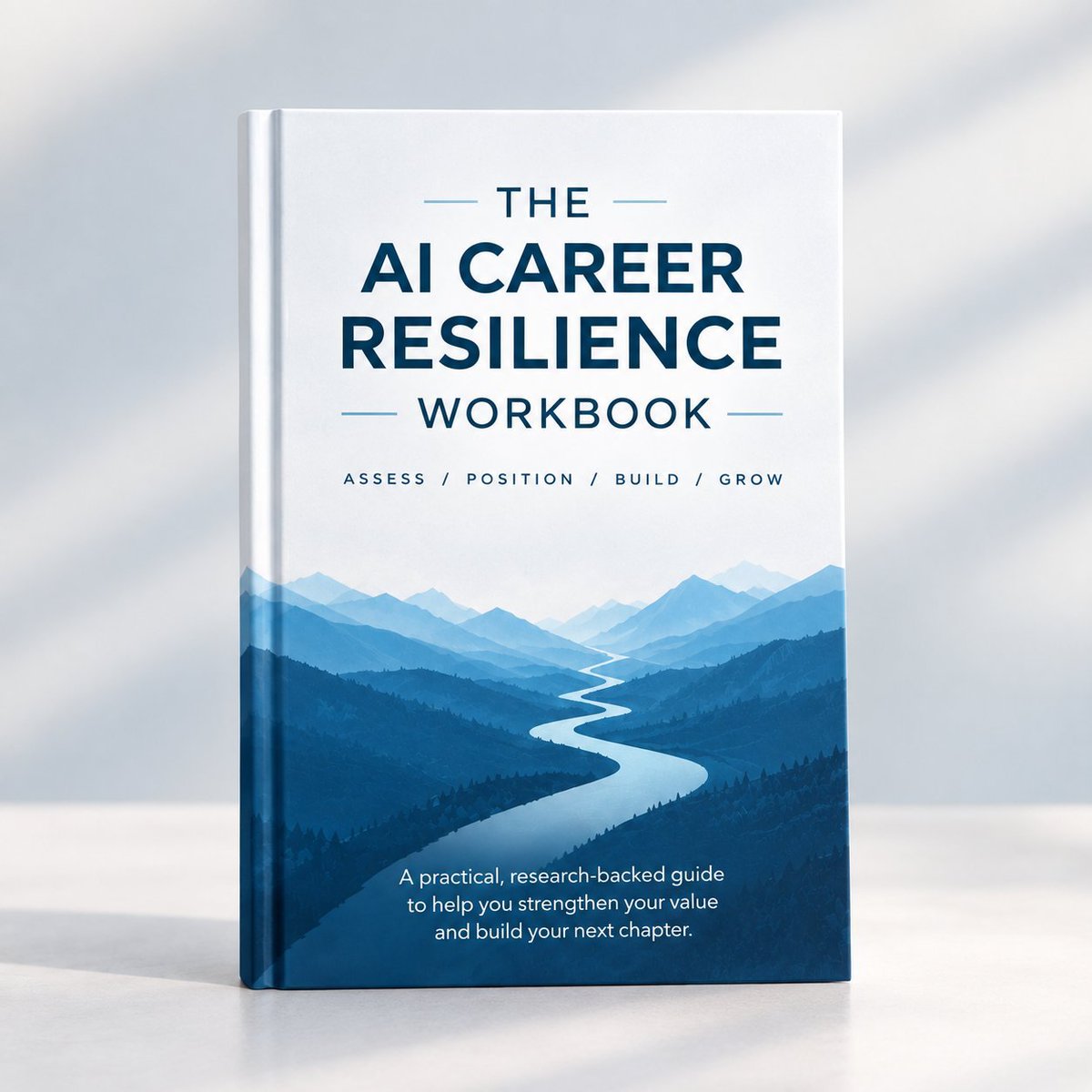
The full scoring method is in The AI Career Resilience Workbook. Reply "AUDIT" and I'll send it over.
Financial analyst example: cleaning a spreadsheet scores a 1 on verification burden. Recommending an investment action scores a 3.
Hand off the first one and keep the second.
The real question: which parts of your week are getting cheap, and which are getting more valuable?
That's what The AI Career Resilience Workbook is built around. Reply "AUDIT" and I'll send it over.
Financial analyst example:
Cleaning a spreadsheet scores 3 on AI capability and 0 on relationships. Explaining an anomaly to the CFO scores 2 and 2, with consequence at 3.
Same job, very different exposure.
Klarna's AI assistant handled about 2.3 million conversations a month.
The company said that was the work of roughly 700 full-time agents.
Then quality slipped on the complex cases. By mid-2025, Klarna was hiring human agents back.
Its CEO admitted the company had focused too heavily on cost.
Here's what most people miss:
This isn't a story about AI failing.
Routine, high-volume questions? AI handles them well.
Escalations, judgment calls, an upset customer who needs a real decision? That's where it fell short.
Klarna now runs a hybrid model. AI takes the routine work, and humans take the hard cases.
So the useful question isn't "can AI do this job?"
It's "which parts of this job can AI own, and which still need a person?"
Klarna found that line the expensive way.
@anupamrjp Happy to connect, I created a fillable guide; research-backed and practical, to help strengthen your value in career exposed to AI. Check it out here. https://t.co/7ePAkscNRm