the conversational pendulum has swung too far towards deep chats*
it's time for small talk and whimsy to make a return.
*i have been complicit in this and I'm sorry.
I hate when businesses shift focus from their core products too early.
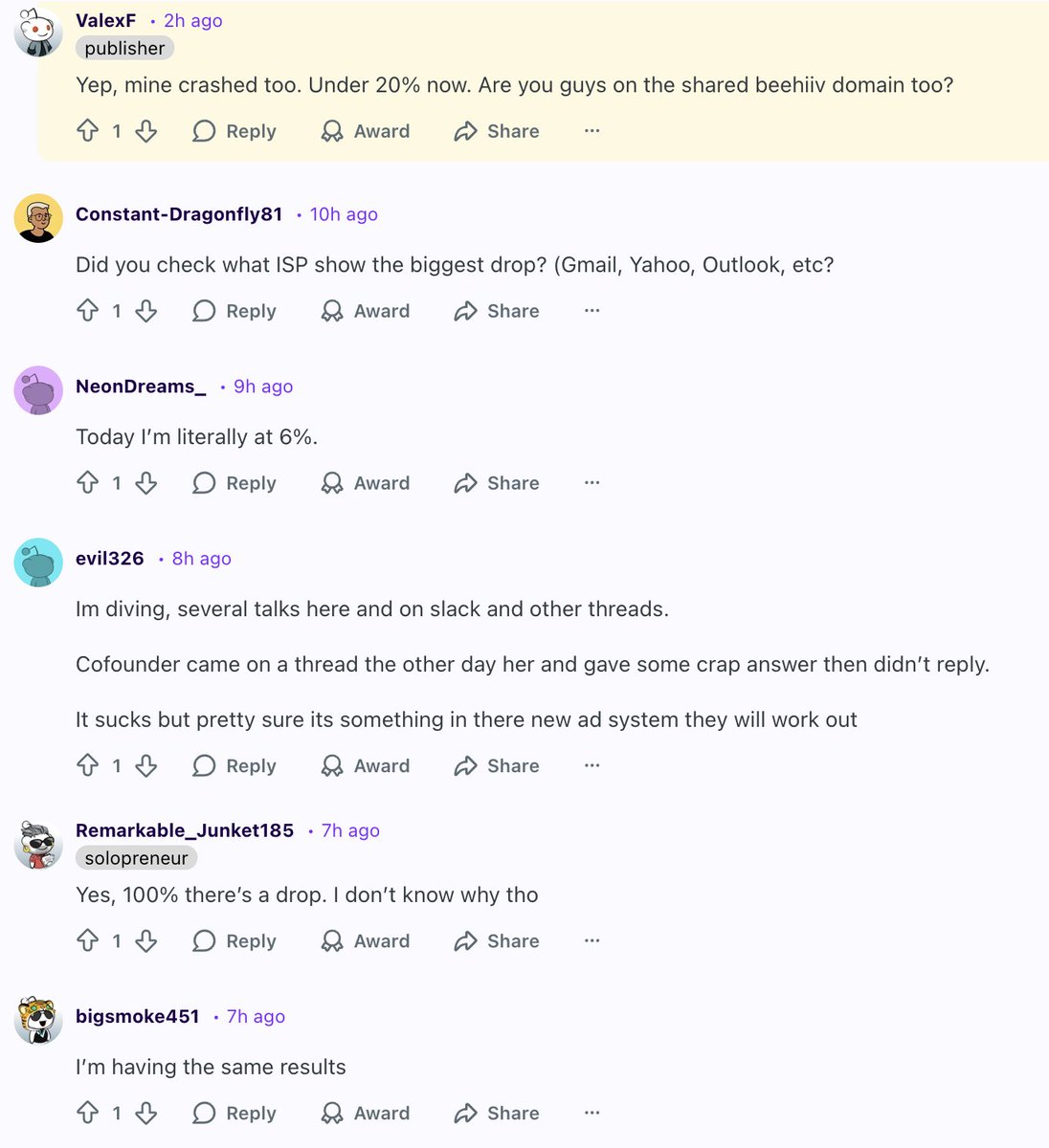
@beehiiv is good, but their core email product still has so much room to improve. Meanwhile they're launching some sexy AI MCP stuff that I don't even know how to use.
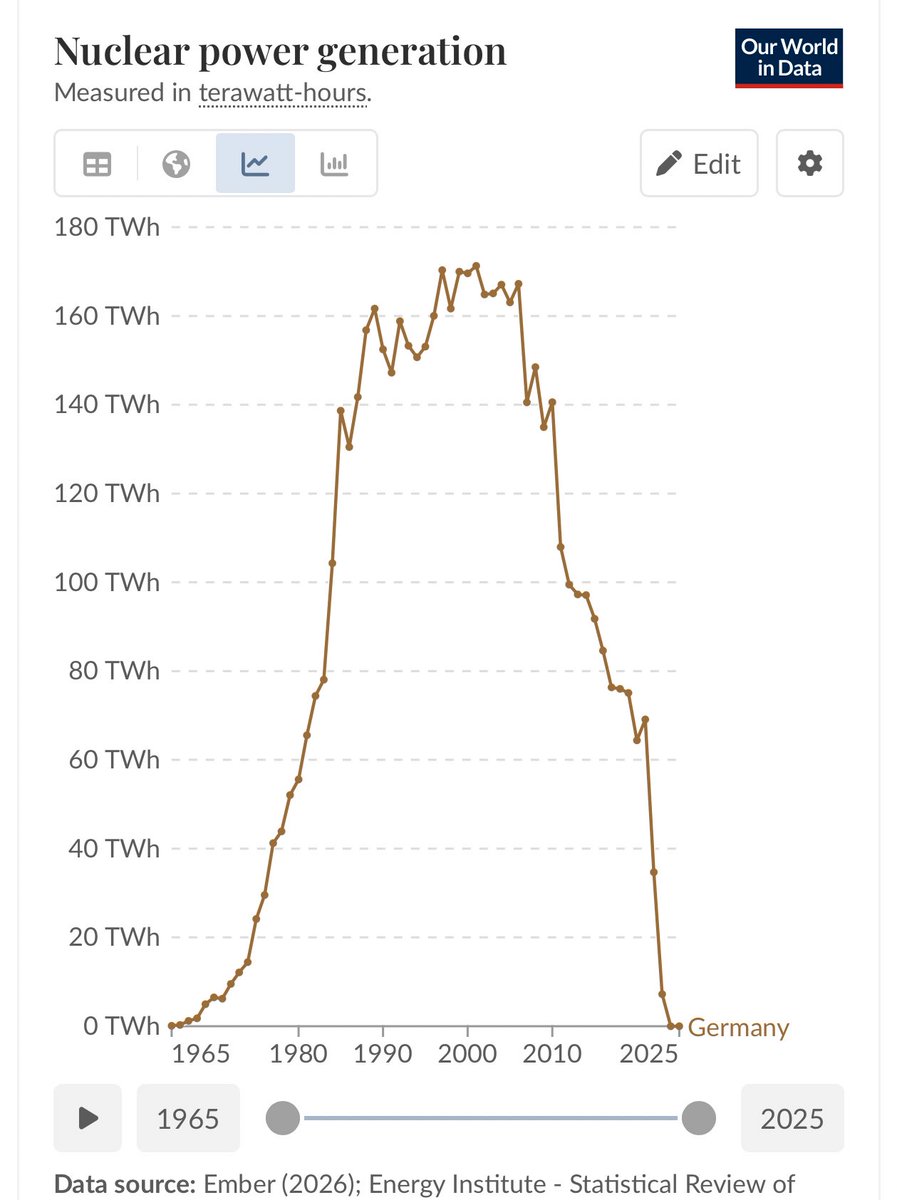
Unreal numbers 👀⚡️
"JPMorgan estimates that, had Germany not phased out nuclear power, the country would have generated 50% less electricity from fossil fuels and 84% less electricity from natural gas in 2024. Electricity prices in Germany would have been around 25% lower, and the country would have imported half as much electricity.."
@CryptoMikli I do this thing where I actually enjoy talking to and spending time with my friends and family.
Works really well.
I regard it as the entire purpose of my life, actually.
Great men of history had little to no introspection.
The personality that builds empires is not the same personality that sits around quietly questioning itself.
@pmarca and I discuss what we both noticed but no one talks about:
David: You don't have any levels of introspection?
Marc: Yes, zero. As little as possible.
David: Why?
Marc: Move forward. Go!
I found people who dwell in the past get stuck in the past. It's a real problem and it's a problem at work and it's a problem at home.
David: So I've read 400 biographies of history’s greatest entrepreneurs and someone asked me what the most surprising thing I’ve learned from this was [and I answered] they have little or zero introspection.
Sam Walton didn't wake up thinking about his internal self.
He just woke up and was like:
I like building Walmart. I'm going to keep building Walmart. I'm going to make more Walmarts. And he just kept doing it over and over again.
Marc: If you go back 400 years ago it never would've occurred to anybody to be introspective.
All of the modern conceptions around introspection and therapy, and all the things that kind of result from that are, a kind of a manufacture of the 1910s, 1920s.
Great men of history didn't sit around doing this stuff.
The individual runs and does all these things and builds things and builds empires and builds companies and builds technology.
And then this kind of this kind of guilt based whammy kind of showed up from Europe. A lot of it from Vienna in 1910, 1920s, Freud and all that entire movement. And kind of turned all that inward and basically said, okay, now we need to basically second guess the individual.
We need to criticize the individual.
The individual needs to self criticize.
The individual needs to feel guilt, needs to look backwards, needs to dwell in the past.
It never resonated with me.
@halletecco I'm not the founder of these companies but I've written deep post-mortems about Pear Therapeutics and Akili
https://t.co/W507e0B4uY
https://t.co/yWp6P0ZS7m
@ushma_17 They used to drill this into us @McKinsey actually.
Trying to go from 3/10 to 4/10 in an area of weakness takes more units of effort than going from 8/10 to 9/10 in an area of strength.
AND, there are non-linear returns at the top end of being great at something.
@ushma_17 Really love this framework.
I think you need table stakes in all areas (e.g., the entrepreneur has to have a basic understanding of psychedelics in mental health) but after that, you get more return on doubling down on strengths.