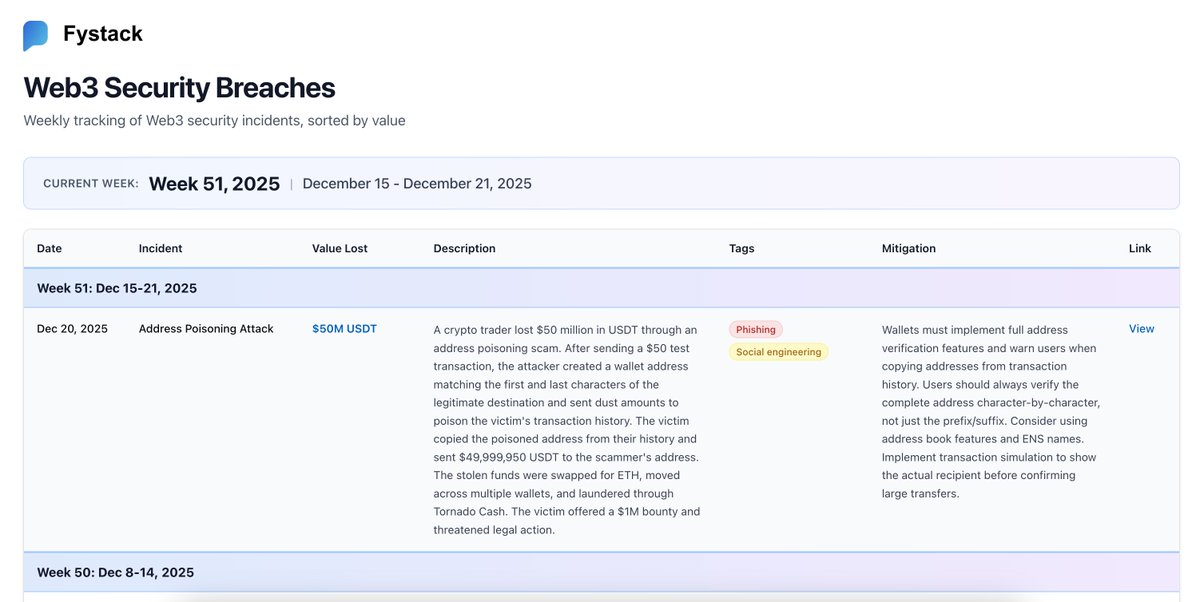
Vastlink's partner @fystack just launched a small tracker to follow Web3 security breaches each week: https://t.co/avhAQx7wg1
You always hear about hacks on social media and in the news, but usually it stops at “what happened” and “how much was lost”. Almost nobody talks about what could have prevented it.
Will Bitcoin survive Quantum Computing?
https://t.co/pWVEQFLxkQ
Post-quantum cryptography solutions are not the real problem — the real bottleneck is Bitcoin's slow, consensus-driven governance process.
Vastlink's notes on "People have their uses: Agentic Wallet and the next decade of wallets"
The article was written by Lacie Zhang at @bitget , originally posted at https://t.co/ecSCO8cWXT
📝 In 1984, Apple (Macintosh) killed the command line with a mouse. In 2026, Agent is killing the mouse.
📝 As early as 1950, Norbert Wiener, the founder of cybernetics, warned that once humans lose the ability to observe and intervene, feedback loops will break and systems will go out of control. The " Harness Engineering " emphasized by OpenAI today is essentially a continuation of this idea.
wallets need to evolve from asset containers and signature tools used by humans into a permission and execution system where humans set boundaries and agents act within those boundaries.
As "ruthless" machine executors, agents do not stay in a particular wallet like humans do, based on interface familiarity, brand preference, or usage habits. Instead, they continuously seek the infrastructure combination with the lowest cost, least latency, and most stable execution.
📝 Agentic Wallet answers a different question than Fat Wallet: Fat Wallet competes for user access, while Agentic Wallet competes for control when the software begins to directly manage funds.
Looking back at the evolution of wallets, we can see that each change in product form essentially corresponds to a change in the object of user trust:
* A mnemonic phrase wallet requires users to trust itself.
* Smart contract wallets require users to trust the code.
* Embedded wallets require users to trust the service provider.
* With Agentic Wallet, users need to trust a control system comprised of permissions, policies, and governance mechanisms.
📝 The Design Philosophy of Agentic Wallet
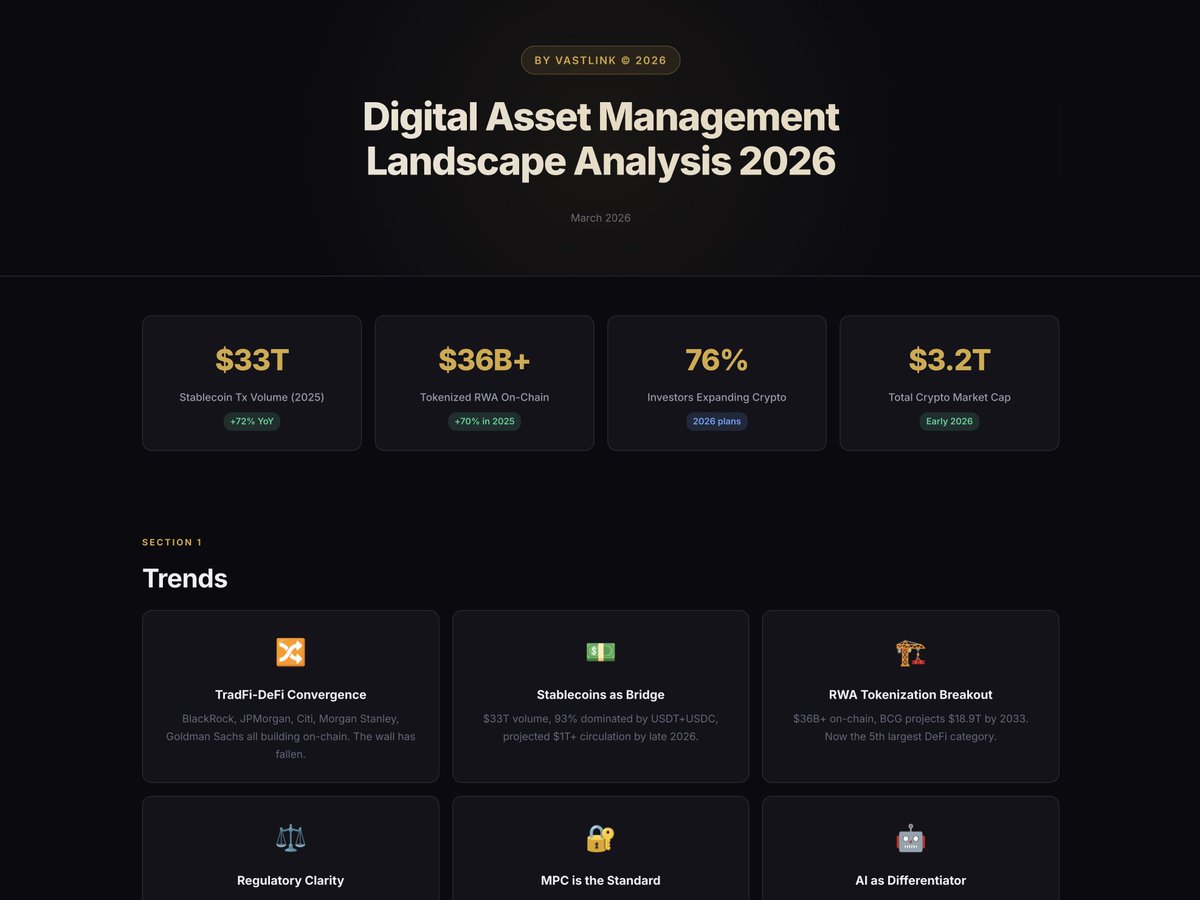
Digital Asset Management Landscape Report for 2026 (by Vastlink)
* TradFi-DeFi Convergence
* Stablecoins as Bridge
* Regulatory Clarity
* AI as Differentiator
* MPC is the Standard
... and more in PDF at https://t.co/9QUm43FBF1
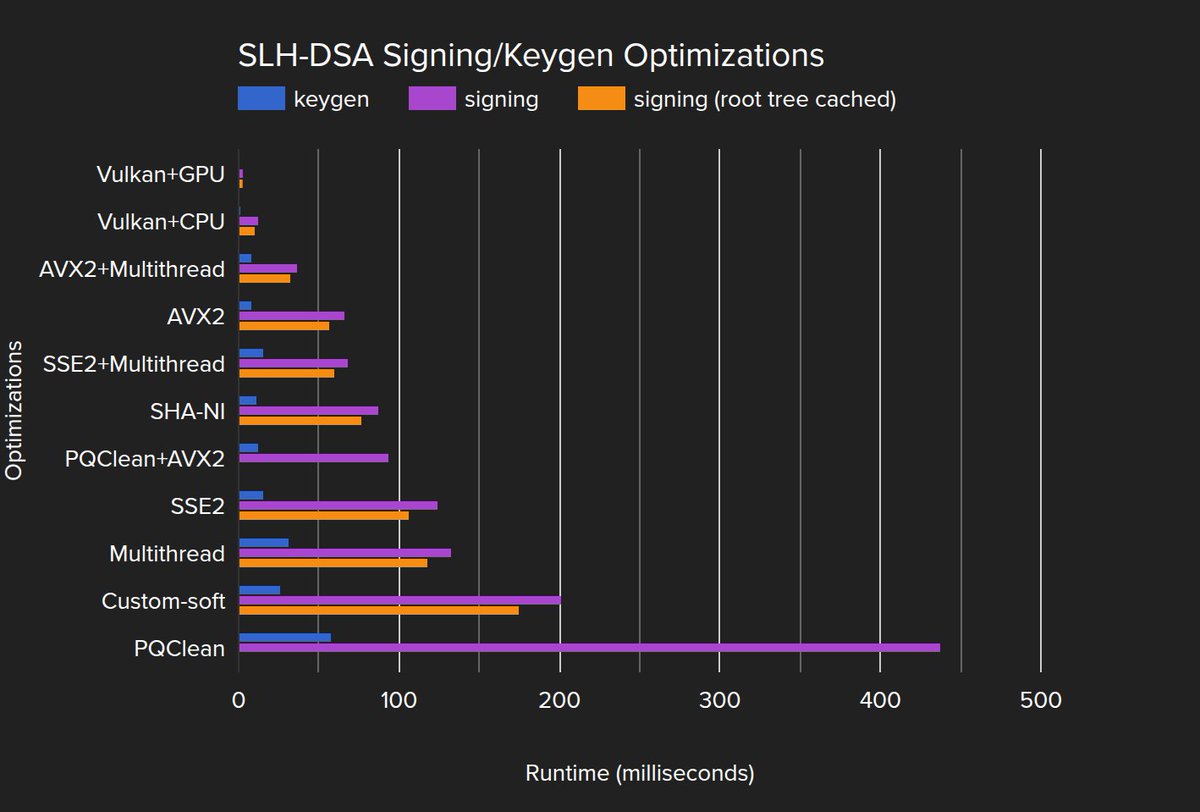
🧵Thread: A major update on post-quantum signatures for Bitcoin — direct from the Bitcoin Dev mailing list.
SLH-DSA (formerly SPHINCS+) is being optimized by @conduition_io as a candidate for the BIP360 quantum-resistant soft fork.
Here’s what changed, why it matters, and what Core devs said.👇
The fundamental problem with current crypto wallets (1)
1. “Not your keys, not your coins!”
It is what crypto is all about. Somehow on the flip side, it means “if I lose my keys, I lose my coins”.
Managing keys (private keys and seed phrases) is hard for everyone, yes everyone, from crypto natives to new comers.
2. “Is it possible that I lose my keys, I don’t lose my coins?”
The answer is “no”, as it is the way crypto works. But the question is valid, the point here is that I don’t want to lose my coins if I lose my keys.
If we ask the question in a different way, “Is it possible that I don’t have to manage my keys, so I don’t worry about losing them, meanwhile I still have control over my coins?”
The answer is “yes”, it is possible with technologies like multi-party computation (MPC) and threshold signature scheme (TSS) as well as account abstraction (AA).
3. “How it works?”
In a nutshell, we don’t have to manage our keys, they are still there behind the scene, but they are no longer exposed to us, or hackers either. We can use the methods we are familiar with, such as email, social accounts, mobile phone, Face ID and etc, to “log in to” a MPC or AA wallet to access our assets.
It is much more user friendly now, with security mechanisms such as multi-factor authentication (MFA) and withdrawal limits, it could offer bank-grade security for crypto now.
Somehow nothing is perfect, it introduces new risks and concerns.
To be continued …
https://t.co/hTxgvlGQkY
@LitProtocol Vastbase (https://t.co/AGBOd7HELI), our next-gen multi-chain and multisig wallet for individual and team treasury management, is built on @LitProtocol , PKP (programmable key pair) makes it possible to be secure, simple and scalable in an open and decentralized way.
We’re excited to be partnering with @LitProtocol on our shared mission to build the User-Owned Web.
We do need an open and decentralized key management ecosystem for the future of the Web.
@paoloardoino Is `Keyless` part of the plan for WDK for future mass adoption?
Private key and seed phrase offer self-custody and sovereignty which is absolutely essential, meanwhile they pose risk of single point of failure, and become a barrier for more people to adopt crypto.