IMO, the Vedas are everything in one. Chanting them after necessary refinements to the mind, and with intent, one can get revelations about science, as much as about spirituality or surgery.
In the age of AI, I will request you to think of the Vedas as quantized, compressed version of a lot of revealed knowledge distilled into the most efficient, lossless sounds called mantras.
Most people may, at most, appreciate their rhythms while they see religious intent mostly with bits of philosophy and spiritual instructions here and there.
It's like someone appreciating an AI model's training weights and the output they see using a low level computer without having the powerful hardware or knowhow to extract the best knowledge.
A truly determined seeker will improve this hardware (or his brain and mind) to be able to extract much knowledge out of the quantized and distilled model (or the Vedas).
To the credit of the Vedas, they even provide the necessary steps to build and improve the hardware (body and mind) to extract the knowledge. Many seekers from Patanjali to Sankara have developed complete systems on how to do this.
But even if all these systems are lost, and only the sounds of Vedas remain in human consciousness, it will still enable more Patanjalis and Sankaras to emerge and develop systems to realize the Universe complete with all its knowledge. This is the beauty of the Vedas.
This is why the Vedas were never just "religion". They are a complete epistemic system engineered for precision, revelation, and infinite expansion of knowledge in our simulation.
They enable us to see the entire source code of the simulation (past, present, and future) or access just parts of it to in-vivo improve our experience (by creating science & tech with the revealed knowledge).
@bubbleboi is in the process of realizing this, do read👇
@kewlprasann@aravind You can start with reading 'Tattvabodha' by Swami Dayananda Saraswati. It is the foundational introductory text on Advaita Vedanta (non-duality). Swami Sarvapriyananda lectures on Mandukya Upanishad are available on Youtube
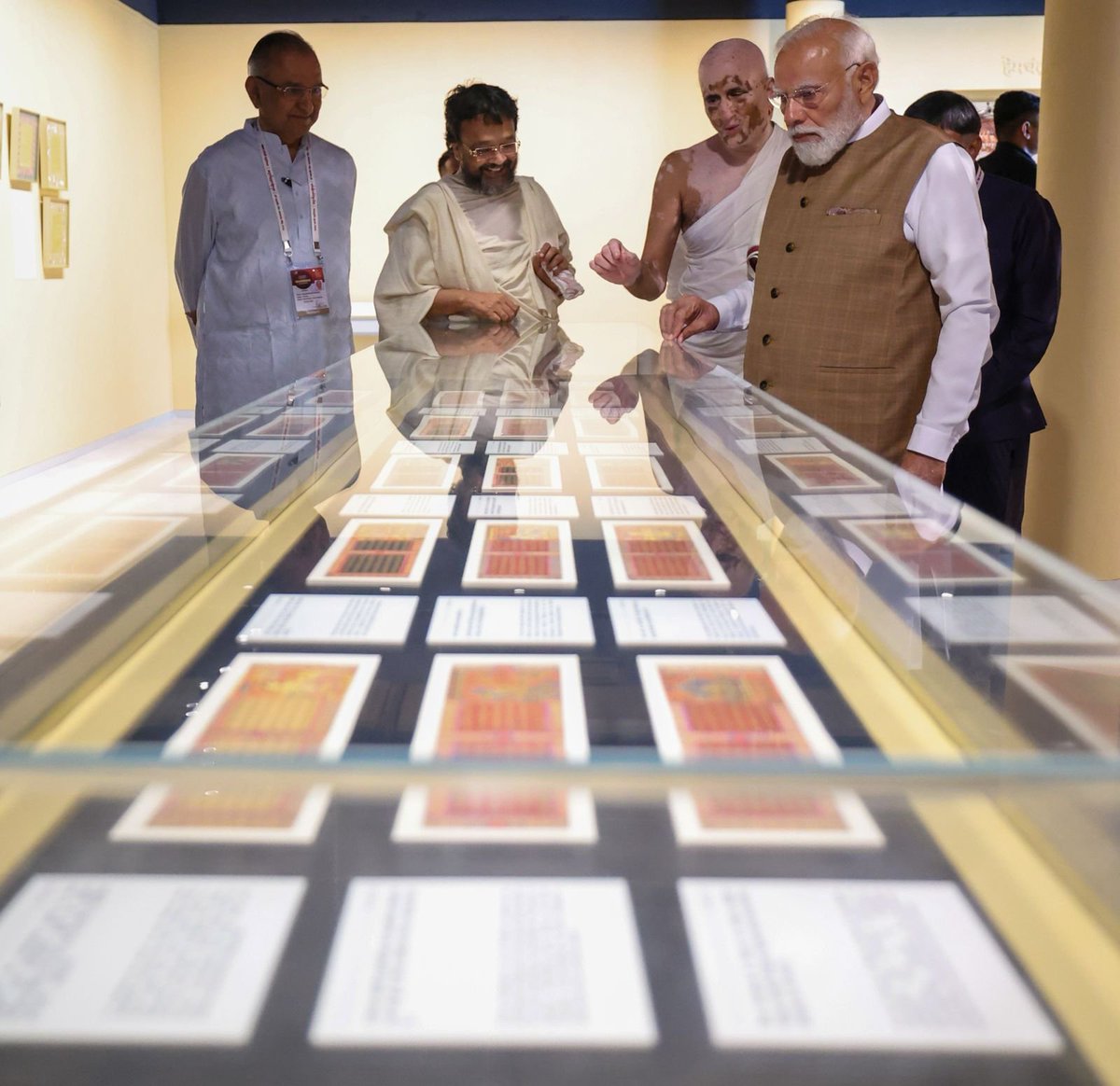
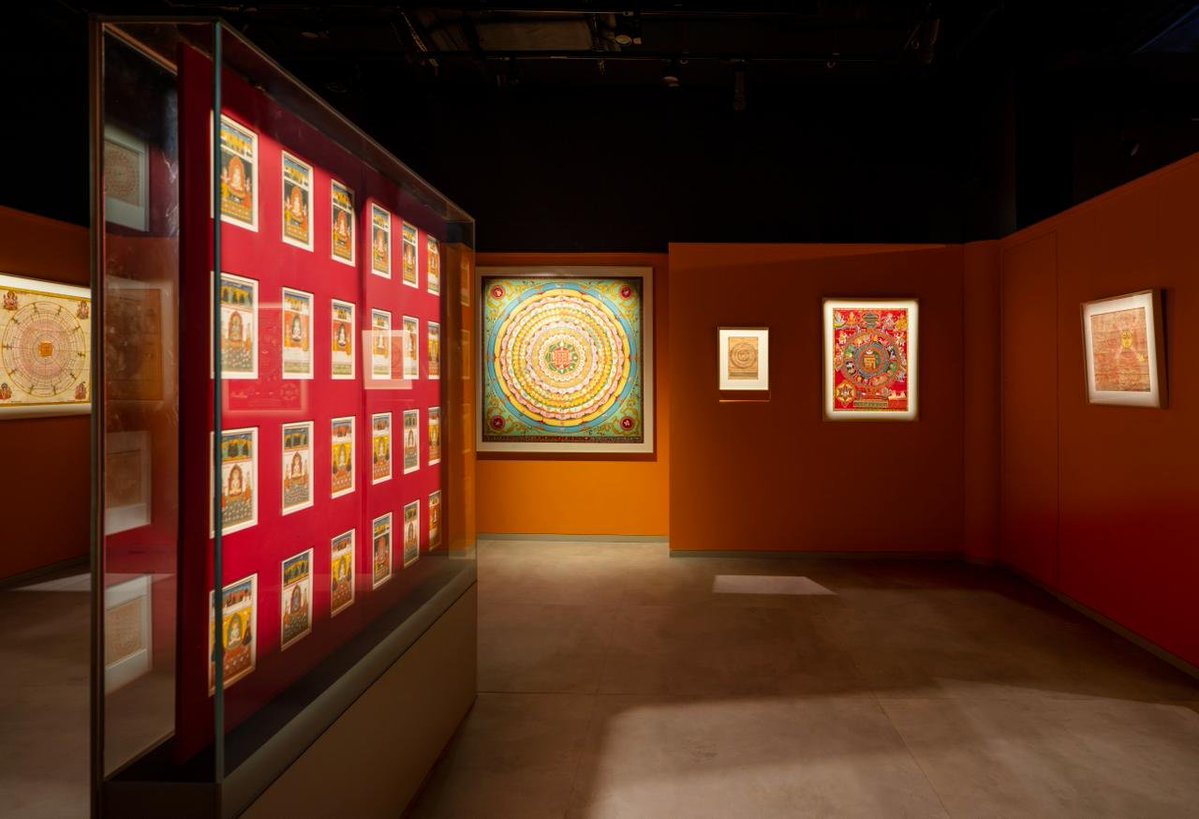
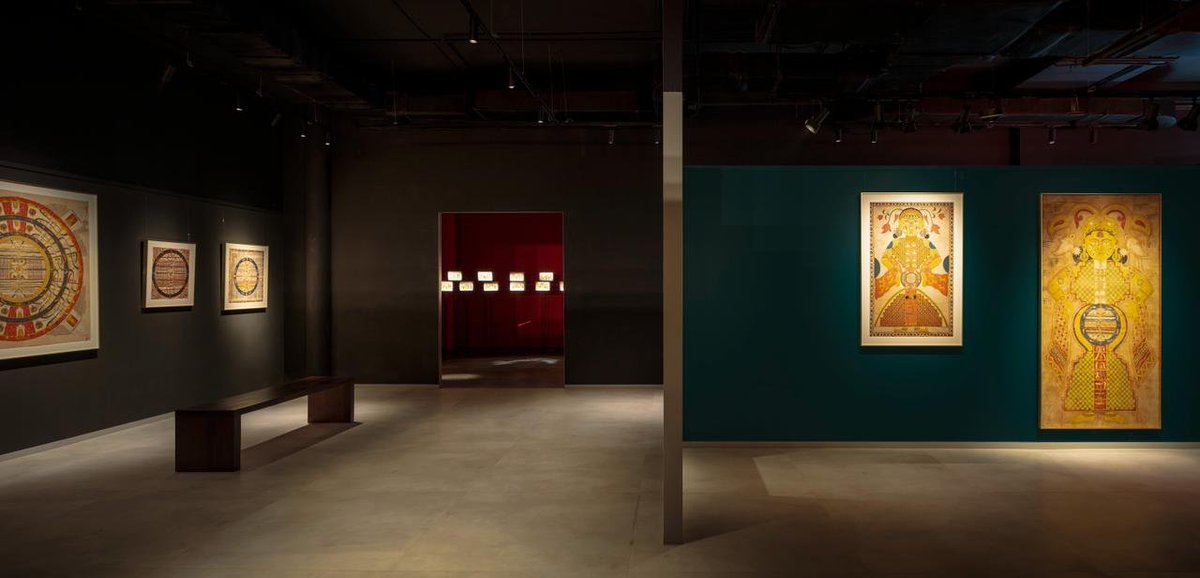
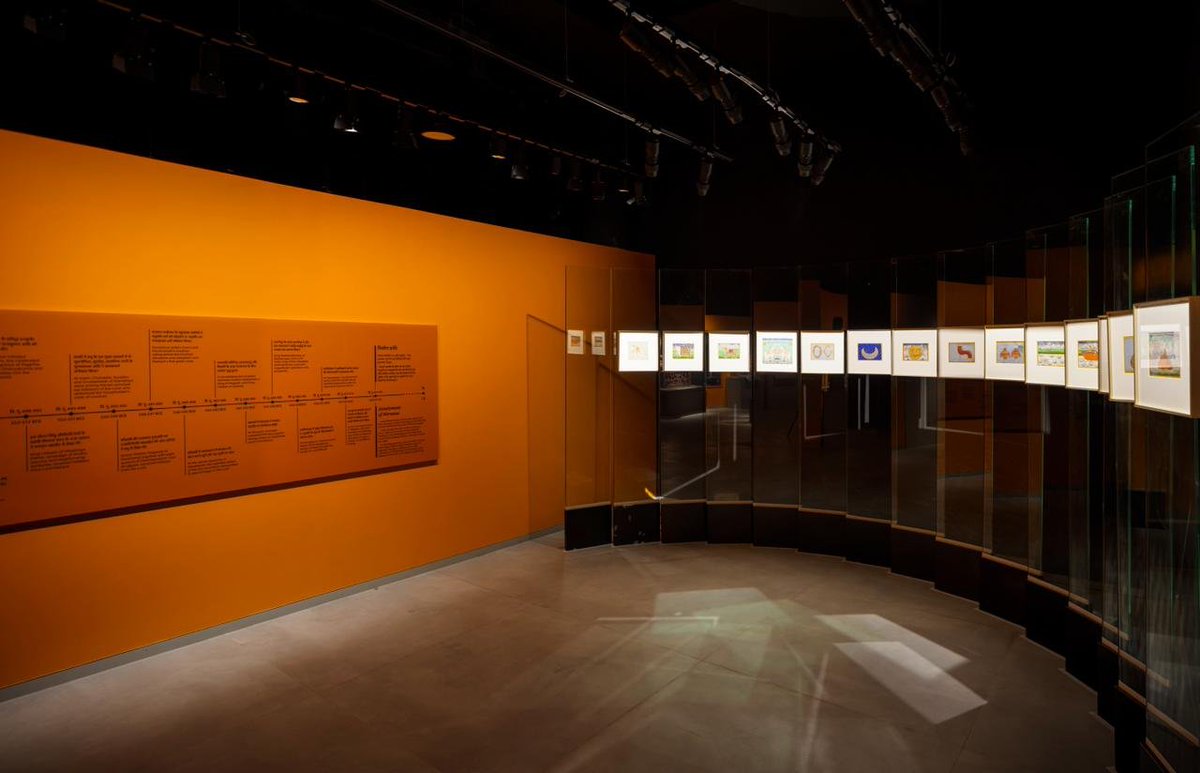
The Samrat Samprati Museum is a must visit for all those passionate about history and culture. The Museum is a commendable effort to popularise Jain history, culture and teachings.
Here are some glimpses of the Samrat Samprati Museum at Koba Tirth which will be inaugurated today. May the thoughts of Bhagwan Mahavir always give strength and hope to humanity.
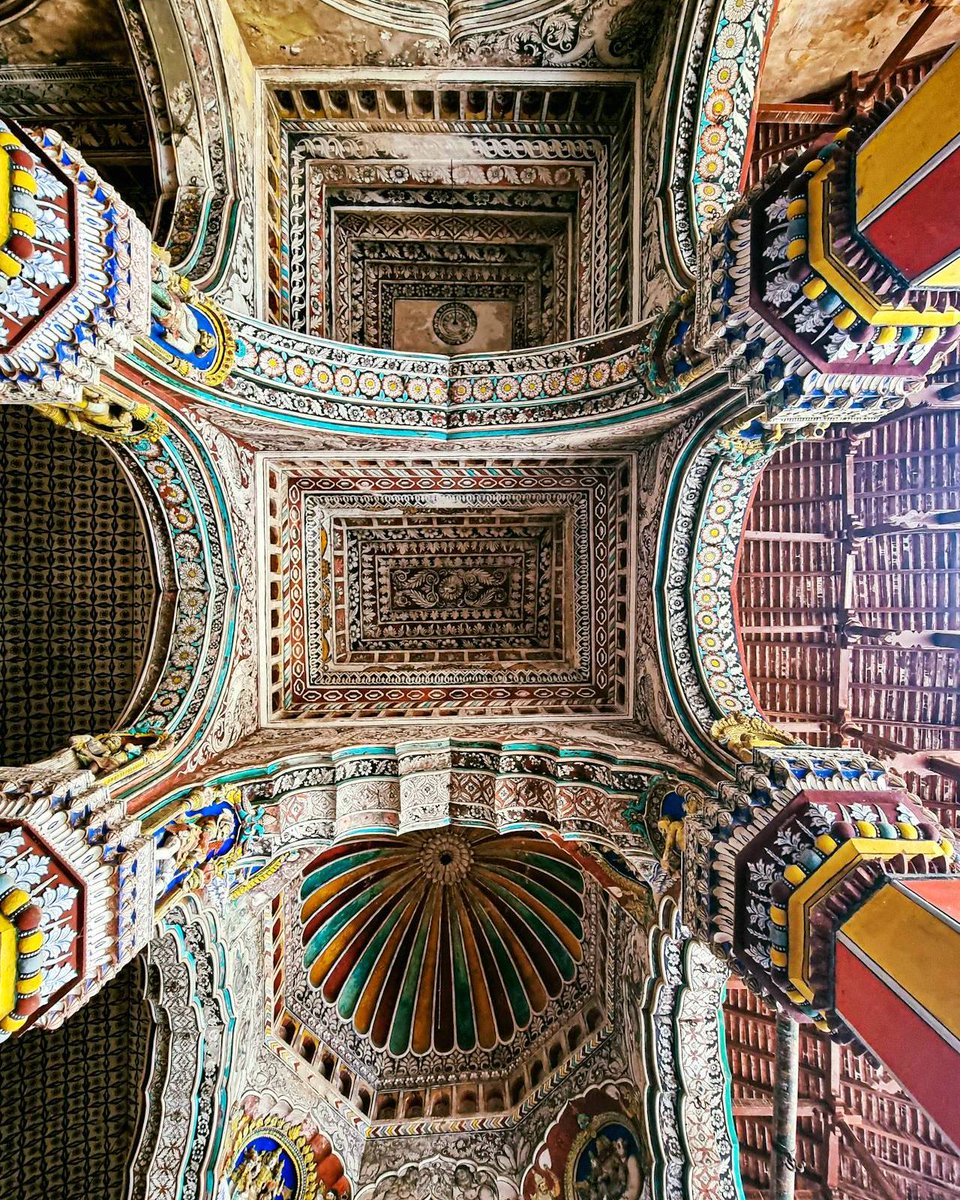
Thanjavur Maratha Palace, Tamil Nadu, India
Built as part of the royal complex that later became the seat of the Thanjavur Marathas (1674–1855), it’s pure “look-up” architecture.
72-year-old Muhammad Aziz has spent more than 43 years reading books every day — 6–8 hours a day. According to him, he has read more than five thousand books in his lifetime.
His shop is right on the street. The books are open, without locks or security.
When asked if he is afraid that the books will be stolen, Muhammad simply smiled and replied with a well-known Arabic proverb:
"A reader does not steal, and a thief does not read."
This phrase encapsulates a whole world.
A quiet faith in people, respect for knowledge, and the feeling that a book chooses its own reader.
Sometimes it seems that such people are the last guardians of a calm, unhurried world where trust is still more important than locks.
What did 1,400 BC sound like in ancient Persia? Hear this! 🔊
Sarah Parsaei plays the Arjan harp, an instrument with roots reaching back almost 3,400 years.
Tehran, Iran
Before caution,
there was movement.
No calculation.
No one watching.
Life stepped forward
on its own.
That ease has not gone anywhere.
It waits beneath thought.
Let me try to explain the attached post by Rohan in an easier way to those who may be interested. So, in India, philosophers and linguists have always discussed and debated about sound, words, and meaning.
We had this theory called Sphuta (from around Panini times / 2000 years ago) which argued that whole sentences gave rise to instant meanings in our head.
For example, "The cow standing there is white in color" instantly creates meaning in our mind of a white cow. Sphuta theory says we do not add the meaning of individual words to make sense.
For example, we are not first seeing a random cow, then seeing it standing, then making it white in color as we hear the sentence.
Now, this attached post by Rohan is referring to a work by the Vaishanavite saint Ramanuja (1000 years later / ago). Ramanuja argues that words have inherent, timeless meaning.
For example, we imagine words to be a social construct. That is, we think a group of people decided to call 'that grass eating animal with four legs of a particular form and giving us milk' as "cow." And then everyone from their community calls it a cow henceforth.
But Ramanuja says that's not true. Just like a wood fire gives rise to smoke, which nobody decided (it just occurs naturally), that milk giving animal is just called a "cow" and nobody decided it. He says the word relationship exists naturally without a beginning (at least it only begins with the beginning of your own consciousness).
You may think this is ridiculous. But if you take the word cow, it is actually a derivative of word Gau from Sanskrit. And some may say Gau comes from some Indo-European root word Go or something like that. But when did this word originate? Did a group of people sit down and decide that grazing animal is called Go?
Ramanuja's theory says, no, none decided. He says the first word (or sound) for that animal we call cow arose in our consciousness by itself and got agreed upon by everyone over time. It doesn't matter it got changed to cow or gau or gai or kho in various languages later. The relationship between the original word and the object always existed.
Why is Ramanuja's theory important? This solves for the "divine revelation" of Sanskrit and vedas. Since vedas are supposed to have been heard and not composed by humans, Ramanuja's theory explains how the words / sounds in vedas existed naturally before anyone invented or created them.
If you get what I have written above, you will also understand
- Why a vedic chant is important to be uttered exactly as heard and passed on for generations
- Why it is useless to write down the vedas (as the utterances and complex sounds are impossible to be represented by text)
- And why chanting a vedic mantra (like say Gayatri) can "reveal" the meaning of itself and a lot more about the universe to you