Token management on Solana is fragmented.
And it doesn’t have to be.
Multiple swaps scattered across wallets,
Dust tokens piling up,
Fees quietly adding up...
@swappadex fixes all of this in one place.
Here’s how it works and why it matters.🔻
Sponsored by @BaoBaoBonk
Most people in Web3 announce what they're building.
I'd rather show it.
An engineer who designs.
A designer who builds.
A builder who writes.
I don't know what title fits, but the combination does.
Building where others overlook. Designing for what others underestimate.
Just got off a call with dev.
Something new just shipped.
Fixes a real problem
a lot of you deal with.
We’ll let you test it soon.
For now…
just know it’s cooking. 👀
I lost $857 in a single transaction while trying to claim a free NFT airdrop.
Here’s what happened 👇
I came across an official annoucement post about a new NFT mint for early users in a crypto Discord community I've been part of for about 5 months, not realizing the server had been compromised by a phishing gang.
The Discord Server was very active that day.
People were sharing screenshots, talking about minting, and nothing immediately felt suspicious.
I carefully read through the annoucement post.
Out of curiosity, I clicked the link.
The website itself looked polished and identical to the real project.
It had a clean interface, a mint countdown, and even recent activity showing wallets interacting with the contract.
Everything looked normal enough.
At that point, I connected my cold wallet.
Shortly after, the site prompted me to “Verify Wallet.”
When I checked my device, all I saw was an unreadable string of hex data.
There was no clear description of what the transaction was doing, just raw information that didn’t mean much at a glance.
I assumed it was a standard sign-in request and approved it.
Almost immediately, my funds were gone.
Looking back, the issue wasn’t just the malicious site, it was that I didn’t actually understand what I was signing.
Because my device couldn’t properly decode the transaction, I didn’t realize I was approving a function that effectively gave the contract permission to move my assets.
That experience changed how I think about wallet security.
Keeping your private keys offline is important, but it doesn’t protect you from signing the wrong transaction.
If you approve something you don’t understand, the outcome is the same.
It also made me realize how much we rely on interfaces that can be misleading.
The frontend might look safe, but the actual contract interaction is what matters.
This is exactly why we need human-readable transactions.
If a wallet can clearly show you what a transaction is doing:
‣ the permissions being granted,
‣ the exact token amounts,
‣ the destination addresses, and
‣ specific functions right on the display,
it becomes much easier to spot something suspicious before it’s too late.
Devices like @era_wallet are moving in that direction by translating complex contract data into plain English that users can actually understand on their device.
If I had been able to read the actual intent of the transaction instead of just a hash, I likely wouldn’t have approved it.
It’s a simple idea, but it makes a big difference.
I just participated in the $600 AI Prompt Challenge by PayRam | Search and Win Season 2.
It got me thinking more deeply about where payments are heading.
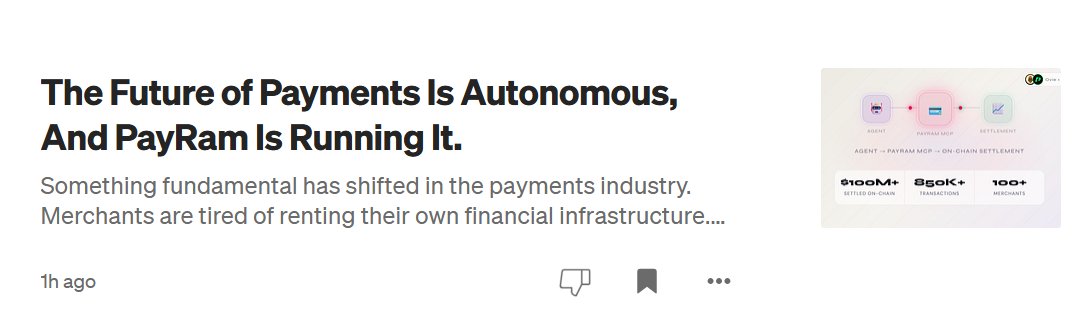
The payments industry feels like it is at a turning point. More merchants are getting tired of relying on third party infrastructure, and at the same time AI agents are starting to handle real transactions at scale.
I recently put together a deep dive on how @PayRamApp is approaching this and what it could mean for the future of commerce.
A few things that stood out to me:
‣ It is self hosted, so you are not relying on a middleman. No KYC requirements and you have full control over your funds and setup.
‣ It supports agent based payments. AI tools like Claude or GPT can create invoices and handle payment flows without constant human input.
‣ There is also a fiat to crypto bridge with support for a wide range of payment methods globally, and settlement happens on chain.
One line that stuck with me from Siddharth Menon was that the future of internet commerce will be built on infrastructure you own, not services you rent.
If you are curious, I shared a full breakdown here: https://t.co/YhIK8HA0Ob
If you want to explore it yourself, the campaign is still live on @SuperteamEarn: https://t.co/tR00me7G0A
You'll be somewhere thinking of a particular solution.
And the next thing is that you see someone has already built it 😔
Omo 😂😂😂😂
Well, congrats to them.
I love seeing things like this.
@oviebest_2 Treating Spot and Derivatives like two separate businesses is a massive mindset shift.
I really appreciate the alpha you dropped here.
Let me head over to Visiion to see how clean this setup actually is.
The market rewards discipline.
But most retail exchanges are designed to make you overtrade.
You find a clean setup, log in, get baited by flashing leaderboards with unnecessary notifications, mess up your sizing, and get liquidated.
Your strategy wasn't wrong. Your environment was just built against you.
Managing your spot portfolio, active margin, and staking across noisy apps drains your edge.
@Visiion_io fixes this at the core.
It lets you separate your Spot holdings from your Derivatives in one clean platform, track your data, and trade with actual discipline.
But a clean exchange is only a tool. You still need a system to extract Capital.
Let's breakdown the exact blueprint to trade with purpose using visiion 🔻
When you sign a smart contract transaction, can you actually read what you're approving?
▸Ledger shows transaction data (if dApps support it)
▸Trezor requires verification across two devices
▸ERA Wallet decodes contract data on-device
Who should verify?
You or the device?
@oviebest_2 Bro this actually never crossed my mind 😭 we out here stressing about hacks and exploits but the real risk is just… how we saved our seed phrase.
The biggest vulnerability in crypto isn't on-chain.
It's how we store backups.
Every approach trades one risk for another:
▨ Ledger Wallet - handles recovery via the cloud.
It’s definitely easier for everyday users, but it means handing over some trust to a third party and dealing with KYC.
▨ Trezor Hardware Wallet - keeps it old school with paper or metal backups.
You get total offline control, but you take on the full risk of physical damage or losing the seed phrase yourself.
▨ ERA Wallet - uses encrypted NFC cards instead of storing seed phrases on paper.
You get the security of staying offline without the fragility of paper, but you do have to figure out how to securely store those extra physical cards.
So the backup you choose isn't really about absolute security.
It's about which risks you are willing to accept.
@oviebest_2@Moca_Network Bro the part about platforms owning your social graph hit different 😭
I have been building on Twitter for years got suspended and created this new account to start a fresh and never thought about it this way.
Going to check out MocaProof rn
The internet rewards attention.
But attention isn't reputation.
And deep down, everyone knows it.
Twitter. Discord. Wallet. Transaction history.
All fragmented. None of it is yours.
What if your reputation followed you everywhere?
That's what @Moca_Network is building.
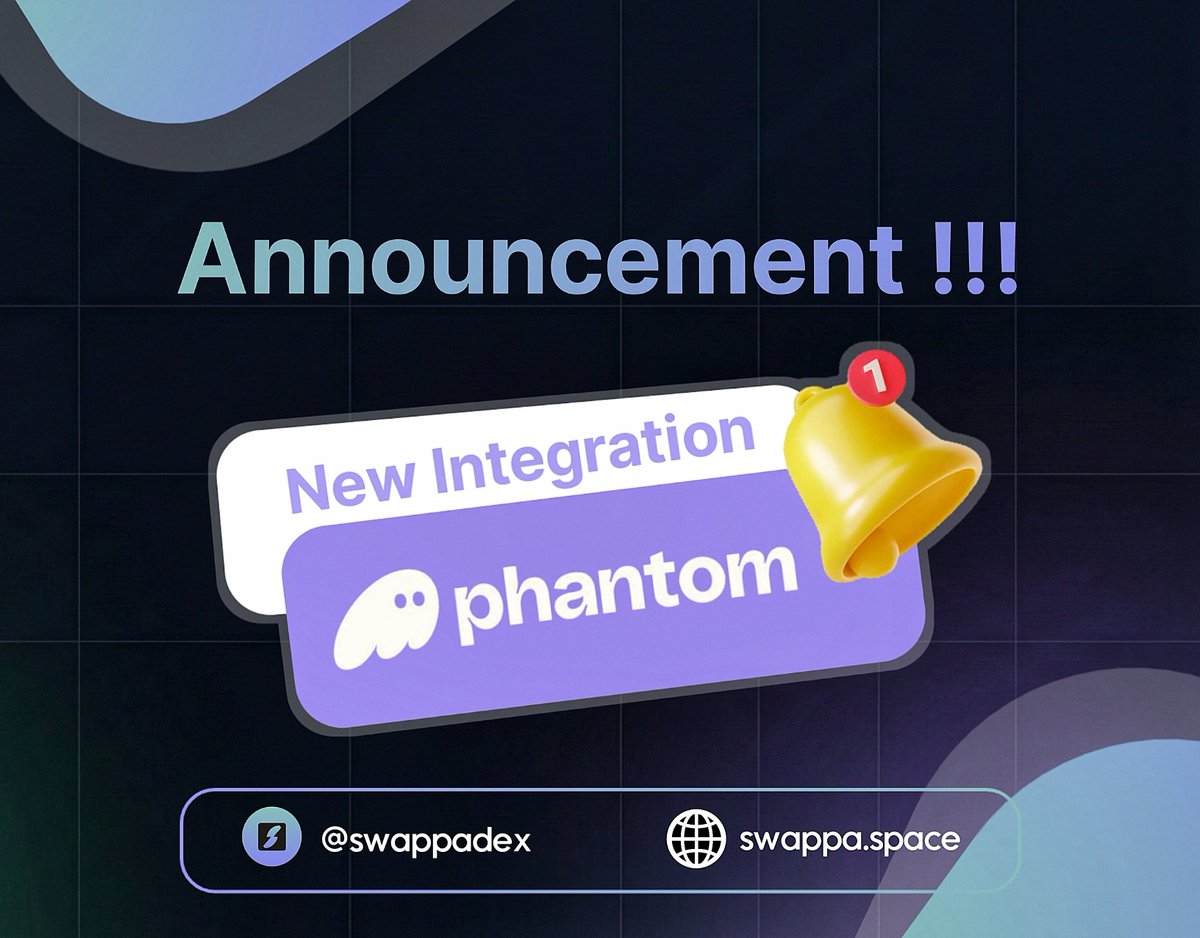
New Integration, Swappa Fam!
We teased an integration with @phantom here are the details.
We’ve integrated the Phantom wallet adapter.
When you connect your wallet to Swappa, you’re now connecting through Phantom’s Embedded Wallet Kit.
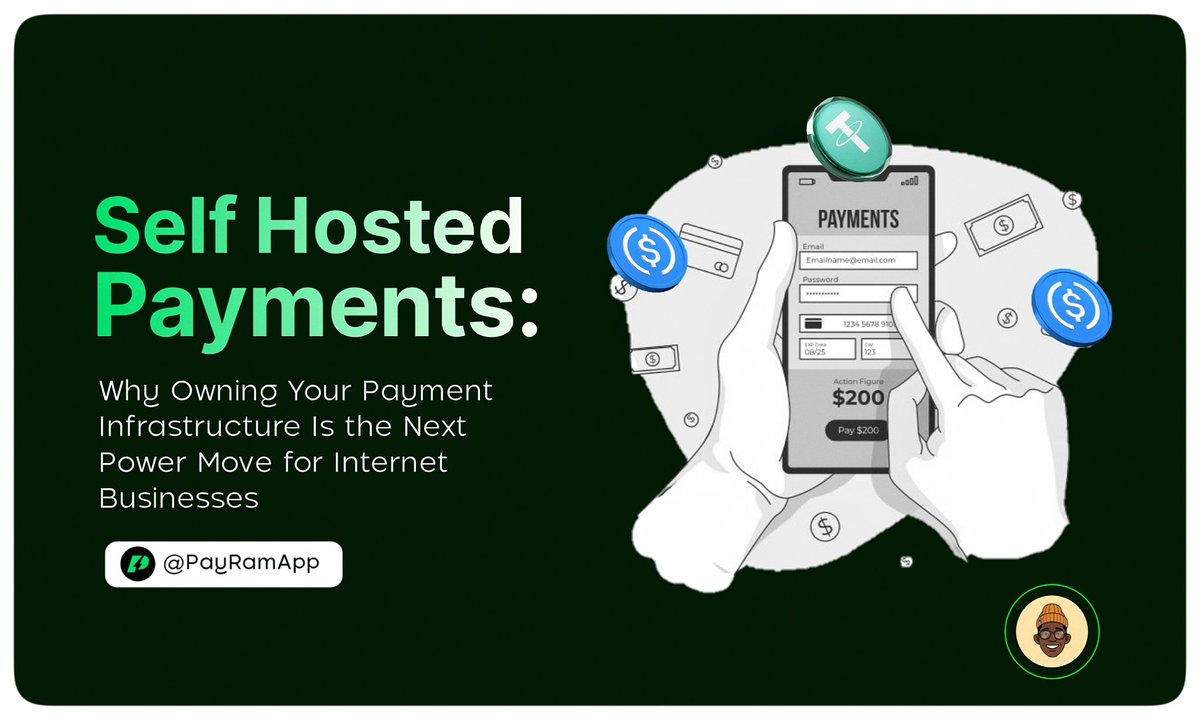
I have been thinking a lot about payments lately.
Most online businesses spend years building products, growing an audience, and refining their marketing.
But who actually controls the money once it starts coming in ?
Walk with me 👇