We Remember & Honor the nearly 234,000 American service members buried or memorialized at ABMC military cemeteries away from the homeland. Education, outreach.
ABMF will be at the Farnborough International Airshow (@FIAFarnborough) on July 20-24! Visit our booth #3040 in the American Pavillion, to learn how you can get involved with ABMF through commemorative events, educational programs, and initiatives that preserve the legacy of 250 years of America defending freedom.
ABMF is the nonprofit partner of the American Battle Monuments Commission (@usabmc), the U.S. federal agency responsible for the management and maintenance of all 26 American military cemeteries and 31 memorials and markers in 17 foreign countries.
#FarnboroughAirshow #WeRemember
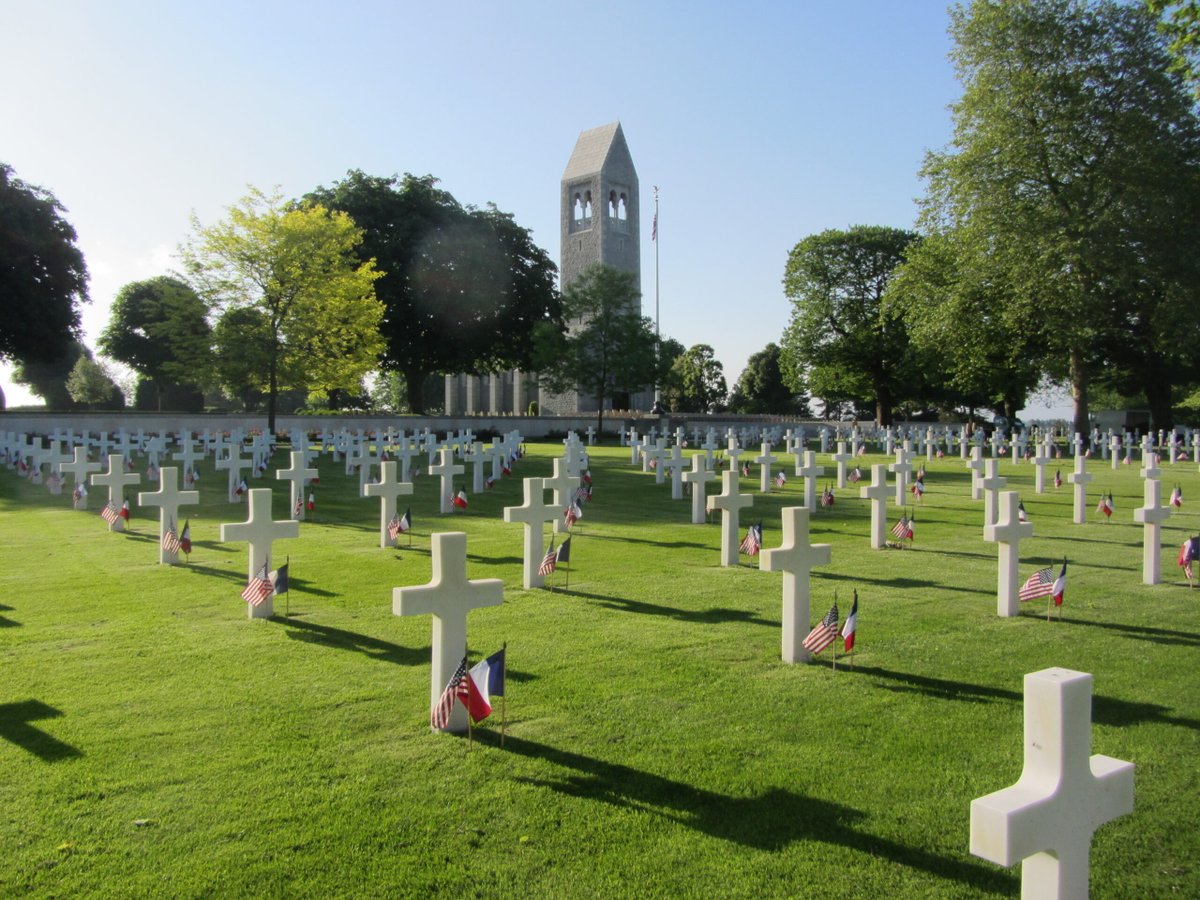
The Battle of Saint-Lô (July 7-19, 1944) was a critical engagement of the Normandy campaign following the Allied landings on D-Day. Saint-Lô was a major transportation hub that was under Germany’s control, and capturing the town was essential for the Allied advance through Normandy and the liberation of France.
American forces fought fierce German resistance in the surrounding hedgerow countryside, where the landscape was in favor of the Nazis. After weeks of intense combat and heavy Allied bombing, Saint-Lô was liberated on July 18, which made the subsequent Operation COBRA possible (the Allied breakout from Normandy).
The Battle of Saint-Lô resulted in more than 11,000 American casualties. Most of those killed are buried or memorialized at the ABMC Brittany American Cemetery.
Your donation to ABMF helps fund commemorative events at this and other @usabmc hallowed sites to honor the Americans who gave their lives for freedom.
https://t.co/xsExHblXKi
#WeRemember #ww2
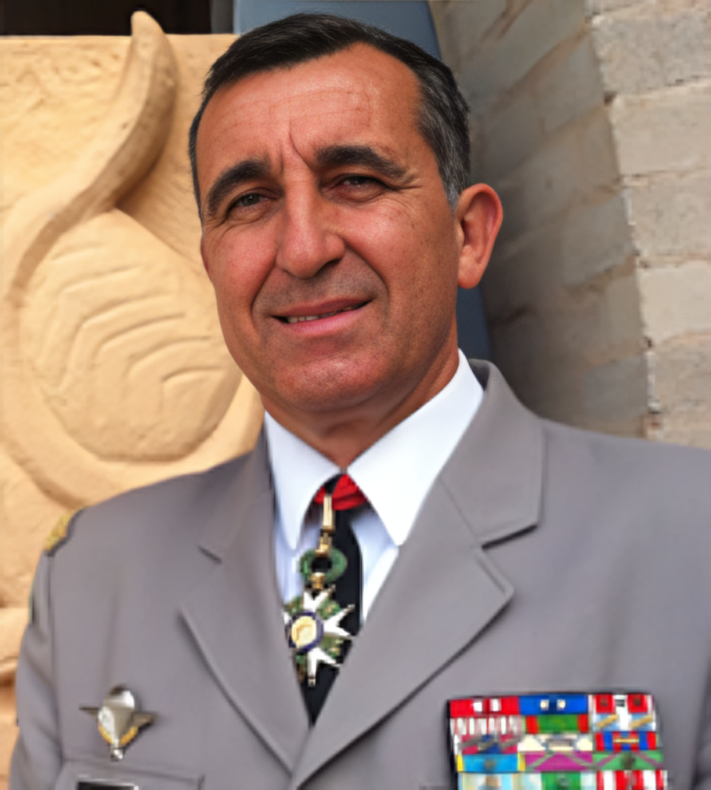
We are grateful for Lieutenant General Olivier Tramond, French Army (Ret.), a member of the ABMF Board of Directors. His distinguished career reflects a commitment to preserving the enduring friendship between the United States and France.
A retired three-star general officer, LT GEN Tramond served for 38 years in the French Army's Airborne Infantry Marines. He commanded operations across Africa, the Middle East, the Balkans, French overseas territories, and the South Pacific. He also held senior leadership positions, including commanding general of the French Army Strategy & Doctrine Center and director of public affairs at @SAFRAN Electronics & Defense.
Thank you, LT GEN Tramond, for your lifelong service, your leadership, and your efforts to strengthen the historic bond between two nations whose alliance dates to the American Revolution.
"My commitment to the ABMF Board of Directors takes on its true meaning in light of half a century spent side-by-side with our American brothers-in-arms.
For, looking back on fifty years—first in uniform and later in the private and non-profit sectors—I have formed a twofold conviction:
France was the young federation’s first and decisive ally—a fact underscored by the ongoing 250th-anniversary commemorations. In turn, France has been supported by the United States during the dark and pivotal moments of its history, most notably the two World Wars of the 20th century.
Despite its ups and downs, the alliance between France and its 'American friend' remains a cornerstone of our two nations' collective security.
Let us remember the blood shed by the soldiers of both our nations!"
- Lieutenant General (France, ret.) Olivier Tramond
#WeRemember #Leadership
Join veterans, business leaders, and other patriots at the 2026 ABMF Golf Classic hosted by the American Battle Monuments Foundation.
Connect with fellow supporters of the American military during an exceptional day of golf at Galloway National Golf Club - one of America's finest private golf courses.
It is located only 25 minutes from Atlantic City.
Proceeds help preserve the stories of Americans who fought and died and educate the younger generations about the value of their service and sacrifice.
Monday, October 19, 2026
Galloway National Golf Club, New Jersey
Limited availability.
Reserve your spot today https://t.co/aa0bpJ7Exa.
#WeRemember #Golf
This fabric cartridge belt, fitted with eight ammunition pouches, is part of the @usabmc collection currently on display at the Château-Thierry American Monument Visitor Center in France (catalog ID: INT93).
A cartridge belt of this kind was typically worn around the waist, over the uniform trousers, as part of standard-issue infantry equipment. Because a fully loaded belt could be heavy, it was commonly worn together with suspenders that ran up over the shoulders to help distribute the weight.
A cartridge belt with fixed individual ammunition pouches was worn throughout World War I, World War II, and the Korean War. It was gradually replaced in the late 1950s and early 1960s by modular load-carrying equipment with detachable ammunition pouches.
This is just one of many fascinating artifacts archived by the American Battle Monuments Commission. Visit the online collection here: https://t.co/127Kgr4Dxn
“Without liberty, law loses its nature and its name, and becomes oppression. Without law, liberty also loses its nature and its name, and becomes licentiousness.”
- James Wilson
Of the Study of the Law in the United States, 1790
#WeRemember#USHistory
Technology of the Month - the Lafayette Gun
This British 12-pounder cannon was designed to breach fortifications with heavy projectiles. Captured by American forces during the Siege of Yorktown, it became one of the best-known artifacts of the American Revolution.
The gun had been damaged during the siege and was reportedly disabled when American troops captured the British position where it was located. After the British surrender, the cannon came into American possession and was later associated with the Marquis de Lafayette, who played a key role in the Yorktown campaign.
More than forty years later, during his return visit to the United States in 1824, Lafayette encountered the same cannon at Watervliet Arsenal. Recognizing the dented gun from Yorktown, he reportedly embraced it and called it "an old friend." From that moment, the artifact became known as the Lafayette Gun.
Photo credit: U.S. Army
#WeRemember #America250
How well do you know the Constitution, the Bill of Rights, and the people who made them possible? Check out quizzes, videos, and Historical Spotlight on the ABMF Freedom 250 page https://t.co/aef8BU5Ctt
Which Founding Father refused to sign the Constitution due to the lack of a Bill of Rights?
A. George Mason
B. Thomas Jefferson
C. Alexander Hamilton
Reply back with your answers!
In July 1918, Army Chaplain Charles C. Pierce received the Distinguished Service Medal for exceptional service during World War I. He transformed the way the U.S. military identified and cared for its fallen service members.
During the Spanish-American War and the Philippine Insurrection, Pierce witnessed the challenges of identifying soldiers and returning their remains to their families. In 1899, he formally recommended that every service member be issued an identification disk. The Army adopted official identification tags (the “dog tags”) in 1906, and by 1917 their use had become mandatory for combat troops. His efforts established many of the procedures that continue to guide military mortuary affairs today.
After the war, General John J. Pershing, commander of the American Expeditionary Forces, became the first chairman of the American Battle Monuments Commission when it was established in 1923. Under Pershing's leadership, @usabmc created permanent overseas cemeteries and memorials to honor the Americans who fought and died overseas.
Today, more than 219,000 American service members are buried or memorialized at ABMC hallowed sites.
Your donation to ABMF helps preserve their stories of service and sacrifice: https://t.co/xsExHbmvzQ
In the picture: Suresnes American Cemetery - ABMC’s first site. Today, ABMC maintains 27 cemeteries and 31 memorials and markers in 17 foreign countries.
#WeRemember #USHistory
In May, five Gold Star Mothers (@AGSM_National) visited American military cemeteries and memorials in France and Belgium to honor America's fallen. They collected sacred soil from these hallowed grounds and brought it back to the United States. Those women represented every mother who had lost a child in America’s wars.
On Sunday, July 5, at @ArlingtonNatl , a rededication ceremony was held to replace the original World War I marker that had stood sentinel in the Meuse-Argonne section. The collected soil was placed inside the new marker by Gold Star Mothers.
Words may not adequately convey the depth of emotion felt by the more than 100 patriots who gathered to Remember & Honor the men and women who gave their lives during WWI – all so that others might live in freedom.
The solemn ceremony included representatives of both the United States to post the colors, play the national anthems, Aux Morts and TAPS, to welcome guests, describe the scope and significance of the project, and to conduct the rededication ceremony. The comments were heartfelt and told personal reflections of family members who had served and died. The common theme was one of gratitude.
Following the rededication ceremony, guests reconvened at the French Embassy for a special reception. This project was conceived as a joint effort to commemorate America’s 250th anniversary. The United Veterans War Council, the American Gold Star Mothers, the American Battle Monuments Commission (@usabmc), the American Battle Monuments Foundation, Le Souvenir Francais, Les Amis de Renée & Gaston Deblaize, and the Association Nationale des Croix de Guerre et de la Valeur Militaire produced the many aspects of the Restoration of the Sacred Soil Marker of Arlington.
Another aspect included pairing American and French high school students to learn and write about the stories behind those who fought at Meuse-Argonne. The marker was sculpted in France from French limestone, then transported to the U.S., compliments of @FedEx . Special funding for travel of the Gold Star Mothers and for the reception at the French Embassy was provided by the Johnson Family Fund and Pierre & Jennifer Oury.
The American Battle Monuments Foundation is grateful to the donors whose generosity helped make this pilgrimage possible. Because of your support, sacred soil from the final resting places of Americans who never returned home now has a permanent place in their homeland.
@CBS , “Good Morning America” (@GMA) aired a story about the Gold Star Mothers in Europe collecting the sacred soil.
https://t.co/0gB3NXdJXY
Photo credit: Patrick J. Hughes, USMC ChuLai 67/68
#WeRemember #GoldStarMothers
Hero of the Month - George Washington
Born in Virginia in 1732, Washington gained experience as a surveyor and military officer during the French and Indian War. He later managed his Mount Vernon estate and served in the Virginia House of Burgesses before emerging as a leading voice against British policies.
In 1775, the Second Continental Congress appointed Washington Commander in Chief of the Continental Army. After six years of war and with critical French support, he secured victory over the British at Yorktown in 1781.
Following the proclamation of independence, Washington played a key role in establishing the new federal government and was unanimously elected the nation's first President on April 30, 1789.
George Washington died on December 14, 1799. Americans mourned the loss of a leader whose service helped secure the nation's independence and guide its earliest years.
George Washington's legacy reminds us that the freedoms we enjoy today were secured at a great cost. Through educational programs and outreach, ABMF helps preserve the stories of American service and sacrifice. Please support us with a like, share, and a comment.
#WeRemember #GeorgeWashington #America250
Today, we commemorate 250 years of America's independence. We remember that the freedoms Americans celebrate were secured at a great cost. Millions who came before us answered the call of duty, and many sacrificed their lives. The more than 219,000 Americans buried or memorialized at ABMC hallowed sites overseas never returned home.
We invite you to watch ABMF's Independence Day film. Please take a moment to honor those who defended our country.
Through commemorative events and educational programs, ABMF ensures that the stories of those who served and died are remembered so that the younger generations understand why freedom can never be taken for granted. Your support makes this work possible.
You can make a donation to ABMF here: https://t.co/xsExHbmvzQ
Thank you.
#WeRemember #America250 #Freedom250
Battle of the Month - Siege of Yorktown
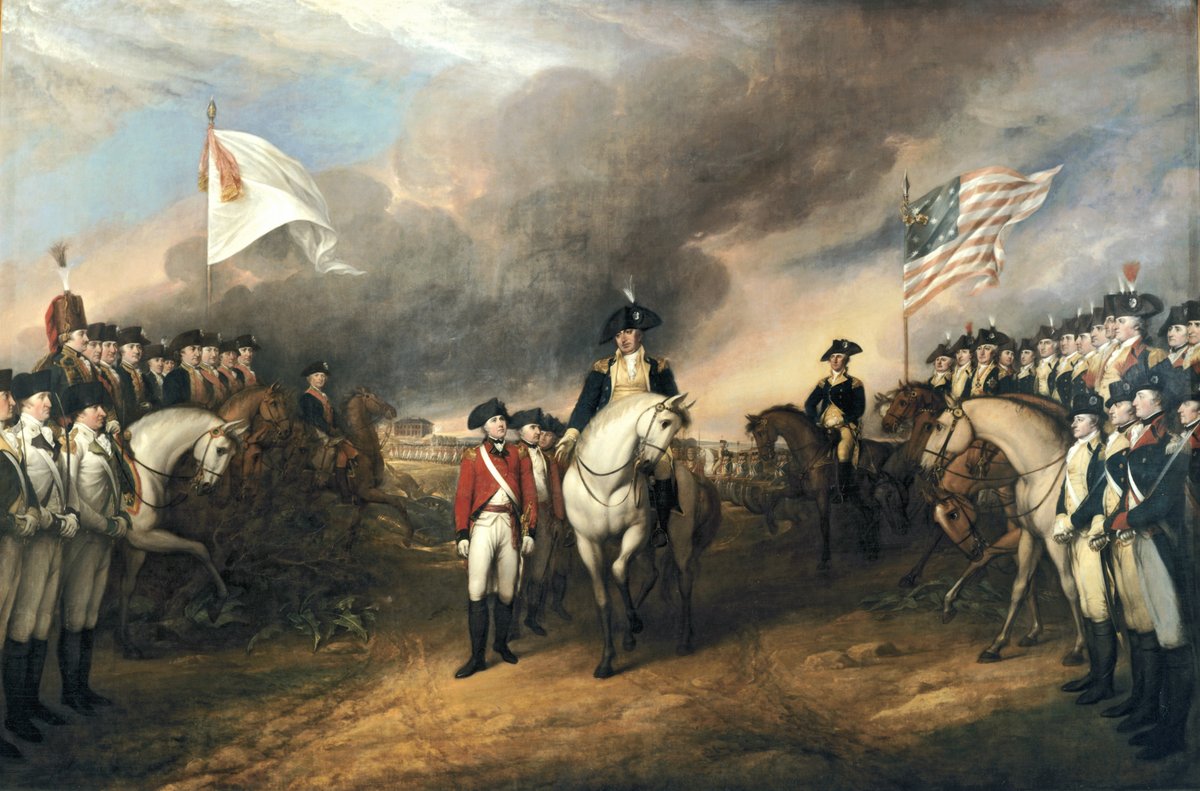
The Siege of Yorktown (September 28-October 19, 1781) was the final decisive moment in the Revolutionary War that made American independence possible.
7,500 British troops under the command of General Lord Conwallis were already weakened and retreating to Yorktown and the adjacent promontory of Gloucester. But their defensive position led to their demise.
General George Washington directed the Marquis de Lafayette, who had 4,500 men, to prevent the British from escaping Yorktown by land. Meanwhile, Washington's 2,500 Continental soldiers in New York were reinforced by 4,000 French troops under the Comte de Rochambeau. At the same time, a French fleet of 24 warships commanded by the Comte de Grasse established a blockade, effectively cutting Cornwallis from any support by sea.
By late September, nearly 14,000 American and French troops had surrounded Yorktown. Throughout early October, allied forces steadily captured British defensive positions and tightened the siege. Isolated, outnumbered, and running short of supplies, Cornwallis surrendered on October 19, 1781. Nearly 8,000 British soldiers were taken prisoner, along with about 240 artillery pieces.
As America commemorates its 250th anniversary, the story of the Siege of Yorktown reminds us that freedom has never been free. Your donation to ABMF helps educate younger generations about the sacrifices that secured our liberty and why it must never be taken for granted.
https://t.co/xsExHblXKi
#WeRemember #America250
Today, we commemorate 250 years of America's independence. We remember that the freedoms Americans celebrate were secured at a great cost. Millions who came before us answered the call of duty, and many sacrificed their lives. The more than 219,000 Americans buried or memorialized at ABMC hallowed sites overseas never returned home.
We invite you to watch ABMF's Independence Day film. Please take a moment to honor those who defended our country.
Through commemorative events and educational programs, ABMF ensures that the stories of those who served and died are remembered so that the younger generations understand why freedom can never be taken for granted. Your support makes this work possible.
You can make a donation to ABMF here: https://t.co/xsExHbmvzQ
Thank you.
#WeRemember #America250 #Freedom250
Tomorrow, America turns 250.
There will be fireworks, flags, and parties.
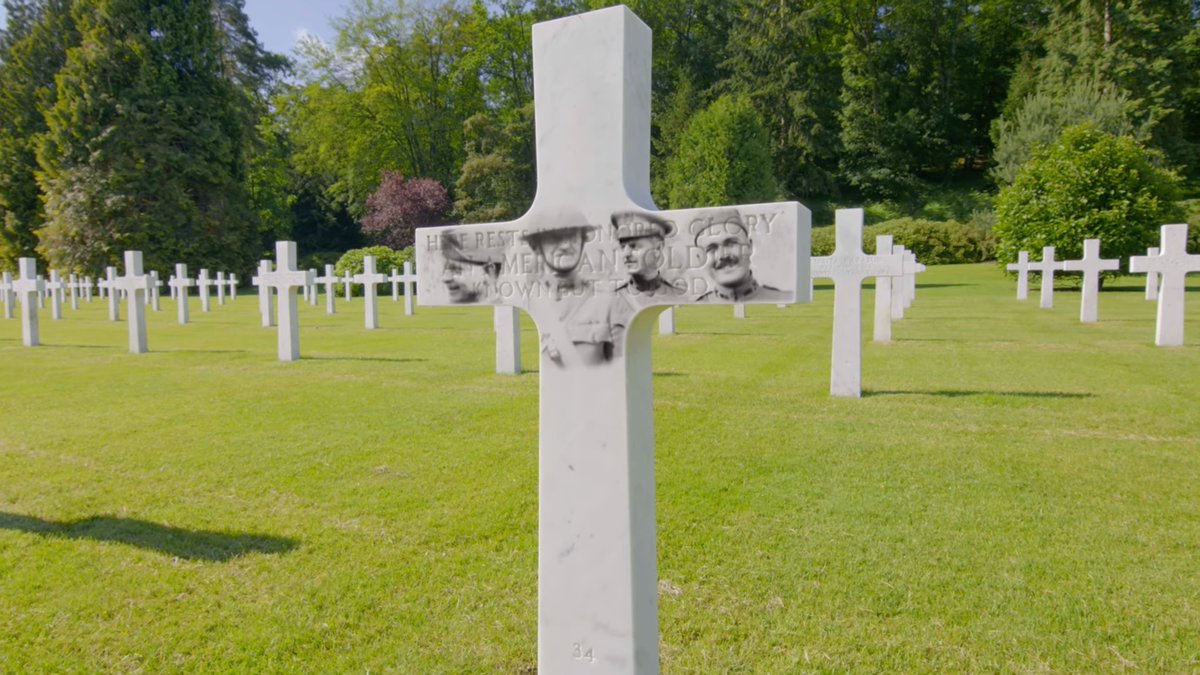
And in 17 countries overseas, standing sentinel, are 219,000+ white crosses, Stars of David, and names engraved on the Walls of the Missing.
These are the Americans who protected our freedom but never got to see the victories they helped secure.
The American Battle Monuments Foundation exists so that we never forget them. Not as statistics, but as people - sons and daughters, kids from across America who went far from home, hoping they would return one day.
Please donate $250 (or any amount) to help us fund education and outreach efforts that make sure the next generation never takes their freedom for granted.
https://t.co/xsExHblXKi
Thank you for supporting this mission.
We Remember & Honor: Then, Now, Forever.
#WeRemember #America250
From the Declaration of Independence
1776
We hold these truths to be self-evident, that all men are created equal, that they are endowed by their Creator with certain unalienable Rights, that among these are Life, Liberty and the pursuit of Happiness.
#WeRemember#America250
In response to German aggression at Verdun, France, the Allies launched an ambitious offensive along the River Somme that would become one of the bloodiest battles of World War I. The battle of the Somme lasted from July to November 1916. The battle reshaped future warfare; it was the first use of tanks in combat.
Under General Sir Douglas Haig, various units, including American volunteers, Australians, Canadians, New Zealanders, Indians, West Indies and South African forces attached to British armies, participated in the overall effort. (The United States officially entered the war to support the Allies in April 1917.)
On July 1, 1916, following a week-long bombardment, British troops advanced but faced fierce German defenses. By nightfall, thousands lay dead or wounded. The first day alone marked the darkest moment in British military history, with more than 57,000 casualties (killed or wounded) on the British side.
In November, with just seven miles gained and 600,000 Allied casualties, the Battle of the Somme ended. The resilience of those who served was inspiring.
The Somme American Cemetery in France is the final resting place for 1,844 American volunteers, most of whom perished in the Battle of the Somme. An additional 333 American service members are honored on the Walls of the Missing.
In the picture: British gunners watching German prisoners passing after the taking of Guillemont, 3 September 1916.
Join our Historical Steward community to receive stories of battles, heroes, military technology, and the work ABMF does, delivered to your inbox free of charge. https://t.co/S4OnNtcAfL
#WeRemember #ww1 #BattleoftheSomme
On Monday, October 19, 2026 we're playing one of the most exclusive invitation-only courses in the United States - Galloway National Golf Club. Located in New Jersey, it is only 25 minutes from Atlantic City.
Business leaders, veterans, and other patriots will come together for a fun day of golf, camaraderie, and meaningful conversations, all in support of a worthy cause. Proceeds fund educational programs that teach the younger generations why living in freedom must not be taken for granted.
To reserve a spot for yourself or your group, visit https://t.co/aa0bpJ76HC.
#WeRemember #Golf #GallowayNational
ABMF Volunteer of the Month - Harriette Waldron
“I have a deep respect for the men and women who fight for us day after day,” says Harriette Owens Waldron. “Being involved with ABMF is one way that I can make sure their memory stays relevant, and I can express my gratitude for the freedoms they protect for me.”
Harriette Waldron, we appreciate you!
Harriette Waldron is an emeritus member of the Board of Directors of ABMF. She continues as a donor, a volunteer as a judge for the ABMF Past is Prologue Essay Contest, and chair of the ABMF Golf Classic. She has attended various in-person and online events and this year will participate in the Presence of Memories Tour in France.
Harriette brings both breadth of experience and depth of expertise to ABMF. Upon graduation from the @universityofky with a B.S. in Nursing, Harriette joined the @USNavy where she served for five years, first on the neuro-surgery floor and then as an operating room nurse at Bethesda Naval Hospital. She served another six years in the Navy Reserves as Chief Training Officer.
She recounts that an exceptional experience was reserve duty at 29 Palms, supporting Marines in Desert Warfare training.
“I was a young woman in my 20’s and had to exemplify what was expected of an officer, both professionally and personally. I give this advice to young people: the military is an exceptional environment to work in health care. You work with the best people; they’re all dedicated. You have the opportunity to move around with the military and to experience all the different aspects of nursing.”
Upon leaving the Navy with the rank of LCDR, she began a career in pharmaceutical marketing with McKesson.
Harriette saw a problem in the intersection of patients’ needs, pharmaceutical charges, and insurance payments. In short, the system was complicated and confusing. Harriette and her business partner left McKesson, which later bought her first multi-million-dollar company with 200 employees. She subsequently formed PSKW and pioneered the point-of-sale copay reimbursement program that has become the gold standard of the pharmaceutical industry.
“As I look back on my career in the Navy Nurse Corps, I certainly treasure all the technical and professional skills I learned there. But it had application for running my companies. As a military officer, knowing your code of conduct was in the forefront of the companies in which I was involved. I credit my military experience with giving me the tools to make those companies successful. And, I cherish the friendships I’ve made along the way. There’s a camaraderie in the military that transcends everything.”
#WeRemember