Agree a lot with Eric when he says that systems are still complicated and the need for people who specialize in bridging the gap between human minds and the specification that a computer can interpret isn’t going to go away.
If you are a software engineer "experiencing some degree of mental health crisis", now hear this, because I've been coding for 50 years since the days of punched cards and I have a salutary kick in your ass to deliver.
Get over yourself. Every previous "programming is obsolete" panic has been a bust, and this one's going to be too.
The fundamental problem of mismatch between the intentions in human minds and the specifications that a computer can interpret hasn't gone away just because now you can do a lot of your programming in natural language to an LLM.
Systems are still complicated. This shit is still difficult. The need for people who specialize in bridging that gap isn't going to go away.
As usual, the answer is: upskill yourself and adapt. If a crusty old fart like me can do it, you can too.
9/ TL;DR: DeepSeek R-1 is a free, open-source, and cost-effective reasoning model. It’s not perfect, but for architecture and planning, it’s a serious contender.
AI is shaping up to be the next Space Race—only this time, the competition is intelligence, not rockets.
8/ My takeaway so far? Models like R-1 are great at planning and reasoning. Traditional models like GPT and Claude are better at executing. Pair them up, and you get the best of both worlds.
7/ Where R-1 really shines: high-level reasoning. I had it architect a class, then fed its plan to Claude for execution. The result? A solid workflow combining strengths from both models.
6/ So, how does it actually perform? I ran tests on real coding tasks.
✅ Generating unit tests? Nailed it, even covering edge cases.
❌ Setting up a new dev environment? Confused responses, Claude 3.5 Sonnet did better.
5/ The likely answer? They trained R-1 using synthetic data from other models (probably o1). I need to dig deeper, but if true, this is a fascinating shift in AI training strategies, the need for powerful chips and my view on synthetic data.
https://t.co/OlC5C5guTC
2/ Through Deepseek’s website anyone can tinker with it. Being open-source anyone can host it, or modify it—including removing the Chinese censorship. Try asking anything about Tianamen square or how to get past the Great Firewall…
https://t.co/9xT3Uq9sgc
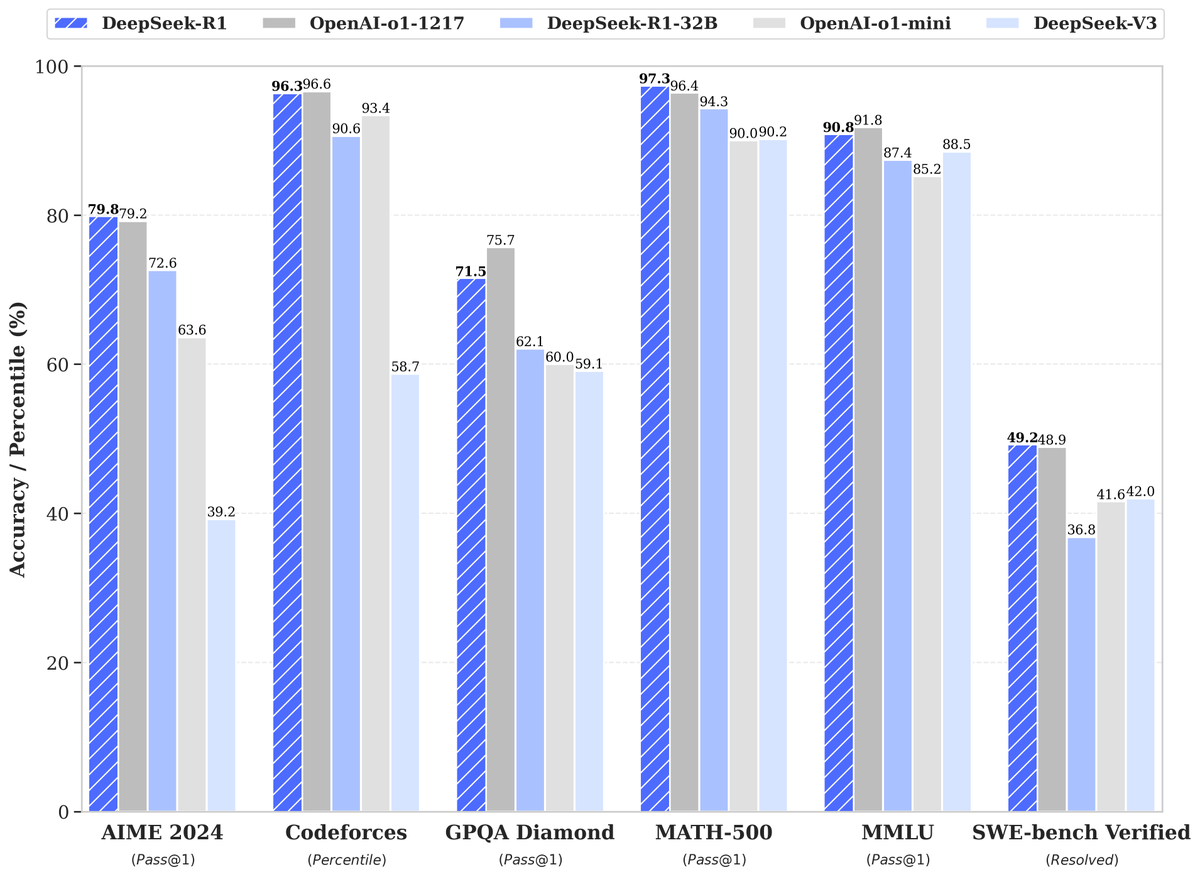
1/ I was able to play with DeepSeek’s R-1 “reasoning” model and I’m impressed with this open-source model. Benchmarks puts it on par with OpenAI’s o1 or Anthropic’s Claude 3.5 Sonnet!
I’ve been toying with this model and it’s incredible how something so good is freely available!
I was very curious to see how o1 worked and now I can have a sense through R-1.
🚀 DeepSeek-R1 is here!
⚡ Performance on par with OpenAI-o1
📖 Fully open-source model & technical report
🏆 MIT licensed: Distill & commercialize freely!
🌐 Website & API are live now! Try DeepThink at https://t.co/v1TFy7LHNy today!
🐋 1/n
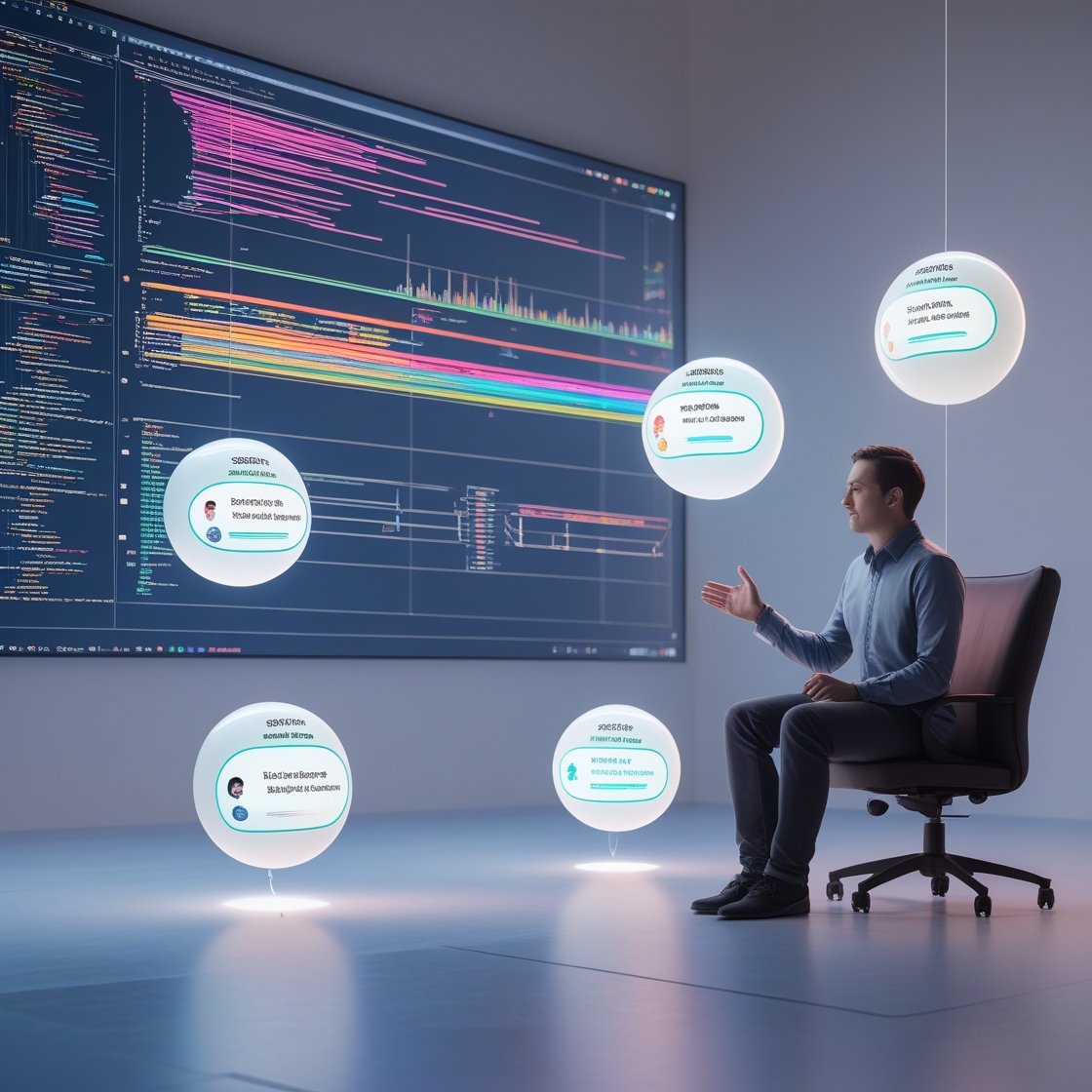
10/ Images generated by ChatGPT, Grok and https://t.co/5AYdErKJM3.
Charts from https://t.co/k4GsYVdhaQ and https://t.co/BQkbqwdo44.
Useful links:
1 - Mark Zuckerberg’s interview: https://t.co/nFO8KzN5U0
2 - Mark Benioff’s interview: https://t.co/3dROxleRJ6
8/ In my opinion, the future Software Engineer will be the fusion of great Computer Scientists that know how to leverage AI to get the work done. Instead of writing every line of code, they'll pull in the right AI tools to deliver faster, better quality, performance and security.
9/ TL;DR: AI won’t kill software engineering; it’ll evolve it. Future engineers will build with AI, not compete against it. Adapt, upskill, and you’ll thrive in a world where humans and machines code side by side. 💡
7/ Think of AI as a power tool. A saw doesn’t make you a carpenter. Engineers will still need strong foundations: logic, algorithms, math. These are the building blocks for leveraging AI effectively.
1/ In 2025, AI could write code at the level of a mid-level Software Engineer.
Don’t take my word for it—Mark Zuckerberg said it himself. This isn’t sci-fi. It’s here. And it’s already reshaping tech jobs. Let’s dive into what this means for engineers. 🧵👇
6/ But don’t panic. It’s not all doom and gloom for Software Engineers. AI isn’t replacing everyone—it’s reshaping the role. Using AI for coding isn't just about simple prompts. Knowing what to ask and how to iterate with AI to get meaningful results.
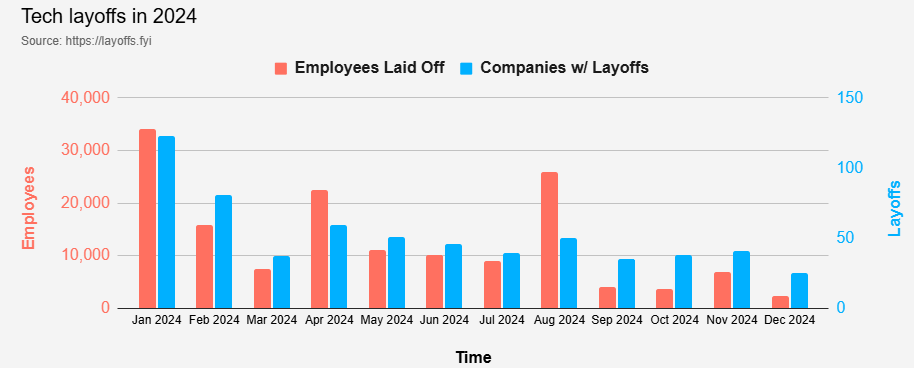
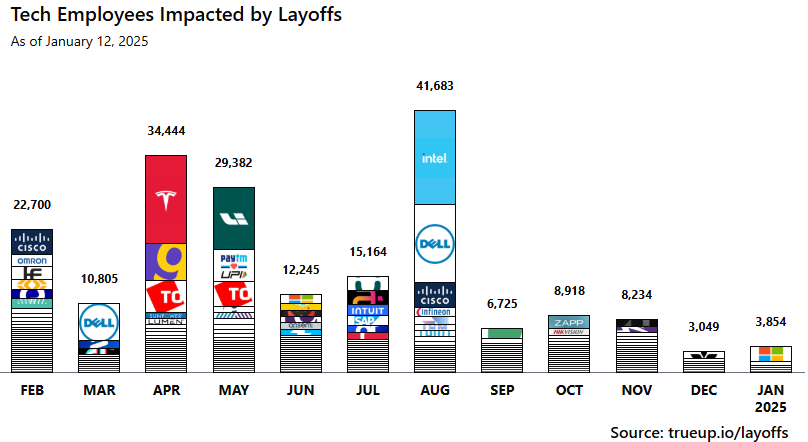
5/ 2024 saw over 150K layoffs in tech. January was particularly brutal. Is it a coincidence that layoffs spiked alongside AI breakthroughs? AI doesn’t call in sick, doesn’t ask for raises, and works 24/7.