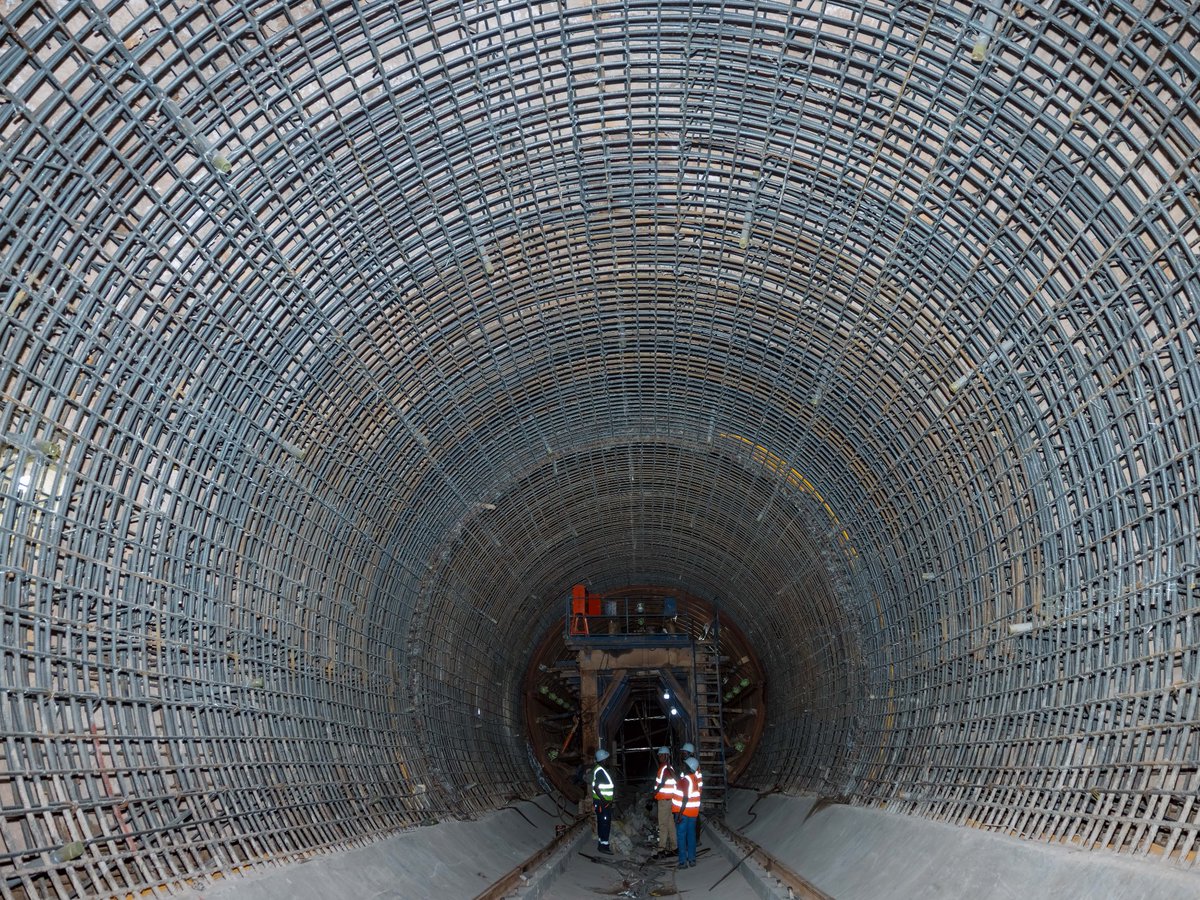
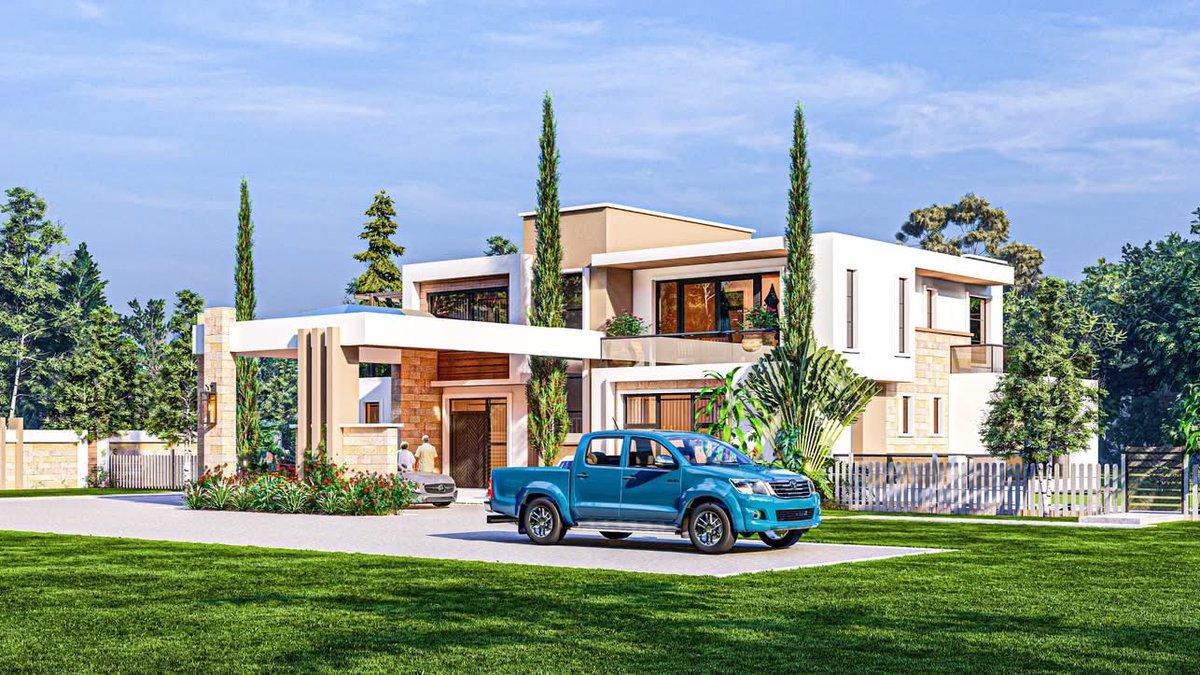
Imirimo yo kubaka urugomero rwa Nyabarongo ya II irarimbanyije ndetse igeze ku kigero cya 75%.
Hari amatsinda akora ku manywa na ninjoro hagamijwe ko imirimo yarangira mu mpera za 2027.
Nirwuzura ruzatanga megawati 43.5 (43.5 MW) akaba ari rwo rugomero rwa mbere ruri mu bwoko bwa damu (Dam) u Rwanda ruzaba rugize.
Amazi y'uru rugomero azakora k'uturere dutanu @Kamonyi , @Muhangadis , @GakenkeDistrict , @NyabihuDistrict na @NgororeroDistr.
Hitezwe ko amazi y'urwo rugomero azafasha mu ngendo zo mu mazi mu guhuza intara y'amajyaruguru @RwandaNorth na @CityofKigali, hazakorerwa n'indi mishinga itandukanye y'ubukerarugendo n'ibindi bikorwa by'iterambere.
#AmashanyaraziKuriBose
"Among the many things you are taking away with you, leave this place with one thing firmly in your minds: You are now builders of something. You are problem solvers. You are innovators. And you are also going to contribute
to this nation, the national effort.
Rwanda will not be developed by people coming from somewhere else, zero. If you thought there is anything like that, quickly change your mind. It is not like that. It doesn't happen like that. You must be the one to do it." President Kagame | Indangamirwa 16 #MeetThePresident
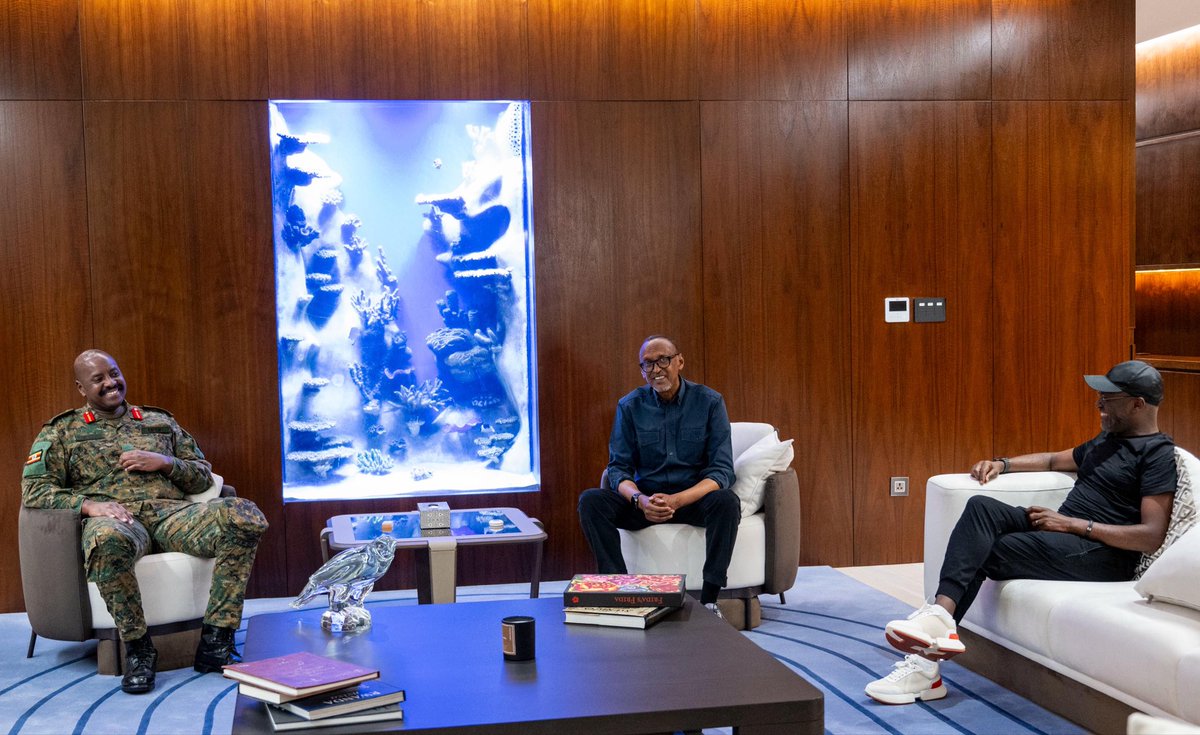
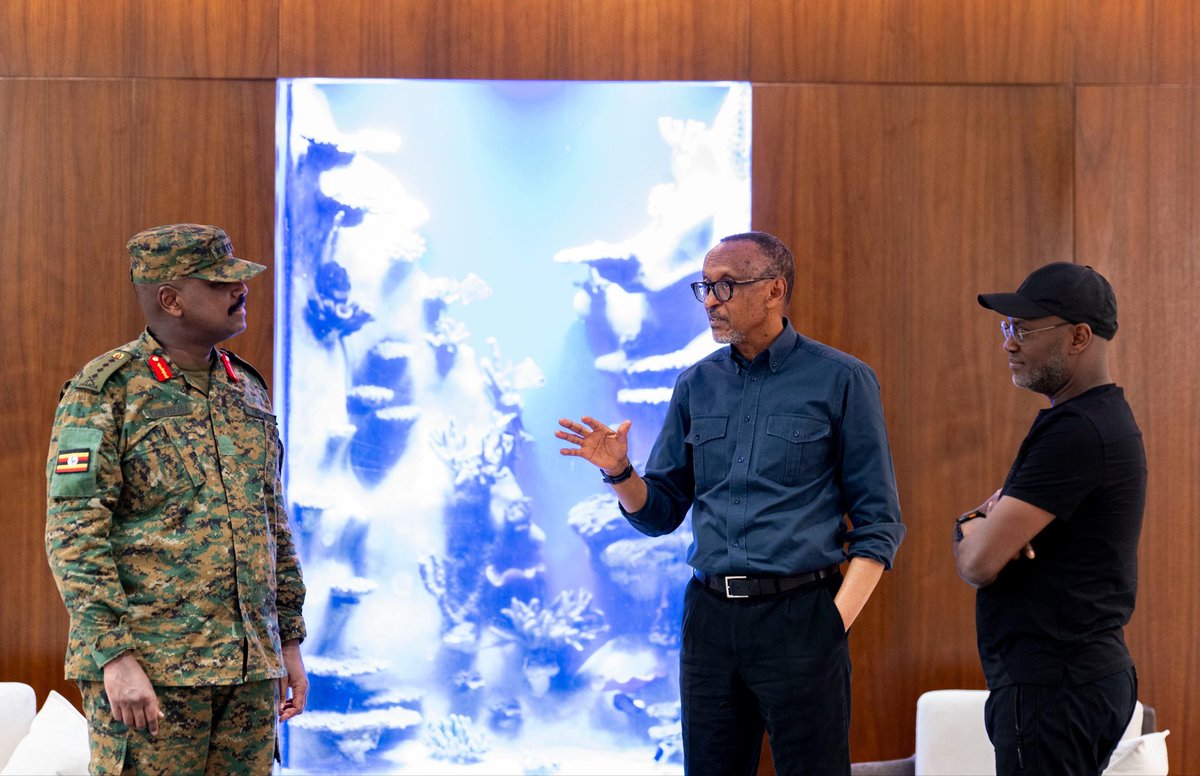
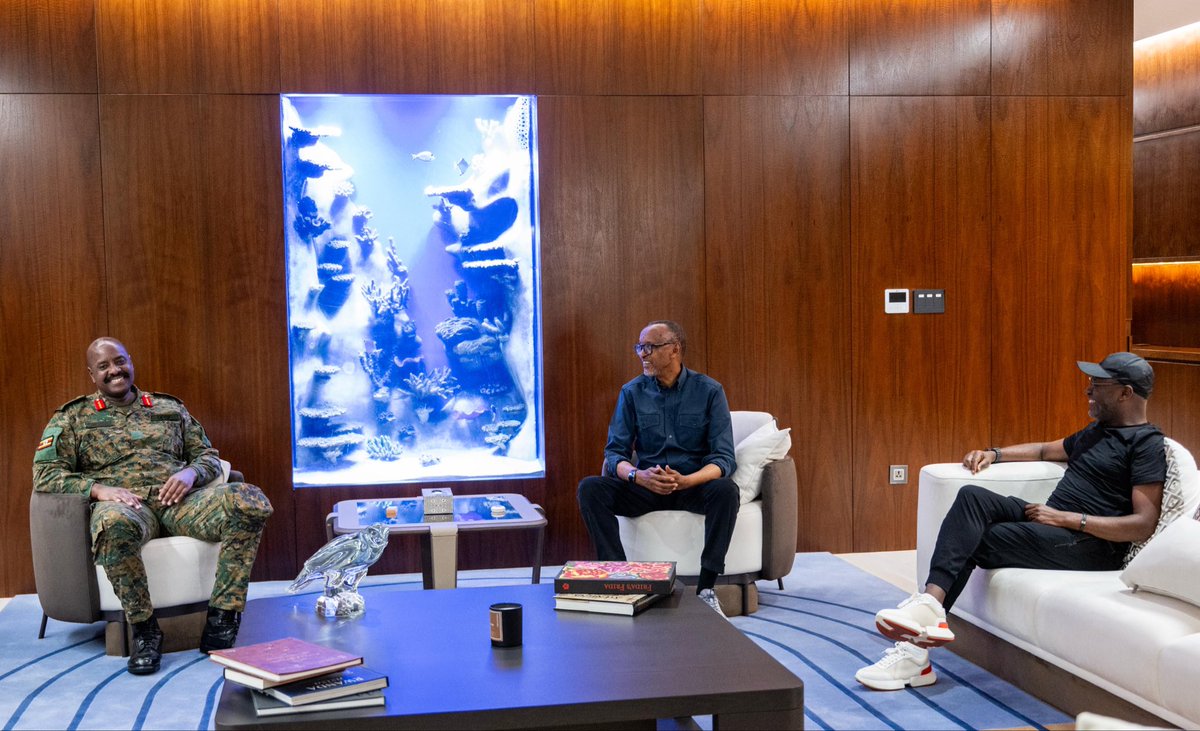
President Kagame today received General Muhoozi Kainerugaba, Chief of Defence Forces of the Uganda People’s Defence Forces (UPDF). Their discussions focused on the strong bilateral cooperation between Rwanda and Uganda, as well as regional peace, security, and stability.
Accessibility to electricity in East African Community
Kenya - 89%
Rwanda - 85%
Tanzania - 74%
Uganda - 52%
DR Congo - 24%
Burundi - 12%
South Sudan - 8%
Somalia - Undetermined.
This evening in Kigali, President Kagame met with Bill Gates, Founder and Chair of the Gates Foundation. They discussed strengthening the Foundation’s longstanding partnership with Rwanda, including accelerating collaboration in health, agricultural transformation, AI, and digital public infrastructure to advance Rwanda’s development priorities.
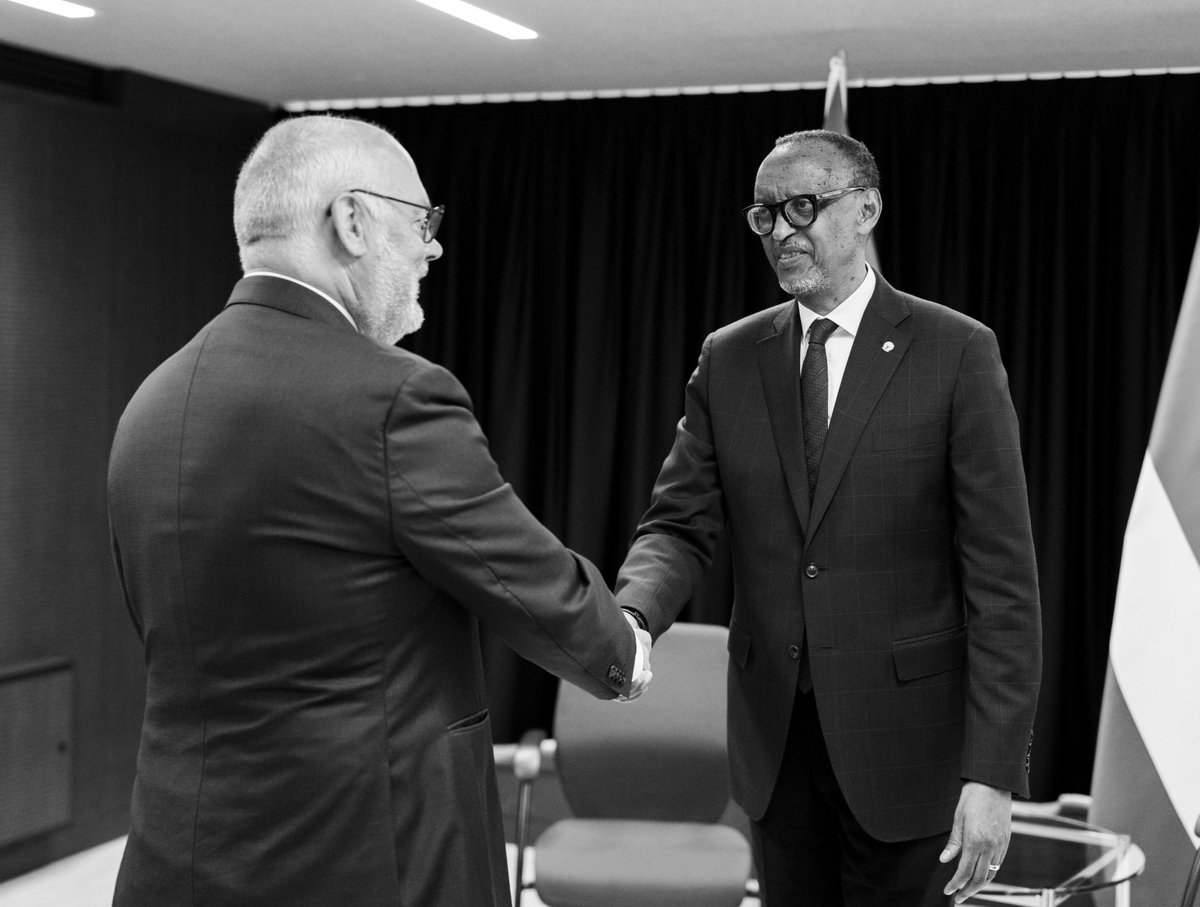
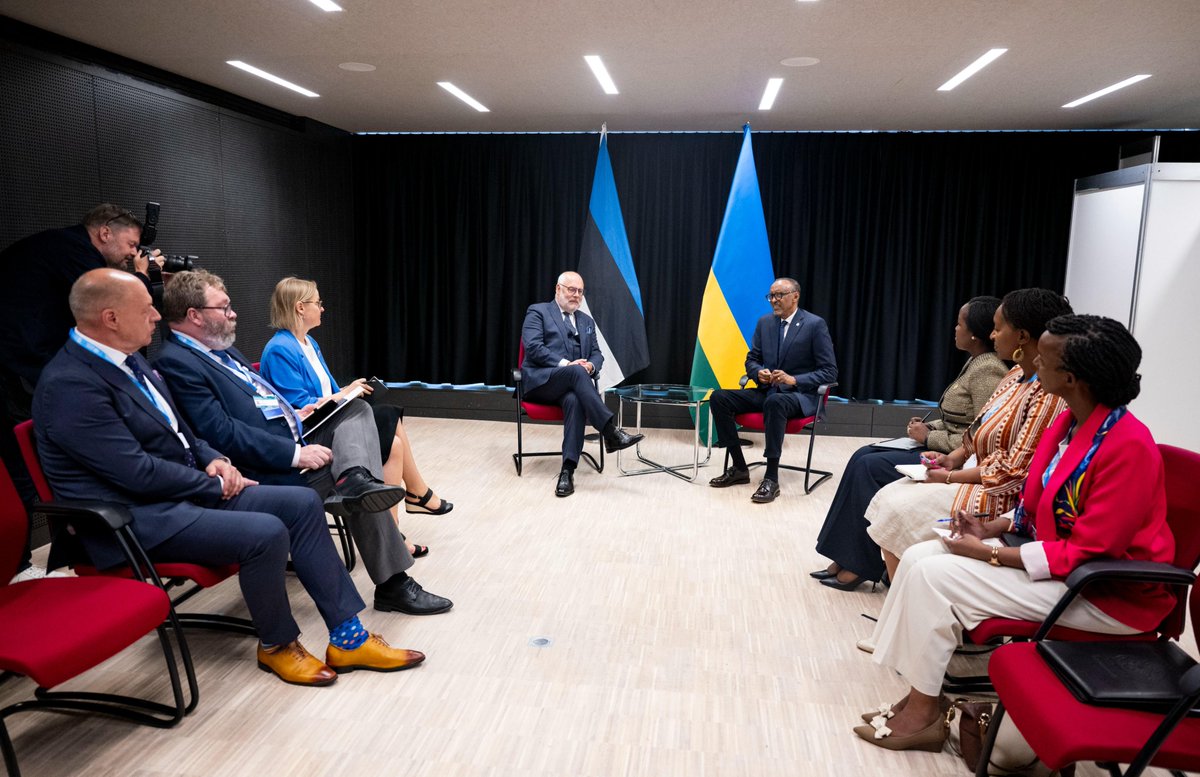
On the sidelines of the #AIforGood Global Summit 2026, President Kagame met with President @AlarKaris of Estonia. The two leaders discussed ways forward to strengthen bilateral relations, in key areas of mutual interest including digital innovation and e-governance.
"The composition of this panel, bringing together a former member of the ex-FAR, General (Rtd) Ibingira from the RPA/RPF, and a former member of the FDLR, and what they have shared, reflects just how complex, diverse, and layered our history is. It is from that history that we should draw the lessons to move our country forward, in the way we want and through our own efforts.
Let me say this: a great deal of what has been said on this panel has been valuable, and the discussions around it have only reinforced those lessons. One thing I wanted to pick up on is what Ibingira mentioned about those ungrateful people who insult and disparage others.
My advice is simple: do not waste your energy fighting those who insult you. Put your energy into building, building yourselves, and building your country, so that insults and the people who make them become insignificant and have no impact on you. Ignore them, and keep doing what you are supposed to do. That is what matters.
Your response should be your actions. Eventually, those who thrive on insults grow tired and stay hostages of history." President Kagame | Unity Club Meeting.
“When you see someone give himself so fully that he is even ready to lose his life, then serving the country at the level we have reached today, compared to that kind of sacrifice, should really not be too much for us.” President Kagame | Swearing-in Ceremony of New Government Officials.
🔵OPEN LETTER TO BELGIAN FOREIGN MINISTER MAXIME PRÉVOT
Dear Minister @prevotmaxime , are Rwandan Lives Negotiable?
For months, your public statements on the crisis in eastern Congo have repeatedly invoked what you describe as “Rwandan aggression.” Yet with every declaration, one fundamental question remains conspicuously absent:
What is Rwanda supposed to do when an armed movement founded by individuals responsible for the 1994 Genocide against the Tutsi remains active on its border, openly hostile to the Rwandan state, and repeatedly linked to security threats against Rwanda?
Your narrative appears to begin where Kinshasa’s narrative begins. The problem is that history did not begin there.
🔷The Convenient Vocabulary of “Rwandan Aggression”
The phrase “Rwandan aggression” has become a diplomatic slogan repeated so often that many policymakers seem to have forgotten to interrogate it.
By adopting the terminology of Kinshasa without equal scrutiny of the facts that produced the current crisis, European officials risk promoting a simplified interpretation of one of Africa’s most complex security conflicts.
The eastern Congo crisis cannot be understood by reducing it to a single accusation directed at Kigali.
Such an approach ignores decades of instability, the failure of successive Congolese governments to establish effective state authority in the region, and the continued presence of armed groups that directly threaten neighboring states.
🔷Diplomacy demands more than slogans. It demands context. Territorial Integrity Cannot Be Applied Selectively
You regularly invoke the principle of territorial integrity. Fair enough. But territorial integrity is not a one-way street. For decades, Rwanda has complained about the continued presence of the #FDLR, a militia whose origins lie among elements responsible for the Genocide against the Tutsi in 1994. The issue is not theoretical.
Over the years, Rwanda has documented cross-border attacks, armed incursions, shelling incidents, infiltration attempts, and security threats originating from eastern Congo. Various international reports have also documented cooperation at different periods between Congolese military elements and the #FDLR.
🔷If territorial integrity matters, then Rwanda’s territorial integrity matters too.
🔷If sovereignty matters, then Rwanda’s sovereignty matters too.
🔷If security matters, then Rwandan security matters too. Or are these principles reserved only for larger states with more diplomatic allies?
🔷The Question Nobody in Brussels Wants to Answer
You frequently call for the withdrawal of Rwandan defensive measures and forces. But before making that demand, answer a simple question:
Would Belgium dismantle defensive deployments if a hostile armed movement responsible for one of the darkest chapters of its history remained active across its border?
🔷Would France?
🔷Would Germany?
🔷Would any European nation?
The answer is obvious.
No responsible government removes security measures while the threat that justified them remains intact.
🔷Neutralize the threat first.
🔷Remove the security measures afterward.
That is not extremism. That is basic statecraft.
🔷Are Rwandan Lives Negotiable?
This is perhaps the most important question of all.
When European officials insist on discussing force reductions while speaking far less urgently about the dismantling of the #FDLR threat, many Rwandans hear a disturbing message:
🔷That their security concerns are secondary.
🔷That their fears can be postponed.
🔷That their lives are negotiable.
Are they? Because every government has a first obligation: protecting its citizens. Rwanda is no exception.
No country should be expected to gamble with the lives of its people in exchange for diplomatic applause.
🔷Washington Cannot Be Separated from Reality
You have repeatedly referenced the Washington process. Yet discussions of Washington often omit a critical reality. The conflict is not solely between Kigali and Kinshasa. It also involves the political and military dispute between Kinshasa and the AFC/M23 movement.
Ignoring that dimension does not make it disappear.
No mineral agreement, no diplomatic declaration, and no international communiqué can substitute for a genuine political settlement addressing the grievances and realities that continue to fuel violence in eastern Congo. Peace requires confronting every dimension of the crisis, not merely the dimensions that fit a preferred narrative.
🔷The Contradiction at the Heart of Your Position
There is an inconsistency that deserves explanation.
You cannot simultaneously acknowledge that the Washington framework places the withdrawal of Rwandan defensive measures alongside the neutralization of the FDLR, and then argue that the two are unrelated. That is not interpretation. That is rewriting the logic of the agreement itself.
The linkage exists because the threat exists. Remove the threat and the rationale for defensive measures disappears. Pretending otherwise serves politics, not peace.
Mr Prévot,
Berlin collapsed in 1994.
The era in which European capitals could dictate African security realities through selective interpretations and convenient political vocabulary is over. If peace is truly the objective, then intellectual honesty must come first.
🔷That means acknowledging all security concerns, not only those advanced by Kinshasa.
🔷That means recognizing that the eastern Congo crisis did not begin with today’s headlines.
🔷And that means answering a question that many Rwandans continue to ask:
Are the lives and security of Rwandans negotiable, or do they deserve the same consideration routinely afforded to every other nation?
Until that question receives a clear answer, many of your statements will continue to sound less like diplomacy and more like selective outrage.
Respectfully,
Roger Marc Ruti.
@onduhungirehe@EgidieBibio@paul_rukesha@RichardGisagara@SadateMunyakazi@TomNdahiro@bideri@merardmp@realDonaldTrump@SecRubio@PatrickMuyaya@Nadia_MUGUNGA1@rpfinkotanyi@pkayumba@PatriotNkotanyi@NkotanyiYvette@Ali_Rukaliza@VictorMurashi@damiennkaka@FelixMugenzi@DrDamascene@NshimyimanaEmma@sheilakamuzinzi@PaulMash424427@PatrickRugaba@RWALINDAP@AAwithJGS@TheoMpoze@jpturayishimye@Curious39031228@SamuelBaker_B@ScoviaMutesi@PatrickRugaba@KUpatriot@JLHaby@ndereyehe@gat_steeve@chastegahunde@dzaneza
“The current standing of RDF does not exist by default. It has been built over many years through dedicated service, discipline, and professionalism. You must lead with integrity, and never stop learning and improving.” President Kagame | RDF Senior Command and Staff Course 14 Graduation Ceremony
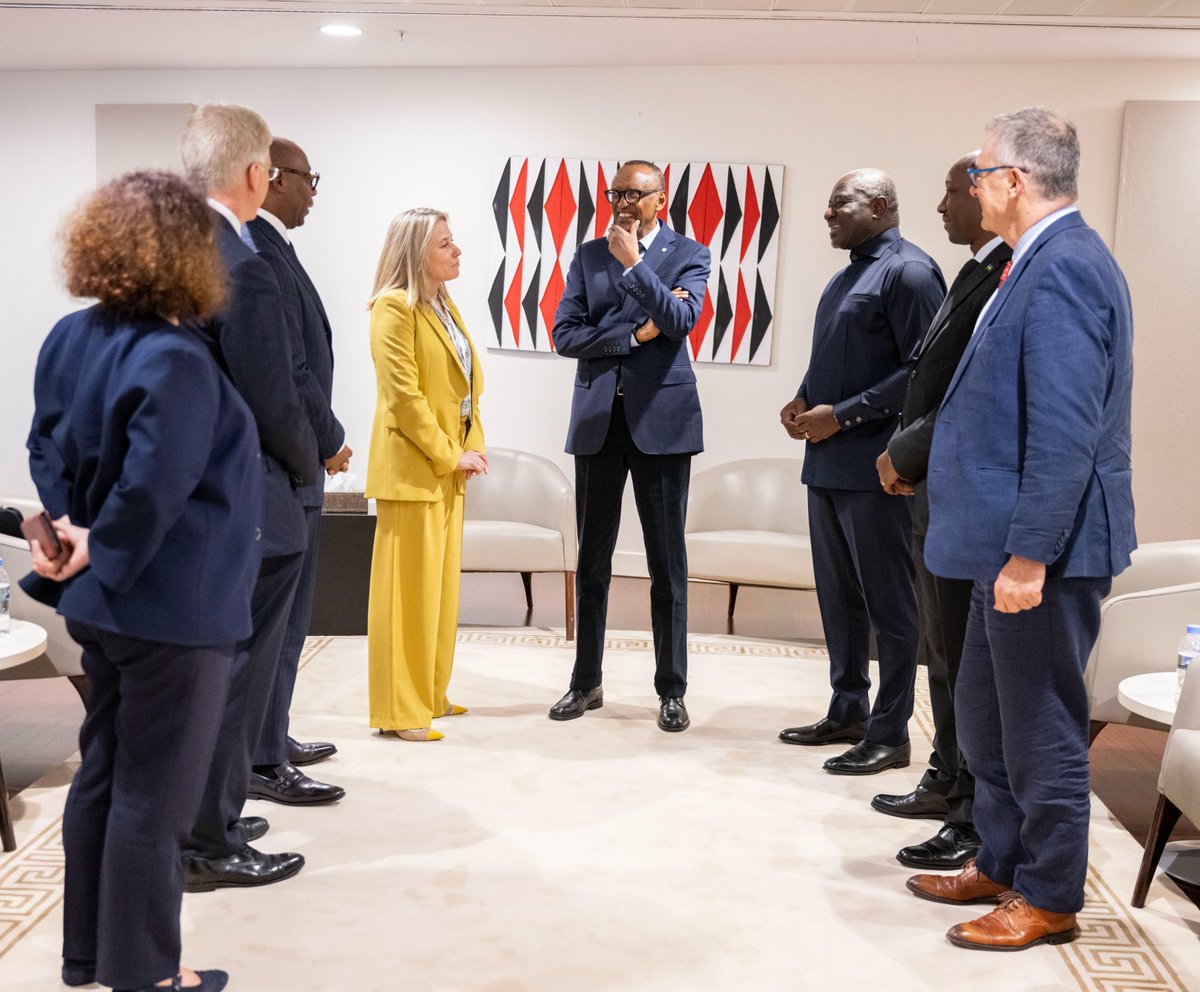
President Kagame also met with Sama Bilbao y León, Director General of the World Nuclear Association; Sylvie Bermann, President of the World Nuclear Exhibition; Serge Ekue, President of the West African Development Bank; Daniel Poneman, Senior Fellow at the Council on Foreign Relations; and Ian Farnan, CEO of Cambridge Atom Works, who are attending the Nuclear Energy Innovation Summit for Africa (NEISA -2026).
They discussed the role of nuclear energy in expanding access to reliable power, supporting industrial growth, and unlocking opportunities in Rwanda, and across the African continent.
“For Africa, energy is not simply a development issue. It is the foundation of industrial growth, and competitiveness. At the centre of this endeavour, is the question of investment. Too often, investors hesitate because they perceive many risks in Africa. We must work to strengthen regulation, ensure consistency and accountability, in order to build confidence and attract long-term capital.” President Kagame | Opening of the 2nd Nuclear Energy Innovation Summit for Africa #NEISA2026
On the sidelines of Day 2 of #NEISA2026, Minister @Dr_JimmyGasore met with Mr. Erik Fernstrom, Regional Representative for Eastern and Southern Africa at the World Bank.
Discussions reflect Rwanda’s commitment to advance nuclear energy agenda. 1/2
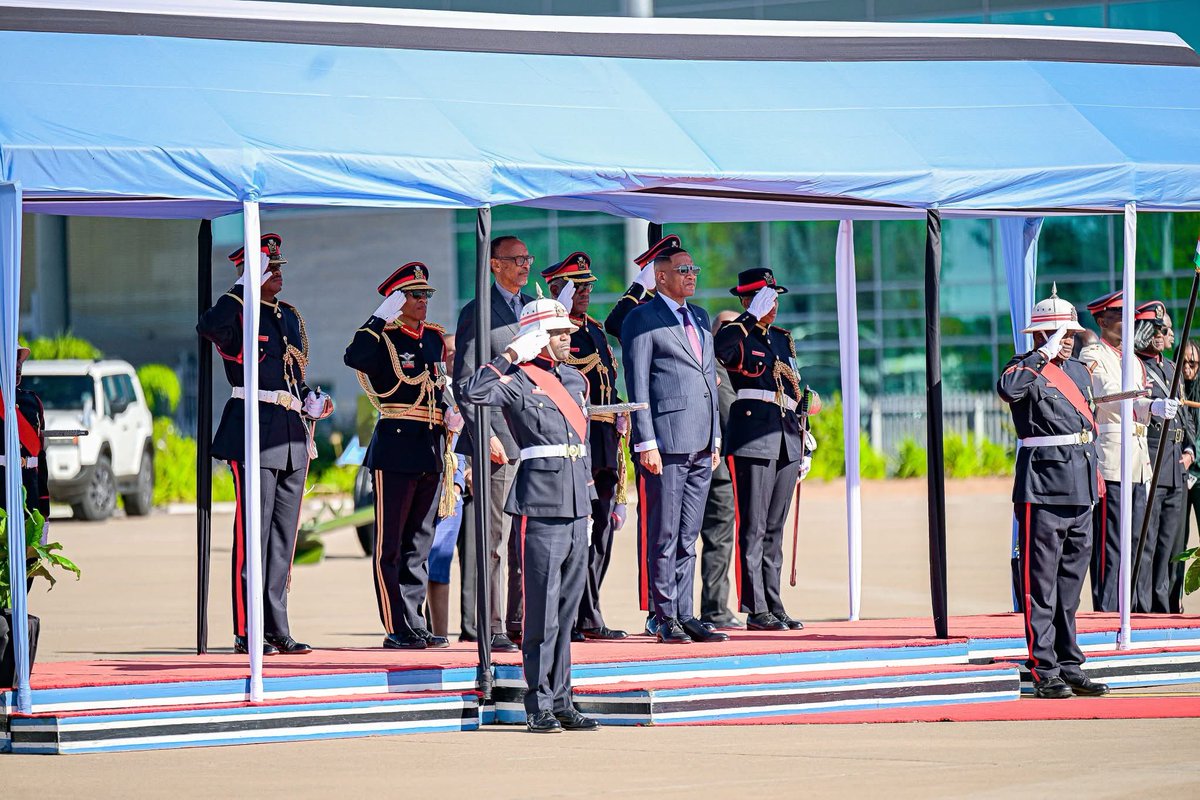
President Advocate @duma_boko today bid farewell to President @PaulKagame following the successful conclusion of his State Visit to Botswana, which reaffirmed the strong & enduring relations between Botswana & Rwanda.
#BotswanaRwandaRelations#BWPresidency🇧🇼
Today we commemorate the 32nd anniversary of the 1994 Genocide against the Tutsi and begin the official commemoration week.
Remember - Unite - Renew
#Kwibuka32
We are going!
With Artemis II's launch, we've taken another step toward a long-term presence on the Moon. Here's a recap of the historic mission so far – and a preview of what's to come.
Follow along as four astronauts continue their journey around the Moon and back: https://t.co/G7LpghURjg