The Connecticut River Stormwater Committee is a coalition working to share information and collaborate on fulfilling obligations under the EPA stormwater permit
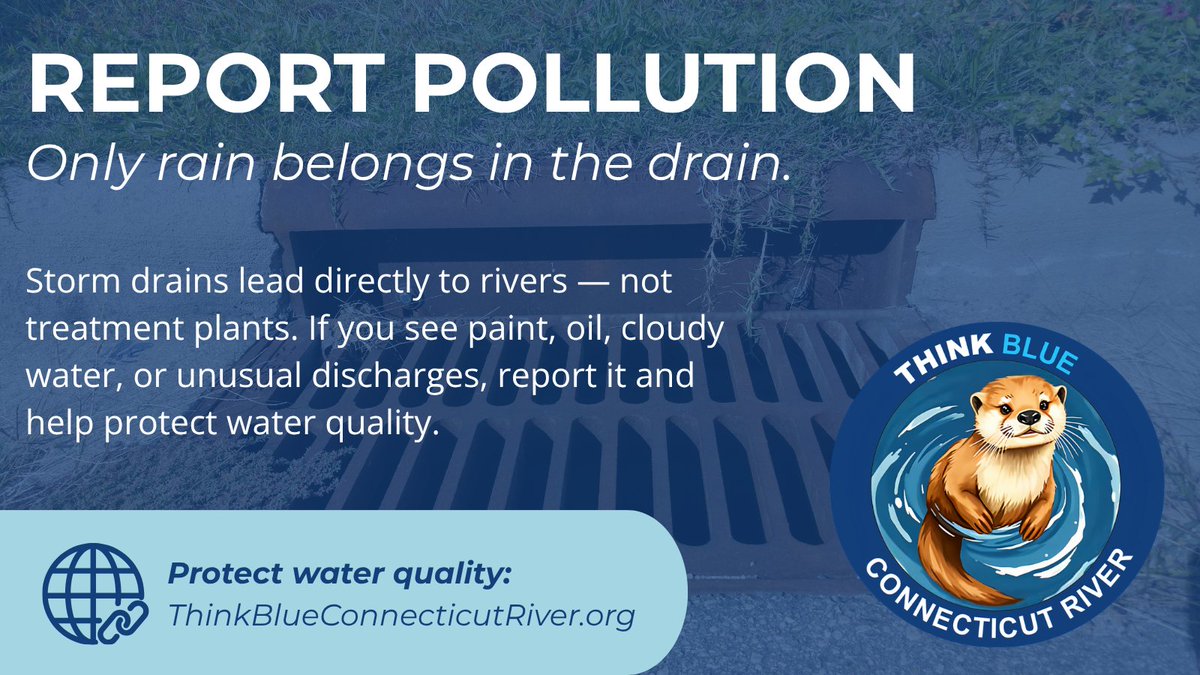
🚨 See something unusual? Report it!
Storm drains flow directly to local waterways. If you spot paint, oil, cloudy water, or another suspicious discharge, notify your local municipality and help protect clean water. 💧🌿
#ThinkBlue#MS4
🚗🫧 Washing your car in the driveway may seem harmless, but soapy runoff can carry oil, dirt, and other pollutants straight to nearby waterways through storm drains. Use a commercial car wash or wash on grass to help protect clean water. 🌊💙
#ThinkBlue#Stormwater
🌱 Bag your grass clippings!
Clippings left in streets can wash into storm drains, clog drainage systems, and add excess nutrients to local waterways. Keep yard waste out of the road to help protect clean water. 🍃💧
#ThinkBlue#Stormwater#CleanWater
🧹 Sweep first, don't wash!
Dry cleanup keeps dirt, leaves, and debris out of storm drains where they can pollute rivers and streams. A broom is one of the simplest tools for protecting water quality. 💧
#ThinkBlue#Stormwater#CleanWater
🗑️ Keep dumpsters covered to keep pollutants out of storm drains.
Closed lids help prevent contaminated runoff, reduce litter, and protect our rivers and streams after it rains. 💧
#ThinkBlue#Stormwater#CleanWater
🔧 Small leaks can become big pollution.
Oil, antifreeze, and other vehicle fluids can wash into storm drains when it rains. Fix leaks early and clean up spills to help protect our rivers and streams. 💧
#ThinkBlue#Stormwater#CleanWater
💧 Storm drains aren't connected to treatment plants.
Anything that goes in—oil, litter, soap, or chemicals—flows directly to local rivers and streams. Only rain belongs in the drain.
#ThinkBlue#Stormwater#CleanWater
🐾 Every scoop makes a difference!
Pet waste left on the ground can wash into storm drains, carrying bacteria and nutrients into local waterways. Bag it, bin it, and help protect clean water. 💧
#ThinkBlue#PetWaste#Stormwater
🍃 That bottle on the ground doesn't stay there for long.
Wind and rain can carry litter into storm drains, where it can pollute rivers and streams. Toss trash in the bin and help protect clean water. 💧
#ThinkBlue#Stormwater#LitterPrevention
🛠️ A healthy septic system helps protect clean water.
Schedule regular inspections, pump your tank as recommended, and use water wisely to help keep bacteria and nutrients out of local waterways. 💧
#ThinkBlue#SepticSystem#CleanWater
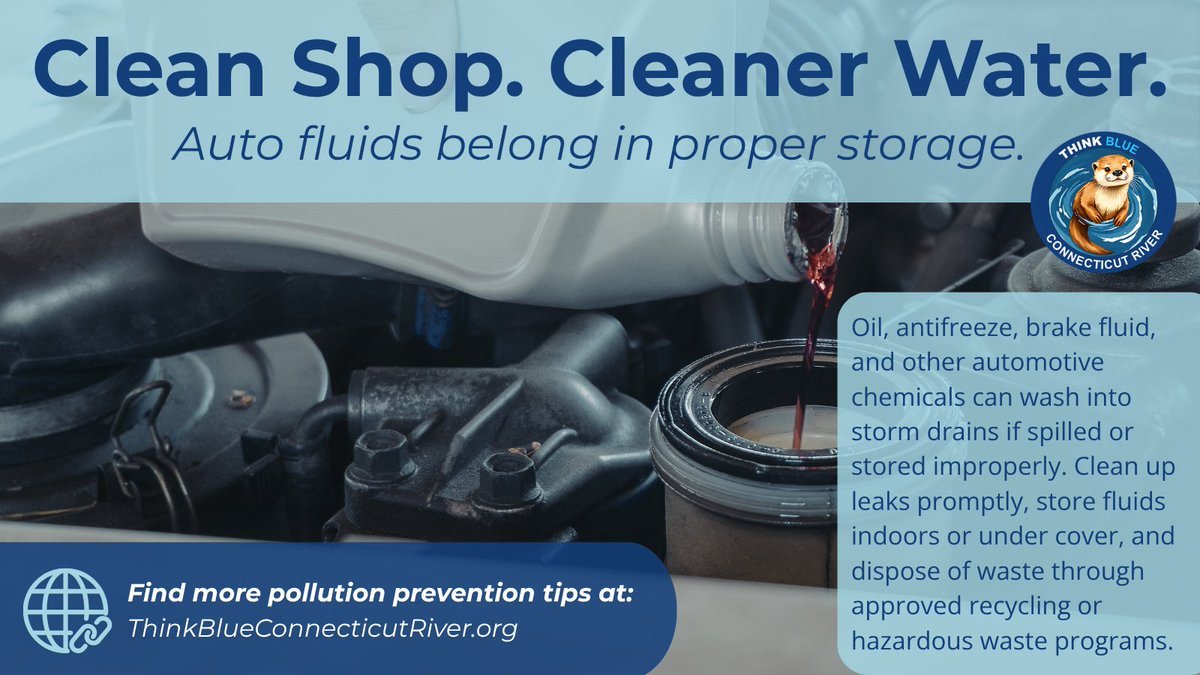
🛠️ A clean shop helps protect clean water.
Store automotive fluids properly, clean up leaks quickly, and recycle used oil and chemicals through approved programs. Keep pollutants out of storm drains! 💧
#ThinkBlue#Stormwater#CleanWater
🍽️ Grease belongs in the bin—not the drain. Fats, oils, grease, and food waste can clog storm systems and pollute local waterways. Proper disposal helps protect clean water for everyone. 💧
#ThinkBlue#Stormwater#CleanWater
🌱 A little erosion prevention goes a long way.
Mulch, plants, erosion blankets, and barriers help keep soil where it belongs—and out of storm drains and local waterways. Protect clean water from the ground up! 💧
#ThinkBlue#MS4
💧 Where your downspout drains matters!
Redirect roof runoff to your lawn, garden, or another permeable area instead of pavement or storm drains. It helps reduce runoff and protect local waterways.
#ThinkBlue#MS4
🐾 Scoop it. Bag it. Trash it.
Pet waste left on the ground can wash into storm drains, carrying bacteria and nutrients into local waterways. Every walk is a chance to help protect clean water! 💙
#ThinkBlue#MS4
🧴 Leftover paint, cleaners, and chemicals don't belong in storm drains or on the ground.
Store them safely and bring them to your local Household Hazardous Waste collection event for proper disposal. Every drop counts!
#ThinkBlue#MS4
🍂 Keep leaves out of storm drains!
Bag or compost leaves and yard debris instead of leaving them along the curb. A little cleanup now helps prevent flooding and keeps local rivers and streams cleaner.
#ThinkBlue#MS4
🧽 Wash smart outdoors!
Soap, dirt, and grime can flow into storm drains if you wash on pavement. Wash your vehicle where water can soak into the ground, or use a commercial car wash to help protect local waterways.
#ThinkBlue#MS4
🌱 Feed your lawn, not our waterways.
Too much fertilizer can wash into storm drains during rain, fueling algae growth and harming local rivers and streams. Apply only what your lawn needs, and skip fertilizing before heavy rain.
#ThinkBlue#MS4
A rain barrel captures runoff before it reaches storm drains and gives you free water for gardens and landscaping. 🌧️
Every drop saved helps protect local waterways and conserve drinking water.
#EveryDropCounts#ThinkBlue#MS4