The same moonlight,
The same lamps on the other hillside...
The countless stars, due to the absence of you,
Are dreamily hung up in the sky.
You try to retrieve from the dark night
The very words -- sure you won't be denied:
There in the valley
The echo is kept alive
10 Years
Don't cast away
The passion that used to be in our life.
Now it is like water, streaming
Softly by.
In the deep and chilly ravines,
In the pines, in the dark night,
Sighingly, it runs faint.
Still, you'd better in truth abide.
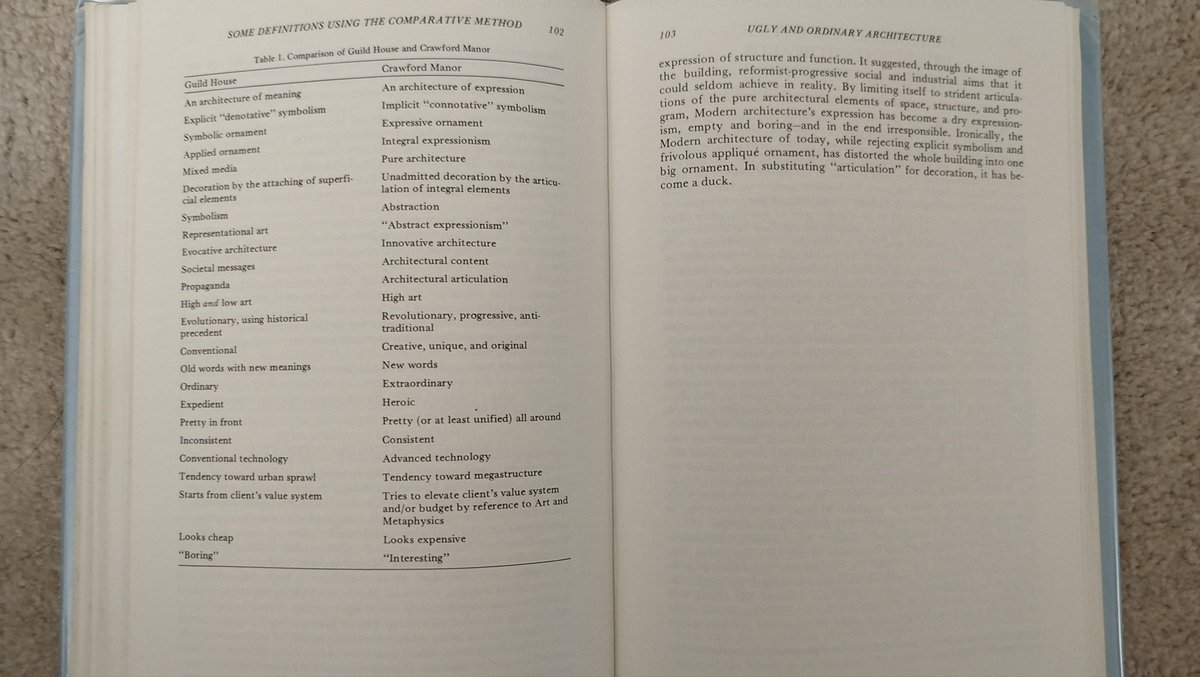
Best place to read "Learning from Las Vegas"
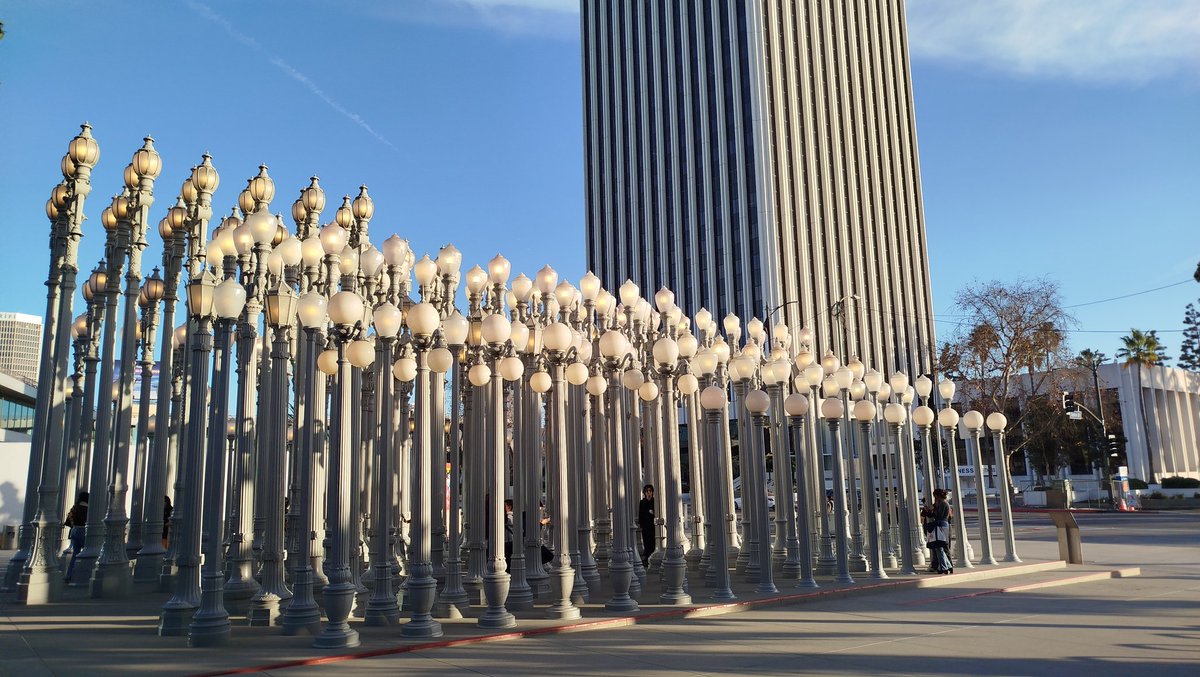
Excavated the old cover image and then took a photo from the same spot after half a century. 😆 How different!
and then they start this new era of digital evolution, and the first—basically the first thing they do, they repeat the mistake: let's build into the foundations of the digital system this 'I like it, I don't like it' function."
--- Yuval Harari on 'like' button
"I once met one of the engineers who came up with the 'Like' button on Facebook.
This invention. The amazing thing about the 'Like' button, which became such a huge invention in the world, they basically rediscovered the beginning of consciousness,
And this is basically what they discovered in a digital form.There's this urge, like, 'I'm aware of something online, and I like it, I don't like it.' We've been struggling basically for millions of years to deal with this organic bug, this constant 'I like it, I don't like it,'
I agree with @DrJimFan.
Life, with all its midblowing structure, is about creating order in a universe of increasing disorder, see e.g. https://t.co/zQDQG4NWbK for an easy intro. Like a cell, a neural network during training takes energy to minimise disorder, that is to predict and generalise better. In fact we even call the loss negative entropy. Like life, the net is part of a bigger environment that gives it data and feedback. Like life, the process results in a lot of disorder for the universe (TPU and GPU heat). In summary we have all the ingredients for intelligence (an emergent property of life), including our understanding of physics. I’d be thankful if someone makes a crisper version of this argument.
The only way a *finite sized* neural net can predict what will happen in any situation is by learning internal models that facilitate such predictions, including intuitive laws of physics.
Given this intuition, I cannot find any reason to justify disagreeing with @DrJimFan.
With more data of high quality, electricity, feedback (aka fine tuning, grounding), and parallel neural net models that can efficiently absorb data to reduce entropy, we will likely have machines that reason about physics better than humans, and hopefully teach us new things.
Incidentally, we are the environment of the neural nets too, consuming energy to create order (e.g. increasing quality of datasets for neural net training).
These are old ideas going back to Boltzmann and Schrodinger among others. They provide the theoretical foundations. Now, it’s about building the code and conducting the experiments, and doing so *responsibly* and *safely* because these are very powerful technologies.
3/3 Though it took millions of years, it was a steady and deliberate process for natural intelligence. Now, artificial intelligence is advancing rapidly, but let's hope it doesn't go astray. #artificalintelligence#naturalintelligence#human
1/3 It's hard to imagine being obsessed with a pile of bones, but it's really fascinating because it was the first time I truly got to know "ourselves."
From early humans to Neanderthals, spanning millions of years. The visible growth of our brains was remarkable.
2/3 From scavenging to hunting. Tools also became increasingly sophisticated; the hand axe seemed so advanced! It's awe-inspiring how human evolution is essentially a history of tool evolution.