I have witnessed this club go from doubters to believers, and from believers to champions. It took hard work and I always did everything I could to help the club get there. Nothing makes me prouder than that.
Us crumbling to yet another defeat this season was very painful and not what our fans deserve. I want to see Liverpool go back to being the heavy metal attacking team that opponents fear and back to being a team that wins trophies. That is the football I know how to play and that is the identity that needs to be recovered and kept for good. It cannot be negotiable and everyone that joins this club should adapt to it.
Winning some games here and there is not what Liverpool should be about. All teams win games.
Liverpool will always be a club that means a great deal to me and to my family. I want to see it succeed for long after I have moved on.
As I’ve always said, qualifying to next season’s Champions League is the bare minimum and I will do everything I can to make that happen.
Join me at Monster Scale Summit (free + virtual) for 40+ tech talks on NoSQL strategies, innovations & insights for data-intensive applications. 🎫 Register for free at https://t.co/BqwbexLHpn #ScyllaDB#monsterscale
@tanyarajhans7 Some Schengen countries process VISA applications quickly. SPAIN provides decision in 4-5 days if you apply through Mumbai/Delhi embassy. If you apply through Bangalore/Chennai consulate it usually takes around 10days.
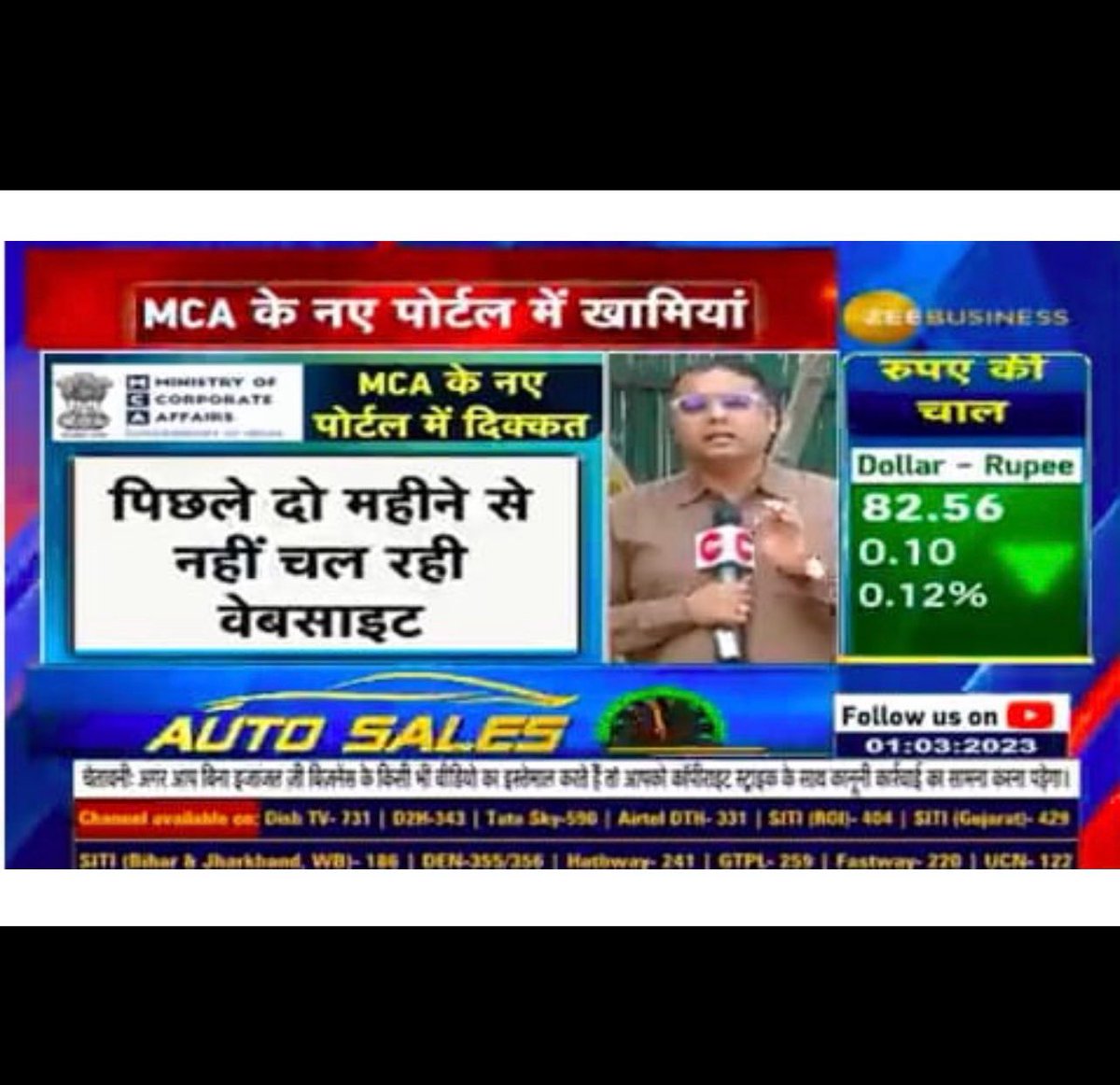
Mca portal wasn't working well in January 2023 and it isn't fully functional in January 2024 too.
100s of crores of funds stuck, mostly startups. 10s of our own. tickets not getting resolved. 😡
Full marks on poor execution to MCA and their tech partner 💯
Kindly repost for maximum reach so that our issue gets highlighted and hopefully resolved. 🙏
The best way to level up your coding skills is to build fully functioning applications.
That’s why I post weekly coding challenges that help software developers level up by practicing building real-world applications.
Yesterday’s challenge was to build your own DNS forwarder.
I learned how to use dig to query a specific server when writing this challenge. A small thing, but it’s always good to learn how to get the most out of the tools you have,
If you are interested, you can find the challenge here: https://t.co/j82F7gy8I2
And here are some of the past challenges:
⇢ Build your own Lisp interpreter - https://t.co/jOb6FtwMUv
⇢ Build your own Redis server - https://t.co/qSmNG5VdjD
⇢ Build your own URL shortener - https://t.co/9jLCDoGtKo
⇢ Build your own Application Load Balancer - https://t.co/ntdbEuQInr
⇢ Build your own DNS Resolver - https://t.co/FDpQEUPnyG
⇢ Build your own Git Client - https://t.co/XNEz7faqSA
⇢ Build your own QR Code Generator - https://t.co/t9RAYWejXt
⇢ Build your own crontab tool - https://t.co/RnTFTmyG7t
⇢ Build your own Scheduling App - https://t.co/MRmLdS9ZNX
⇢ Build your own Rate Limiter - https://t.co/uDpZtoo1CL
⇢ Build your own Message Broker - https://t.co/U0EZV9NWV8
⇢ Build your own Web Server - https://t.co/qyUUR9fNFT
⇢ Build your own Memcached server - https://t.co/J1ekgCw9aR
⇢ Build your own IRC client - https://t.co/PPcbpfGd90
⇢ Build your own Discord Bot - https://t.co/LSlDb8uezV
⇢ Build your own compression tool using Huffman encoding - https://t.co/ZzKcZBOj06
⇢ Build your own Spotify client - https://t.co/w8vFd35ZjZ
⇢ Build your own JSON parser - https://t.co/9W89VvKjem
To every Indian supporter in the stadium - make sure that our bowlers run up to a roar for every SINGLE BALL.
This team has given us 10 flawless games. Let’s give them an unforgettable one. Pull these boys over the line.
A Brief History of Dependency Management in Go
For those of you newer to #golang, it might surprise you to know that go modules was not always part of the language. When Go launched in 2009, it did not have any dependency management solution as Google had no need for one.
As Go matured over the years, its approach to dependency management has evolved, reflecting both the community's needs and the language's philosophy. Here’s a brief look at how we got to Go Modules.
1. No Official Tool (Early Days):
In the earliest days of Go, there wasn't an official tool for dependency management. Developers were left to their own devices, often resorting to vendoring—copying the source code of dependencies directly into their projects. This method was simple but could lead to issues with versioning and bloated repositories.
2. GOPATH and the Workspace Model:
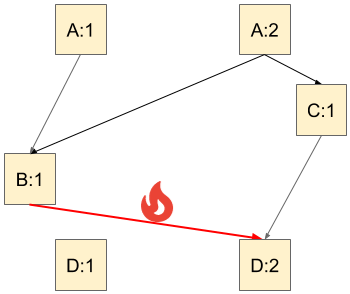
Early on, Go developers organized their code and dependencies in a specific directory structure. We would settle env var GOPATH to be the root of our dev folder, and all imports in other projects would be relative to this. While GOPATH provided some structure, it lacked versioning, leading to the "diamond dependency problem" where different projects required different versions of the same package.
3. godep, glide, and govendor
Recognizing the limitations of GOPATH, the Go community developed various tools like `godep`, `glide`, and `govendor`. These tools helped specify and lock versions of dependencies. They represented the community's efforts to find a robust solution to the challenges posed by GOPATH and dependency management generally.
4. dep - The official Experiment:
As the need for a standardized tool became clear, the Go team introduced dep as an official experiment. dep provided both a manifest (Gopkg.toml) and a lock file (Gopkg.lock), allowing precise control over dependencies and versions.
Dep was actually run as another project and not part of the golang repo. You can explore it here: https://t.co/jFkaCcXcOz
5. Go Modules and the Rise of go mod:
With Go 1.11, Go modules were introduced as an opt-in feature.
Modules allow for versioning of Go packages, making it easier to specify and use dependencies outside of the GOPATH. The go mod suite of commands, including `go get, offers a streamlined toolset for dependency management. By Go 1.13, modules became the official recommendation, signaling the end of the GOPATH era.
The rest they say, is history :)