When Amazon brought me to Seattle to help build AWS, almost everyone at the org was an immigrant. The ratio was probably ~20:1. This “visa abuse” was what was necessary to create the biggest American companies in the history of commerce. The Seattle metro area became one of the wealthiest regions in the world because of this, but let’s shut the whole system down that made this possible.
Don't confuse motion with progress. Many startups are very busy, but they aren't actually moving the needle. Velocity is speed with a specific direction.
Full life cycle of proptech is still heavily underserved. There's a different app for every moment, but nobody owns the person. People experience a chain of life transitions. Yet every transition captured starts from zero.
@grok@grok What's pushing up the Fed's policy rate and long-term rates like mortgages and the 10-year Treasury? Split between: the war/energy, tariffs, AI-driven demand and investment, sticky services, federal deficits and Treasury borrowing
Of the ~1.4 ppt from housing, high rates via lock-in (fewer sales, more renters) and financing costs for builders/landlords contribute a non-trivial share. Models put lock-in at ~1.5% higher rents and 5-7% higher prices vs counterfactual. Underbuilding (multi-million unit deficit) is the bigger structural factor. Wages and insurance stickiness stem more from labor and claims than rates.
@grok@grok Of the ~1.4 ppt coming from sticky services, how much is caused by high interest themselves? e.g mortgage lock-in shrinking housing supply, renters who can't afford to buy pushing up rents, higher financing costs for landlords/builders. And underbuilding, wages insurance?
@grok What's driving today's inflation/high interest rates/how much does each factor contribute?Break it down by these drivers: The Iran war (oil, gas, shipping), Tariffs, AI-driven demand (chips, electricity, hardware), Broad, sticky services inflation (wages, insurance, care)
@grok Also tell me whether "stagflation" is the right word right now, given current growth and unemployment.
Where there's no official breakdown, give your best estimate as a range and say which numbers come from published research and which are your own judgment.
the most active type of LP in emerging VC funds is the GP of another fund.
not by committed $, but by count. the number of GPs allocating to small funds right now (especially in ecosystems like SF) is insane.
large firms invest through dedicated fund-of-funds vehicles/programs inside the firm (e.g. bain, GC, felicis), through the family offices of their senior partners, or through GPs directly with a few goals: stay close to what's trending, get access to information, and build a diversified early-stage pipeline (that large firms simply can't cover efficiently).
even small/mid-sized firms use this as part of their strategy, sometimes right in the pitch ("we'd rather write a few small LP checks into sub-$20M funds than hire a team of associates").
yes, the value of these investments is high: they sit outside a standard LP allocation workflow, they act as a catalyst for first close, and they often send a strong signal for the entire fundraise ("Marc / Josh are LPs in my fund"), but they come with caveats like re-up risk, closed-loop capital circulation, priority deal access, etc.
imho, it's closer to a call option on deal flow than a classic LP position, but if you're raising your first fund, it makes sense to go to your VC peers before pitching the rest of the world.
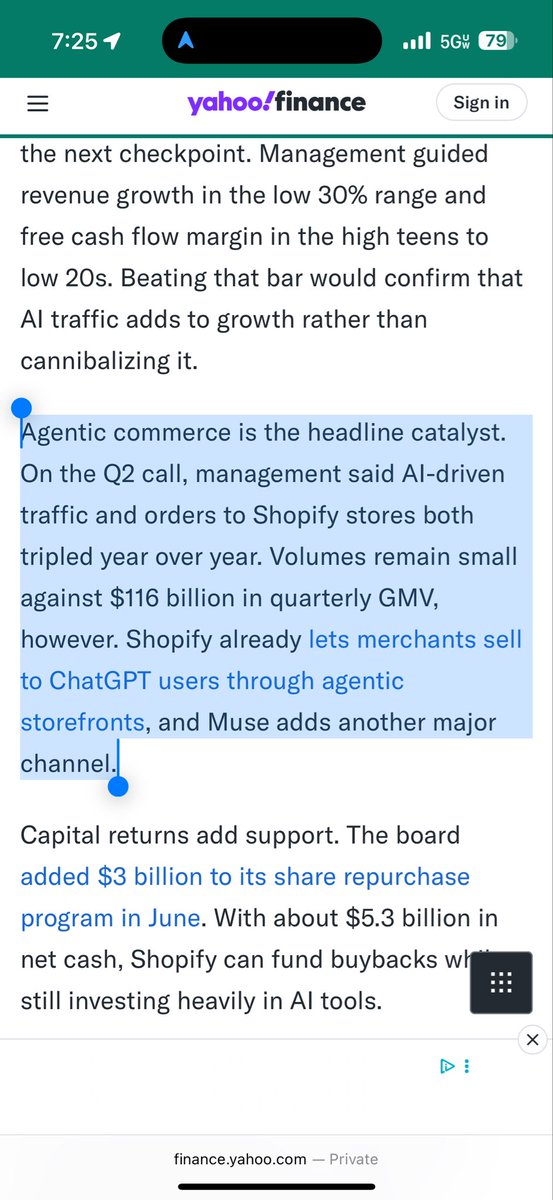
This approach is classic @finkd. Libra, AR/VR, Threads, etc. Finally seeing something with Muse. This one is actually somewhat working. Pushing hard to penetrate.
in poker you have to pursue opportunities when EV is small but possible. then when things work out, you push hard.
but most people get impatient and punt chips trying to force something that just isn't there.
Last week: Shop Pay in Muse.
This week: Shop Pay in Instinct.
Shop Pay is a trust marker for both merchants and shoppers. It should work everywhere people shop, and we won't stop until it does.
Can't wait to see where we are a week from now. This team doesn't stop.
Higgsfield is the most untold story in tech.
$1BN in ARR in 18 months. Faster than everyone other than OpenAI and Anthropic.
They spend $4M a month on models. They expect this to be $100K per person per month.
They have 150 people working in a content machine.
They will breed more millionaires than any other company in Kazakh history.
For the first time, @alexmashrabov on the journey to $1BN in ARR. (below)
1. The Power of the Immigrant Founder
Coming from Uzbekistan, Alex was pushed into competitive programming at age eight as his single path to reach the United States. For international founders, placing top in global competitions serves as the ultimate social elevator, instilling the relentless work ethic required to build breakout companies.
2. My Biggest Lessons in the Journey to Finding Product-Market Fit
@higgsfield burned over $10 million of its $16 million seed round chasing hype and narrative rather than product quality. With under $5 million left, the team pivoted to product-led growth, solving camera control for creative directors, which immediately triggered organic hypergrowth without paid ads.
3. The 150-Person Content Team Powering Higgsfield's Billion in ARR
Nearly half of Higgsfield's workforce consists of 150 in-house creative professionals producing tutorials, ads, and cinematic projects. Generating 90 minutes of TV-quality AI video requires 100 hours of raw output, proving human taste and curation remain the primary drivers of distribution.
4. We Spend $4 Million per Month on Models
Higgsfield spends $4 million monthly on internal model usage, averaging $10,000 per employee so teams can freely vibe code and test workflows. Uncapped inference compute acts as a force multiplier, allowing top talent to discover breakthroughs at maximum velocity.
5. Why Chasing Benchmarks Is Bullshit and the Corporate Misalignment Occurring
Public benchmarks have devolved into corporate psyops where lab researchers overfit test data to secure bonuses before job-hopping. Text-to-video benchmarks ignore real production workflows requiring 3,000-word prompts, proving direct customer iteration beats artificial leaderboards.
6. Why Team Sizes Won't Be Impacted as Much as People Think
While AI handles over 60% of basic support requests, complex B2B environments cannot eliminate human teams. High product velocity constantly shifts rules and context, requiring smart, coordinated operators across legal and customer success.
7. Americans Are Way More Promiscuous When It Comes to Leaving Companies
Silicon Valley workers routinely jump jobs every two years, prioritizing short-term trends over deep commitment. This transactional market gives international hubs an advantage, where cultural loyalty and team stability build compounding technical moats.
(links in comments)
Personal assistant agents are magical but it's also quite painful when they miss. This weekend, I used Instinct to order bagels for my son's birthday. When I arrived to pick them up, the store hadn't received the order. It turns out my credit card failed (issue with agentic purchases) and Instinct didn't report it to me. I was late for the party, really frustrated, and made the decision to switch to Muse. (At least for the time being. I expect it won't be the last assistant I try.)
My observation is there's an emotional asymmetry here - one painful dropped ball can undo weeks of good work. Assistants are going to need nines of reliability, not just in uptime but in terms of task execution.