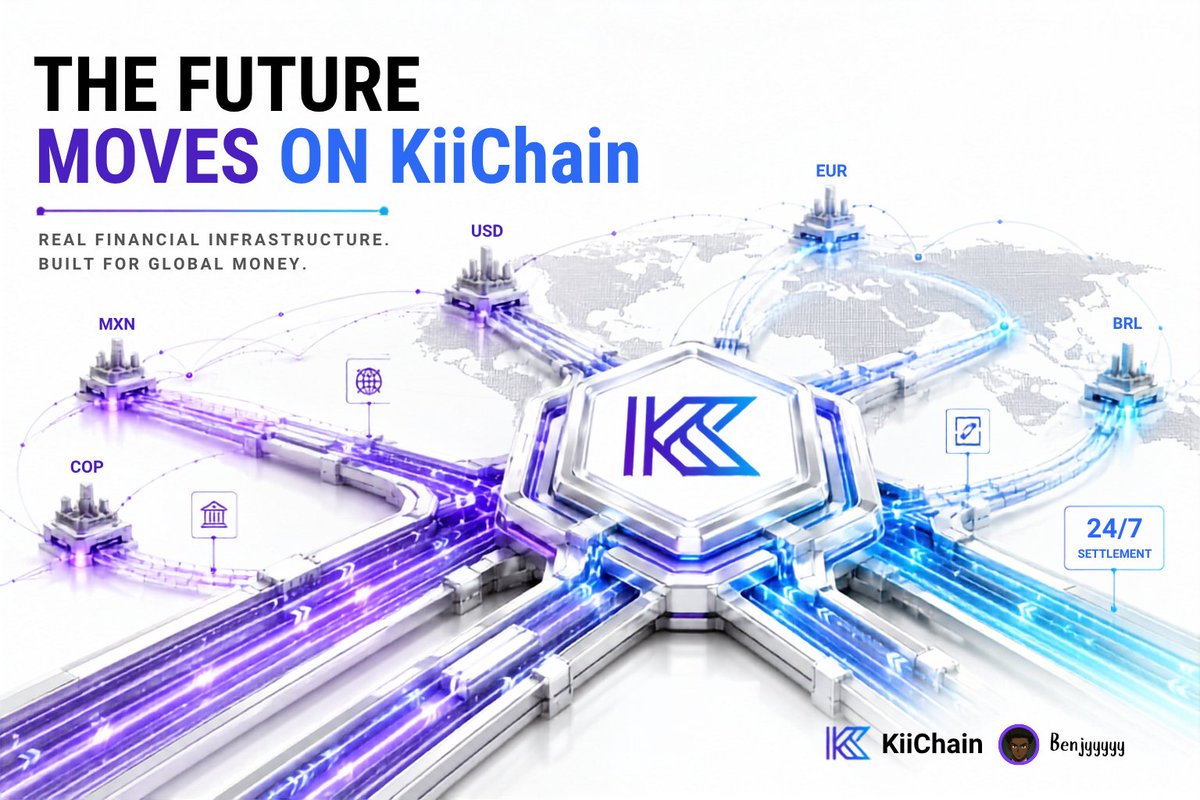
For months, the question hanging over this entire ecosystem was always the same.
Would @KiiChainio actually build what it described, or would it follow the pattern that defines most crypto projects and launch a token first while searching for something real to attach to it afterwards?
The answer came before the token did.
KIIEX processed over $500 million in cumulative transaction volume, serving 350+ enterprise clients.
A testnet brought in 360,000+ participants earning real rewards before $KII had a market price.
Onchain FX went live on Base with the USDC/MXNB corridor settling real transactions 24 hours a day.
A public sale crossed one million dollars in commitments before the first day ended.
The token has now entered an ecosystem that was already running without it.
$KII is officially live, and everything built before this moment is what gives this moment its weight. 🧵🔻
https://t.co/1baa2myQLf
@ben_jay18@KiiChainio This is impressive execution. Real FX volume, enterprise clients, and live settlements before the token. Trust earned the hard way.
It did not start with a token sale.
It started with a real exchange called KIIEX by @KiiChainio processing over $500 million in historical onchain volume.
It started with 200+ enterprise clients who paid for a service that solved a real problem. It started with 360,000+ people joining a testnet before a single $KII token existed.
Then onchain FX went live on Base. Real settlements. Real currencies. 24/7.
Then the public sale opened.
Before the first day ended, over $1 million was committed and pro-rata triggered automatically.
The market gave its answer before most people finished reading the announcement.
This is what it looks like when a team earns trust before asking for it. 🧵🔻
https://t.co/4HDPEFm2oA
@ben_jay18 Euclid Protocol looks like a legit step toward fixing DeFi's biggest headache, fragmented liquidity.
Clean architecture, no bridging mess. Bullish if they execute.
The internet is honestly becoming harder to trust every day.
AI can now generate articles, comments, reviews, and even entire personalities. Bots amplify narratives. Fake engagement spreads faster than real human experiences.
The problem isn’t just misinformation anymore.
It’s identity.
How do we prove a real human is behind the signal?
That question is exactly what led me to discover @twin3_ai.
And their approach is surprisingly thoughtful. 🔻
#twin3ai #twin3ThreadContest
In 2023, @wef ranked misinformation and disinformation among the most severe global risks facing humanity over the next decade.
That ranking surprised many people worldwide.
It ranked higher than several economic and geopolitical threats.
At the same time, Pew Research Center reported that a majority of social media users struggle to distinguish factual reporting from opinion-driven content online.
Now pause and think carefully.
If global institutions are warning about misinformation at scale, what does that mean for crypto markets that move billions of dollars daily?
We trade based on headlines constantly.
We react emotionally before verifying details properly.
We trust confident threads without tracing sources thoroughly.
When was the last time you opened a headline and actually clicked through to verify the raw source behind the claim?
Exactly.
That uncomfortable realization is what made me start researching @prismnewsapp seriously.
Because if misinformation is a global risk, then infrastructure for verification becomes extremely valuable.
And that is precisely what PRISM claims to be building.
🧵🔻 #PRISMTruth
In the last few years, AI did not slowly change creativity, it detonated it.
Music that once took weeks can now be generated in seconds, entire genres can be replicated instantly, and voices can be cloned with accuracy that would have sounded impossible a decade ago.
But here is the part most people skip past because it is uncomfortable.
The faster creation becomes, the weaker ownership gets, unless the system is rebuilt from the ground up.
We built creative platforms assuming scarcity would always protect creators.
AI shattered that assumption completely.
So the real question is no longer “Can AI make music?”
The real question is “How does authorship, ownership, and payment survive when generation is infinite?”
This is the problem @AISUEDE is addressing, and once you see how they approach it, you realize this is not just another AI music app story.
#SUEDELABSAI
🔻
I did not plan to spend this much time on RivrDEX.
I opened the testnet expecting a quick look, a few clicks, maybe a surface-level impression.
But the more I interacted with it, the more I caught myself slowing down and paying attention.
Not because something flashy jumped out.
Not because of noise or hype.
But because everything felt intentional.
And that made me ask a question I do not ask often enough in DeFi.
What happens when a DEX is designed to feel usable first, and impressive second?
What happens when friction is reduced quietly, without making a big show of it?
This thread is my honest, hands-on experience using @Rivr_DEX on @VaraNetwork testnet.
No marketing language.
Just real interaction, real observations, and real thought.
#RivrDEX
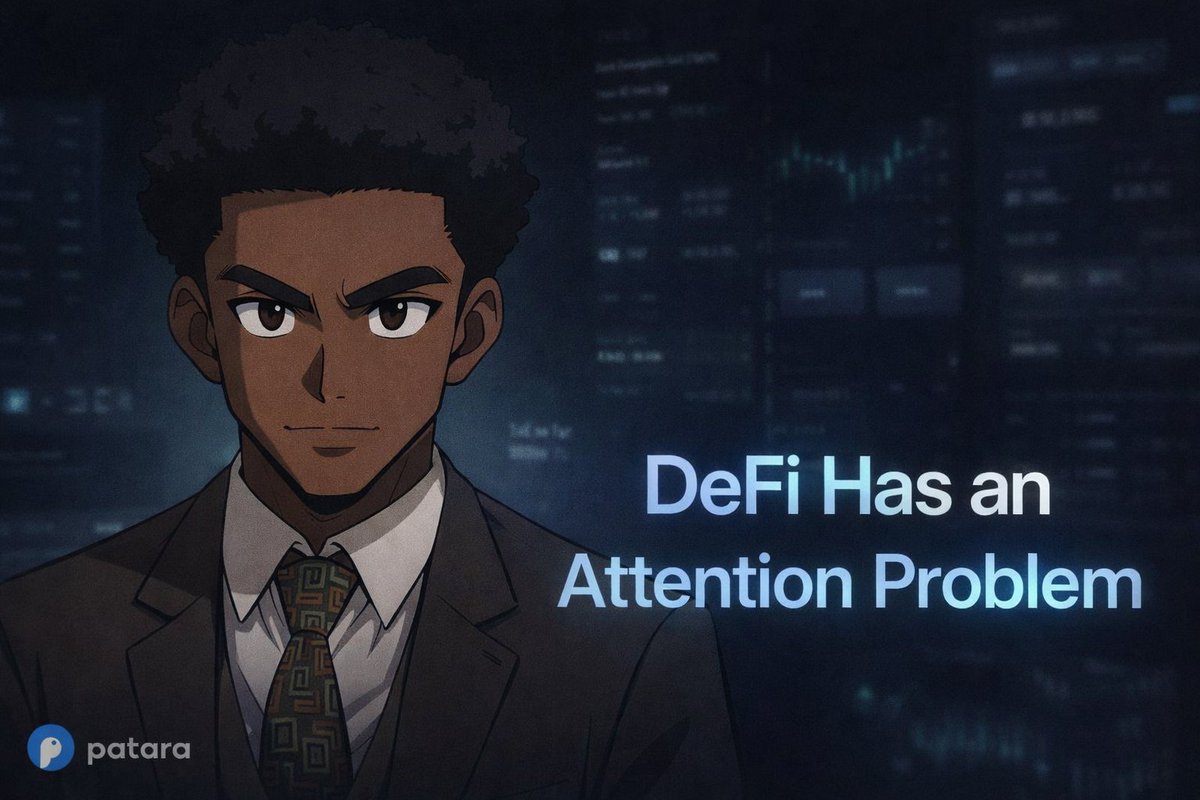
Most people think they lose in DeFi because they picked the wrong token, entered too late, or exited too early, but the truth is far less dramatic and far more uncomfortable to admit.
They lose because DeFi quietly demands constant attention, emotional discipline, perfect timing, and endless micro-decisions, all from humans who already have jobs, lives, stress, and distractions pulling at them every single day.
And if we are being honest with ourselves for a moment, how many of us actually enjoy staring at charts, refreshing dashboards, and wondering whether today is the day we finally “do something” with our idle assets.
What if the real problem was never yield, but attention.
What if the biggest leak in DeFi was not capital, but decision fatigue.
That exact question is what led @PataraApp to build something called Smart Asset Management, and once you understand it properly, you start seeing DeFi very differently.