Busy investor with no time to stock-pick?
Here’s a plug-and-play ETF setup 👇
📈 Growth:
$QQQ
$SPY
$SCHG
💰 Income:
$SCHD
$FDVV
$DIVO
🔥💸 High Income:
$QQQI
$SPYI
$JEPQ
Free LEAPS trade idea:
You could buy 100 shares of $MSFT right now for $36,800.
Or you could buy the $300 call expiring January 2028 for roughly $112.00.
That's $11,200 for leveraged exposure to 100 shares of Microsoft - 18 months out - for about 70% less capital.
Breakeven: $412.00
Why the setup is interesting:
- MSFT is down ~24% in 2026, its worst month since the dot com era, almost entirely on AI capex fear
- Q3 revenue $82.9B, up 18% YoY, beating estimates
- Azure grew 40% YoY, its fastest rate in over a year
- AI business now at a $37B annual run rate, up 123% YoY
- Commercial backlog hit $627B, up 99% YoY - a locked-in order book
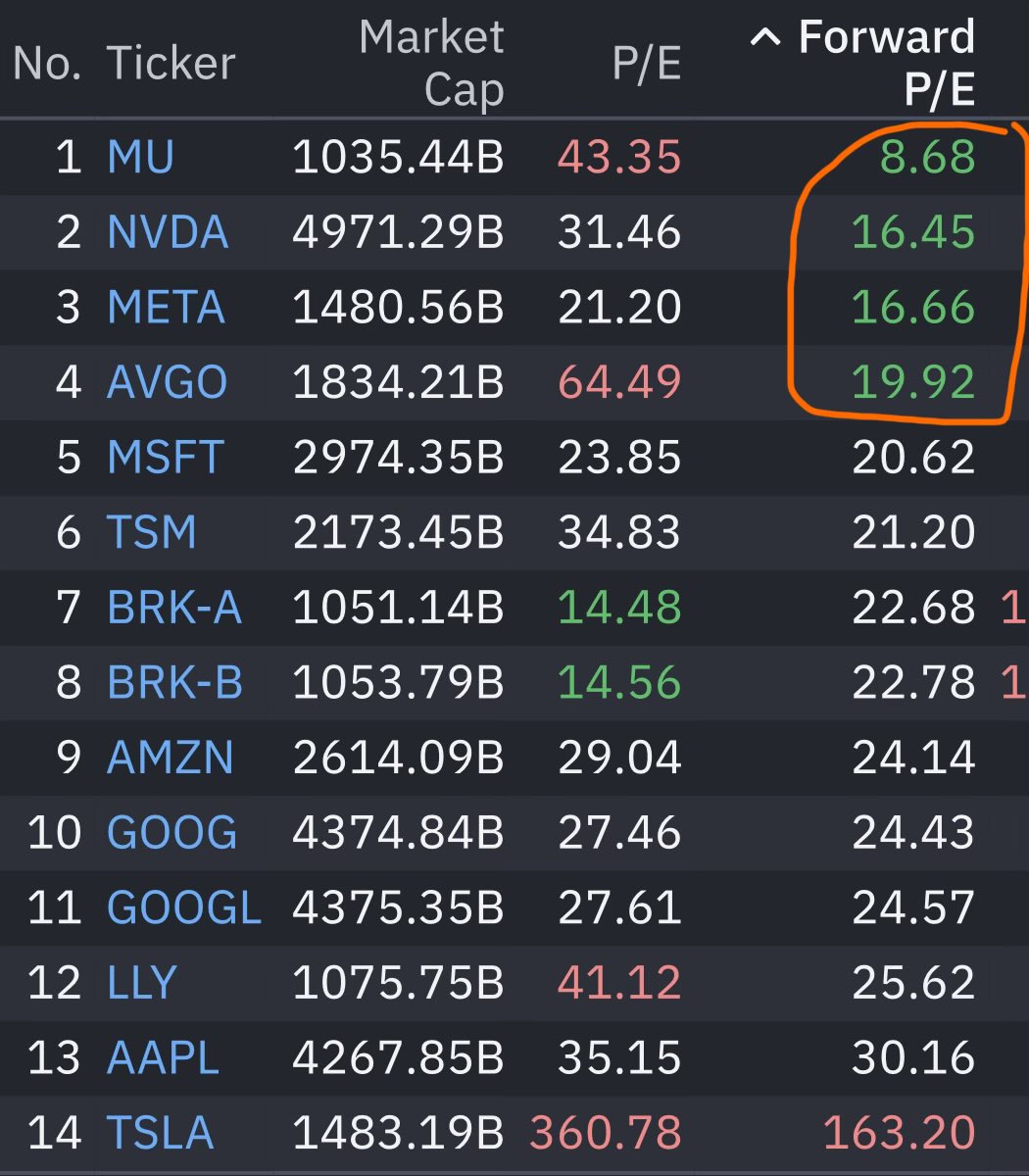
- Forward P/E compressed to ~22x vs a 10-year average near 31x, roughly 25% below its own history
- $300 strike sits deep in the money with a delta around 0.80, so the LEAP tracks the stock closely
If $MSFT hits $450 by expiration, the LEAP returns roughly 34% vs 22% on shares.
If $MSFT hits $500, the LEAP returns roughly 79% vs 36% on shares.
If $MSFT hits $555, the LEAP returns roughly 128% vs 51% on shares.
The max you can lose on a LEAP is the entire premium you paid. At ~$112/contract, that's $11,200 of capital at risk. If $MSFT drops or stays flat, this contract loses value every day.
The capex fear is real - free cash flow fell ~10% and the $190B AI buildout won't pay off overnight. This is a high-conviction play on the buildout maturing, not a casual position.
Not financial advice. I share these for education.
I'm only going to say this once. If you want to become a millionaire, you need to learn how to properly use LEAPS.
LEAPs give you leveraged exposure to 100 shares of a stock for a fraction of the cost.
Most people use them wrong. Here's how to use them right:
At the NYSE ETF Central CRTR Summit, @Michael_Khouw, YieldMax Strategist, highlighted how investors can approach both sides of a trade using options-based ETFs.
Using $MSTY and $WNTR as an example tied to $MSTR, he explained how pairing a long income ETF with an inverse income ETF can help generate distributions while also hedging directionally.
This creates a way to express both bullish and bearish views while still generating income.
MSTY - YieldMax® MSTR Option Income Strategy ETF
WNTR - YieldMax® MSTR Short Option Income Strategy ETF
Market Wizard Linda Raschke’s 12 Technical Trading Rules:
1. Buy the first pullback after a new high. Sell the first rally after a new low.
2. Afternoon strength or weakness should have follow through the next day.
3. The best trading reversals occur in the morning, not the afternoon.
4. The larger the market gaps, the greater the odds of continuation and a trend.
5. The way the market trades around the previous day’s high or low is a good indicator of the market’s technical strength or weakness.
6. The previous day’s high and low are two very important “pivot” points, for this was the definitive point where buyers or sellers came in the day before. Look for the market to either test and reverse off these points, or push through and show signs of continuation.
7. The last hour often tells the truth about how strong a trend truly is. “Smart” money shows their hand in the last hour, continuing to mark positions in their favor. As long as a market is having consecutive strong closes, look for up-trend to continue. The up trend is most likely to end when there is a morning rally first, followed by a weak close.
8. High volume on the close implies continuity the next morning in the direction of the last half-hour. In a strongly trending market, look for resumption of the trend in the last hour.
9. The first hour’s range establishes the framework for the rest of the trading day.
10. A greater percentage of the day’s range occurs in the first hour then was the case in the past, and thus it has become increasingly important to trade aggressively if there are early signs of a strong trend for the day.
11. There are four basic principles of price behavior which have held up over time. Confidence that a type of price action is a true principle is what allows a trader to develop a systematic approach.
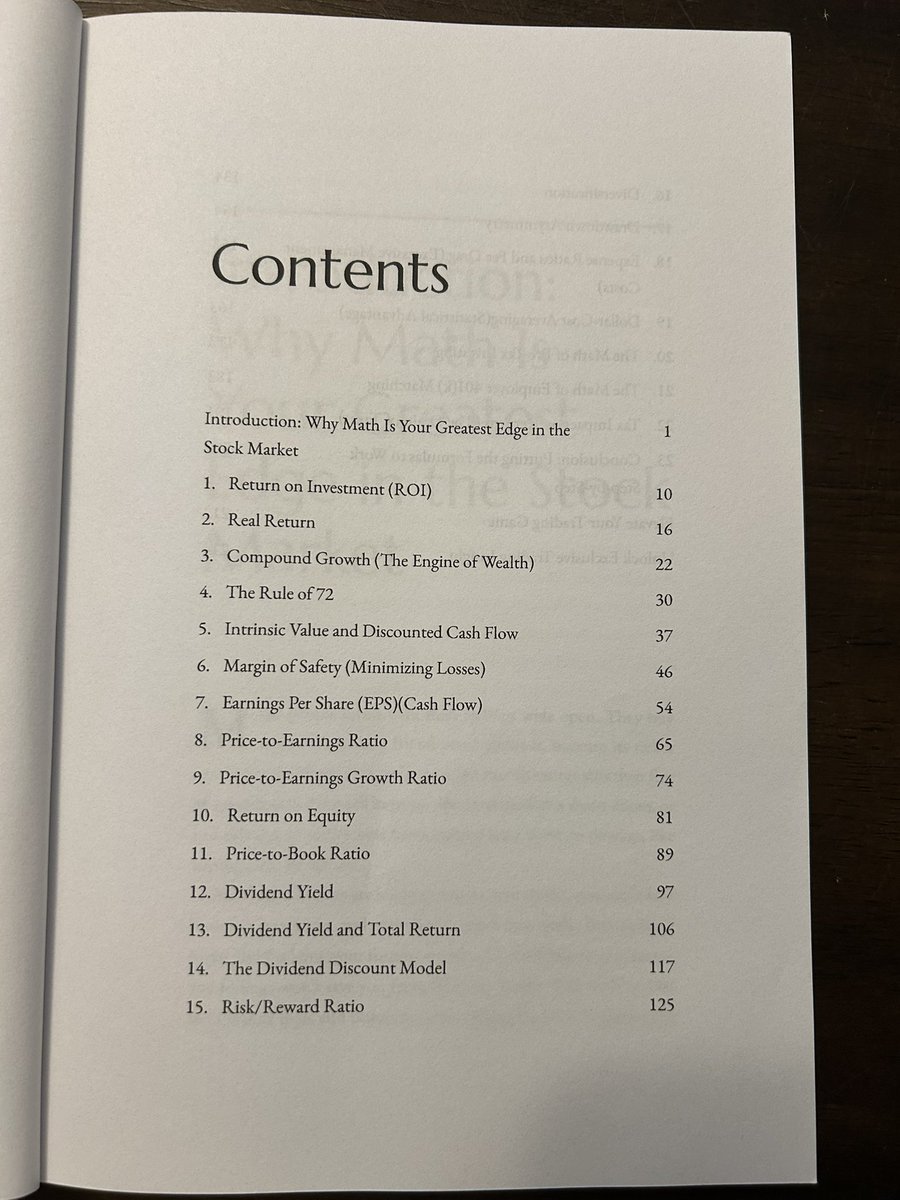
Book Title: Stock Market Investing is Math: A Beginner's Guide to the Formulas for Valuing Stocks and Building Wealth
Amazon U.S. Link-> https://t.co/LHH2R6xZFM