Co-founder & COO at @wazza_ai, an AI-native animation studio. We build Wazza Pro: AI does the grunt work, artists make the calls. Notes from the pipeline.
I don't have a clean answer. I do think studios that use AI for inbetweens owe their juniors another way to train. Keys on real shots. Reviews with seniors. Time.
The next Miyazaki might be 19 right now. Let's not remove the door they'd walk through.
Hayao Miyazaki started as an inbetweener at Toei. Drawing the frames between other people's key poses.
That job was never just labor. It was school.
And it's exactly the job AI is getting good at.
We build tools that do inbetweens in minutes. So I can't pretend this question isn't mine.
If juniors never draw thousands of inbetweens, where do they learn timing, weight and spacing? Where does the next generation get its hands?
The ultimate flex isn't "we didn't use CGI."
It's "we made a movie people actually remember."
Audiences don't care about your pipeline. AI, CGI, miniatures or puppets. If it serves the film, it's cinema.
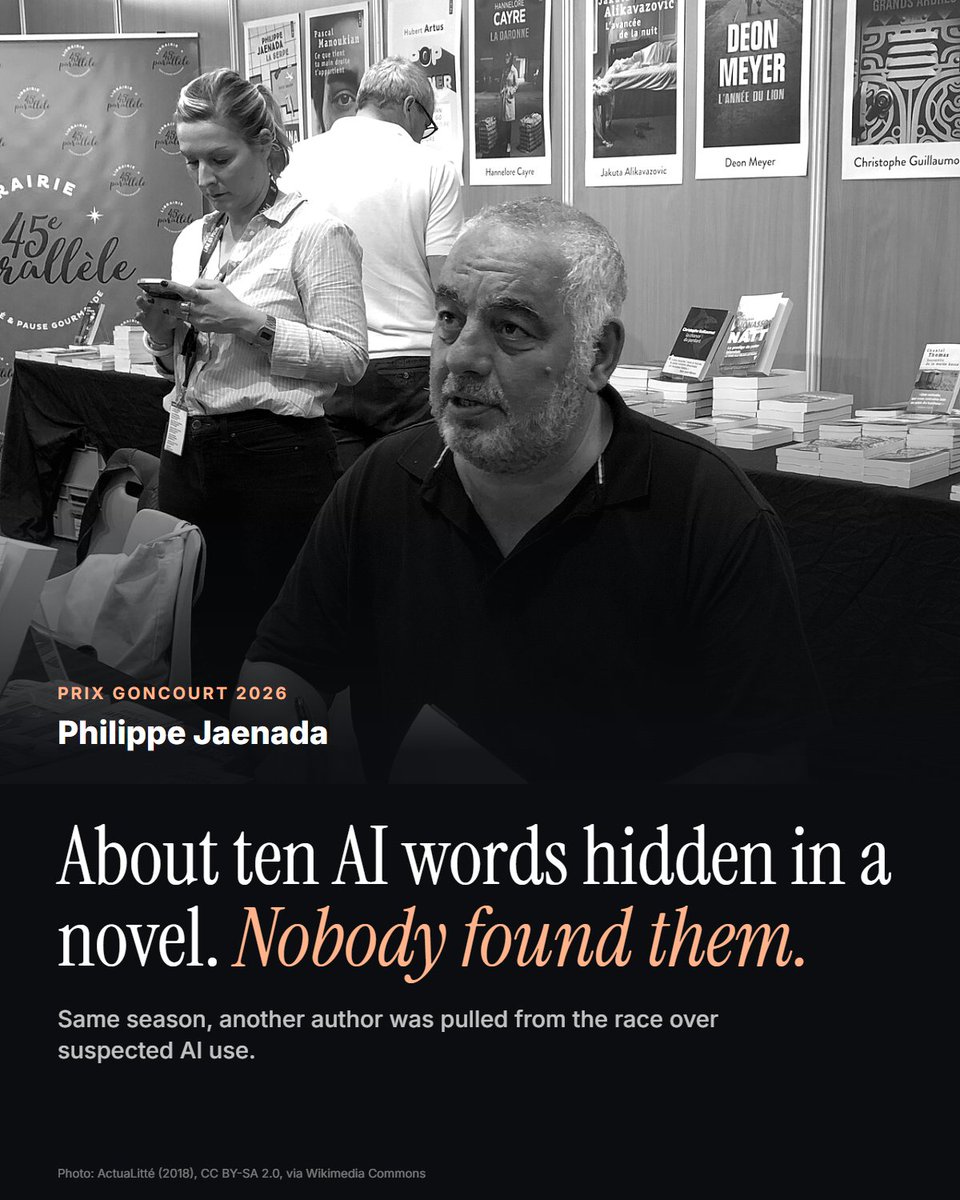
France's top literary prize just went to a novelist who hid an AI-generated sentence in his book.
About ten words.
Dozens of readers went looking. Nobody found it.
Same season, another author was pulled from the race over suspected heavy AI use.
So the line was never "did you use AI".
Philippe Jaenada asked chatbots a few research questions, found the answers useless, and wrote that into the novel.
The line is: who decides what stays on the page, and do you say it out loud.
check out Wazza Pro, our first product for agentic film-making on #producthunt and get a 10% discount on credit top-ups and subs for all the models and the tools
link below 👇
They argue, they often disagree, and then I decide.
What it doesn't change is who carries the risk. On tax, nothing moves unless all three agree. Above a certain amount, a human expert signs. Always.
Same idea as Wazza Pro: more options, same supervisor signing off.
25 business advisers. None of them is human.
9 for legal, 3 for tax, 2 for accounting, 6 for LinkedIn and 5 for cold email. All AI agents, each with one job and one brief.
When I have a decision to make, I don't ask one chatbot. I ask the panel.
I don't think "zero AI" is an identity. I don't think "every pixel generated" is one either.
Pixar is Pixar because of taste. Laika is Laika because of taste. Someone still has to say: "No. That shot isn't us."
Tools change. The standard shouldn't.
At VIEW Conference this month, Januel Mercado (co-director of Puss in Boots: The Last Wish) said "We didn't use any AI" on stage. The room applauded.
On the same program, NVIDIA and Runway had a keynote called "Every Pixel Will Be Generated."
The line that stuck with me came from Pixar. McKenna Harris, co-director of Toy Story 5, said they didn't use generative AI on the film. Then she said Pixar is at a crossroads about what all this means for the studio's identity.
That's the real question.
That's why I think disclosure belongs on screen. Not in an interview, not in a press conference. Before the scene.
"14th" lands on Netflix on December 4. A lot of people will see those photos move without knowing how they were made.
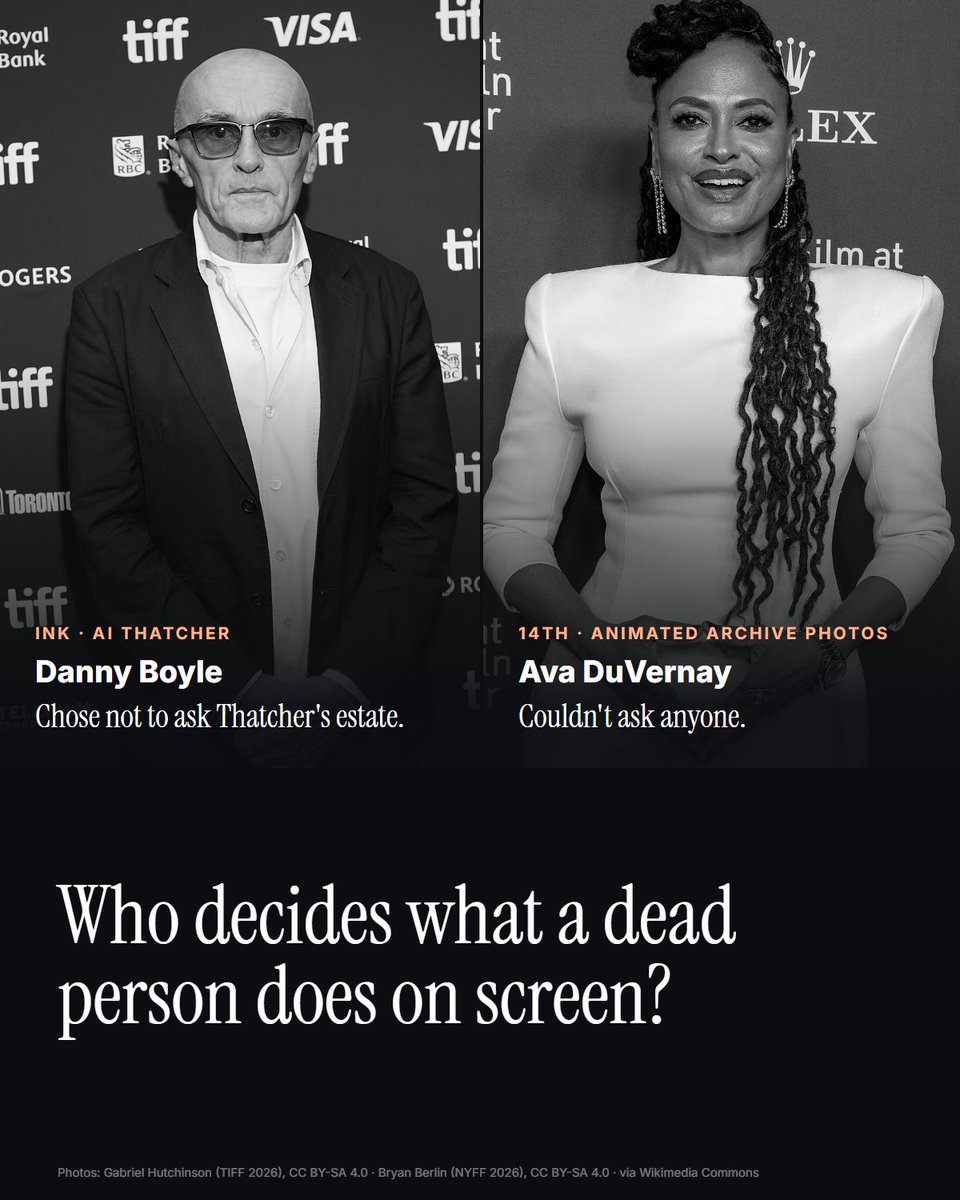
Danny Boyle chose not to ask Thatcher's estate.
Ava DuVernay couldn't ask anyone.
In "Ink," Boyle used AI to put Margaret Thatcher's face on an actor.
In "14th," DuVernay used AI to animate archive photos of Black Americans from just after slavery.
But they raise the same question.
Who decides what a dead person does on screen?
Art has always put words in famous mouths. What changed is what the audience sees. An actor playing Thatcher is a performance. A face that looks real isn't.
A voice without consent isn't a production asset. It's a liability.
If a studio can't show who agreed to a voice, when, and for what use, it shouldn't ship it. That's not an ethics slide. It's basic production tracking.
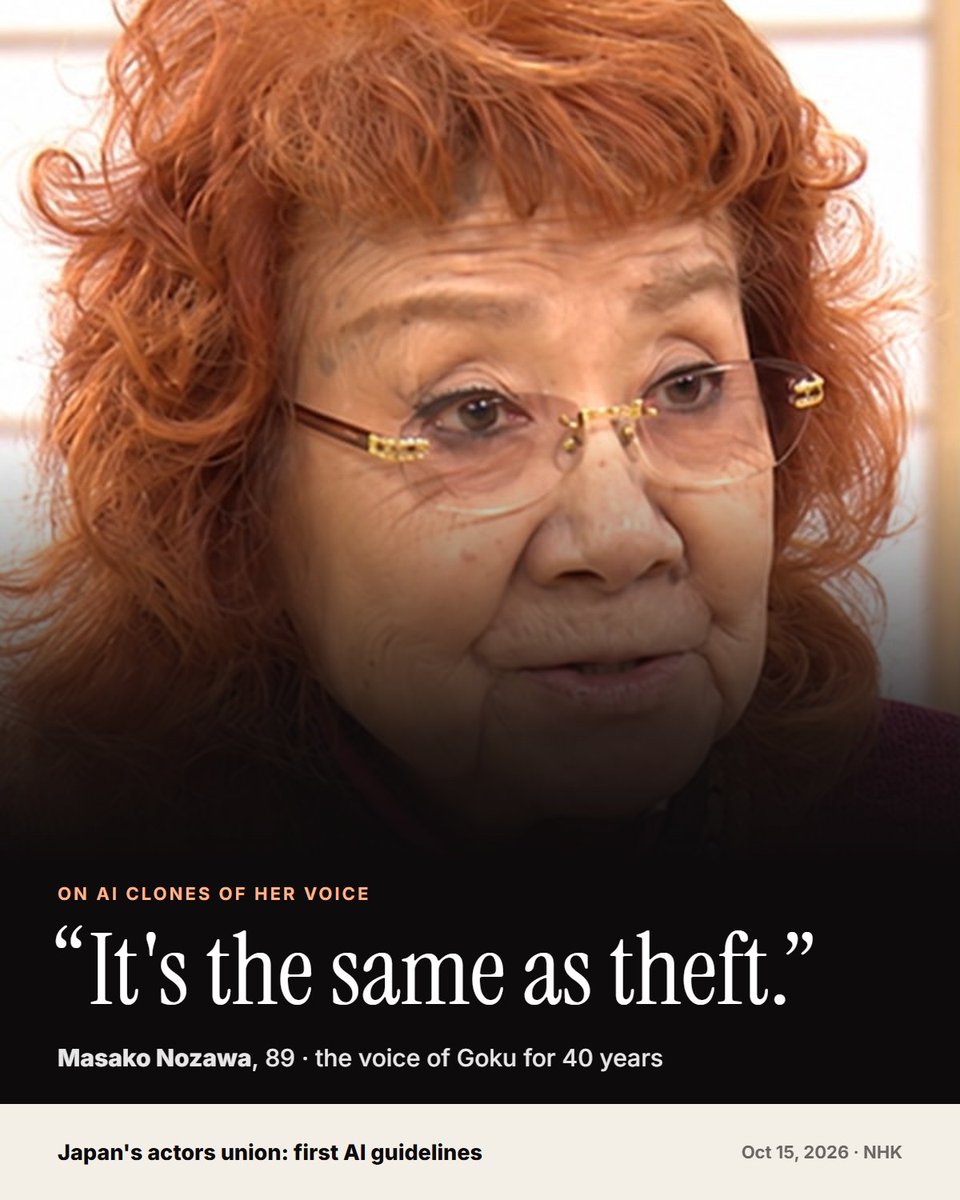
Masako Nozawa has voiced Goku for 40 years. She just turned 90.
This month she called AI clones of her voice "the same as theft."
"This is not my voice. Using it without permission is unforgivable."
I work on the AI side of animation. I think she's exactly right.
The part most headlines skipped: she said she hopes that "by everyone following the rules, we can create a world where humans and AI can have fun."
She's not against AI. She's against being taken without asking.