Does physical activity protect against depression?
Customary physical activity and odds of depression: a systematic review and meta-analysis of 111 prospective cohort studies #OpenAccess@mph8
https://t.co/vmjTimryhG
Sleep: a foundation, not pillar, of mental health? Associational study of +1,000 people. Sleep quality was the strongest predictor of depressive symptoms and flourishing, followed by sleep quantity. Next were physical activity then diet (fruit & veggies). https://t.co/bhu7hRJG7W
Simply associational, but older adults who slept 5hr a night or less were twice as likely to develop dementia across 5 years vs. those who slept 7-8hr. Snoring also a key player. I hope we can better address age-related sleep impairment in the clinic... https://t.co/541vJJaBVB
Treating sleep apnea associated with more than a 20% reduced risk of developing Alzheimer’s disease, and the progressive declining stages into Alzheimer’s disease. https://t.co/RhNMpZLPw9
With a $2.3b boost to mental health services, the Federal Budget has delivered substantial increased funding for mental health, however, integrated and collaborative models of care that include physios is needed to achieve better mental health outcomes.
https://t.co/Yp5TiENSk1
"Falls are the number one cause of preventable death in residential aged care. Mobility programs led by physiotherapists can reduce the number of falls in residential aged care by 55 per cent."
The Fed Budget will be a litmus test of the Aus Gov’s commitment to quality aged care and increased access to physio. Read our full media release at https://t.co/2KcanG3lfQ
Osteoarthritis affects 48 per cent of Aussies over the age of 50. @JoanneLKemp et al. present 5 discussion points about the role of physio in the diagnosis and management of osteoarthritis. This #infographic is a #PRF initiative supported by @FlexezeHeat
https://t.co/wCdaPyA8RW
The APA has made a submission to the Select Committee on Mental Health and Suicide Prevention, calling for investment in expanding multidisciplinary mental health teams for the recognition of the critical role physiotherapists play in mental health.
https://t.co/IUI0U0yIN8
Physio can help this #worldparkinsonsday
The Economic Value of Physiotherapy report, recently commissioned by the APA, found that physio offers an effective addition to both drug and surgical treatment for #parkinsonsdisease
https://t.co/9OUxvXQmiq
#FundPhysio#EconomicValue
CBD, a non-psychoactive compound in cannabis, improved Alzheimer's symptoms, slowed cognitive decline, and increased the function of 2 proteins that reduce the accumulation of beta-amyloid plaques in animal models with early-onset Alzheimer's disease.
https://t.co/ycMzjt7FzJ
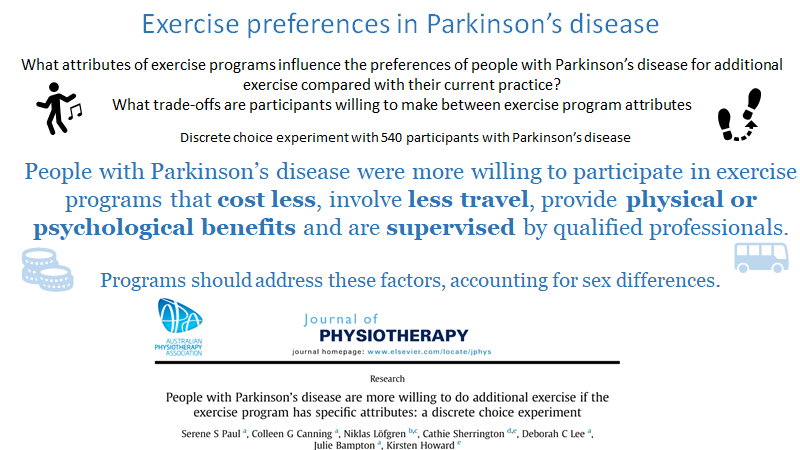
Among people with Parkinson's Disease, men are more likely to consider adopting strengthening exercises, whereas women tend to be averse to adopting aerobic exercise. Find out their other exercise preferences here: [https://t.co/yXqbpmEznx]
Free full text
#Parkinsonsdisease
Eating a diet high in refined carbohydrates (white bread, pasta/noodles, breakfast cereals, crackers, and bakery products) was associated with a 47% increased stroke risk, 33% increased heart disease risk, and a 27% higher all-cause mortality.
https://t.co/MeGwMyeznD
Resistance exercise results in high lactate which crosses the blood-brain barrier and induces BDNF to improve learning/memory. Endurance training leads to high succinate which boosts energy expenditure in fat.
Fascinating work by @ClemmensenC!
https://t.co/NZiLHUexzd
Bacteria in the gut produce neurotransmitters such as GABA and serotonin, both have been found to be disrupted in people with major depressive disorder. They also have significant changes in their gut microbiome composition compared to healthy controls. https://t.co/zEelAGhDrY