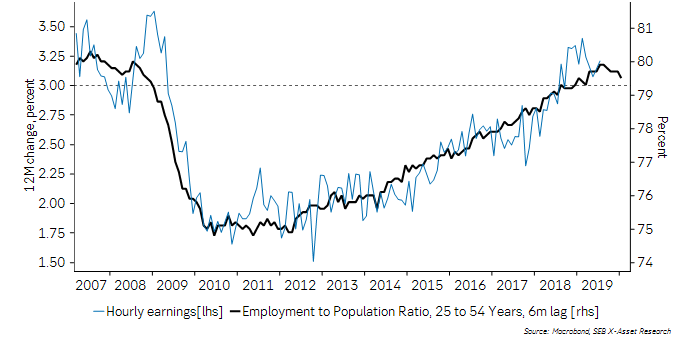
@opinion@johnauthers I love the reference to Beveridge. But perhaps it is more straightforward to look at the Philips curve instead? This is the US employment-population rate (25-54 years) and the employment cost index (wages and salaries). Looks like a parallel shift. If permanent, NAIRU must double
@AndreasSteno Well I don't do Germany so I can't take responsibility for that, but this is just one indicator. And maybe you can't see a gap of 3.5-4%, but I'm glad you can at least see there is a difference :-) We can leave it here in that case
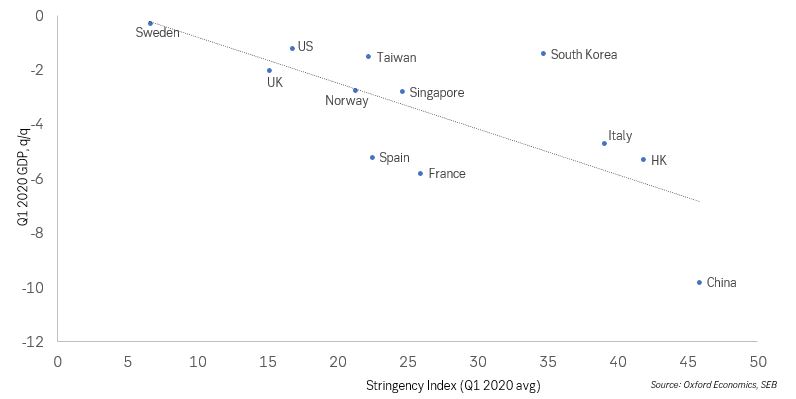
@AndreasSteno Here's the correlation between COVID-19 restrictions and GDP growth. Denmark at 21 in Q1, which would fit with decline of 3-4%. For Q2, Sweden so far 45 and Denmark 82. Q3 may be different, of course. But how can this be a surprise? I'm puzzled we even have this discussion :-)
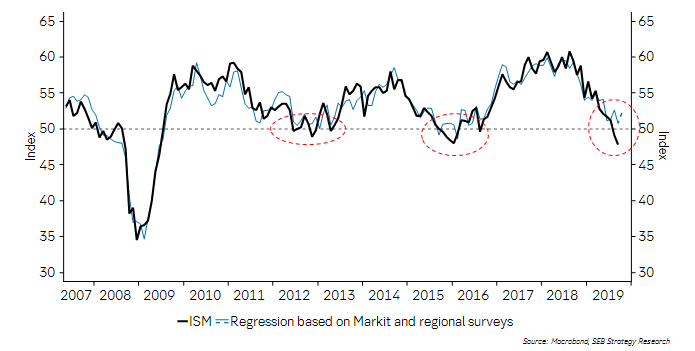
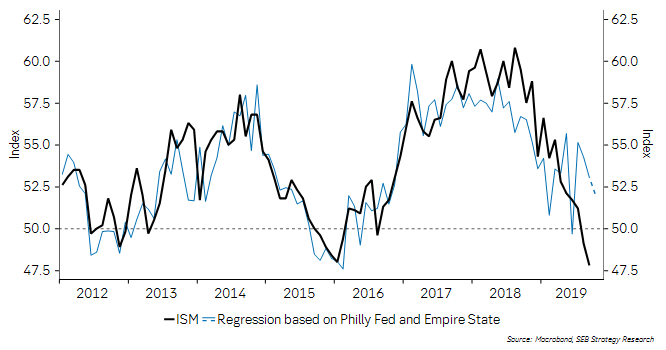
Ahead of next week's key ISM release, we took some encouragement from the Markit flash PMI and regional surveys. September's weak ISM still looks like an outlier, and the bigger picture looks more like the tactical reversals in 2012 and 2016 when the Fed delayed recessions.
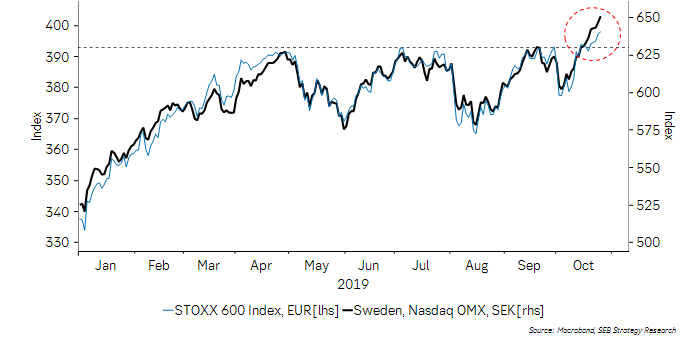
Last week European stock indices broke the ceiling after three unsuccessful attempts in 2019, supported by easing political risks, improving macro momentum and accelerating policy support. Now we just need S&P 500 to follow suit - big week coming up with FOMC, PMIs, ISM, NFP...
First set of October data from US manufacturers still doesn't corroborate the ISM scare story from last month. Not an all clear, but an indication that the economy has not fallen over a cliff. If political risks ease, markets are likely calm down about growth too.
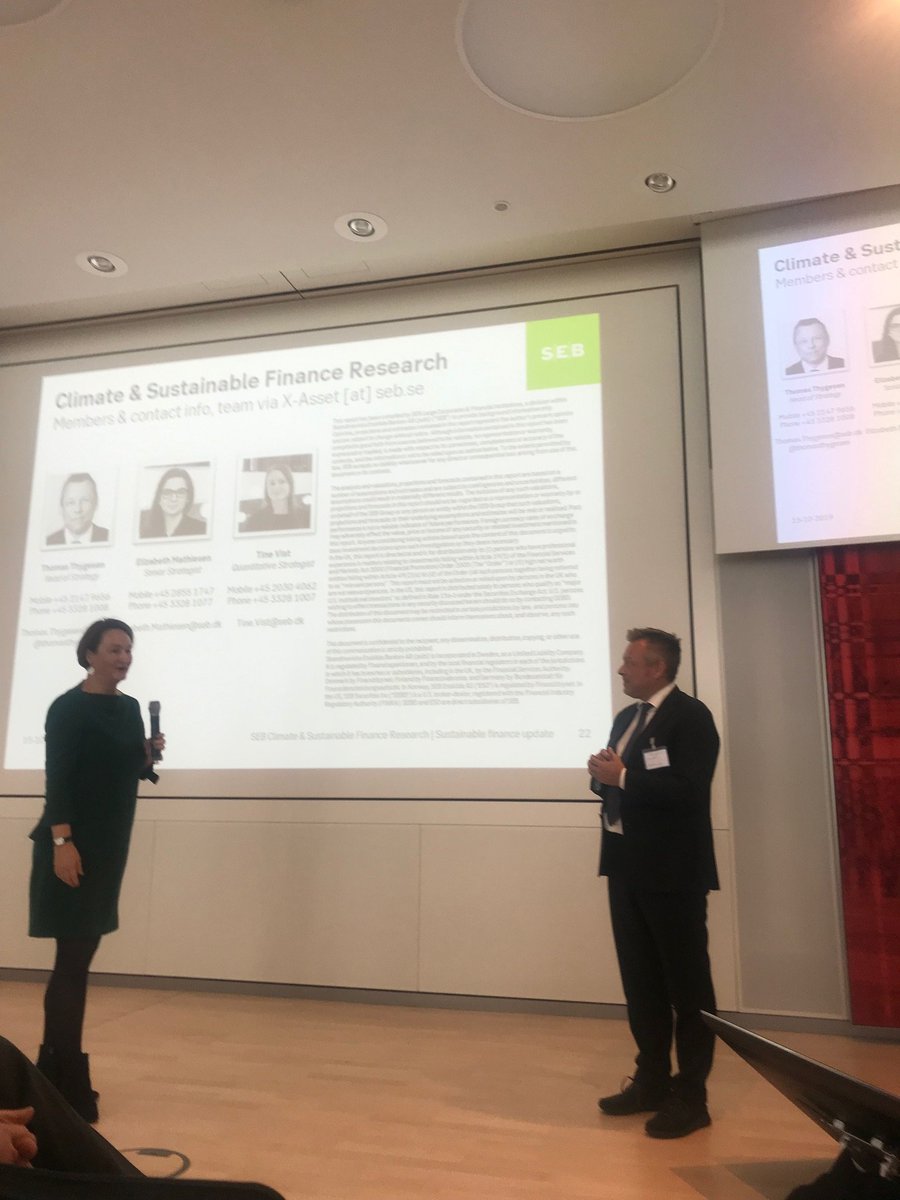
I was proud to get to present our sustainable finance 2.0 story to European bank regulators and supervisors today at the ESE seminar at Bundesbank in München today!
German orders weren't as bad as they looked. The 12m decline was big, but most of it happened more than 6 months ago. Monthly change slightly below consensus, but prior month revised higher by twice as much. A bit like the 2012 trough? Provided trade war doesn't come to Europe
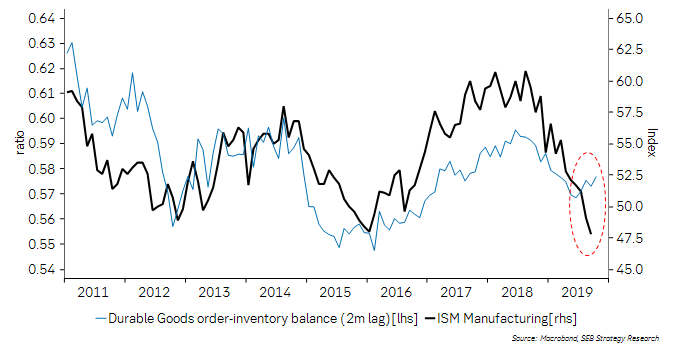
And about that ISM/PMI divergence in the US - hard data seem to be on the side on the Markit PMI. Durable orders-inventories balance turned higher 4-5 months ago, and this was also a warning of an ISM trough in 2016
Tactical upswing? World manufacturing PMI posts first back-to-back increases since 2017, macro surprises turn neutral as policy turns supportive. Looks more like Q1 2016 than Q4 2018... if you disregard the political uncertainty, that is.
@PeterVejgaard jeg er helt enig, det er derfor negative rente ikke virker så godt, specielt i tyskland hvor det meste opsparing er rentebærende, selv om investeringerne selvfølgelig stadig kan reagere. Men 10 års renten under nul er tegn på, at de ikke har været aggressive nok med andre tiltag.
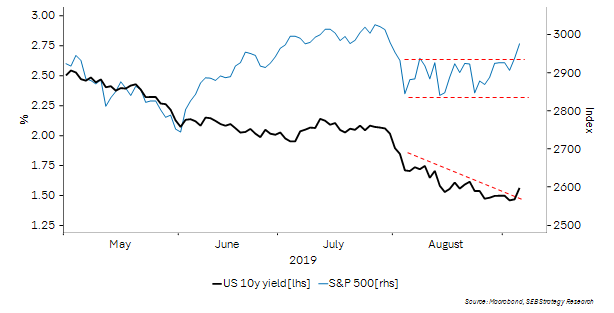
Tactical breakout: equities and bond yields break higher as better macro data, dovish CBs and easing trade war fears lift risk appetite. We expect more near-term upside, but also note that central banks using all their ammo to delay a recession will add risk when it finally comes
A ray of light? After 15 months of uninterrupted decline, the world manufacturing PMI posted a small gain in August. It had been underway for some time, but the trade war always seemed to get in the way. Stronger growth and dovish Fed: time for equities to break higher?
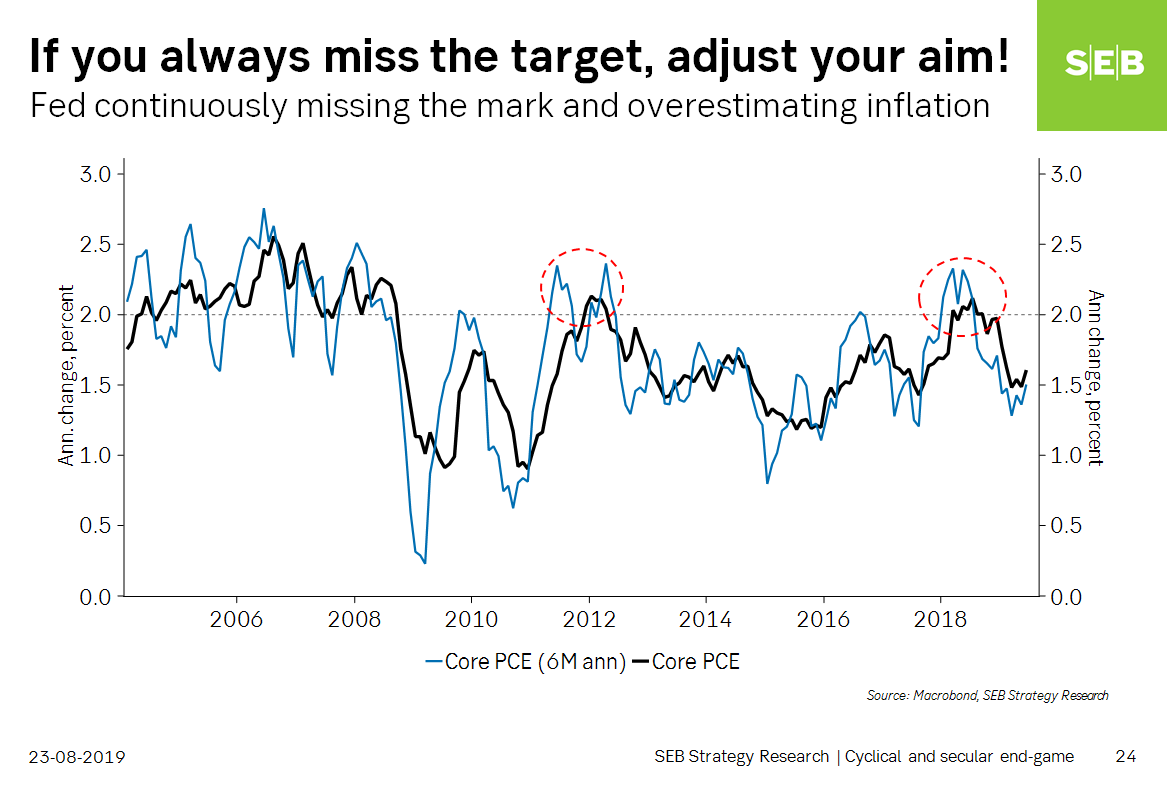
So it's just two hours to go before we hear from Fed chair Powell, and the conventional policy analysis suggests he shouldn't accommodate rate cut hopes. However, if you hit below target 90% of the time, perhaps you should adjust your aim. That's the opening for a dovish signal.
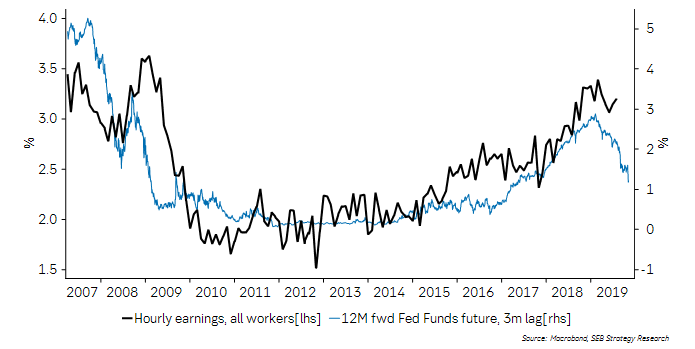
Once the psychologicalshock is digested, focus will turn to fundamental impact. Fed reaction is key to how bad it will be, and markets expect a strong reaction. But can the Fed cut 100bp+ with wage inflation above 3%? This policy dilemma dilemma will be in focus in coming months
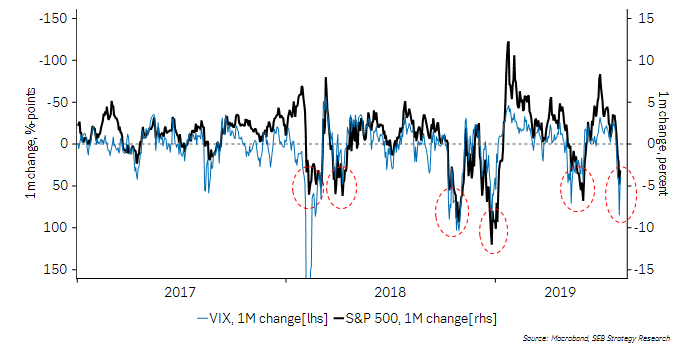
Falling risk appetite ushed the VIX briefly above 24 while the S&P 500 declined by around 6%. This is close to a normal initial reaction to sentiment shock: a VIX increase of 50-100% accompanied by an S&P 500 decline of 5-10%, followed by choppy bottoming over the next few weeks.
With the trade war escalating, a 'neutral' Fed isn't enough - more cuts are needed to compensate. But how far can the Fed go? Today's NFP suggests there is no room for agressive easing with wages rising 3%+ and EMPPOP close to past cycle peaks. That's a policy dilemma right there